Best months: June to October (dry season) · January to March (Kilimanjaro clearest)
Country: Kenya
Region: Southern Kenya · Amboseli ecosystem · Selenkay Conservancy
Best for: Elephants, big tuskers, Kilimanjaro views
Amboseli National Park: Elephants Beneath Kilimanjaro
Amboseli National Park is the postcard of East Africa — great herds of elephants crossing open plains with the snow-capped summit of Mount Kilimanjaro rising behind them. It is one of the most photographed landscapes on the continent, and it delivers that image reliably, day after day, in a compact park just a few hours from Nairobi.
At Escape Xperts, we include Amboseli National Park in Kenya itineraries for its unique combination of accessibility, wildlife density and visual drama. The park is small — roughly 390 square kilometers — but its swamps, fed by underground meltwater from Kilimanjaro, draw some of the largest elephant herds in Kenya year-round.
The Elephants and the Big Tuskers
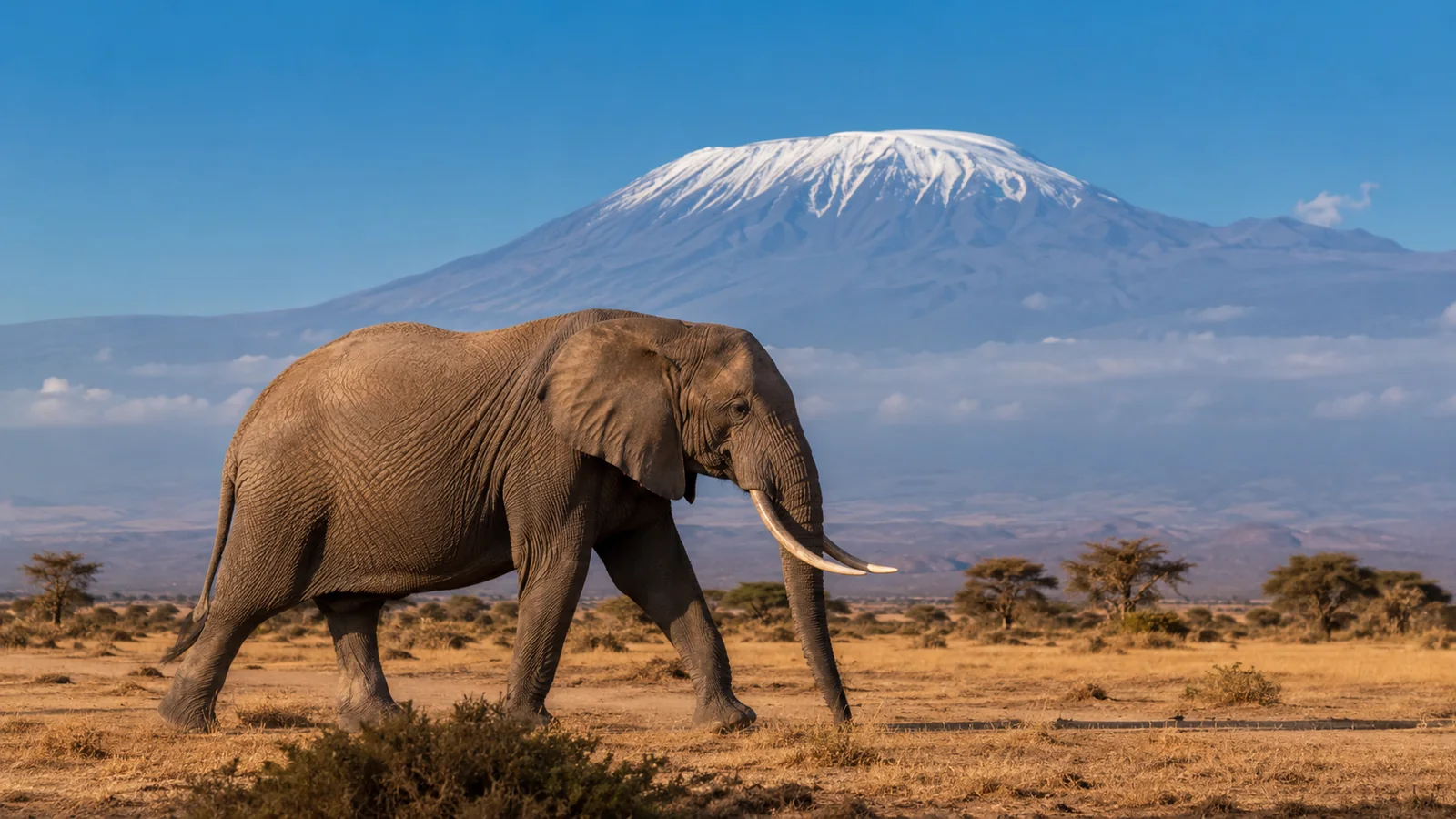
Amboseli National Park is famous above all for its elephants. The park holds over 1,500 elephants, including some of the last remaining big tuskers — bulls with tusks that reach the ground. These are among the most studied elephants in the world, tracked by researchers since the 1970s.
Because of this long history of habituation, the herds here are remarkably relaxed around vehicles. Elephants walk close, feed beside the road and cross the dusty plains in family groups with a calm that few other parks can match. For photographers and first-time safari travelers alike, the closeness of the encounter is extraordinary.
In addition to elephants, the open grasslands support lions, cheetahs, buffalo, giraffes and large numbers of zebra and wildebeest. However, leopards are seldom seen and rhinos are effectively absent. Amboseli National Park is not a full Big Five destination — its strength is elephants, scenery and accessibility, not a species checklist.
When to Visit: The Kilimanjaro Window
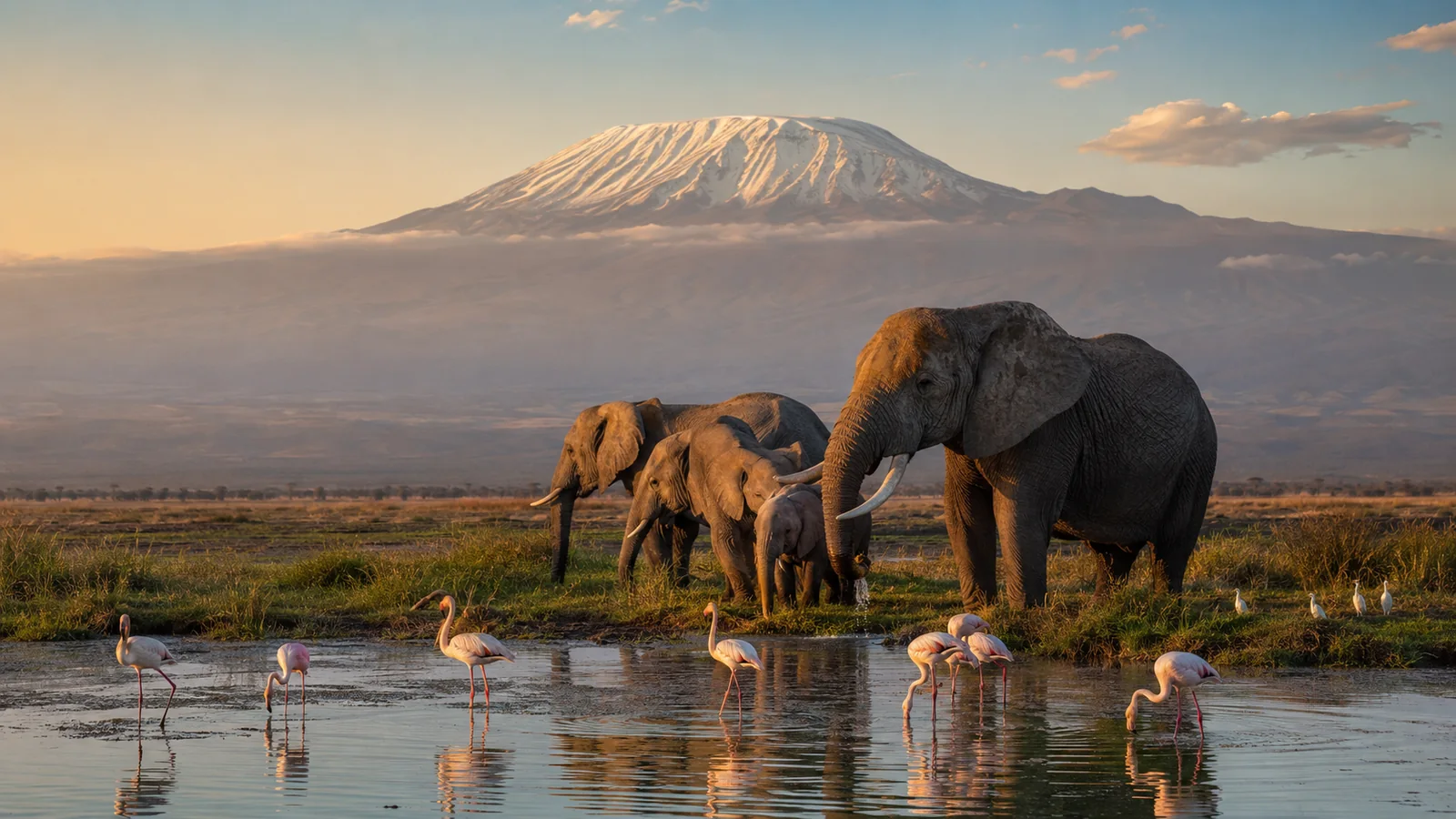
The best time for Amboseli National Park depends on whether the priority is game viewing or the mountain.
The dry season from June to October concentrates wildlife around the swamps, making game drives productive and the elephant herds easier to find. Meanwhile, the mountain is more likely to be obscured by haze during these months — dawn and the late afternoon offer the clearest windows.
In contrast, January to March brings lighter rains and often the clearest Kilimanjaro views of the year. The skies are washed clean of dust, and the mountain stands sharp against deep blue morning light. Therefore, if the Kilimanjaro photograph matters as much as the wildlife, the early months of the year are often the smarter window.
From Observation Hill, the only elevated vantage point in the park, the full panorama unfolds: the shimmering wetlands, the open plains, the elephant herds and the mountain behind them. A morning spent here anchors the experience.
Where to Stay: Lodges with the View
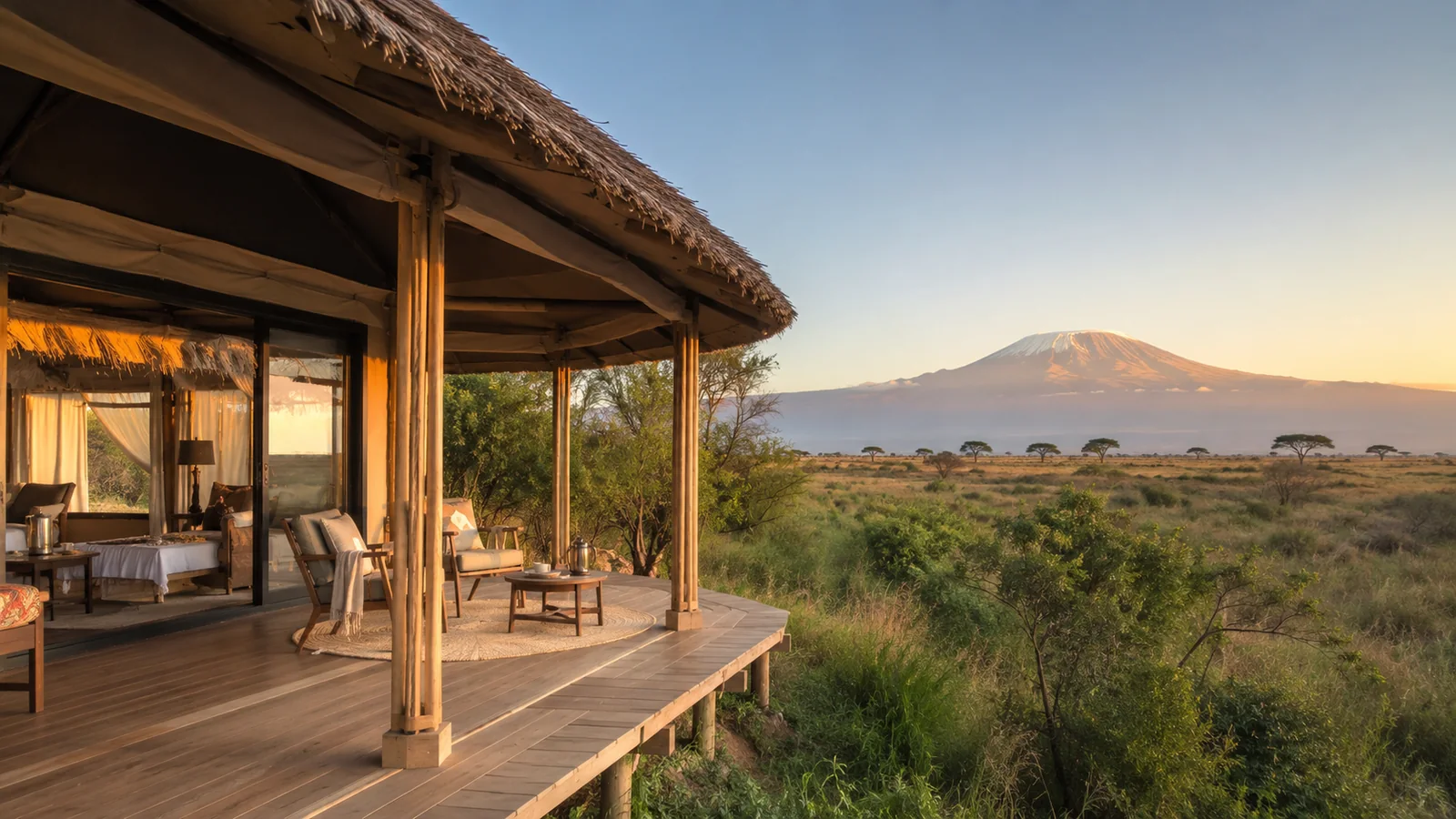
Accommodation in Amboseli National Park is shaped by one question: does the lodge face the mountain?
Tortilis Camp, set just outside the park boundary in a private conservancy, offers unobstructed Kilimanjaro views from its tented suites and is one of the most refined options in the area. Its location on the conservancy side also means walking safaris and night drives are possible — activities not permitted inside the park itself.
Inside the park, Ol Tukai Lodge sits among a grove of yellow fever trees, with elephant herds moving through the grounds and the mountain visible from many of the rooms. As a result, the wildlife here often comes to you rather than the other way around.
Next, the surrounding conservancies — particularly Selenkay — add exclusivity and cultural depth. These Maasai-owned lands support community-run camps that combine game drives with cultural visits to local homesteads.
Beyond the Park: Selenkay and Maasai Culture
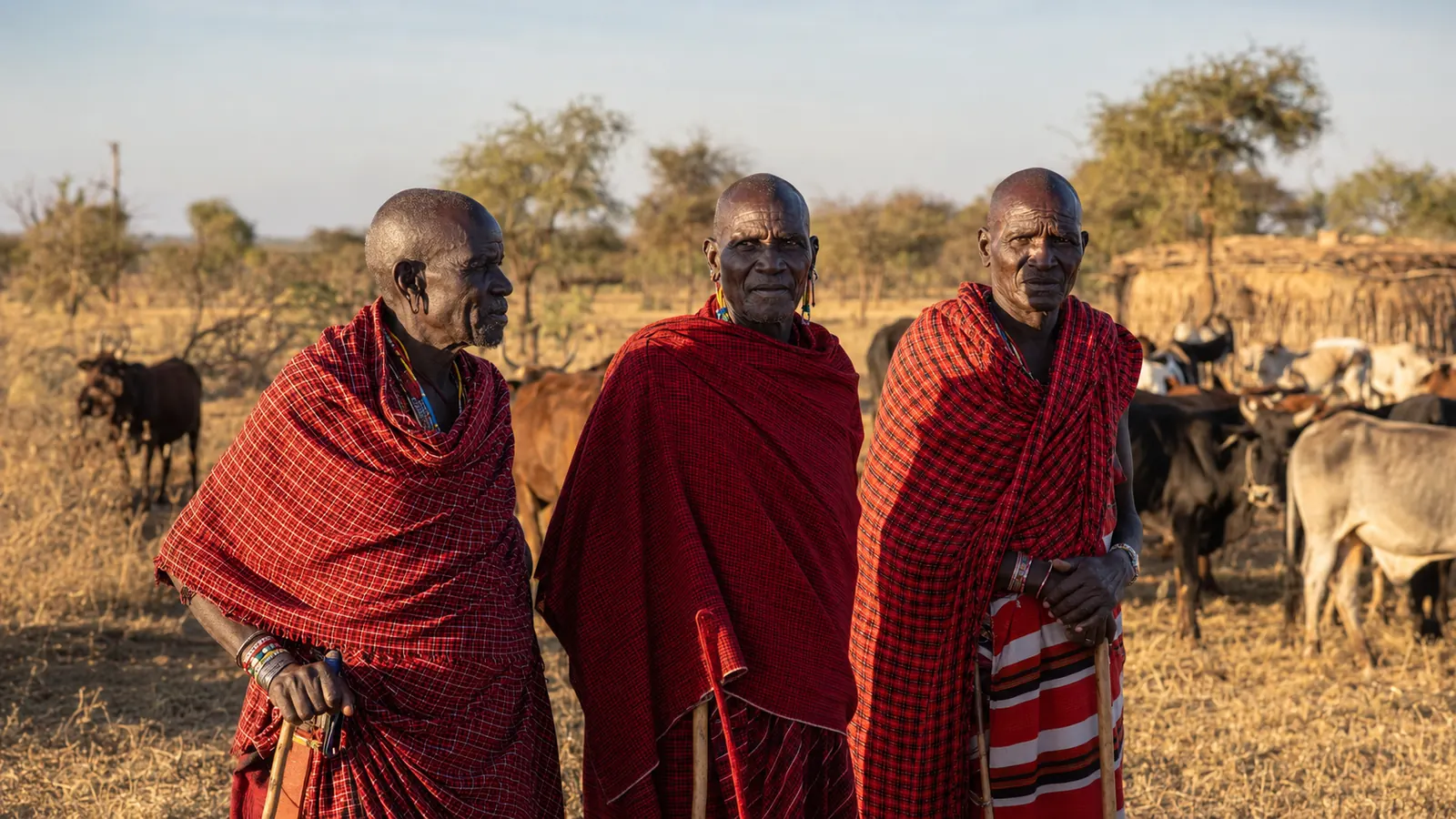
The Amboseli National Park ecosystem extends well beyond the park’s boundaries. The surrounding Maasai community conservancies — Selenkay, Kimana, Olgulului — provide wildlife corridors that keep elephant herds and predators moving freely between grazing grounds.
A stay in one of these conservancies adds a dimension that the park alone cannot offer. Guided walks with Maasai trackers, visits to active homesteads and the chance to understand the relationship between pastoralists and wildlife bring the landscape into sharper focus.
Because of this model, Amboseli is a strong example of conservation through community benefit — tourism revenue gives the Maasai a direct stake in protecting the wildlife corridors that elephants depend on.
Adding Amboseli to Your Kenya Safari
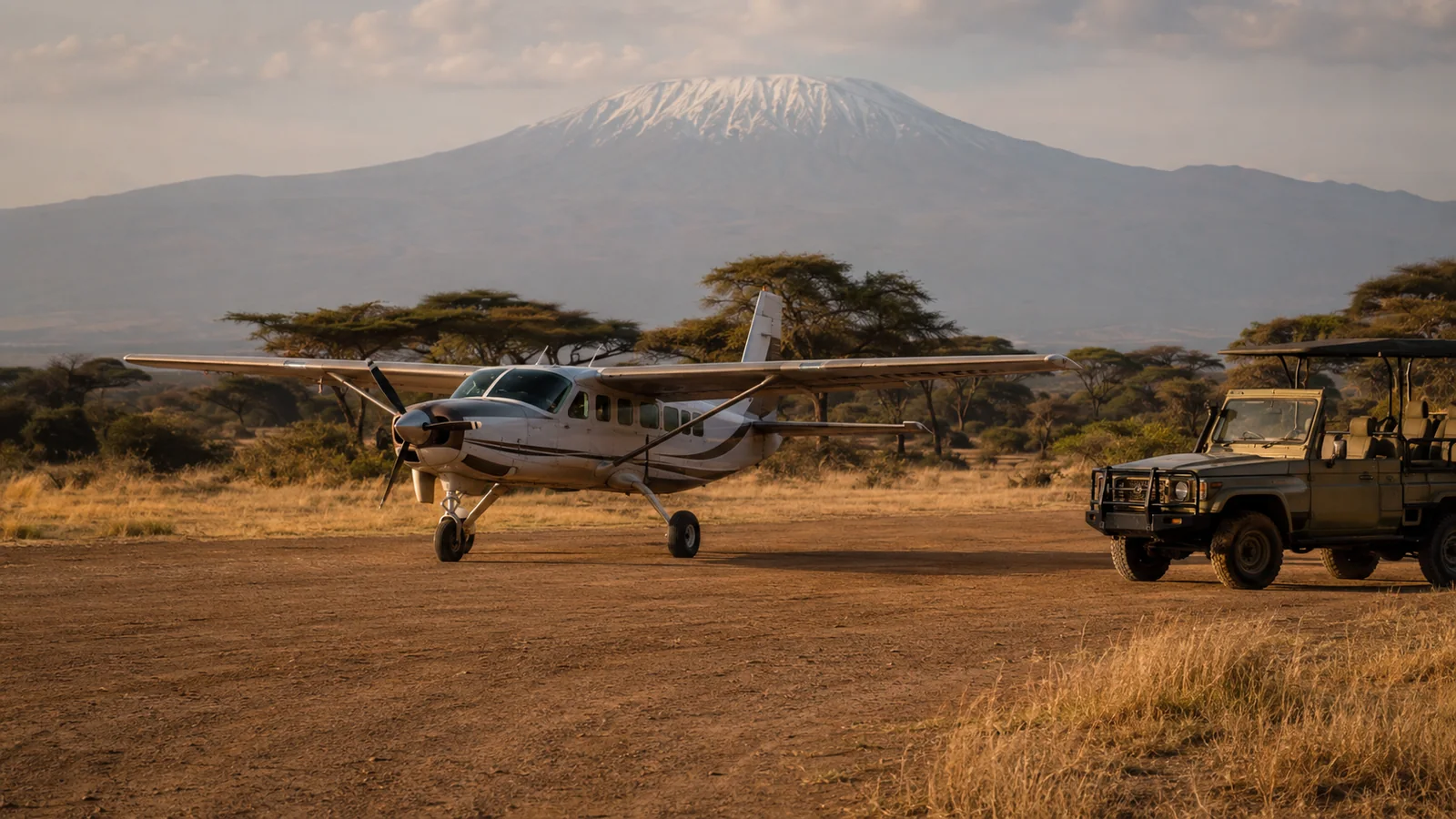
Amboseli National Park sits approximately four hours by road south of Nairobi, or roughly forty-five minutes by light aircraft. Because of this proximity, it works naturally as the opening or closing chapter of a wider Kenya circuit.
The classic combination pairs two or three nights in Amboseli with a Masai Mara safari — the elephants and Kilimanjaro of the south against the migration and big-cat drama of the west. A fly-in transfer connects the two in under an hour.
In addition, Amboseli connects well with Tsavo, Kenya’s largest park, for travelers who want a wilder, less visited extension. The road between the two crosses dramatic volcanic landscapes and red-earth plains.
Whether as a first taste of Kenya or as a deliberate counterpoint to the Mara’s intensity, Amboseli National Park earns its place in any considered itinerary — the most iconic view in Africa, earned in a compact, accessible park.
Elephants at the waterhole, Kilimanjaro on the horizon, and Africa’s oldest calm
Signature Experiences
- Dawn game drive as elephant herds cross the plains beneath Mount Kilimanjaro
- Sunrise panorama from Observation Hill
- Walking safari with a Maasai tracker in the Selenkay Conservancy
- Close encounter with one of Amboseli’s remaining big tuskers
- Sundowners overlooking the swamps at dusk
- Cultural visit to a Maasai homestead near the park
- Cheetah tracking on the open grasslands
- Fly-in transfer from Amboseli to the Masai Mara
- Birdwatching at the seasonal lake — flamingos, pelicans and raptors
- Night drive on the conservancy under the southern Kenyan sky
Ready to Begin the Journey?
Amboseli rewards timing and local knowledge — the right morning, the right waterhole, the right angle on the mountain. At Escape Xperts, we design Amboseli safaris around seamless logistics, the finest lodges with Kilimanjaro views and curated wildlife encounters that place the elephants front and center.
Why Travel to Amboseli with Escape Xperts
Amboseli National Park offers the most iconic view in Africa — great elephant herds beneath the summit of Mount Kilimanjaro, in a compact park that combines accessibility with genuine wildness. At Escape Xperts, we place the big tuskers, the mountain light and the Maasai conservancies at the heart of the journey, and we connect Amboseli seamlessly with the rest of Kenya’s safari circuit. For destination information, see https://magicalkenya.com/