Best hours: Before nine in the morning · after six in the evening
Best months: Late October to March, excluding Carnival
Country: Italy
Sestieri: San Marco · Cannaregio · Dorsoduro · Giudecca · the northern lagoon
Things to Do in Venice Once the Day Boats Have Gone
The best things to do in Venice are not different places but the same places at different hours. Between ten in the morning and five in the afternoon the city carries a visiting population several times its residential one. Before and after that window, it becomes a different city entirely.
At Escape Xperts, we build Venetian days around that tidal rhythm and around the sestieri that the day traffic never reaches. The result is a city that feels close to empty in the middle of its busiest season.
The Day-Tripper Clock: When the City Empties
Venice runs on a schedule set outside the city. Coaches and trains arrive from the mainland through the mid-morning, cruise passengers land in clusters, and almost all of them leave before dinner. The pattern is remarkably consistent.
Consequently, the crowd concentrates in a narrow corridor. The route from the station and Piazzale Roma to the Rialto and on to San Marco carries the overwhelming majority of visitors, and streets two turns off that line stay comparatively empty all day.
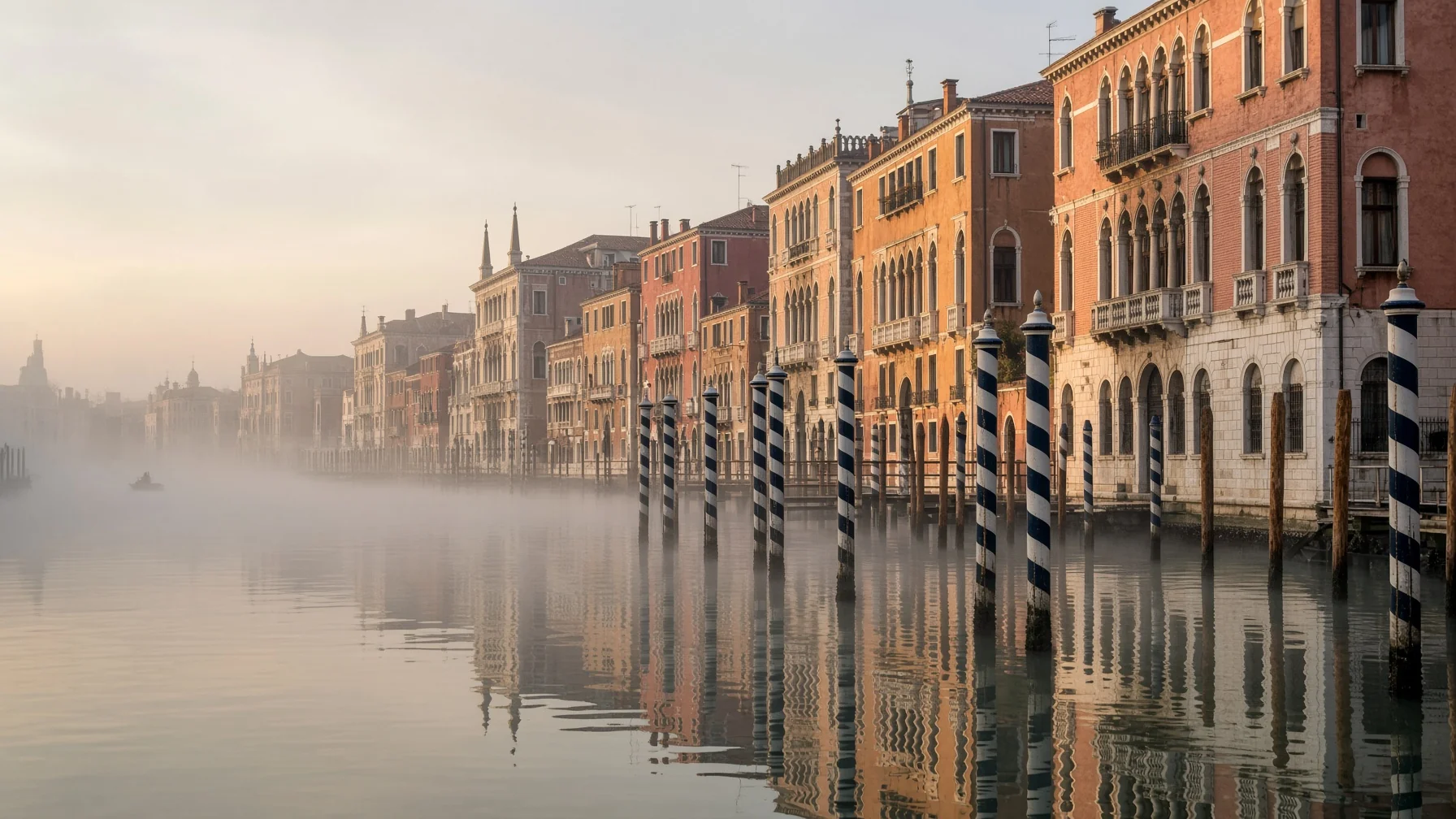
Early morning is the clearest window, and most of the best things to do in Venice sit inside it. Between seven and nine the deliveries are running, the bakeries are open, the canals carry working boats rather than tour craft, and the light comes low across the water with almost nobody in it.
The evening window is longer and easier. From six onward the day crowd has gone, the bridges empty, and the city takes on the quality that its reputation rests on. Dinner at half past eight in a residential sestiere feels like a different destination.
Therefore, the single most effective decision in Venice is to sleep in the city. Day visitors are locked into the middle hours; anyone staying has both ends of the day to themselves.
San Marco at the Right Hour
St Mark’s Basilica is worth the queue it generates, but it should never involve one. Early entries before general opening allow the mosaics to be seen with the floor lights on and the nave largely empty, which is the only condition in which the gold reads as a single surface.
The Pala d’Oro behind the altar and the loggia with the original bronze horses are separately ticketed and frequently skipped. Both reward the extra step, and the loggia offers the square from above at a height nobody else is using.
Next, the Doge’s Palace holds a secret itinerary through the administrative rooms, the chancery and the old prisons, following the internal passages rather than the ceremonial route. It is a smaller, stranger building seen this way, and the groups are limited by design.
Meanwhile, the square itself changes completely after dark. The orchestras stop, the arcades empty, and the basilica facade is lit against a sky that the daytime glare removes. Walking it at eleven at night costs nothing and remains one of the best things to do in Venice.
In contrast, the middle of the day in San Marco is worth avoiding altogether. That is the moment to be in a museum, on the water, or somewhere across the city entirely.
Cannaregio and Dorsoduro: The Sestieri That Stay Residential
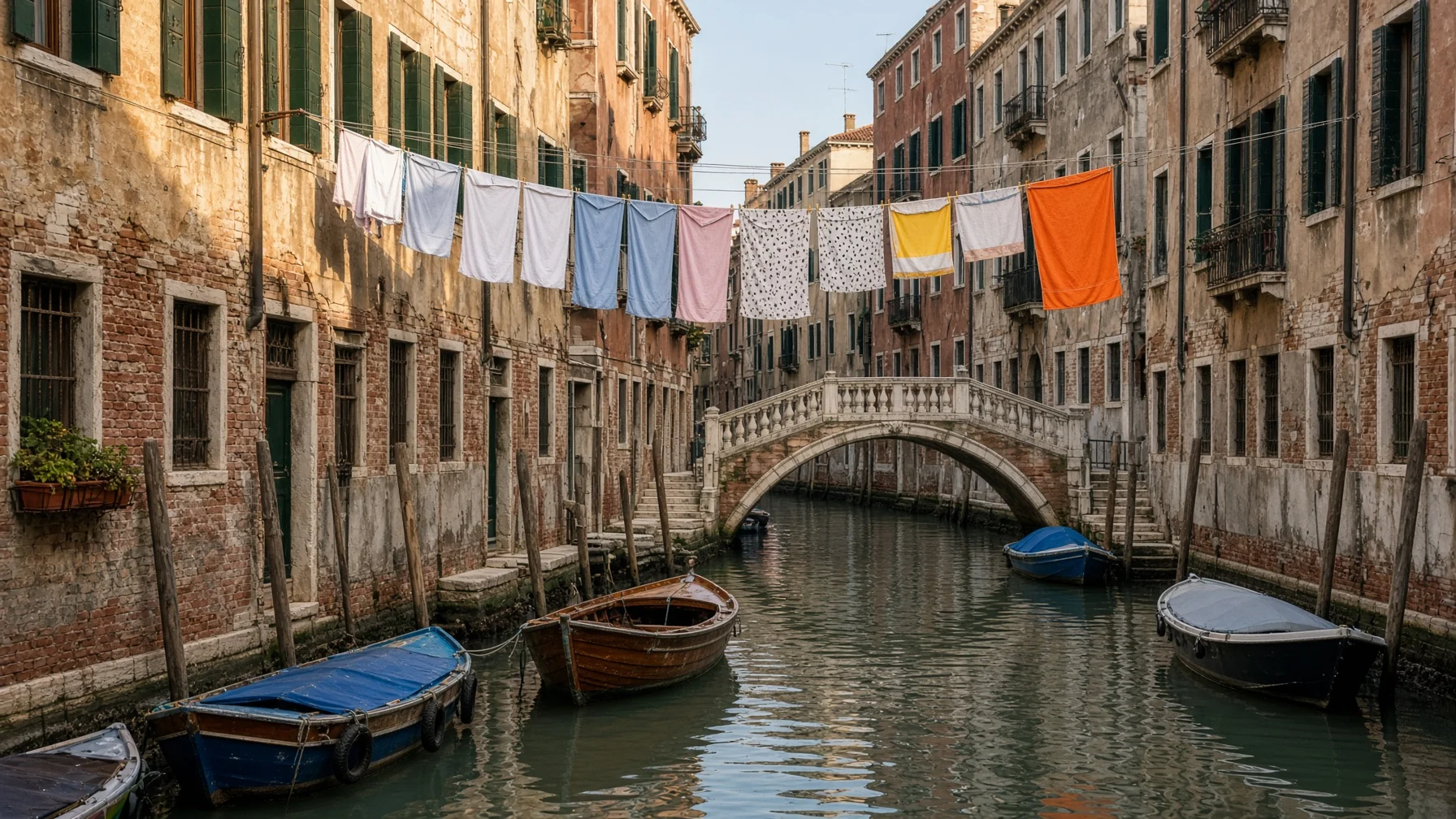
Cannaregio occupies the northern edge of the city and holds most of its remaining residents. The long fondamente along the canals catch the afternoon sun, the bars serve working Venetians, and the Jewish Ghetto at its center is the oldest in Europe and among the quietest corners in the city.
It is also where the bacaro crawl belongs, and few things to do in Venice return more for less effort. Moving between small wine bars for a glass and a cicchetto standing at the counter is the local evening ritual, and in Cannaregio it happens among people who live there rather than as a performance.
Dorsoduro sits across the water with a different character: university students, artisan workshops, and the two collections that make it essential. The Peggy Guggenheim Collection occupies an unfinished palazzo on the Grand Canal, and the Accademia holds the Venetian painters in the city that produced them.
In addition, the Zattere promenade along the southern edge faces the Giudecca canal and catches the full afternoon light. It is one of the few long, straight walks in Venice, and the working ships passing on the channel keep it from feeling curated.
As a result, an itinerary that treats these two sestieri as its base rather than its detour produces an entirely different week. San Marco becomes an early morning errand rather than the center of gravity.
The Lagoon Day: Torcello, Burano and the Water Beyond
The lagoon is the reason the city exists, and it is missing from almost every list of things to do in Venice because most visitors never leave the island. A full day on the water changes the shape of the trip more than any additional church.
Torcello is the essential stop. It was the original settlement, held tens of thousands of people, and is now almost empty grass with a cathedral whose Byzantine mosaics predate anything in San Marco. The Last Judgment across the west wall is the finest work in the lagoon.
Burano nearby is the painted fishing island, best visited in the early morning or the late afternoon when the day boats have gone and the colors are being used as house paint rather than a backdrop.
Beyond those two, the northern lagoon holds abandoned islands, marsh channels navigable only at certain tides, and a fishing tradition still operating. A private boat with a local captain is the only way to see it properly, and it is the rare Venetian experience with no crowd at all.
Finally, the timing depends on the season. Winter brings mist across the water and the clearest air of the year, while the Venice Biennale months fill the city with a different, more dispersed crowd that reaches the outer islands rather less. For heritage context, see https://whc.unesco.org/en/list/394/
Where to Sleep, and Why the Address Changes the City
In a city with no cars, the address is the itinerary, and it quietly determines which things to do in Venice are actually within reach. A hotel on the wrong side of the Grand Canal adds two bridges and fifteen minutes to every movement, and in Venice those minutes accumulate faster than anywhere else.
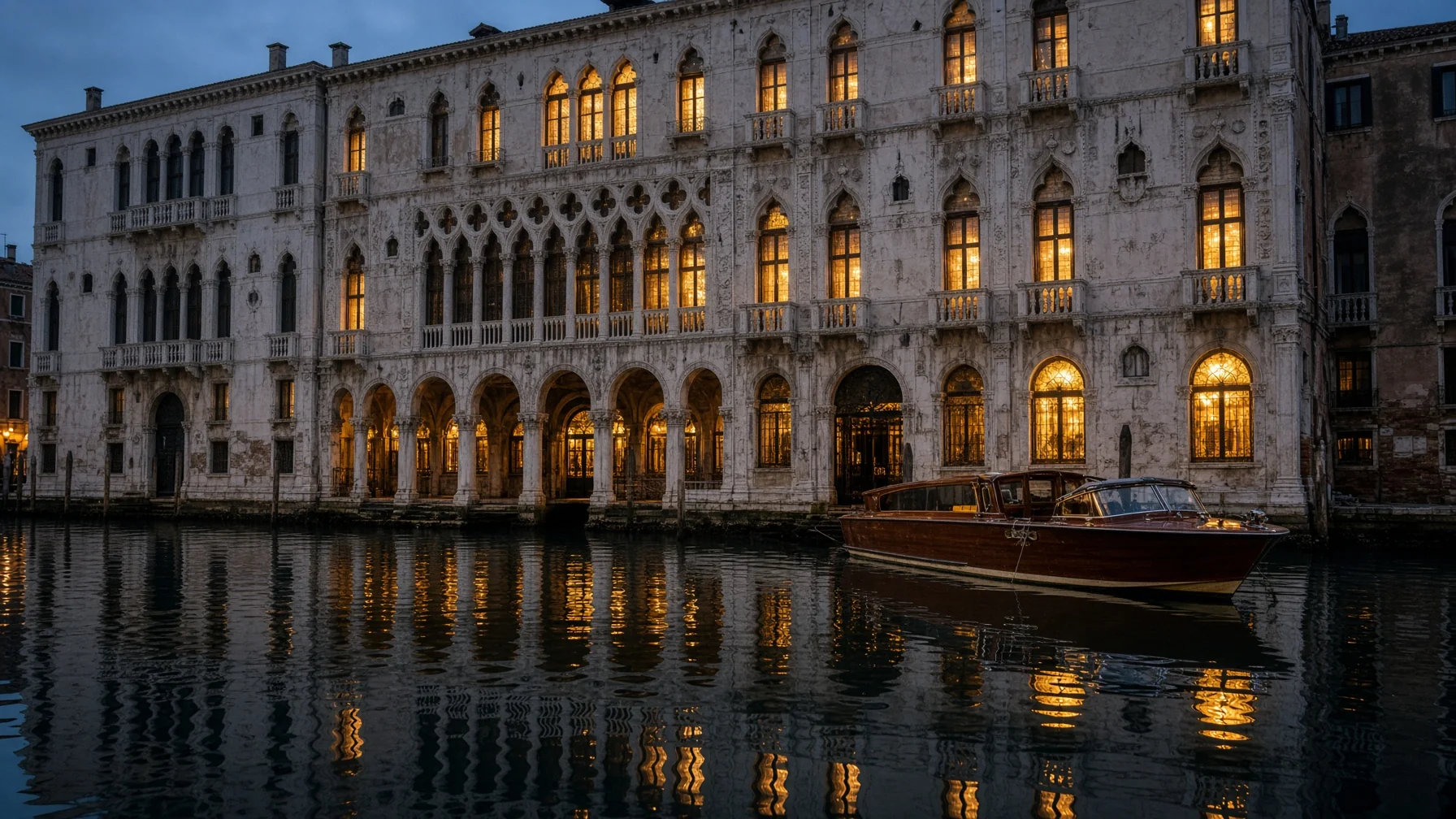
Aman Venice occupies a sixteenth-century palazzo on the Grand Canal in San Polo, with frescoed piano nobile rooms and a private garden, which is close to unheard of on the water. It sits within walking distance of the Rialto while remaining off the main artery.
Gritti Palace takes the opposite position, directly on the canal in San Marco facing the Salute, with the terrace that most defines the Venetian view. The location is central in a way that is convenient in the early morning and busy at midday.
Because of this, the choice comes down to which half of the day matters more. Both properties come with a boat, and arriving by water rather than dragging luggage over bridges is not a luxury but a practical requirement.
Low water, early light, and a city that belongs to whoever stays the night
Signature Experiences
- Before-hours entry to St Mark’s Basilica with the mosaics lit
- Secret itinerary through the Doge’s Palace chancery and prisons
- Loggia view over the square from the bronze horses
- Evening bacaro crawl through Cannaregio
- Byzantine mosaics of the Last Judgment on Torcello
- Early morning landing on Burano before the day boats
- Private boat through the northern lagoon channels
- Modern collection in the unfinished palazzo of the Peggy Guggenheim Collection
- Zattere walk facing the Giudecca in afternoon light
- Artisan workshops in Dorsoduro with the makers
- Water arrival by private launch at Aman Venice
- Canal terrace evenings at the Gritti Palace
Ready for Something Extraordinary?
Venice rewards travelers who stay, start early and sleep in the right sestiere. At Escape Xperts, we hold the first entries, the private boats and the addresses that make the city walkable, combining seamless logistics, private access and curated exploration.
Why Travel to Venice with Escape Xperts
The finest things to do in Venice happen in the hours the day traffic never sees, and in the sestieri it never enters. At Escape Xperts, we plan the city against its own clock, placing travelers on the water early, in the residential quarters by evening, and out in the lagoon on the day everyone else spends in the square.