Suggested stay: Four nights, five with Sintra
Organized by: Hill, not by monument
Country: Portugal
Areas covered: Alfama · Chiado & Bairro Alto · Príncipe Real · Belém · Sintra & Cascais
Things to Do in Lisbon, Read Hill by Hill
Lisbon is built on seven hills above an estuary, and almost every visitor walks it uphill without a plan. The things to do in Lisbon become legible when the city is organized by its slopes rather than by a list of sights scattered across them.
Two of those hills carry the old city, one carries the upper town, and the monumental quarter sits flat on the water six kilometers west. Understanding that geography removes most of the wasted walking from a first week here.
At Escape Xperts, we plan the city by hill and by viewpoint, with the two outlying days, Belém and Sintra, given the time they actually require.
The Hills, and the City Seen From Above
The viewpoints are not a checklist; they are how the city explains itself. Each one sits on a separate hill and shows a different Lisbon.
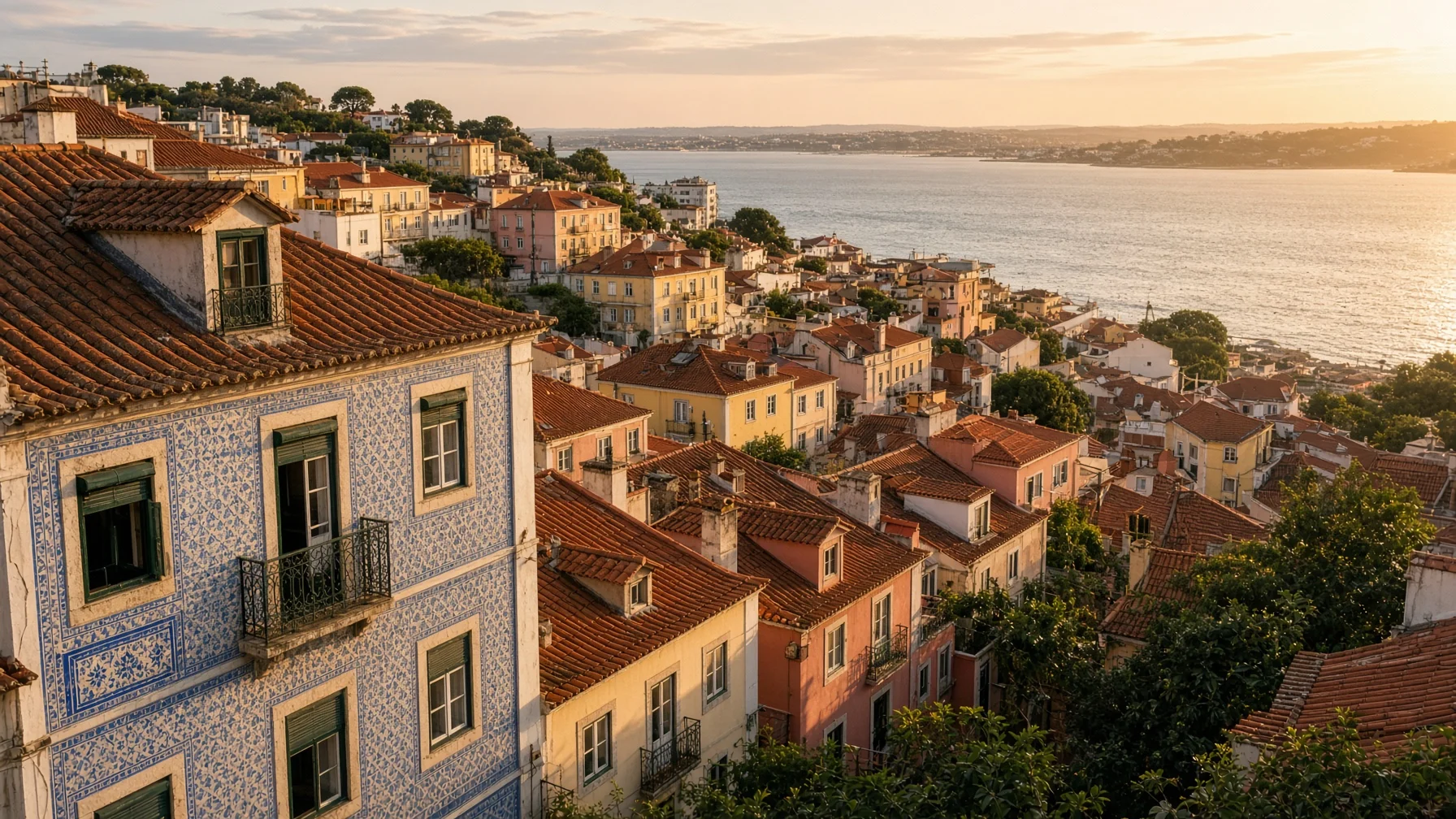
From the terraces above the Graça district the whole eastern city falls away toward the river, with the castle on the opposing ridge and the estuary opening behind it. It is the best first hour of any visit, and it is at its finest in the last light of the day.
Meanwhile, the terrace above the Chiado looks the other way, across the rebuilt lower town to the castle hill, and it has the advantage of a funicular that saves the climb.
Next, the tram routes connect what the legs cannot. The old wooden cars work as transport rather than as a ride, and taking one uphill and walking down is the standard approach among people who live here.
Therefore, altitude is the organizing principle. The things to do in Lisbon arrange themselves cleanly once each day is assigned to a single hill.
Alfama: The City That Survived 1755
Alfama is the oldest quarter and the only substantial part of central Lisbon that survived the earthquake of 1755, because its bedrock held while the lower town collapsed and burned.
Its street plan is Moorish: stepped lanes, blind turns and small squares that open without warning, wrapped around the hill below the castle. It is the one district where a map is less useful than simply descending.
Here, the fado houses matter. The music is a nineteenth-century urban form, sung with two guitars in rooms of thirty people, and the difference between a proper house and a tourist dinner is worth arranging in advance.
In addition, the flea market spreads across the square beside the National Pantheon twice a week, selling genuine domestic clutter alongside the antiques, and it has been doing so for several centuries.
Because of this, Alfama rewards early mornings and late evenings, when the residents are on the street and the tour groups are elsewhere. Few of the things to do in Lisbon change as much with the hour as a walk through this district.
Chiado, Bairro Alto and Príncipe Real: The Upper Town
The upper town is where Lisbon does its shopping, its reading and, increasingly, its eating.
Chiado is the literary quarter, rebuilt after a fire in 1988 by the architect Álvaro Siza, and it holds the oldest bookshop still trading anywhere, in business since 1732, along with the cafés where the city’s writers worked.
Above it, Bairro Alto is a tight eighteenth-century grid that is residential by day and busy at night, while Príncipe Real is the calmest of the three: a garden square with a single vast cedar trained into a canopy, surrounded by nineteenth-century palacetes now holding galleries and independent shops.
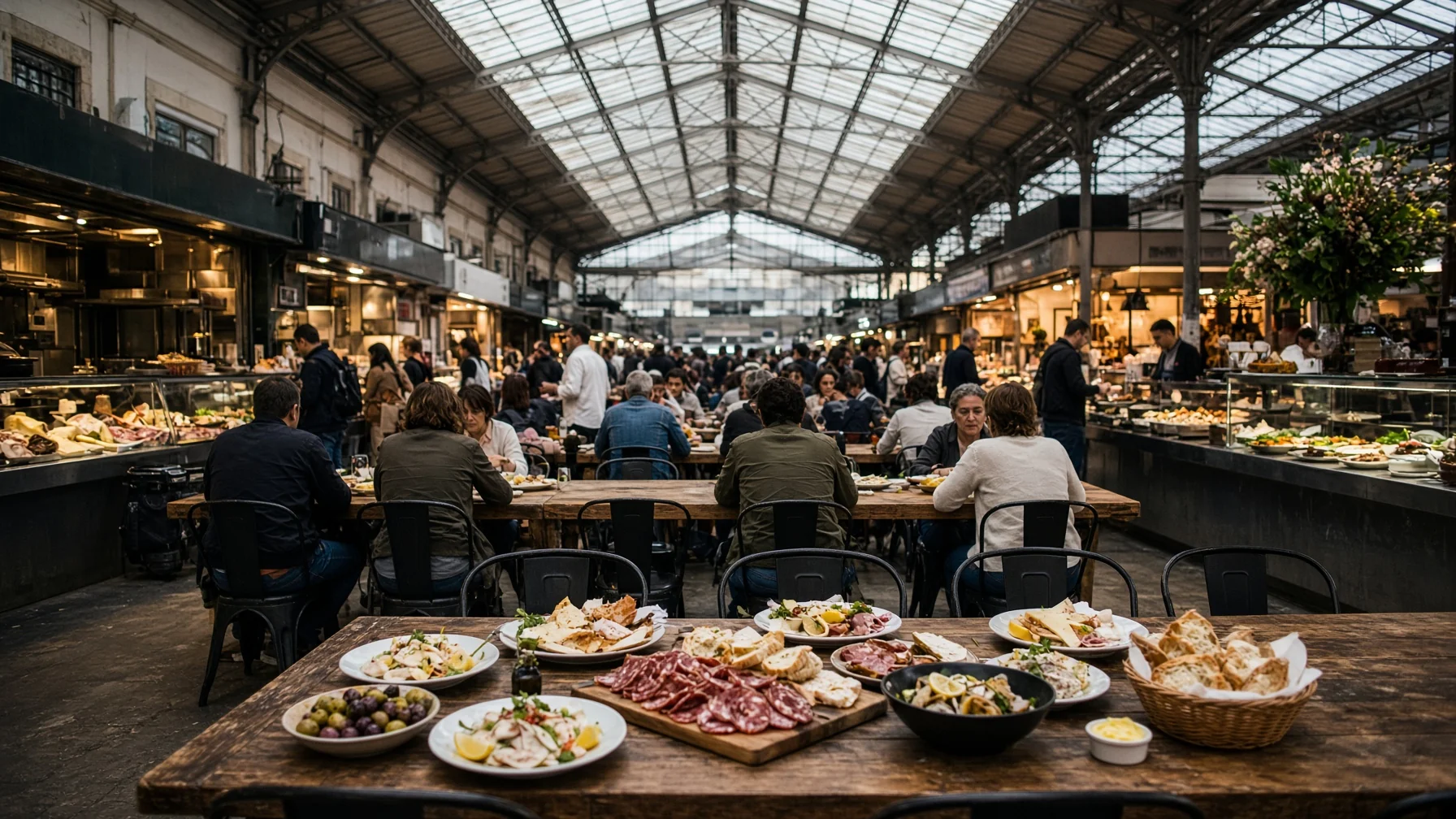
Here, the eating is worth structuring. The Time Out Market in the old riverside market hall gathers the city’s kitchens under one roof, which works well for a first evening, while the neighborhood market at Campo de Ourique does the same thing at a quarter of the scale for a fraction of the crowd.
Meanwhile, the older institutions hold their ground: the tinned fish shops, the century-old pastry counters and the cervejarias where seafood is ordered by weight at the bar.
As a result, this is the part of the city to stay in. Among the things to do in Lisbon, an unplanned evening between these three districts consistently outperforms a booked one.
Belém and the Azulejo Trail
Belém sits on the flat ground where the ships left for India, and it holds the two buildings that define Portuguese Manueline architecture.
The Jerónimos Monastery was funded by the spice trade and its cloister is carved with rope, coral and navigational instruments in stone. The Belém Tower stands in the water a short walk downstream, built as a fortress and a ceremonial gate. Both are UNESCO-listed and both are best at opening.
Next, the azulejos are the cultural thread that runs through everything else. The national tile museum occupies a sixteenth-century convent east of the centre and holds a twenty-three-meter panorama of Lisbon made before the earthquake, which is the only complete image of the city that was lost.
Meanwhile, the Fronteira Palace on the northern edge of the city keeps its seventeenth-century tiled gardens intact, with battle scenes and allegories covering the walls of the terraces and the water tank.
Therefore, the tiles are not decoration but documentation, and a half day between those two locations gives the city a depth the monuments alone do not. Among the things to do in Lisbon, the tile trail is the most consistently skipped and the most rewarding.
Sintra and Cascais: The Full Day, Done Properly

Sintra is treated as a stop and is a full day at minimum. The hills hold their own microclimate, cooler and wetter than the coast, which is why the Portuguese court summered here and why the forest is subtropical.
The logistics decide the experience. Pena Palace issues timed entry, private traffic on the hill roads is restricted, and the queues at the gate build sharply by mid-morning. The first entry slot of the day, reached before the coaches, is worth the early start.
Beyond Pena, the estate of Quinta da Regaleira holds the initiation well, a spiral stair descending nine levels underground, and Monserrate sits further along the ridge with the best gardens and the fewest visitors.
Meanwhile, Cascais completes the day. It lies on the coast below Sintra, a former fishing town turned royal resort, and the road back into Lisbon follows the estuary the whole way, which makes the return the best drive of the trip. Of all the things to do in Lisbon outside the city itself, this pairing is the one worth a full day.
Finally, both are reachable by train, and the coastal line is the more pleasant of the two. For official regional information, see https://www.visitportugal.com
Stepped lanes above the river, tiled walls that record a lost city, and a hill that keeps its own weather
Signature Experiences
- Last light from the terraces above the eastern hills
- Stepped lanes and blind turns through Alfama
- Fado in a thirty-seat room with two guitars
- The twice-weekly flea market beside the Pantheon
- The world’s oldest operating bookshop in Chiado
- Evening in the eighteenth-century grid of Bairro Alto
- The cedar canopy and palacetes of Príncipe Real
- Counter dinner under the iron roof of the Time Out Market
- Carved cloister of the Jerónimos Monastery at opening
- The river fortress of the Belém Tower
- The pre-earthquake panorama among the azulejos of the tile museum
- First entry to Pena Palace before the coaches reach Sintra
- The estuary road back from Cascais
Let’s Design Your Experience
Lisbon is a city where the order of the day decides how much of it is seen. At Escape Xperts, we assign each day to a hill and hold the early entries that make the outlying sites work, combining seamless logistics, private guiding and curated exploration.
Why Travel to Lisbon with Escape Xperts
Lisbon is walkable in theory and vertical in practice, and most visitors spend their week climbing between sights that could have been grouped. At Escape Xperts, we structure the city by its hills and its viewpoints and give Belém and Sintra the days they need, which is what makes the best things to do in Lisbon reachable rather than theoretical.