Ideal stay: Three nights, not a single stopover
Getting around: By river, from hotel pier to temple pier
Country: Thailand
Region: Rattanakosin · Thonburi · Yaowarat · Bang Krachao
Things to Do in Bangkok Along the River That Built It
The most rewarding things to do in Bangkok gather along one line: the Chao Phraya river. The royal temples, the old Chinese quarter, the canal districts of the western bank and the city’s historic hotels all face the water, and the river remains the most graceful way to move between them.
Many journeys treat Bangkok as a single night between an international flight and the next connection. Seen from an airport hotel or a traffic jam, the capital appears exhausting.
At EscapeXperts, we plan Bangkok as a stay of three nights organized around the river. This approach turns the city from a transit point into a destination of temples, craftsmanship and one of the most accomplished food cultures in Asia.
Things to Do in Bangkok Begin on the Chao Phraya
The river was the reason the capital was founded here, and it still defines the historic city. Palaces, monasteries and trading houses were built to be approached by water, so arriving by boat restores the intended view.
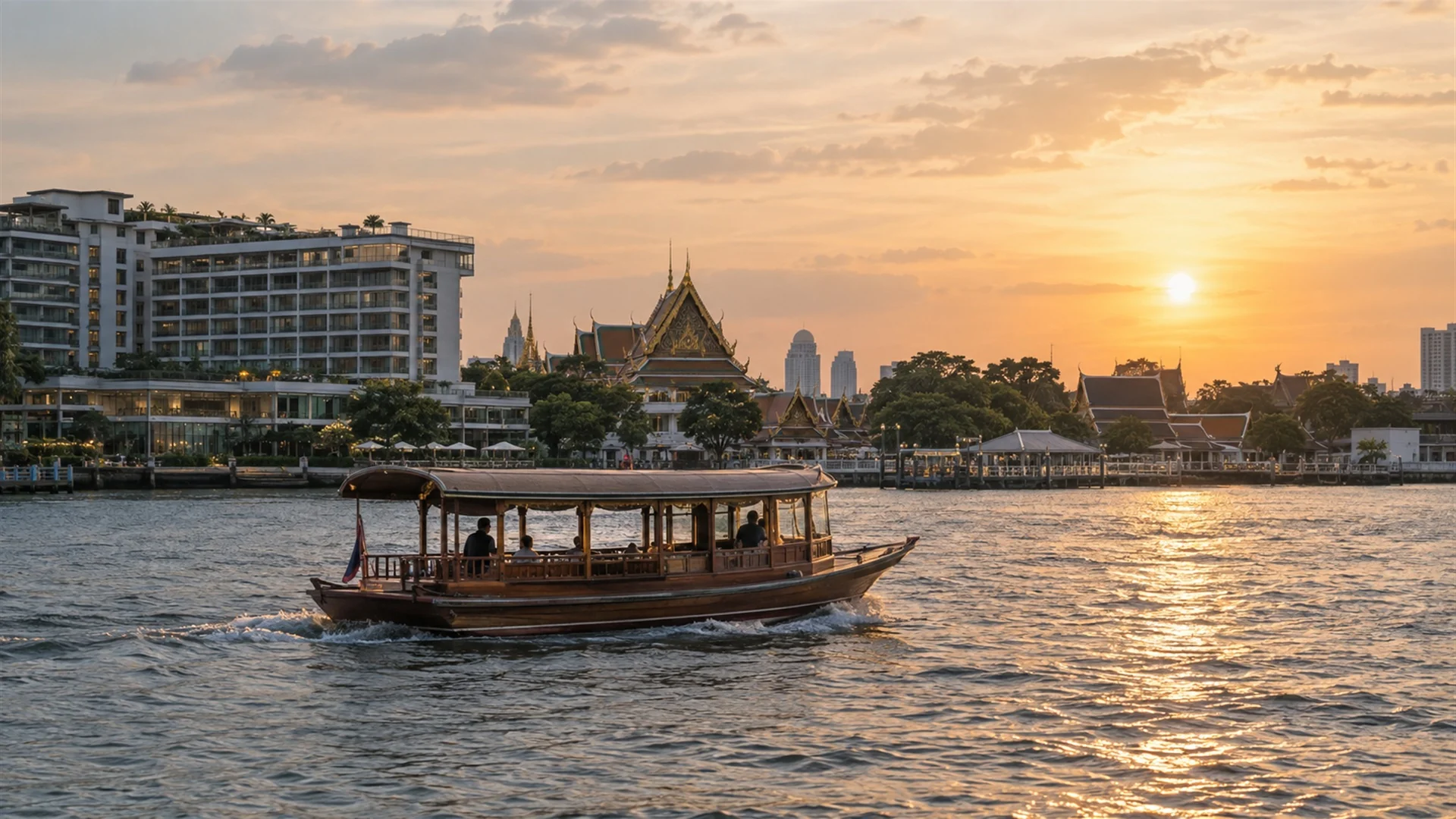
Two riverside hotels anchor the experience. The Mandarin Oriental Bangkok, which opened in 1876, sits on the eastern bank, while The Peninsula Bangkok faces it from the western shore. Both run their own boats across the river.
From their piers, the public express boats and private long-tail craft reach the temple district in minutes. As a result, a morning at the Grand Palace begins with a quiet crossing instead of an hour on the road.
This is the logic behind the most refined things to do in Bangkok: choose a riverside base, and the city arranges itself along the water.
The Grand Palace and Wat Pho, Timed for the Morning
The Grand Palace was founded in 1782, when the capital moved across the river to the island of Rattanakosin. Its courtyards hold the royal halls and the temple of the Emerald Buddha, the most revered image in the country.
Timing matters here more than anywhere else in the city. The palace is busiest from mid-morning, when tour groups arrive together, so the first hour after opening is the calmest time to visit. Shoulders and knees must be covered, and a private guide makes sense of the murals, the throne halls and the rituals that are still performed here.
Next, a short walk south leads to Wat Pho, home of the great gilded reclining Buddha. The monastery is also a historic center of traditional Thai medicine and massage, and its quieter rear courtyards reward an unhurried hour.
Because the two sites sit side by side, they form a single morning that ends before the heat of the afternoon. For many travelers, these remain the essential things to do in Bangkok.
Wat Arun, Thonburi and the Khlongs
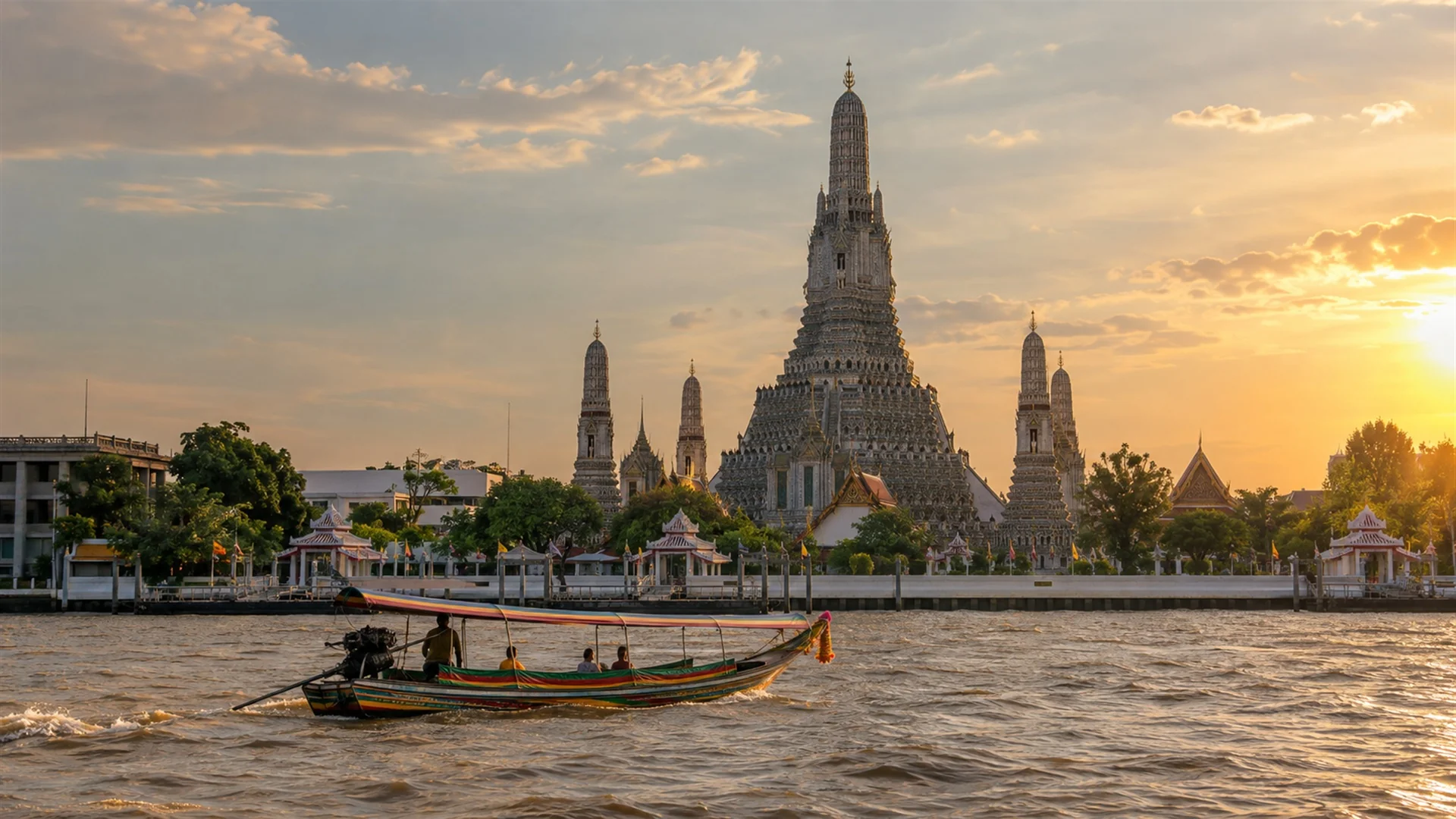
Across the water stands Wat Arun, the Temple of Dawn. Its central spire is covered in fragments of porcelain and ceramic, which catch the light across the river from the pier beside Wat Pho.
Most visitors see the temple only from a passing boat. In contrast, a visit in the late afternoon, followed by the view from the eastern bank as the light fades, shows the monument at both scales: detailed up close, sculptural from afar.
Beyond the temple lies Thonburi, the briefly held capital before Bangkok. Its khlongs, the old canals, still thread between wooden houses, small temples and family workshops. A private long-tail boat through these waterways reveals a residential city that few visitors see.
Therefore, the western bank adds what the royal district cannot: daily life along the water that once shaped the entire capital. Mornings are best, when the canal-side homes are opening and the light on the water is soft.
Chinatown Yaowarat and the Continuum of the Table
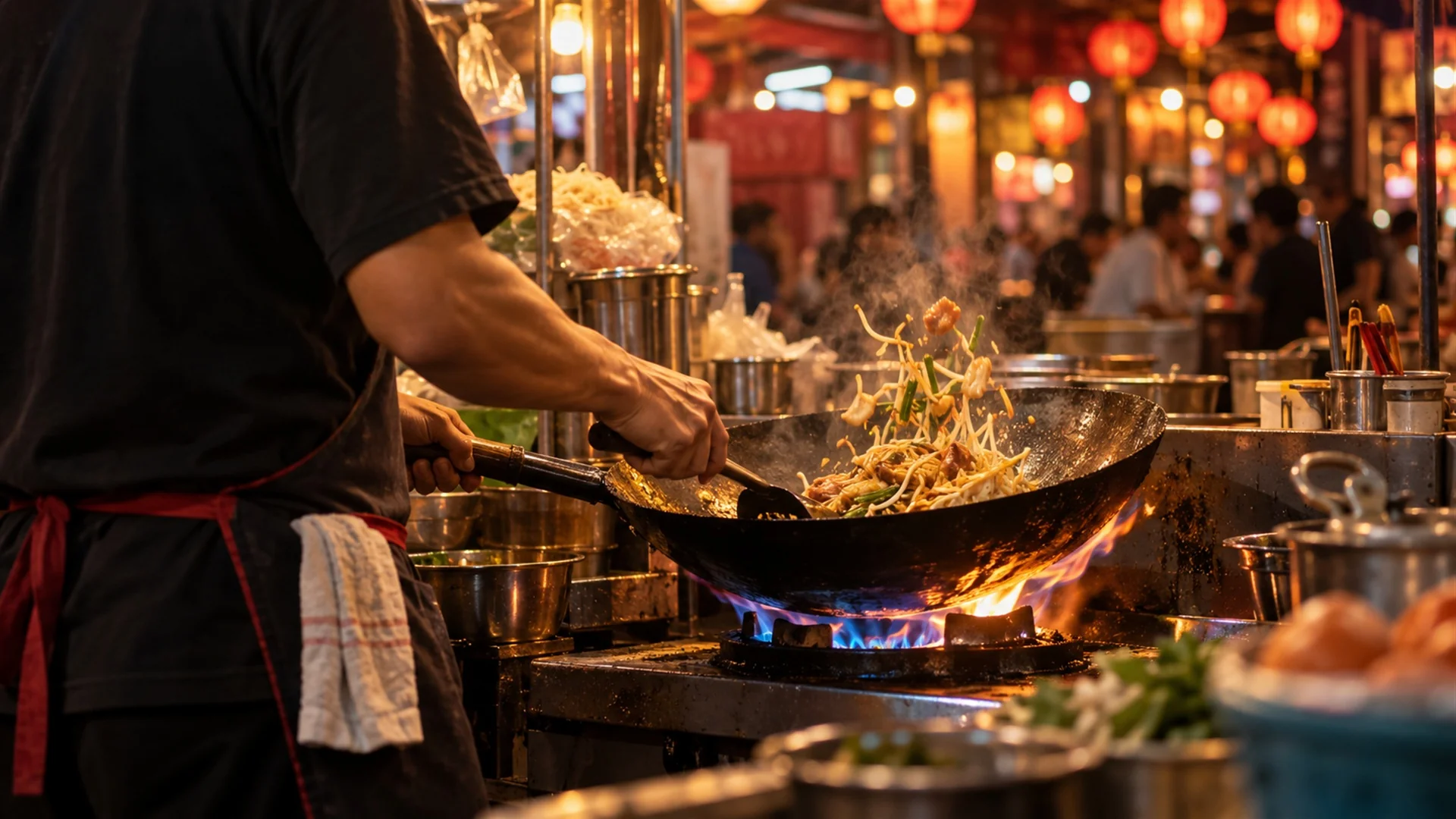
A little downstream, Chinatown Yaowarat gathers gold shops, herbal pharmacies and temples along narrow lanes. After dark, the main road fills with cooks working over charcoal and wok flame. By day, the lanes behind it reveal Chinese shrines, tea merchants and shophouses that have traded for generations.
Here, street food and fine dining belong to the same tradition. The Bangkok edition of the MICHELIN Guide recognizes street stalls alongside tasting-menu restaurants, and some of the city’s most celebrated cooks still work at a single open burner.
Meanwhile, the city’s contemporary kitchens draw on the same ingredients: river prawns, curry pastes pounded by hand, fermented sauces and herbs from the central plains. A refined dinner and a plate from a Yaowarat stall speak the same culinary language.
Because of this, we treat Bangkok’s food as one continuum. A guided evening walk through Chinatown, followed by a tasting menu the next night, shows how closely the two are connected. Few things to do in Bangkok explain the city as clearly as its table.
Jim Thompson House and Bangkok’s Craft Heritage
Away from the river, the Jim Thompson House sits beside a canal in the modern center. The American silk entrepreneur assembled several traditional teak houses here after the Second World War, filling them with Southeast Asian art and antiques.
Thompson is credited with helping revive the Thai silk industry, and his disappearance in Malaysia in 1967 remains unexplained. The house, now a museum, offers a calm and intimate view of historic Thai architecture.
In addition, the visit connects naturally with the city’s craft traditions, from silk weaving to lacquerware and bronze casting, which are best explored with a specialist guide.
Because the house lies inland, we pair it with an afternoon in the modern center rather than with the temple district. This keeps each day focused on one part of the city, which is the quiet principle behind well-planned things to do in Bangkok.
Bang Krachao, the Green Loop Across the Water
Finally, a broad bend of the river encloses Bang Krachao, a green district of orchards, mangroves and elevated cycle paths. It is often described as the city’s green lung, and it feels far from the traffic of the center.
A short boat crossing leads to quiet lanes, a botanical park and small community markets. A morning of cycling here balances the density of the temple district, and local guides can arrange visits to small family enterprises working with coconut, herbs and orchard fruit.
For couples staying three nights, this is one of the most unexpected things to do in Bangkok, and it confirms the river as the thread that holds the whole city together.
For seasonal timing, we cover Thailand’s calendar separately in our guide to the best time to visit the country. For official visitor information, see https://www.tourismthailand.org
Gilded temples, river light, and a table that runs from the street to the tasting menu
Signature Experiences
- Private boat crossings on the Chao Phraya
- An early morning visit to the Grand Palace
- Quiet courtyards and the reclining Buddha at Wat Pho
- Late afternoon light on the spire of Wat Arun
- Long-tail journeys through the khlongs of Thonburi
- A guided evening of street food in Yaowarat
- Tasting menus rooted in Thai ingredients and technique
- Teak houses and Asian art at the Jim Thompson House
- Morning cycling through the orchards of Bang Krachao
- A riverside stay at the Mandarin Oriental Bangkok or The Peninsula Bangkok
Ready for Something Extraordinary?
Bangkok deserves more than a night between flights. At EscapeXperts, we design stays that follow the river, combining seamless logistics, private experiences and curated exploration of the temples, the canals and the city’s remarkable table.
Why Travel to Bangkok with EscapeXperts
Bangkok reveals itself to travelers who approach it from the water. At EscapeXperts, we choose the riverside hotel, time the temples around the crowds and arrange the boats, guides and tables that make the city legible. The result is a stay built on the things to do in Bangkok that justify three nights rather than one.