Best months (north and Rajasthan): October to March
Best months (Kerala and the Western Ghats): June to September, and again after the rains
Best months (Himalaya and Ladakh): June to September
Regions covered: Northern plains · Rajasthan · Kerala · Goa · Western Ghats · Himalaya
Best Time to Visit India: Three Calendars, Not One
The best time to visit India depends on the region. The north and Rajasthan are at their finest from October to March, the Himalaya and Ladakh open from June to September, and Kerala and the Western Ghats come alive during the southwest monsoon. India has no single season; it has three calendars running at once.
Most advice reduces the country to its winter window. That rule is sound for Delhi, Agra and the desert cities, yet it quietly dismisses the months when the south is greenest and the mountains are open.
At EscapeXperts, we time India by latitude and altitude. This guide separates the three calendars, places the major festivals within them and explains why the monsoon deserves a second look.
The Best Time to Visit India’s North: October to March
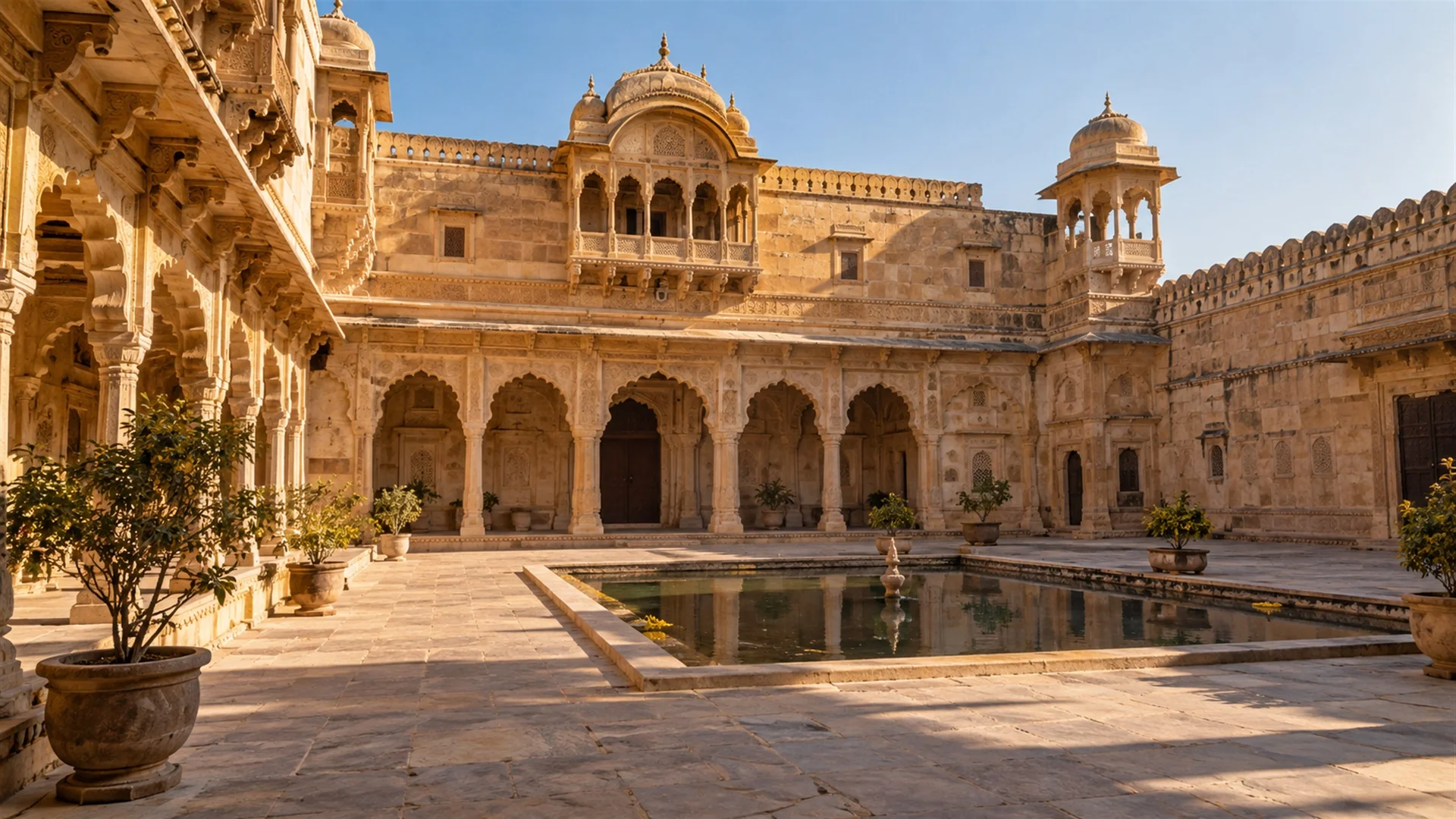
From October, the heat breaks across the northern plains. Days in Rajasthan turn warm and bright, nights in the desert grow cool, and the light over the forts and palaces becomes clear and low.
December and January are the heart of the season. Mornings in Delhi and Agra can open under fog, and nights in the desert approach freezing, so layers matter as much as linen. In contrast, February and early March bring warmer days with the same dependable skies.
Because of this, the winter window remains the best time to visit India for a first journey through the north. It is also the busiest period, and the finest palace hotels fill early for the Christmas and New Year weeks.
The shoulder months deserve attention. October, as the rains withdraw, leaves the countryside green and the skies washed clean, while March holds the last of the pleasant weather before the heat. As a result, both months offer a refined balance of climate and calm within the best time to visit India for the north.
From April, the plains heat quickly. By May, temperatures in much of the north can exceed 40°C, and journeys shift either to the mountains or to later in the year.
The Southwest Monsoon and the Case for Kerala
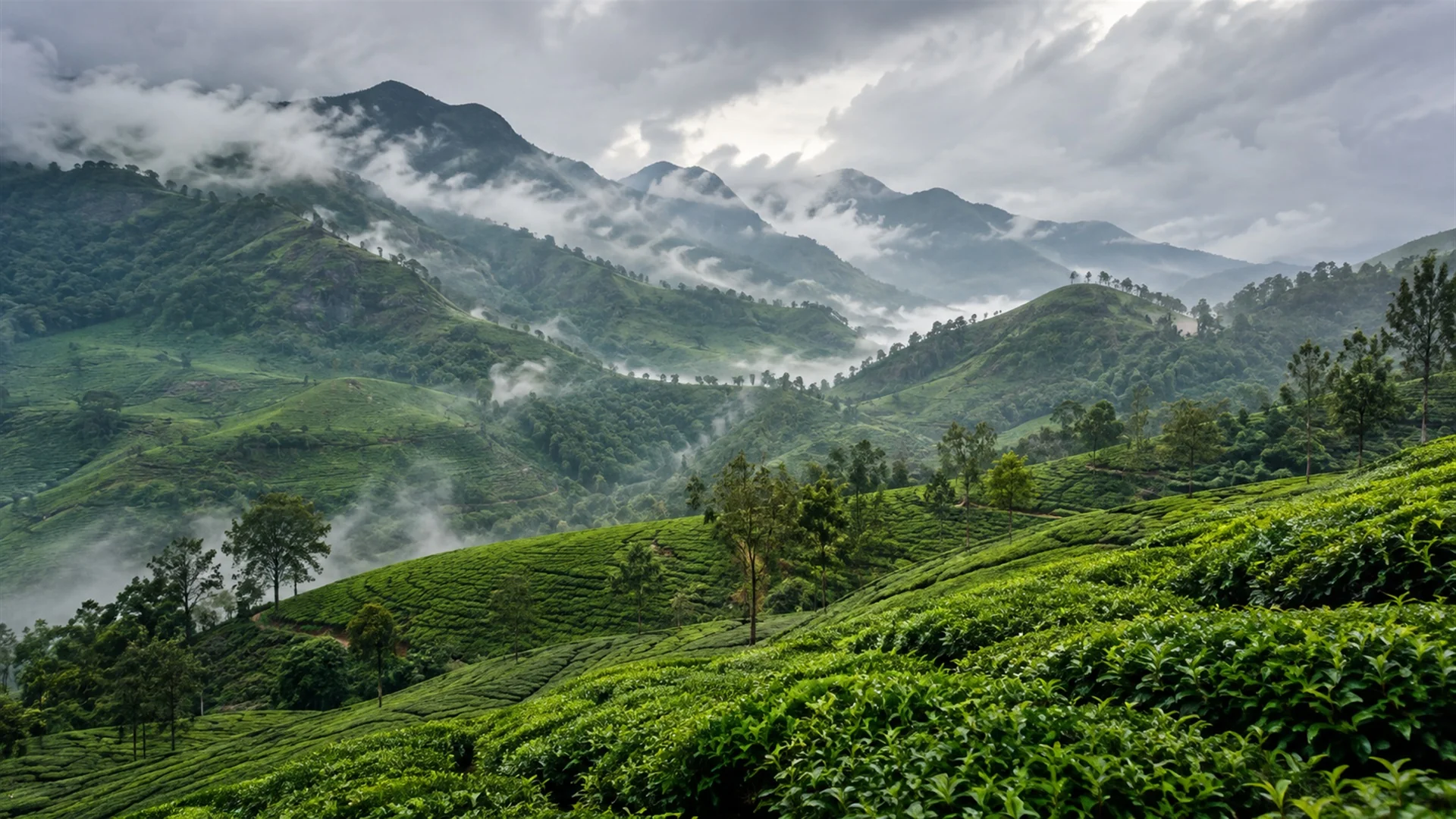
The southwest monsoon reaches the coast of Kerala around the start of June and spreads north over the following weeks. It is usually described as a reason to stay away. For the south, it is closer to the opposite.
Rain in Kerala tends to arrive in heavy bursts rather than constant downpours, often followed by clear spells. The Western Ghats turn a deep green, waterfalls return to the hill country around Munnar and the backwaters run full. UNESCO describes the range as one of the finest examples of the monsoon system on the planet.
In addition, the monsoon has long been regarded in Kerala as the traditional season for Ayurveda, when the cool, humid air is thought to suit treatment. Many of the region’s most respected retreats build their programs around these months.
Some flexibility is still required. Heavy days can slow road journeys in the hills, and the sea along the coast is too rough for boating. Because of this, monsoon routes in the south are best designed around fewer bases, longer stays and experiences that welcome the rain rather than resist it.
Meanwhile, visitor numbers fall and the landscape is at its most generous. Therefore, for travelers drawn to the south, the monsoon can be the best time to visit India, precisely when the consensus advises against it.
After the Rains: Goa and the Southern Coast
The coast behaves differently. Goa and the beaches of the west are shaped by rough seas during the monsoon, and many beach venues close until the season turns.
From November, the sea settles, the skies clear and the southern coast enters its most comfortable months. As a result, the post-monsoon period suits a beach extension to a northern journey, with warm water and green hinterland still fresh from the rains.
The southeast follows a separate rhythm. The coast of Tamil Nadu receives much of its rain from the northeast monsoon, later in the year, so a journey that crosses the south benefits from careful sequencing.
For a beach stay, then, the months after the rains are the best time to visit India on the coast, when the sea is calm and the countryside still green.
This is where the calendars begin to overlap. A winter route can join Rajasthan to the southern coast, while a monsoon route can pair Kerala with the Himalaya.
The Himalaya and Ladakh in Summer
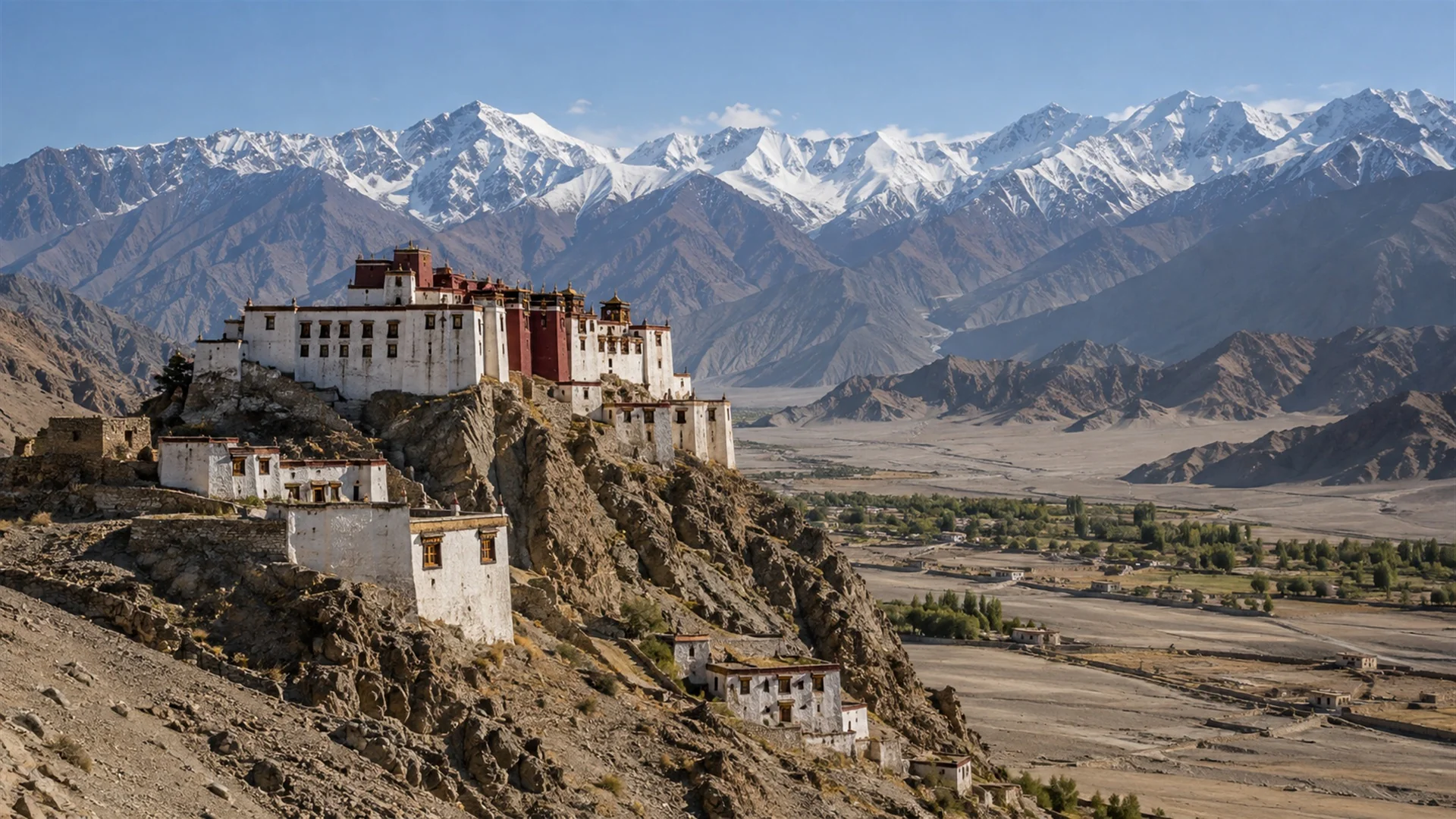
While the plains swelter, the Himalaya open. Ladakh, high on the Tibetan plateau, lies largely in the rain shadow of the main range, so its summer months are dry and bright while much of India receives the monsoon.
June to September is the season here. Mountain roads open, monasteries hold their summer festivals and the high valleys are at their most accessible. The festival at Hemis, one of the best known, falls in early summer, its dates also set by the lunar calendar. Later, from October, the cold returns quickly and the passes begin to close.
Because of this, summer is the best time to visit India for travelers drawn to altitude. It also pairs naturally with the south: a week in Ladakh and a week in Kerala in the same month offer two contrasting landscapes under two different skies.
Acclimatization is essential. Leh sits at high altitude, and the first days are best kept slow before any excursion into the higher valleys.
Festivals, and a Note on Northern Air
Holi, Diwali and the fair at Pushkar follow the lunar calendar, so their dates move each year. Holi usually falls in March, Diwali in October or November, and the Pushkar fair around the full moon of the same autumn season. Dates should be confirmed for each specific year.
Each festival transforms the experience. Holi fills the streets with color, Diwali lights the cities, and Pushkar gathers traders and camels at the edge of the desert. Because of this, the finest rooms around each date are reserved many months ahead.
One caution belongs here. From late October into the winter, air quality in Delhi and across the northern plains often deteriorates, as seasonal burning, festival fireworks and still winter air combine. It is a real consideration, not a reason to avoid the north.
Therefore, many of our northern journeys spend fewer nights in the capital during those weeks and more time in Rajasthan, where conditions are generally clearer. For monsoon context, see https://whc.unesco.org/en/list/1342/
Desert light, monsoon green, and mountain skies
Signature Experiences
- Clear winter mornings over the forts of Rajasthan
- Monsoon Ayurveda in the green hills of Kerala
- Waterfalls and tea estates of the Western Ghats
- Full backwaters beneath monsoon skies near Alleppey
- Summer monastery festivals across Ladakh
- A post-monsoon beach extension in Goa
- Diwali evenings in the lit cities of the north
- Camel traders at the autumn fair in Pushkar
- Warm February days in Delhi and Agra
Ready for Something Extraordinary?
India rewards travelers who plan around its calendars rather than against them. At EscapeXperts, we align each region with its season, combining seamless logistics, private experiences and curated exploration so that every chapter of the journey arrives in its best weeks.
Why Travel to India with EscapeXperts
India is not one climate but several, and a journey that crosses desert, coast and mountain must reconcile them. At EscapeXperts, we read those calendars together, choosing the order of regions, the right weeks for each and the festivals worth the planning. The result is a clear answer to the best time to visit India for the journey you actually want to take.