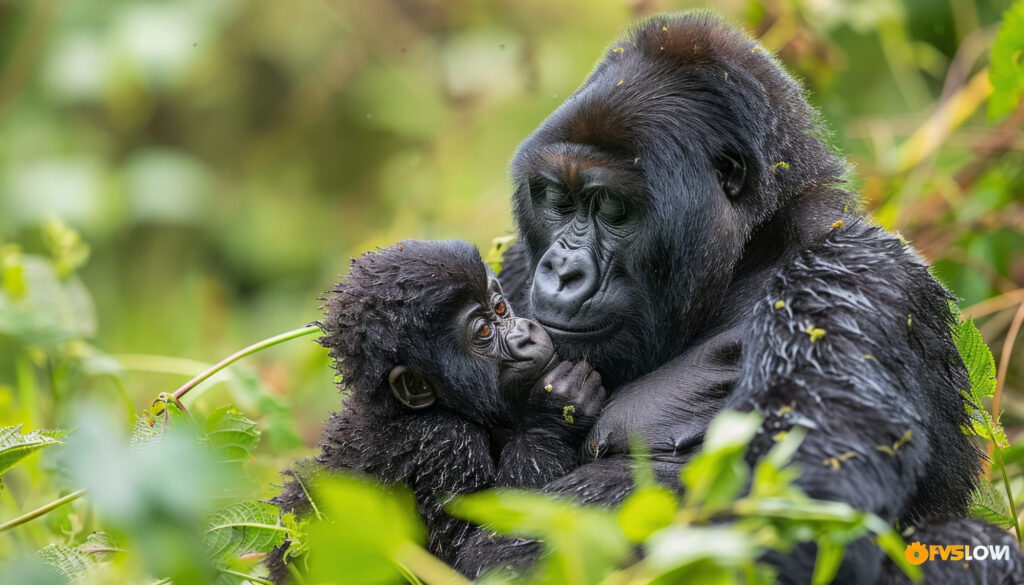
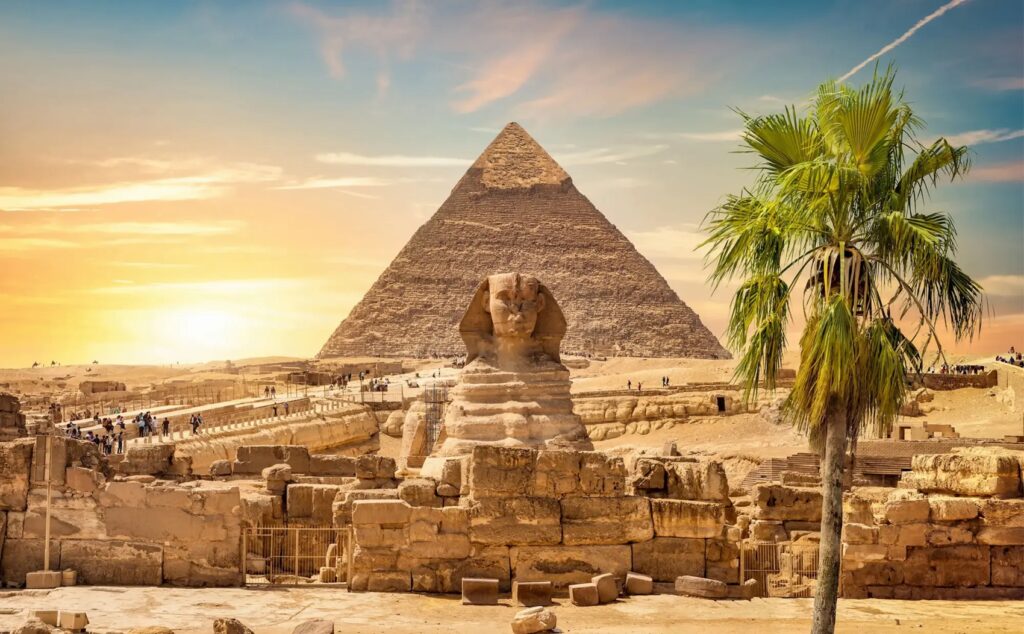
The Five: Lion · Leopard · Rhinoceros · Elephant · Cape Buffalo
Best parks: Sabi Sands · Masai Mara · Ngorongoro · Chobe · Ol Pejeta
Best for: First-time and returning safari travelers who want to see all five
The Big Five Safari: What They Are and Where to See Them
A big five safari remains the defining ambition of African travel — lion, leopard, rhino, elephant and buffalo, the five animals that colonial hunters once considered the most dangerous to pursue on foot. Today the term has been reclaimed by conservation and tourism, and seeing all five in the wild is less about luck than about choosing the right park, the right season and the right guide.
At Escape Xperts, we approach the big five safari not as a checklist but as a design problem — matching each animal to the destination where it is most reliably and beautifully encountered, then connecting those destinations into a single coherent journey.
Lion: The Open Plains Predator
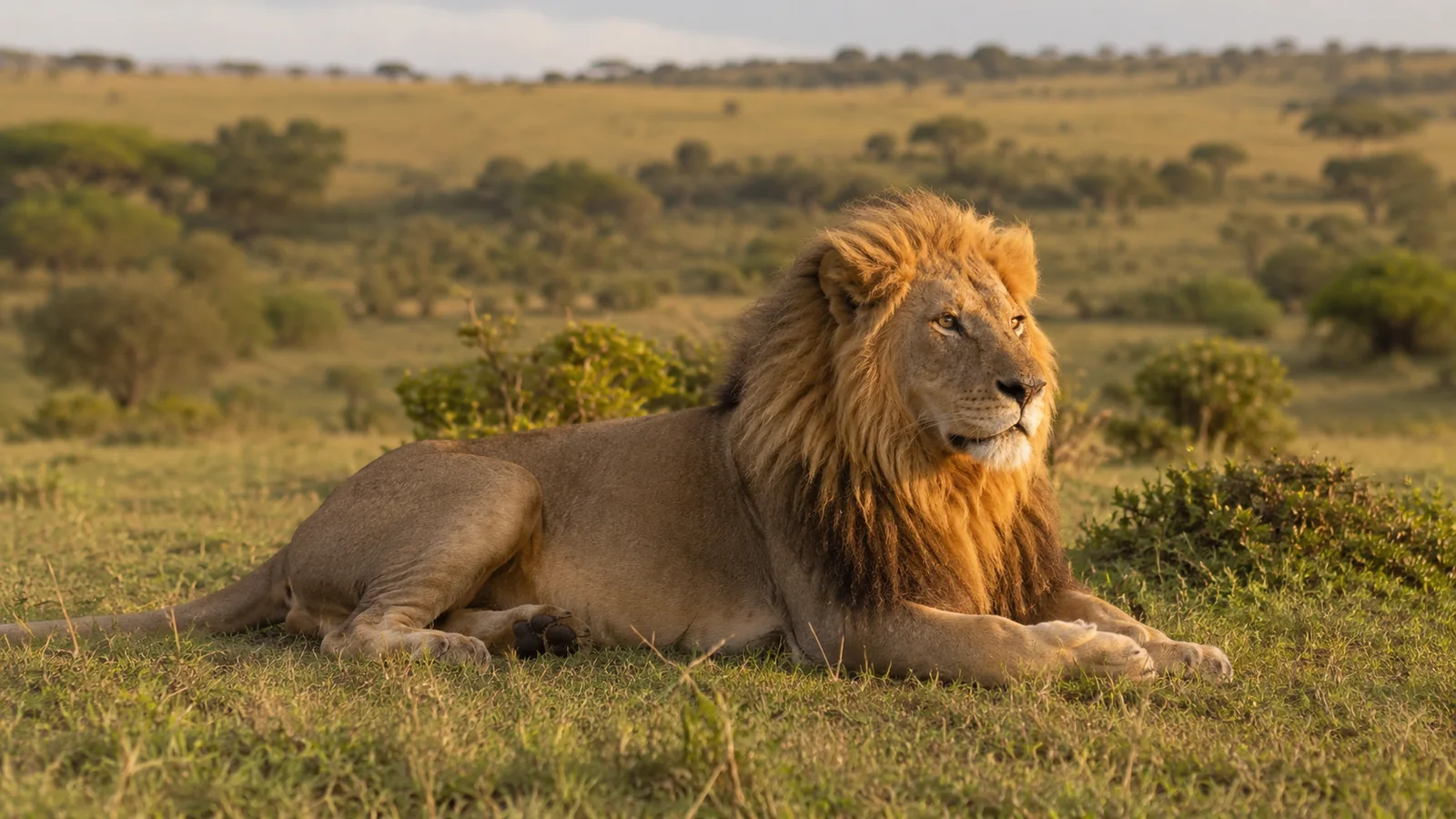
The lion is the most visible of the Big Five — a social predator that hunts in open grassland and rests in plain sight. The best parks for lion sightings are those with large, unfenced territories and healthy prey populations.
The Masai Mara in Kenya holds one of Africa’s densest lion populations, particularly during the Great Migration when the herds draw predators to the river crossings. The Ngorongoro Crater in Tanzania concentrates lions on its crater floor, making sightings almost certain. In Southern Africa, the Sabi Sands private reserve and the greater Kruger ecosystem deliver consistently high encounter rates, often with prides habituated to vehicles.
Because of this, the lion is usually the first of the five to be ticked — the question is not whether you will see one, but how close and in what light.
Leopard: The Elusive Master of Sabi Sands
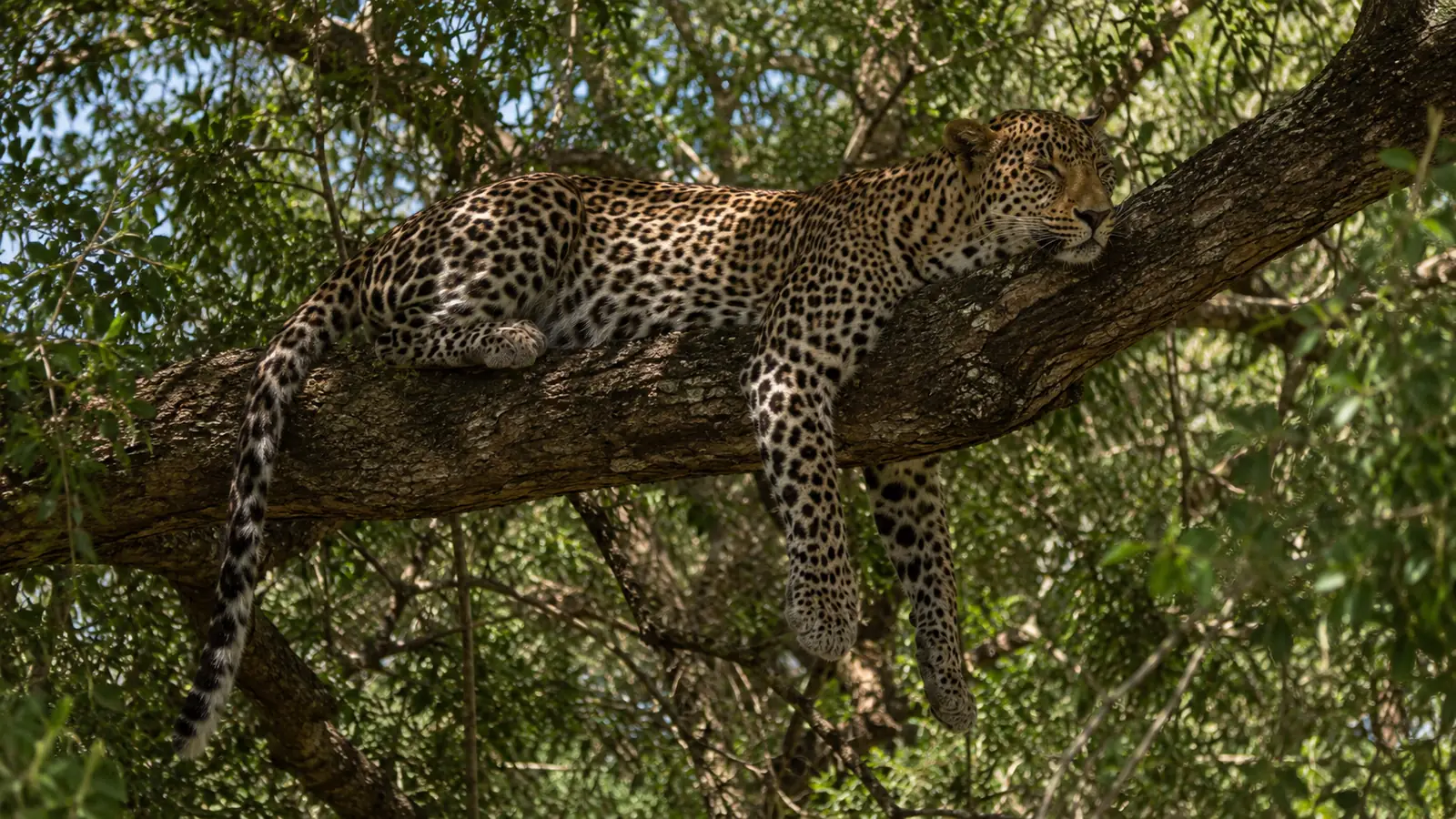
The leopard is the hardest of the Big Five to find in most parks — solitary, nocturnal and superbly camouflaged. However, one reserve has turned leopard sightings from rare to reliable: Sabi Sands, adjoining Kruger National Park in South Africa.
The leopards of Sabi Sands have been tracked and habituated over decades. The guides know individual animals by name, and the combination of open traversing rights, experienced trackers and night drives means that a three-night stay offers a very high probability of a quality leopard encounter — often in a tree, often at close range, often in exceptional light.
In addition, the Mara and the Serengeti hold leopard populations, but sightings depend more on luck. For travelers whose big five safari hinges on the leopard, Sabi Sands is the answer.
Rhinoceros: Conservation’s Frontline
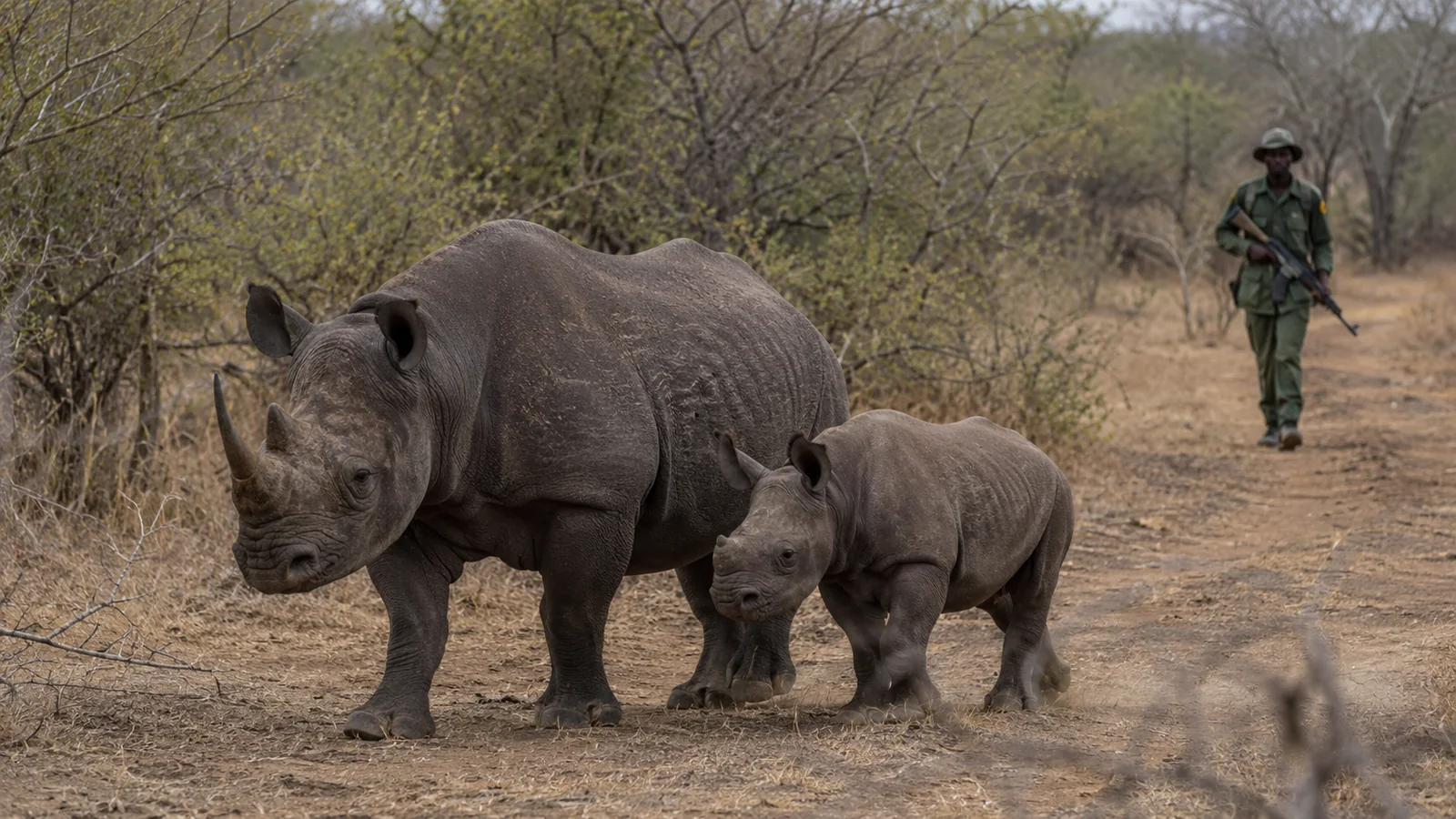
The rhino is the most threatened of the Big Five — poaching has reduced populations dramatically, and seeing one in the wild now requires visiting parks with active, well-funded protection programmes. The species splits into two: white rhino (grazer, more numerous) and black rhino (browser, critically endangered).
For white rhino, the best options are South Africa’s Kruger ecosystem and the private reserves of KwaZulu-Natal. For black rhino, Ol Pejeta Conservancy in Kenya holds the largest population in East Africa, with dedicated rhino tracking experiences and armed ranger escorts. Ngorongoro Crater also supports a small but visible black rhino population on the crater floor.
As a result, rhino sightings on a big five safari are increasingly a statement about conservation — visiting the parks that protect them directly funds the anti-poaching units that keep them alive. Therefore, the rhino encounter carries a weight that the other four do not.
Elephant: The Giant of Amboseli and Chobe
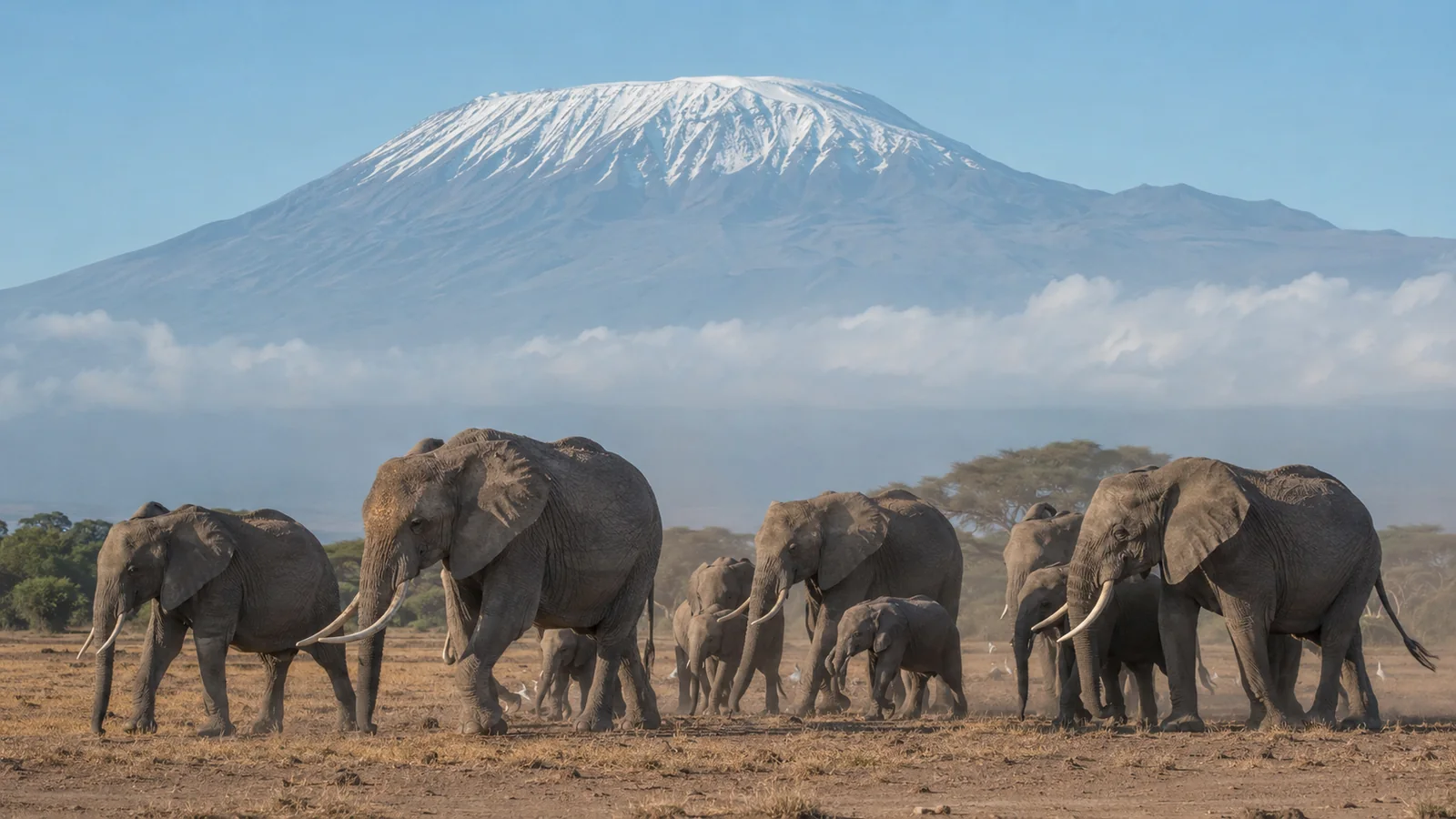
The elephant is Africa’s largest land animal and the easiest of the Big Five to see in numbers — the challenge is seeing them in a setting that matches their scale. Two parks define the elephant experience.
Amboseli in Kenya places elephant herds against the backdrop of Mount Kilimanjaro — one of the most photographed wildlife scenes on the continent. The matriarch-led families here are among the most studied in Africa, and the open, arid landscape allows sustained observation from a distance that feels respectful.
Meanwhile, Chobe National Park in Botswana holds Africa’s largest elephant population — an estimated 120,000 animals that gather along the Chobe River during the dry season. Boat safaris here offer a perspective unlike any game drive: elephants swimming, bathing and crossing the river at sunset.
In addition, the Serengeti, the Mara and Kruger all support large elephant populations, so the elephant is rarely the bottleneck in a big five safari. It is, however, the animal most likely to leave a lasting impression.
Cape Buffalo: The Understated Fifth
The buffalo is the most overlooked of the Big Five — large herds are common across most major parks, and they rarely generate the excitement of a lion or leopard sighting. However, the buffalo is considered by many guides to be the most dangerous of the five when encountered on foot — unpredictable, powerful and with a reputation for charging without warning.
Buffalo herds are best observed in parks with large open plains: the Serengeti, the Mara, Kruger and Chobe all deliver reliable sightings. Old bulls — the so-called dagga boys — are often found alone near waterholes, caked in mud, with a presence that commands quiet respect.
Therefore, the buffalo completes the big five safari not as a spectacle but as a reminder of the wildness that gives these five animals their collective name.
Five animals, five destinations, one journey designed around the encounters that matter
Signature Experiences
- Lion pride at a Mara River crossing during the Great Migration
- Leopard in a marula tree at dusk in Sabi Sands
- Black rhino tracking with rangers at Ol Pejeta
- Elephant herd beneath Kilimanjaro in Amboseli
- Buffalo herd crossing the Serengeti plains at golden hour
- Boat safari past bathing elephants on the Chobe River
- Ngorongoro Crater floor — all five in a single day
- Night game drive for nocturnal predators in Sabi Sands
- Walking safari among buffalo and elephant in Kruger
- Conservation briefing at a rhino protection programme
Ready to Begin the Journey?
The Big Five safari is not a matter of luck — it is a matter of design. The right parks, the right seasons and the right guides turn five iconic animals into five defining encounters. At Escape Xperts, we build Big Five journeys across countries and ecosystems, connecting the lion plains, the leopard thickets and the rhino conservancies into a single, seamless itinerary.
Why Plan a Big Five Safari with Escape Xperts
A big five safari is Africa’s signature wildlife experience — lion, leopard, rhino, elephant and buffalo across the parks and conservancies where each is best encountered. At Escape Xperts, we match each animal to its strongest destination, connect the dots with seamless transfers and build the journey around conservation, access and the light that makes every sighting unforgettable. For park information, see https://www.sanparks.org/parks/kruger