Duration: 8 days
Best months: October to April
Country: Egypt
Region: Luxor · Esna · Edfu · Kom Ombo · Aswan · Philae
A Nile Dahabiya Cruise from Luxor to Aswan by Sail
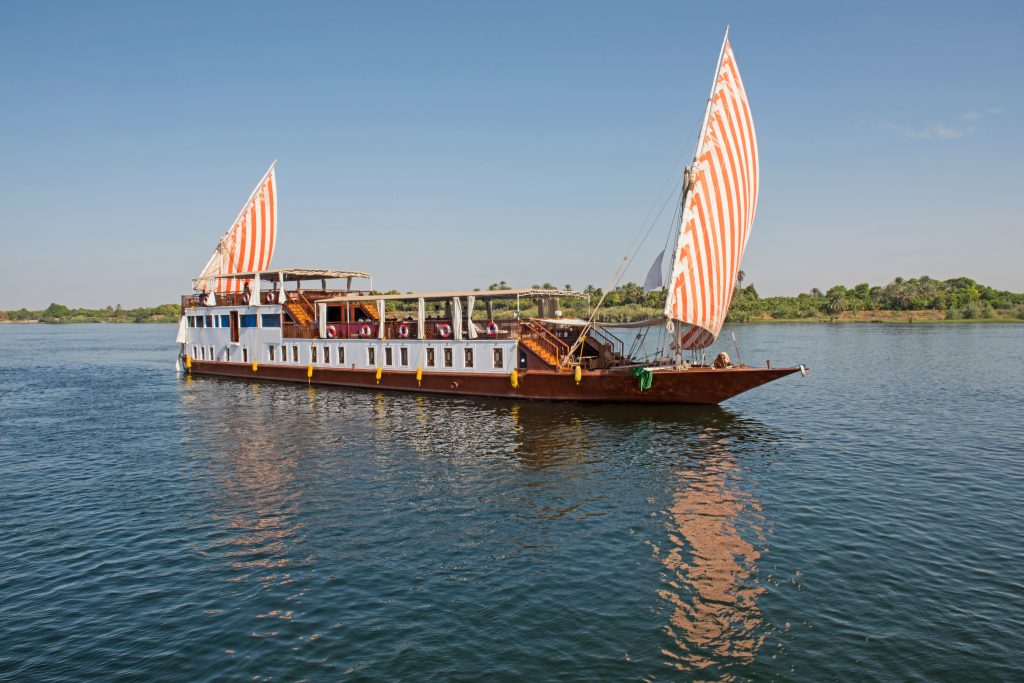
This nile dahabiya cruise follows the ancient river from Luxor to Aswan aboard a traditional sailing vessel carrying 8 to 12 cabins — a category entirely distinct from the motor cruise ships that carry 100 or more passengers on the same route. The dahabiya moves under sail and current, stopping at riverbank sites that larger boats cannot reach.
The Nile between Luxor and Aswan passes through one of the densest concentrations of ancient heritage on Earth. Luxor alone — ancient Thebes — is a UNESCO World Heritage Site encompassing Karnak, the Valley of the Kings, and the Temple of Hatshepsut. As a result, this nile dahabiya cruise unfolds as an archaeological corridor experienced at a pace that the river itself determines. https://whc.unesco.org/en/list/87
Luxor and the Eastern Bank
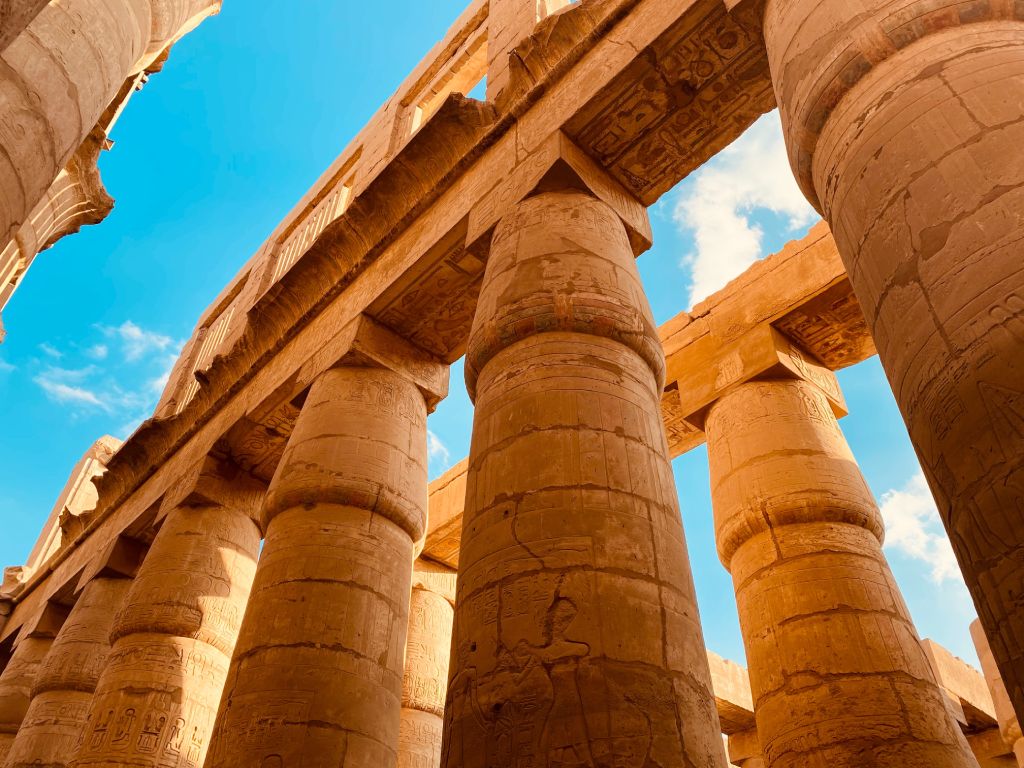
The journey begins in Luxor, where Karnak Temple — the largest religious complex ever built — and the Valley of the Kings establish the archaeological scale of the voyage. Private guided visits allow access before the motor cruise groups arrive.
From the start, the nile dahabiya cruise uses timing as a tool. The dahabiya’s smaller passenger count means temple visits happen at quieter hours, and the guides can adjust the pace to the travelers rather than to a fixed schedule.
Esna and the Lock Passage
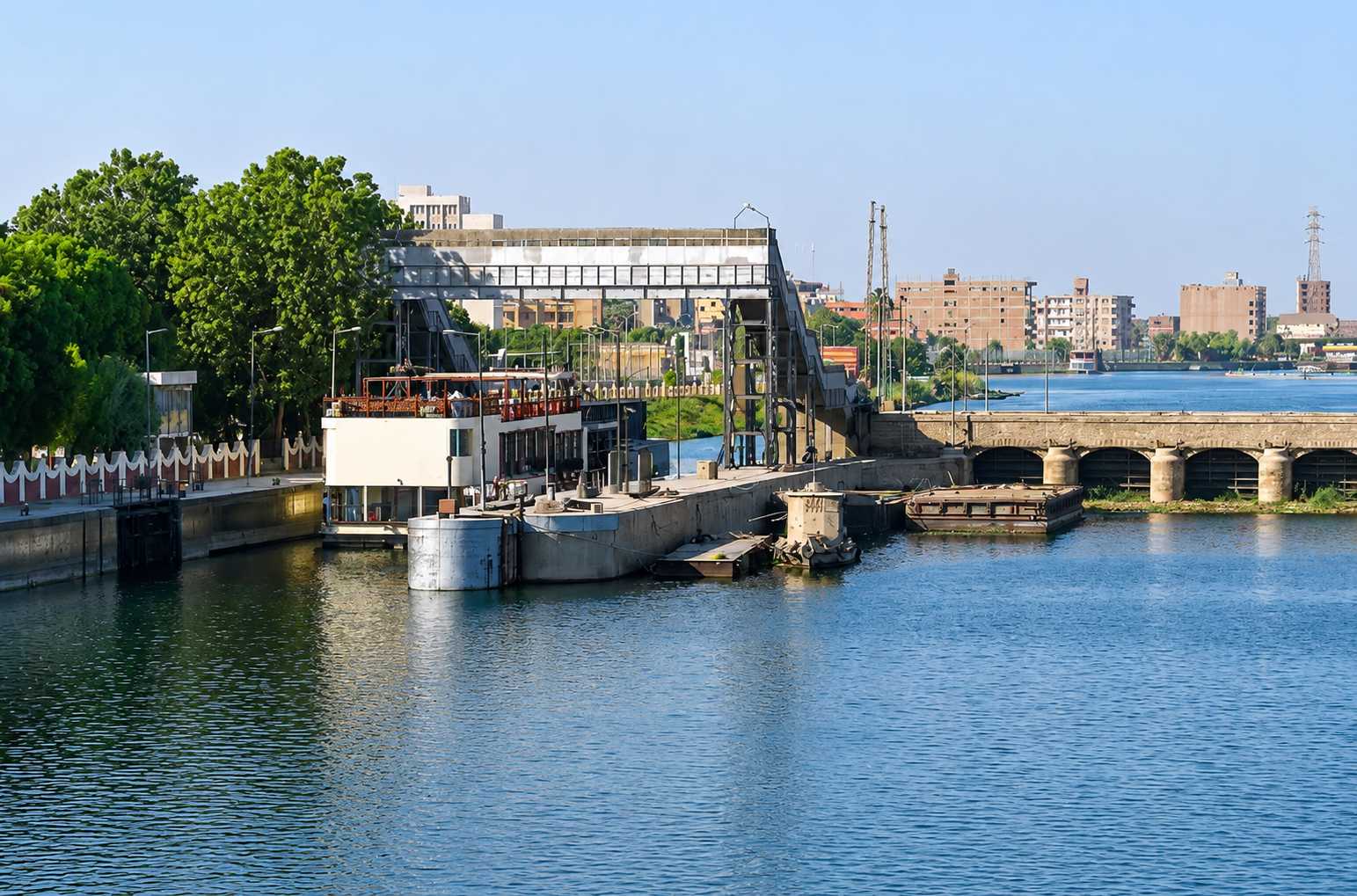
The ship passes through the Esna lock — a navigational threshold that separates the upper and lower Nile. The Temple of Khnum at Esna, dedicated to the ram-headed creator god, is a compact site that motor cruises often skip due to scheduling pressure.
Meanwhile, the dahabiya may anchor along the riverbank between Esna and Edfu, allowing swimming in the Nile, walking to riverside villages, or simply observing agricultural life from the deck. Because of this flexibility, the Esna stage reveals the rhythms of the Nile that scheduled cruises miss.
Edfu and the Temple of Horus
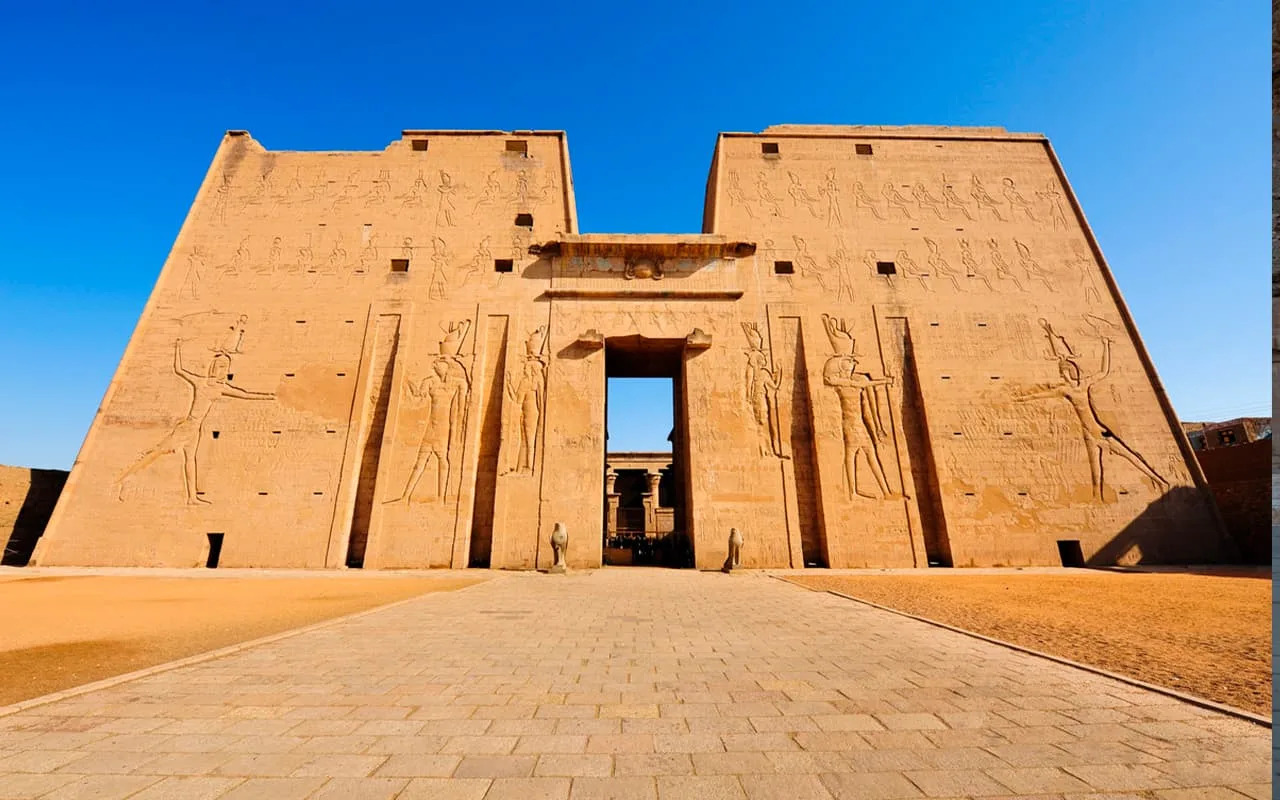
Next, the route reaches Edfu, home to the Temple of Horus — the best-preserved Ptolemaic temple in Egypt. The falcon-headed god’s sanctuary remains intact, with ceiling paintings, hieroglyphic inscriptions, and architectural proportions that convey the full scale of Greco-Egyptian religious construction.
In addition, the approach to Edfu by dahabiya places the temple in its riverine context — visible from the water before the landing, exactly as travelers have experienced it since the 19th century. This stage deepens the nile dahabiya cruise with its most architecturally complete encounter.
Kom Ombo and the Dual Temple
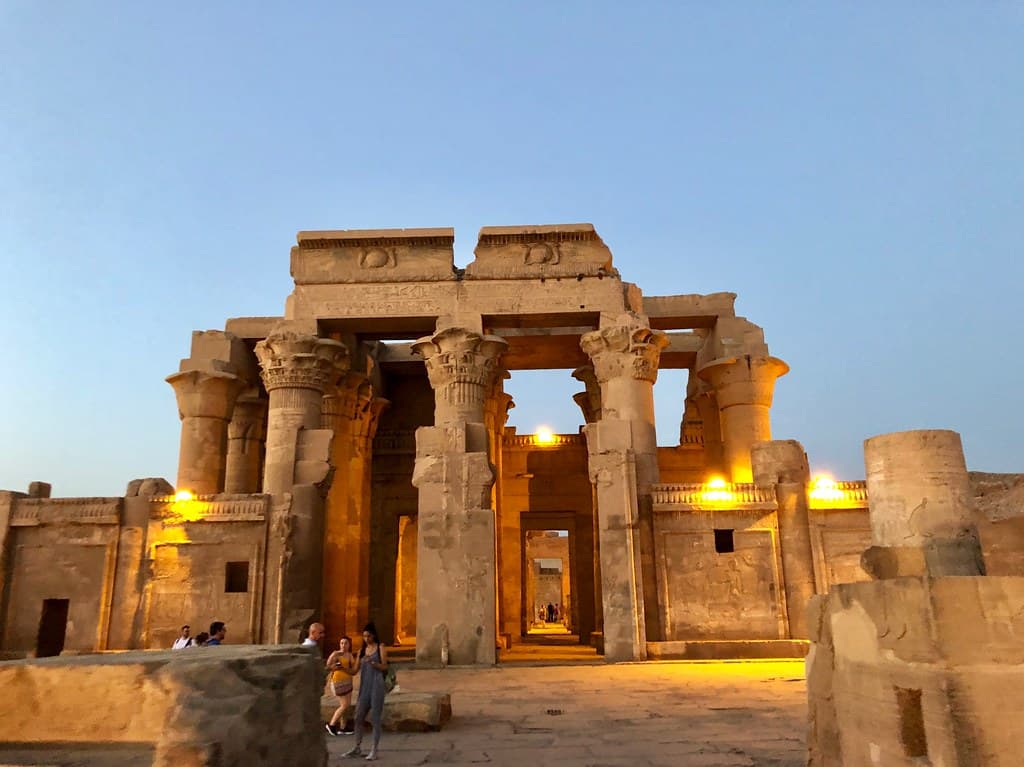
The ship continues south to Kom Ombo, where a dual temple dedicated to Sobek (the crocodile god) and Horus the Elder stands on an elevated riverbank. The temple’s position directly above the Nile makes the approach by water one of the most photogenic moments of the voyage.
Therefore, Kom Ombo is where the nile dahabiya cruise reveals the relationship between temple placement and the river — a deliberate ancient alignment that motor cruise passengers, arriving by road, rarely appreciate.
Aswan and Philae
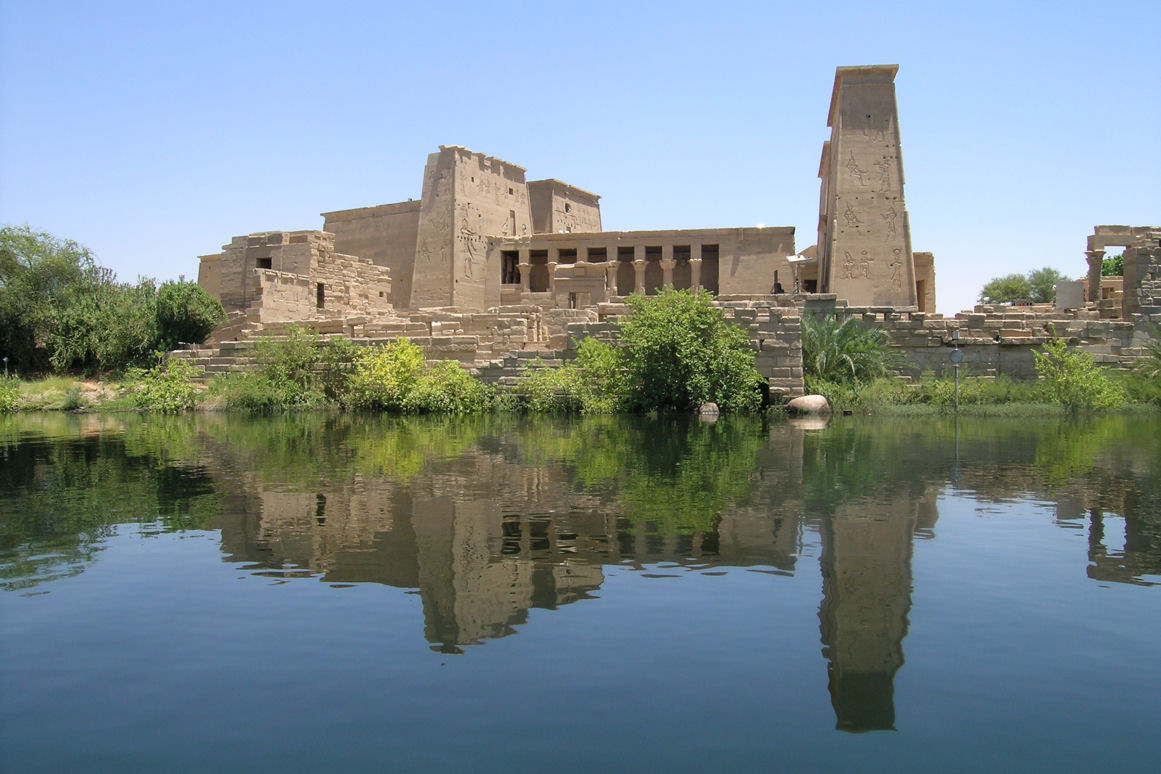
The final stage arrives at Aswan, where the Nile narrows between granite formations and Nubian villages painted in vivid colors. A felucca crossing reaches Philae Temple on Agilkia Island — the Temple of Isis, rescued from flooding and reassembled stone by stone during the UNESCO salvage campaign.
Because of this closing encounter, the nile dahabiya cruise ends where ancient Egypt meets modern preservation — a fitting conclusion to a voyage that traveled the river as it was meant to be traveled: slowly, under sail, and with the current.
Ancient temples, Nile current, and the silence between the banks
Signature Experiences
- Private early-morning visits to Karnak Temple and the Valley of the Kings
- Sailing the Nile under wind power aboard a traditional dahabiya
- Anchoring at riverbank villages inaccessible to motor cruise ships
- Passing through the Esna lock and visiting the Temple of Khnum
- Exploring the Temple of Horus at Edfu in its full Ptolemaic preservation
- Approaching Kom Ombo by water with the dual temple on the elevated bank
- Walking through Nubian-painted villages near Aswan
- Felucca crossing to Philae Temple on Agilkia Island
- Onboard Egyptian cuisine prepared by a private chef
- Sunset observation from the dahabiya deck in open river silence
Ready for Something Extraordinary?
Navigating the Nile by dahabiya requires vessel selection, lock scheduling, and archaeological coordination that differ entirely from motor cruise logistics. At Escape Xperts, we match travelers with the right dahabiya, secure private guides at every temple, and build itineraries where the river sets the pace.
Why Travel to Egypt with Escape Xperts
The Nile between Luxor and Aswan rewards travelers who choose sail over engine and silence over schedule. At Escape Xperts, we design dahabiya voyages that restore the river to its original role — as the route, the rhythm, and the reason for the journey. The result is a nile dahabiya cruise that delivers five thousand years of heritage at the pace the ancients intended.