Duration: 10 days
Best months: May to August
Country: Norway
Region: Bergen · Geirangerfjord · Sognefjord · Lofoten · Tromsø · North Cape
A Norwegian Fjords Cruise from Bergen to the Edge of Europe
This norwegian fjords cruise spans ten days along Norway’s entire western coast — from Bergen’s Hanseatic wharf to the midnight sun at North Cape. The route covers over 2,000 kilometers of fjords, islands, and Arctic coastline, designed for travelers who want the full Norwegian landscape rather than a sampler.
Norway’s western seaboard holds two UNESCO-recognized fjords, Europe’s northernmost mainland point, and one of the most dramatic coastal transitions on Earth. As a result, this norwegian fjords cruise is measured in geological contrasts rather than port stops.
Bergen and the Hanseatic Departure
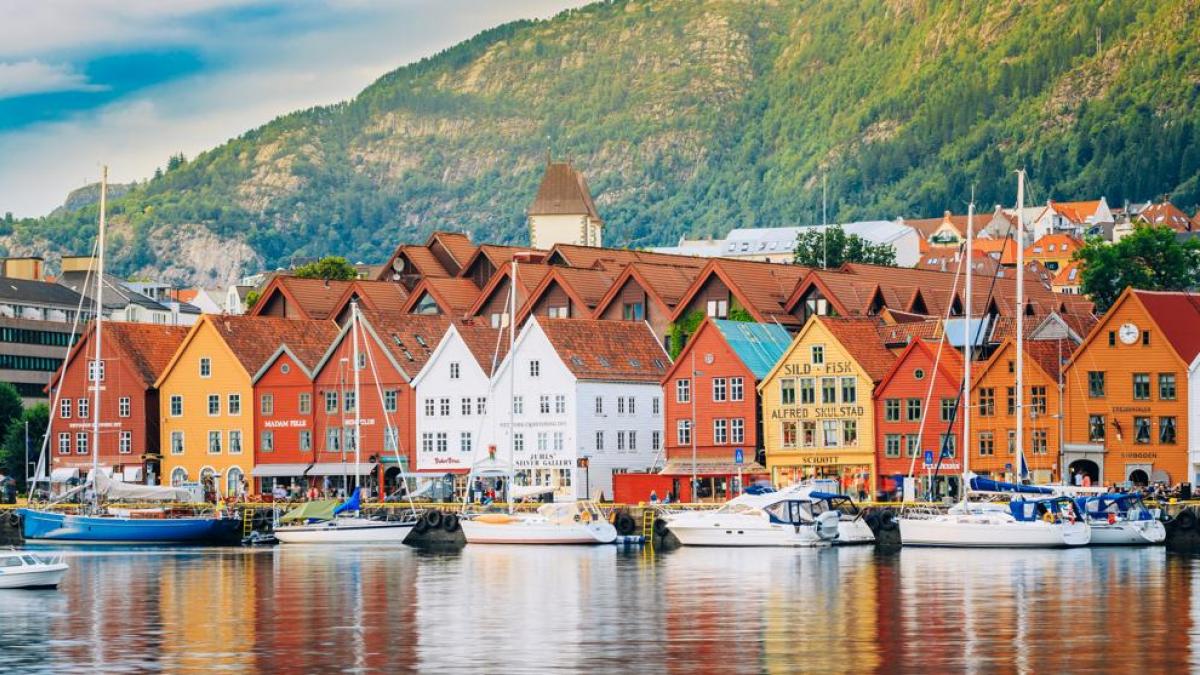
The journey begins in Bergen, Norway’s second city and a historical Hanseatic trading port. The wooden wharf district of Bryggen — a UNESCO World Heritage Site — sets the architectural tone before the ship turns north into the fjord system.
From the start, the first hours pass through narrow waterways where steep green mountainsides rise directly from the sea, and waterfalls cascade from heights invisible from the road. This departure establishes the scale of the norwegian fjords cruise.
Geirangerfjord and the Western Fjords
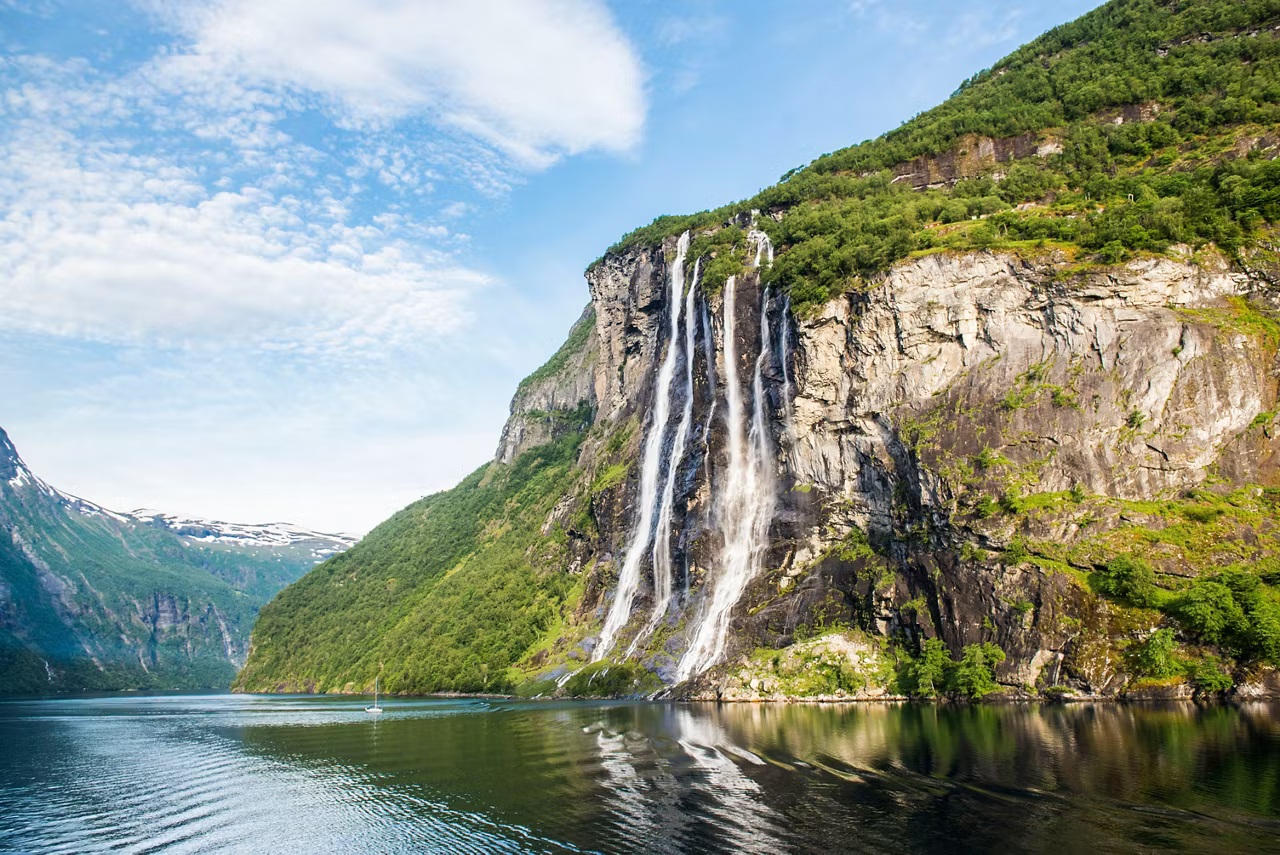
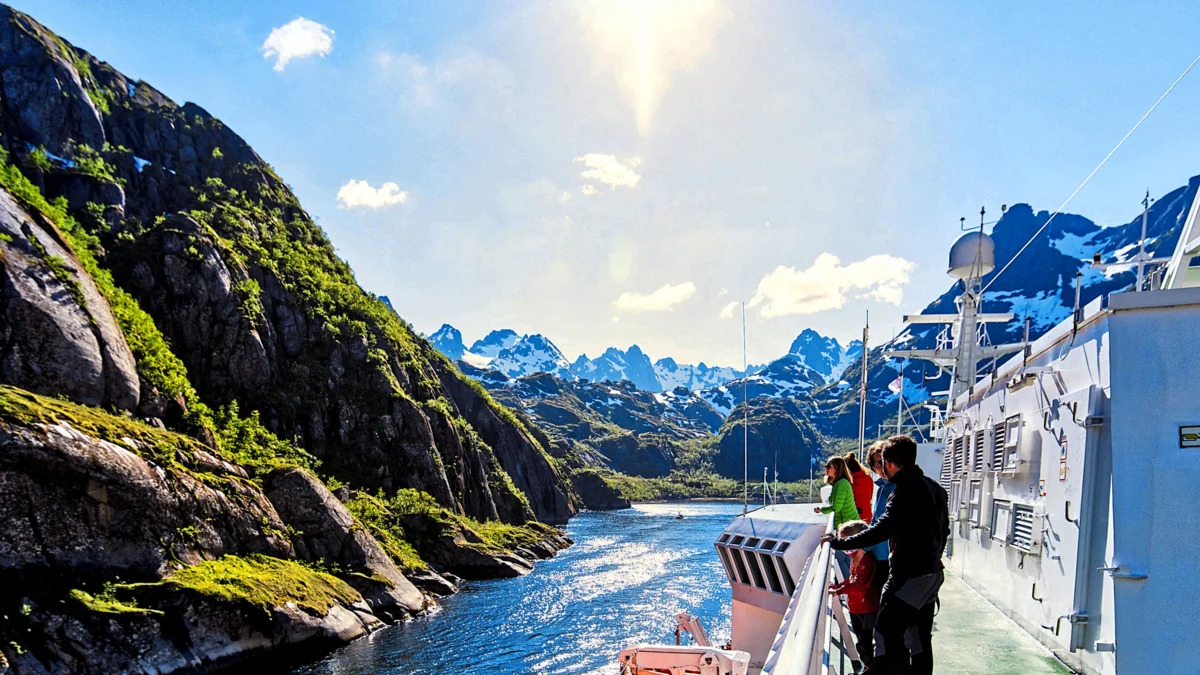
The ship enters Geirangerfjord, a UNESCO World Heritage fjord recognized for its vertical walls, abandoned farmsteads, and cascading waterfalls — including the Seven Sisters and the Suitor. https://whc.unesco.org/en/list/1195
Meanwhile, neighboring Sognefjord — Norway’s longest and deepest at 204 kilometers — reveals an inland waterway system that rivals the scale of a small sea. Because of this geographic concentration, the western fjords represent the most visually dense section of the norwegian fjords cruise.
The Coastal Passage and Arctic Circle
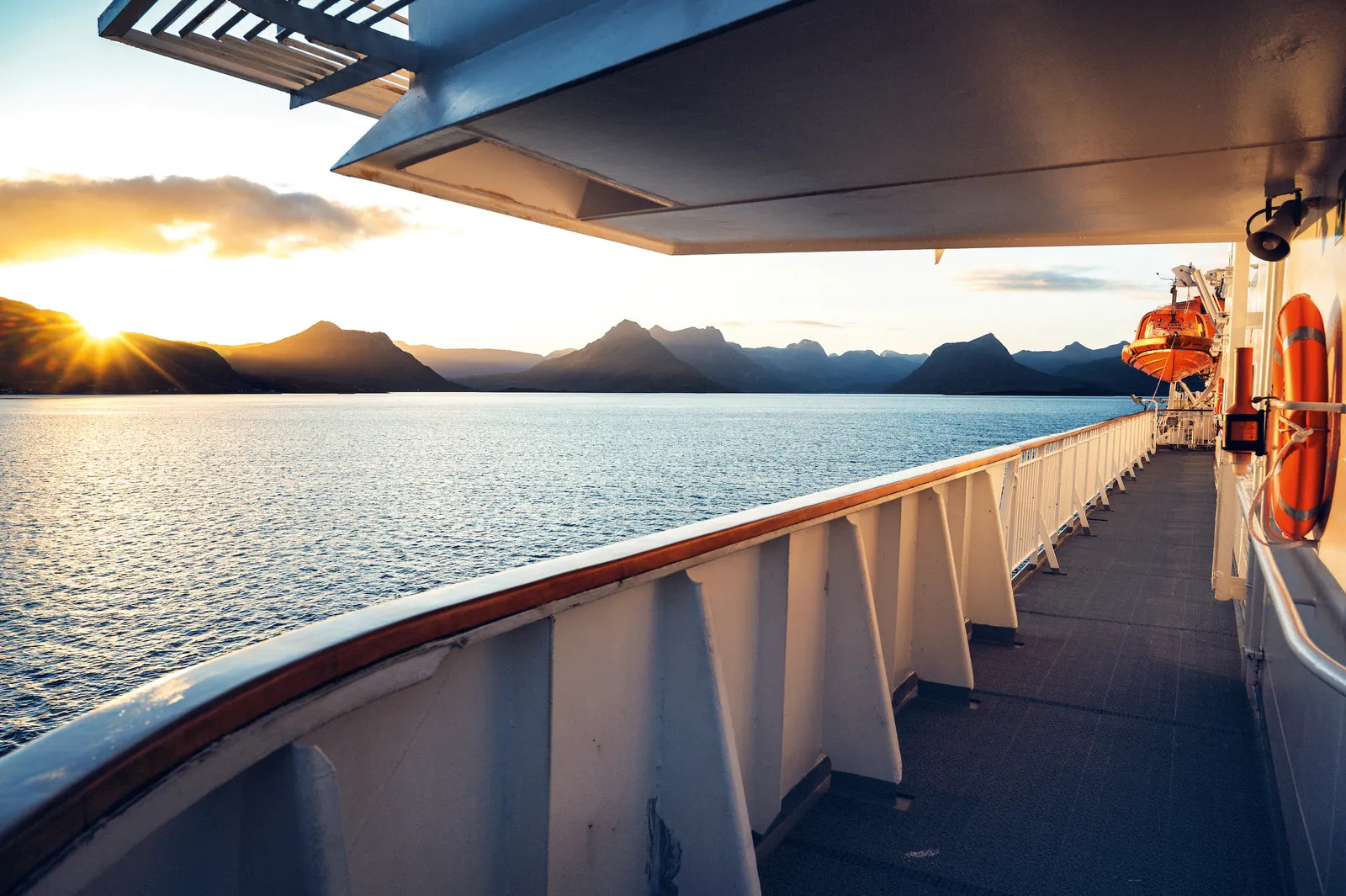
Beyond the fjords, the route follows the outer coast past Ålesund and the Helgeland archipelago. This transitional stage crosses the Arctic Circle — a threshold that changes the light, the vegetation, and the character of the voyage.
Hurtigruten, HX, and Havila each operate this coastal segment, but the effect is consistent: a gradual shift from temperate fjord to subarctic terrain. In addition, the extended daylight between May and August means the landscape is visible nearly 24 hours a day.
Therefore, this passage is where the norwegian fjords cruise transforms from fjord immersion to Arctic approach.
Lofoten and the Arctic Archipelago
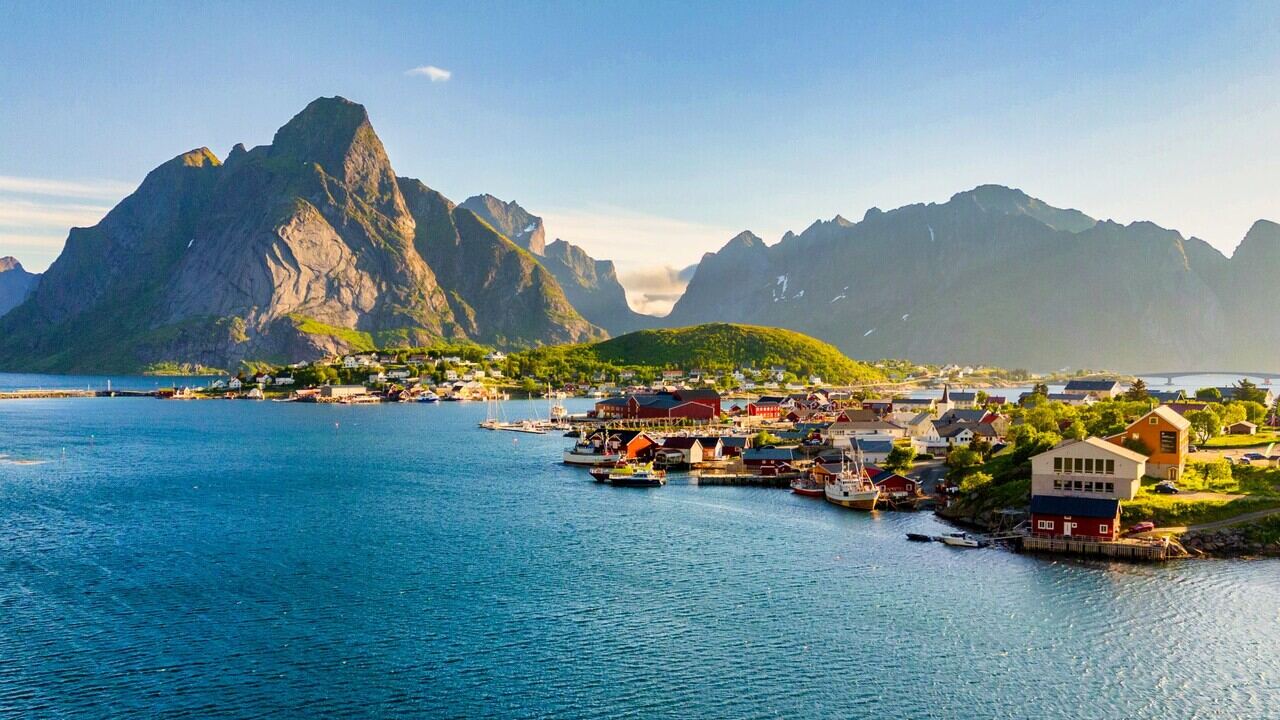
The Lofoten islands rise from the Norwegian Sea like a chain of granite peaks connected by bridges and fishing villages. The mountains are sharp, the beaches are white, and the water shifts between green and deep blue depending on the light.
Traditional fishing villages — including Reine, Nusfjord, and Henningsvær — are among the most photographed settlements in Scandinavia. This stage gives the norwegian fjords cruise its most distinctive visual chapter.
Tromsø and the Gateway to the Arctic
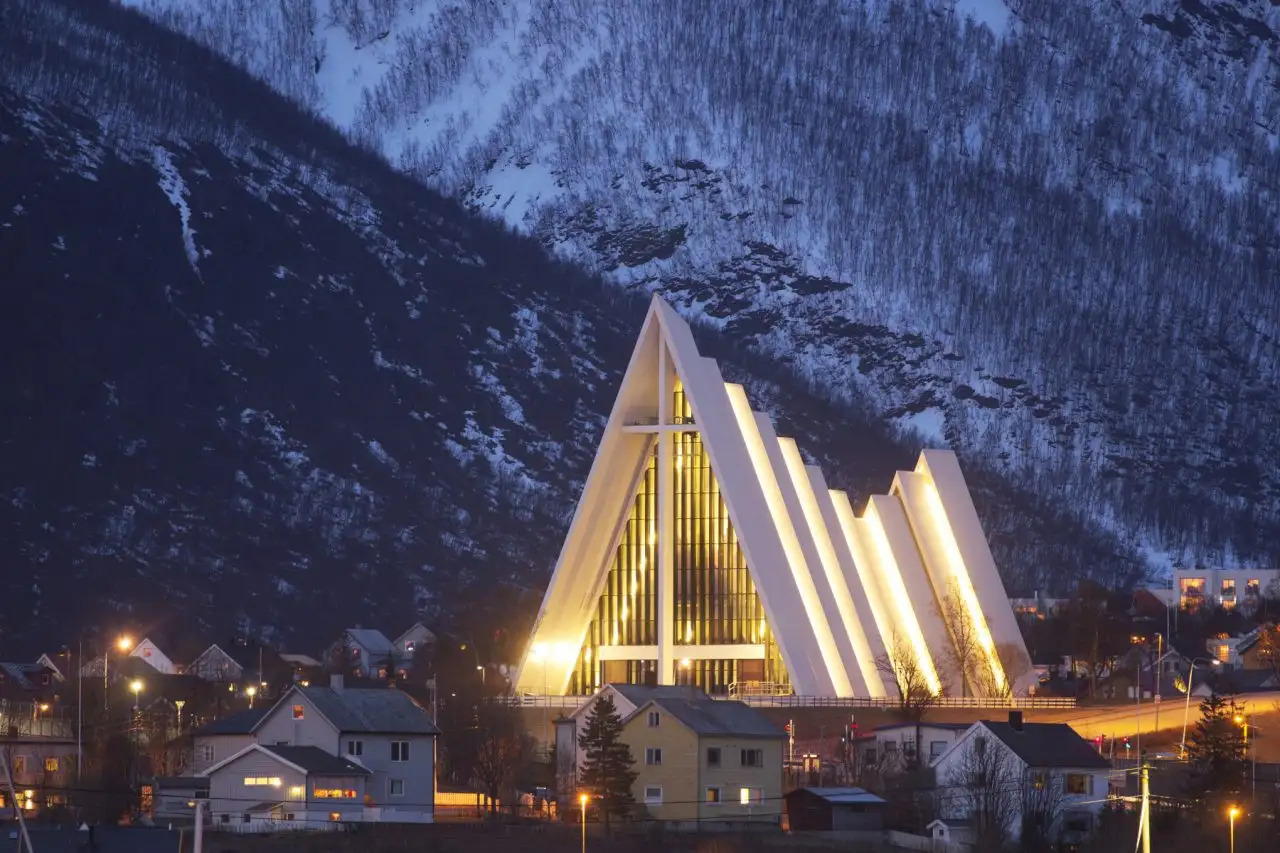
Next, the ship reaches Tromsø, Norway’s Arctic capital. Known as the Gateway to the Arctic, Tromsø is a university city with cultural infrastructure that belies its latitude — the world’s northernmost cathedral, botanical garden, and brewery all reside here.
The midnight sun is fully visible from late May through July, creating a continuous golden light that never sets. This stage adds an urban Arctic dimension to the norwegian fjords cruise.
North Cape and the Edge of Europe
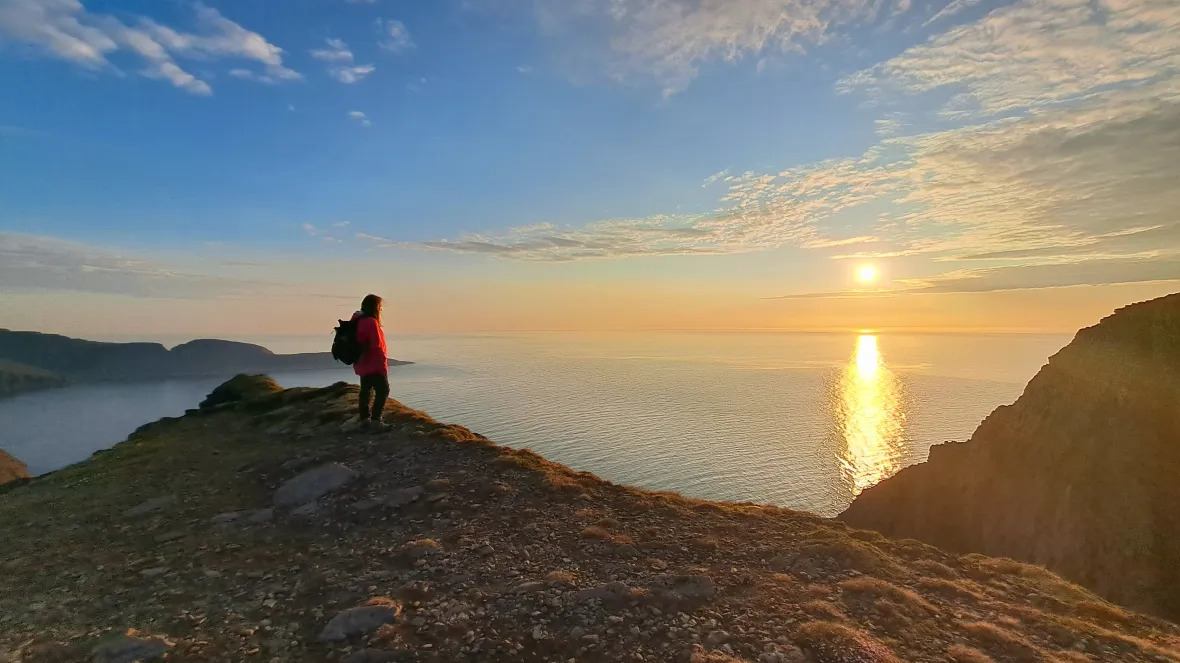
Finally, the voyage reaches North Cape, a 307-meter cliff marking the northernmost point of mainland Europe. The approach by sea is stark — a flat plateau of rock rising from the Barents Sea, framed by nothing but water and Arctic sky.
Hammerfest, one of the world’s northernmost towns, may serve as a final port. Ponant and other expedition lines design this closing stage for contemplation rather than activity. Because of this finality, North Cape is where the norwegian fjords cruise reaches its natural conclusion.
Fjord silence, midnight sun, and the long coast to the edge of Europe
Signature Experiences
- Walking the Bryggen UNESCO wharf in Bergen
- Entering Geirangerfjord beneath the Seven Sisters waterfalls
- Cruising the length of Sognefjord, Norway’s deepest fjord
- Crossing the Arctic Circle under continuous summer light
- Anchoring near the fishing villages of Lofoten
- Walking the white sand beaches at Ramberg and Haukland
- Exploring the Arctic capital of Tromsø
- Observing the midnight sun from the ship’s upper deck
- Approaching North Cape by sea at Europe’s northernmost point
- Visiting Hammerfest, one of the world’s northernmost towns
Ready to Begin the Journey?
Planning a full Norwegian coastal cruise requires fjord permits, Arctic logistics, and midnight sun timing. At Escape Xperts, we select expedition vessels, align the itinerary with the best light window, and build voyages that cover the coast from Hanseatic Bergen to the Barents Sea.
Why Travel to Norway with Escape Xperts
Norway’s coast is best experienced as a continuous journey from south to north — fjord to Arctic, temperate to subarctic. At Escape Xperts, we design voyages that respect this geographic arc, selecting vessels and timing that allow every stage to unfold without rush. The result is a norwegian fjords cruise that delivers the full Norwegian seaboard in its most concentrated and luminous season.