Suggested stay: Four nights
Divided between: The imperial axis and everyday Vienna
Country: Austria
Areas covered: Schönbrunn · The Hofburg · The Ring · The inner city · Naschmarkt
Things to Do in Vienna: The Palaces and the Afternoons Between Them
Vienna is planned around its palaces and remembered for its afternoons. The things to do in Vienna divide cleanly into two categories: the imperial inheritance, which is finite and can be seen in two days, and the daily life of the city, which is what makes travelers extend the stay.
The first is a matter of tickets and opening hours. The second runs on habits that have not changed in a century, in rooms where nobody is expected to leave.
At Escape Xperts, we build the week so that the palaces occupy the mornings and the city’s own rhythm takes the rest.
The Imperial Axis
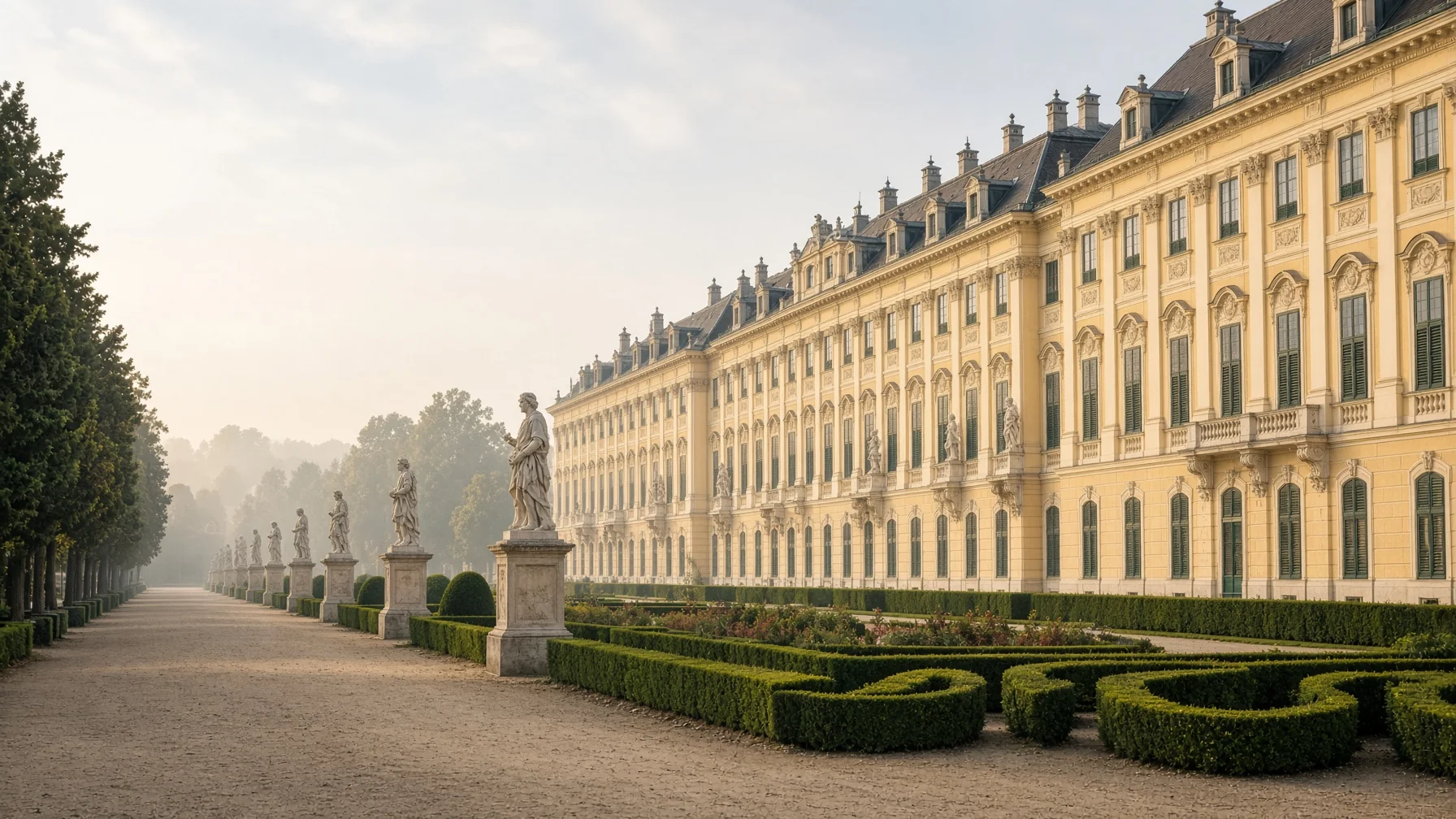
Schönbrunn Palace was the Habsburg summer residence and holds well over a thousand rooms, of which around forty are open. Two routes are offered, and the longer one is the one worth taking: it includes the state rooms of the eighteenth century rather than only the private apartments.
Its gardens are free, extensive and largely empty of the crowds inside, climbing to a colonnade on the hill with the whole city laid out below. The visit is timed, and the first slots of the day are considerably quieter.
Meanwhile, the Hofburg in the centre was the winter residence and remains a working complex of government offices, a library, a chapel and three museums, including the imperial silver collection, which is more interesting than it sounds.
Next, the Belvedere occupies two baroque palaces at either end of a terraced garden. The upper one holds the largest collection of Klimt anywhere, including the painting that put him on every poster in the city, and it is at its best in the last hour before closing.
Therefore, two mornings cover the imperial inheritance properly. Among the things to do in Vienna, these are the fixtures around which everything else is arranged.
The Ring: What Replaced the Walls
In 1857 the city demolished its fortifications and replaced them with a boulevard, and almost every major public building in Vienna was raised along it within thirty years.
The result is a single circuit holding the opera house, the parliament, the city hall, the university and two facing museums, each built in a different historical style as an argument about what the institution was for.
Here, the simplest approach is also the best. The trams that run the full circle take around half an hour, and doing it once at the start of a visit gives the city an order that no map provides.
In addition, the Ring is where Viennese modernism pushed back. The Secession building with its gilded dome stands a short walk beyond it, and the bare white facade that Adolf Loos placed opposite the Hofburg in 1911 caused a scandal that outlived everyone involved.
Because of this, an hour spent on the circuit is the most efficient orientation available in any European capital, and it costs one of the cheapest of all the things to do in Vienna.
Next, the two museums facing each other across the square between the Ring and the palace are worth separating rather than combining. One holds the imperial art collection, the other the natural history cabinet that grew from the same Habsburg habit of acquisition, and each takes a morning on its own terms.
The Coffee House as an Institution
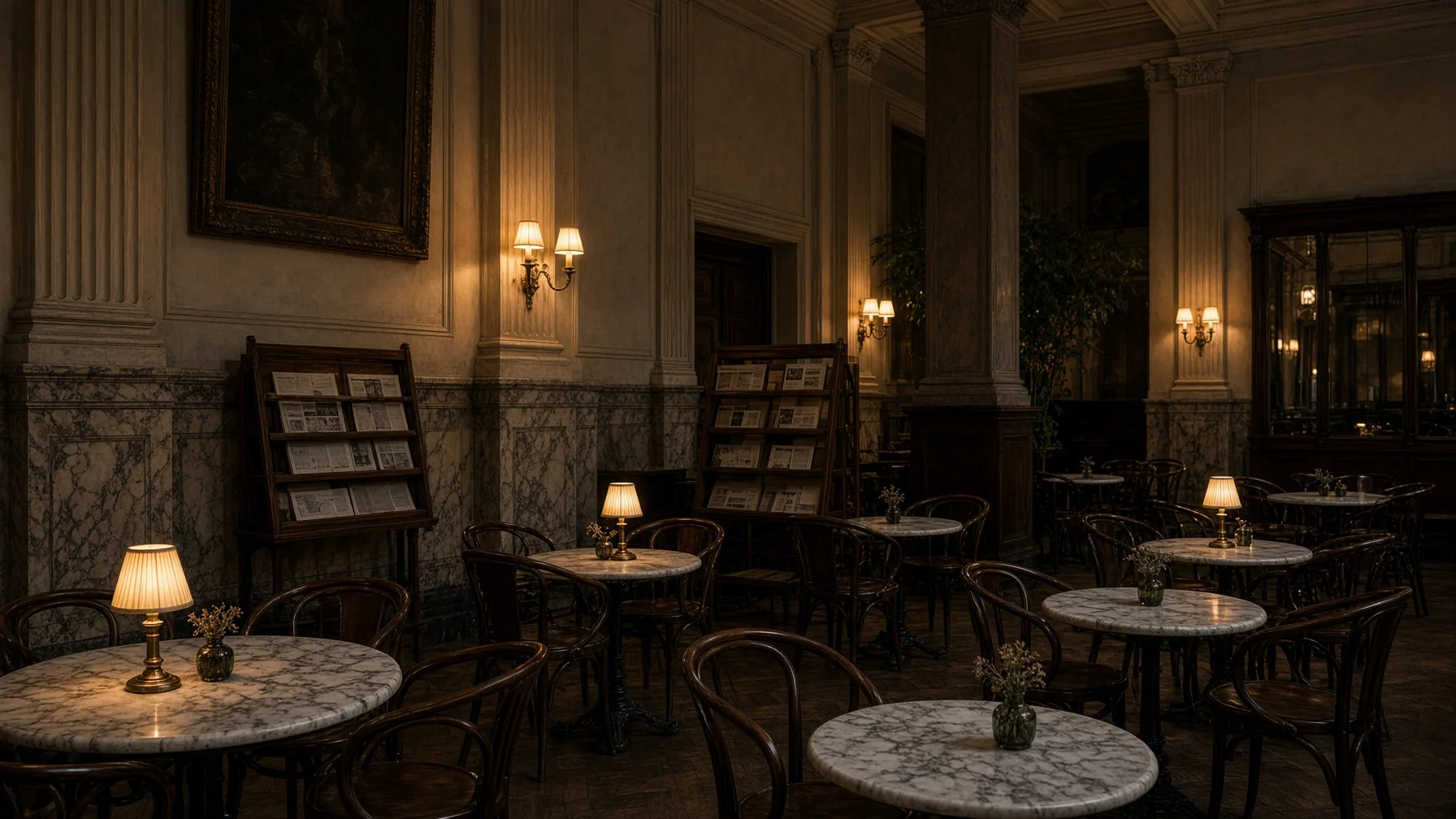
The Viennese coffee house is recognized by UNESCO as intangible cultural heritage, and the listing is not ceremonial. It describes a specific set of customs that still operate.
A single order buys the table for as long as it is wanted. The coffee arrives on a silver tray with a glass of water, the newspapers hang on wooden holders by the door, and nobody will come to move a guest along. The waiters wear tails and have often worked the same room for decades.
Café Central occupies the arcaded ground floor of a nineteenth-century palace on the Herrengasse and was the working office of half of literary Vienna before 1914. Its vaulted hall still fills at eleven in the morning.
Meanwhile, Café Demel on the Kohlmarkt was the imperial court confectioner and remains a patisserie first, with the pastry kitchen visible behind glass and a rivalry over a chocolate cake that reached the courts and was settled there.
As a result, the coffee house is not a stop between sights. Of all the things to do in Vienna, an unhurried afternoon in one of these rooms is the most characteristic of the city.
Opera and Horses: How the Access Works
Two institutions define the city’s performance calendar and both are misunderstood by visitors.
The Vienna State Opera stages a different work almost every night from September to June, which is close to three hundred performances a year and an unusually deep repertoire. Seats are released months ahead, while a number of standing places are sold shortly before each curtain, and the queue for them forms in the late afternoon.
Next, the Spanish Riding School performs in a white baroque hall built for the purpose in the 1730s, with chandeliers above the sand. Full performances are limited and sell out early; the morning exercise sessions on weekday mornings are far easier to attend and show the same horses working.
Meanwhile, the horses take a summer break, which means the hall is dark for a stretch of high summer. Any itinerary built around them needs to check the calendar first.
Therefore, both should be booked before the flights rather than after. The things to do in Vienna that require reservations require them months out.
Everyday Vienna
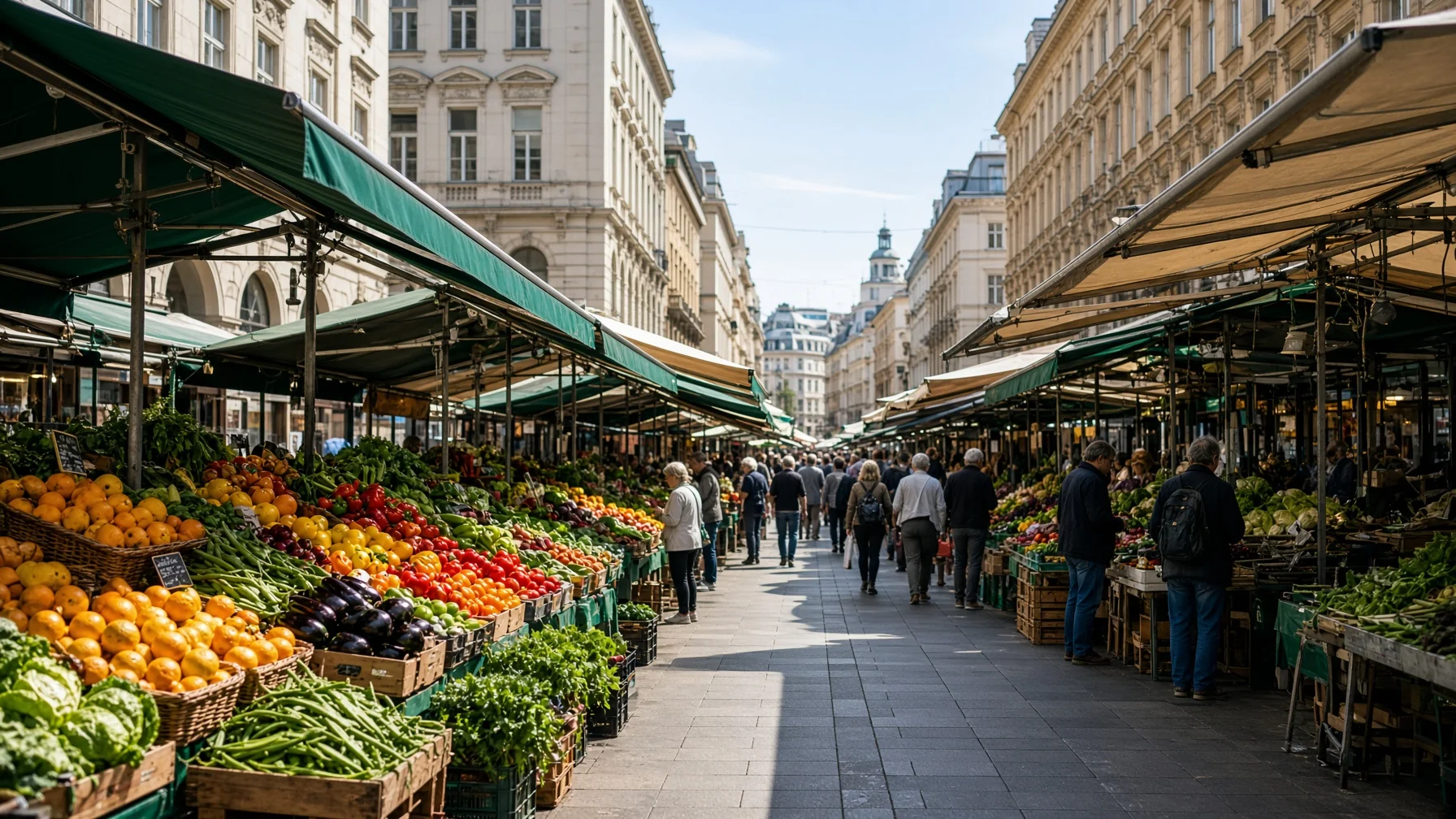
Beyond the palaces, the city runs on markets, shopping streets and a quiet standard of comfort.
The Naschmarkt stretches for well over a kilometer along a covered river, with produce stalls at one end, restaurants at the other and a large flea market on Saturdays that draws the whole city.
Here, the Goldenes Quartier concentrates the international houses into a few blocks behind the Graben, though the more interesting shopping is the old specialist trades of the inner city: the loden makers, the porcelain manufactory and the shops that still bear an imperial warrant.
In addition, the accommodation reflects the same inheritance. Hotel Imperial on the Ring was built as a private palace and converted before it ever opened as a residence, while Park Hyatt Vienna occupies a former bank headquarters with its pool in the old vault.
Finally, the city’s parks and the wine taverns on the hills above it are where the Viennese spend their own weekends. The vineyards inside the municipal boundary are unusual for a European capital, and an afternoon at a tavern among them belongs on any honest list of things to do in Vienna. For official regional information, see https://www.austria.info
State rooms in the morning, marble tables all afternoon, and a hall lit by chandeliers
Signature Experiences
- First entry to the state rooms at Schönbrunn Palace
- The colonnade above the gardens with the city below
- Imperial silver and private apartments inside the Hofburg
- The Klimt collection at the Belvedere in the last hour
- A full circuit of the Ring by tram on arrival
- The gilded dome of the Secession and the Loos facade opposite the palace
- A long morning at Café Central under the vaults
- Pastry counter and court history at Café Demel
- An evening from the standing places at the Vienna State Opera
- Weekday morning exercise at the Spanish Riding School
- Saturday flea market alongside the Naschmarkt
- A room in a converted palace at Hotel Imperial or the old bank vault at Park Hyatt Vienna
Ready to Begin the Journey?
Vienna rewards a slower schedule than most capitals require. At Escape Xperts, we hold the performances and the first entries and leave the afternoons genuinely open, combining seamless logistics, private guiding and curated exploration across the imperial city and the everyday one.
Why Travel to Vienna with Escape Xperts
Vienna’s palaces can be seen in two days and its habits take longer to reach. The city’s real character sits in rooms where a single order holds a table for an afternoon, and in performances that must be secured long before arrival. At Escape Xperts, we book the fixed points early and build the rest around them, which is what the most rewarding things to do in Vienna quietly require.