Journeys covered: One night to six
Cities linked: Paris · Venice · Vienna · Budapest · Istanbul · Edinburgh
Rolling stock: Restored 1920s and 1930s carriages
Dress: Smart by day, jacket and tie at dinner
Luxury Train Journeys in Europe: What a Night on the Rails Buys
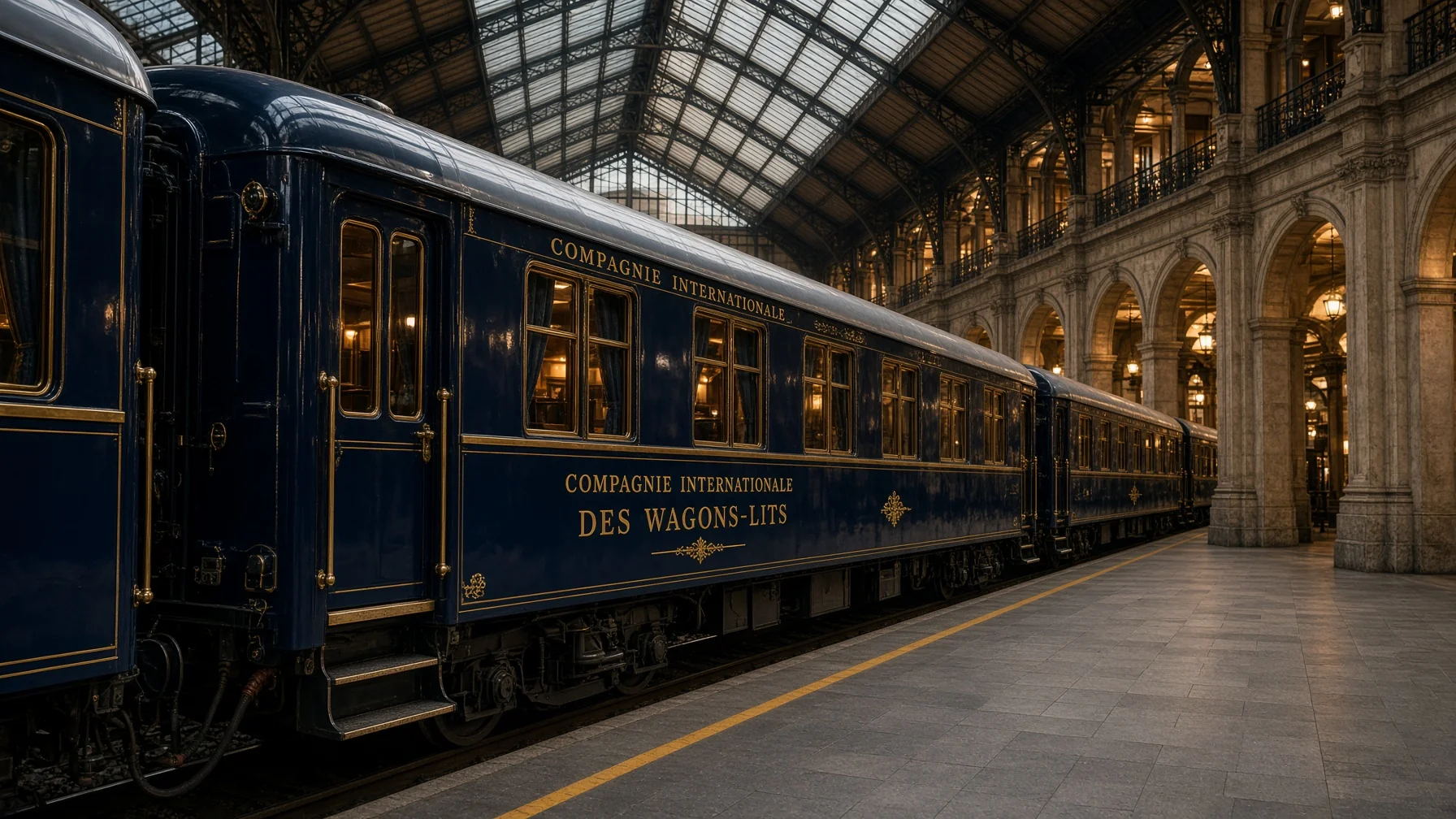
A night aboard a restored wagon-lit is not transport with better seats. It is a hotel that moves, with a fixed guest list, a single dining service and no way to leave, and the luxury train journeys Europe still operates should be judged on those terms rather than on the photograph of a blue carriage.
What the traveler is buying is time in a specific set of rooms: marquetry panels cut in the 1920s, a dining car that seats everyone at once, and a corridor that is the entire public space of the journey.
At EscapeXperts, we explain the product before we plan it, because the difference between a one-night crossing and a six-night grand tour is not a matter of degree.
The Venice Simplon-Orient-Express and Its Routes
The Venice Simplon-Orient-Express is operated by Belmond and runs on original 1920s carriages, a collection of wagons-lits recovered from across Europe and restored to their interwar condition rather than rebuilt in the style of it.
Its classic crossing links Paris and Venice in a single night, boarding in the late morning, running through Switzerland by daylight and arriving the following afternoon. It is the shortest of the journeys and the one most travelers take first.
Meanwhile, the central European routes connect Vienna, Budapest and Prague over two nights, and a series of shorter city-to-city crossings have been added between Italian cities.
Next, the Grand Tour runs from Paris to Istanbul once a year over six nights, following the original 1883 alignment, with three of those nights aboard and the remainder in hotels along the way. It sells out a year or more in advance.
Therefore, the route determines the experience more than any other choice. Among the luxury train journeys Europe offers, a single night is an introduction and six is a different proposition entirely.
Cabins, and What Actually Changes Between Them
The cabin categories are the decision that most affects the night, and the differences between them are practical rather than decorative.
A historic cabin is the original configuration: a daytime bench that a steward converts to an upper and a lower berth while guests are at dinner, with a washbasin concealed in a marquetry cabinet and lavatories at the end of the carriage. It is the authentic arrangement and the least private one.
Here, the suites move to a floor-level double or twin bed with a private bathroom in the cabin, which removes the corridor from the equation entirely and is the point at which most travelers stop hesitating.
Beyond them, the grand suites occupy the largest footprint, with a separate seating area, a private bathroom with a shower, champagne kept in the cabin and transfers arranged at either end. There are very few of them on any departure.
In addition, one artist-designed suite has been added to the fleet in recent years, sold as a single distinctive room rather than as a category.
Because of this, the cabin should be chosen before the route. Availability in the upper categories is the constraint that decides most bookings among the luxury train journeys Europe currently runs.
The Table, the Dress and the Rhythm of the Day
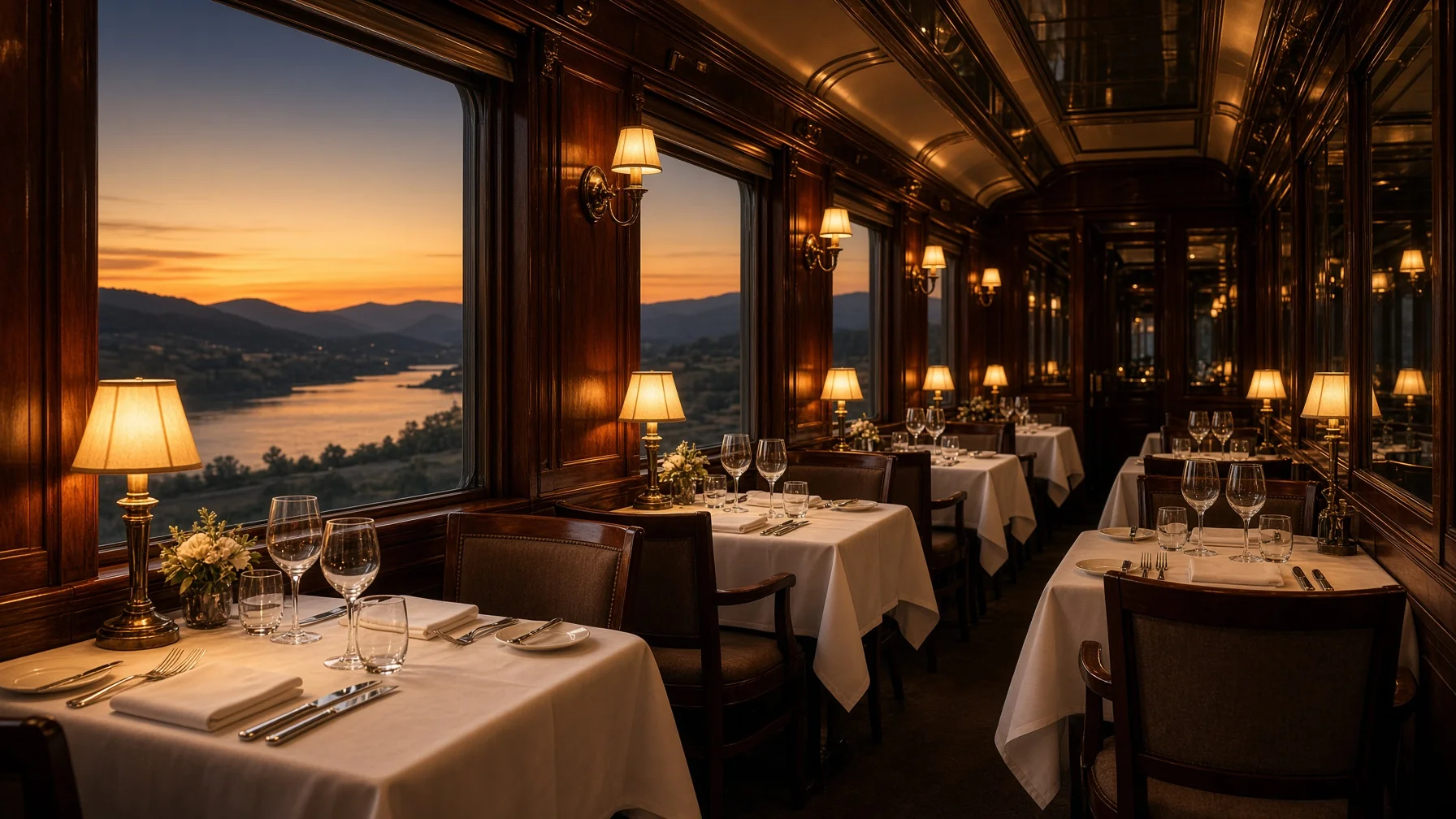
Dinner is the centre of the journey, and it is treated as such by the operator and by the passengers.
The kitchens are led by Jean Imbert, whose menus draw on classical French service and on the regions the train passes through, prepared in galleys the size of a domestic kitchen while the carriage is in motion.
Meanwhile, the dress code is genuine rather than suggested. Days are smart casual, with jeans and trainers explicitly excluded; evenings call for a jacket and tie at minimum, and a significant proportion of passengers wear black tie without being asked to.
Next, the luggage rules shape the packing. Guests keep a small bag and an overnight case in the cabin, while a larger suitcase travels in the baggage car and cannot be reached until arrival, which means the evening’s clothes must be planned before boarding.
As a result, the day has a fixed shape: late morning boarding, lunch in the dining cars, an afternoon of window and conversation, drinks in the bar car with a pianist, dinner in two sittings, and a corridor that stays busy long after.
Because of this, the social dimension is part of what is purchased. There is no room service culture and no separate table for two in a private lounge; the luxury train journeys Europe operates in this format put around a hundred strangers into three dining cars and expect them to dress for it.
Beyond the Orient Express
The same model exists elsewhere in Europe, on a different landscape and at a different pace.
The Royal Scotsman operates out of Edinburgh on journeys of two to seven nights through the Highlands, with a country-house interior of tartan, wood and open observation deck at the rear.
Its rhythm is slower by design. The train stops overnight so that guests sleep in stillness rather than in motion, and the days include excursions to distilleries, castles and estates rather than continuous running.
Therefore, it suits a different traveler. Where the Orient Express is a crossing between two cities, the Scottish journey is a moving base for a week in one region, and it accommodates a group travelling together particularly well. Of the luxury train journeys Europe keeps in service, it is the one that works best as a celebration.
Panoramic Trains Are Not Luxury Trains
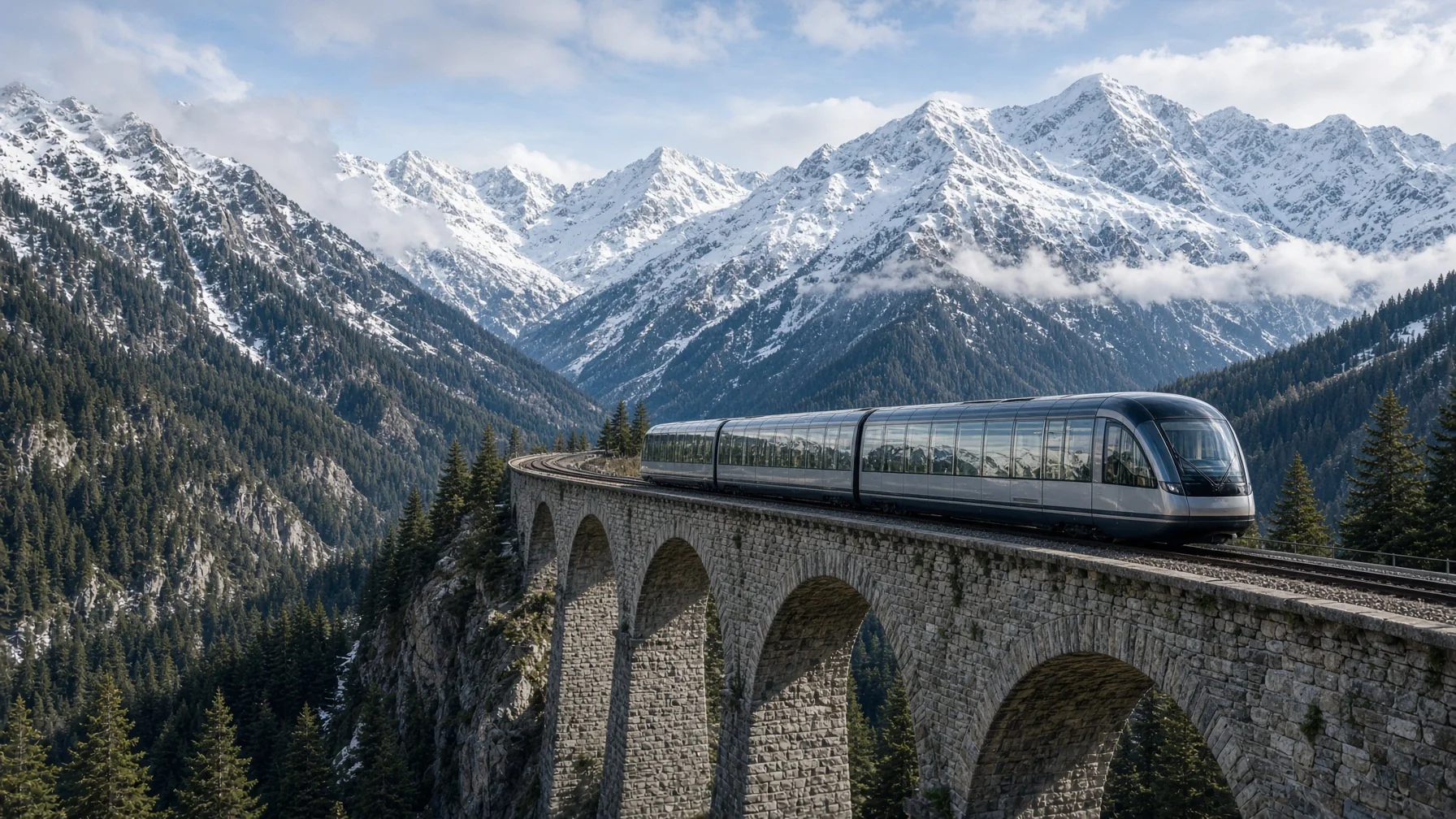
This is the distinction the market blurs most often, and it matters before any booking is made.
The Glacier Express runs between Zermatt and St. Moritz in roughly eight hours, and the Bernina Express crosses the Alps on a line that is itself UNESCO-listed, climbing without rack assistance through spiral viaducts and hairpin gradients.
Both are extraordinary and neither is a luxury train in the sense used above. They are scheduled day services with panoramic glazing and a premium class, they carry ordinary passengers, and nobody sleeps aboard.
Meanwhile, they combine well with the overnight trains rather than competing with them. An alpine day service placed between two nights aboard a wagon-lit gives a rail itinerary its variation, and most of the luxury train journeys Europe sells as complete weeks are built exactly that way.
Finally, the choice comes down to what the journey is for: the window, or the room. For operator detail on the historic service, see https://www.belmond.com/en/trains/europe/venice-simplon-orient-express
Marquetry cut a century ago, a dining car that seats everyone, and a corridor that is the whole world for a night
Signature Experiences
- The single-night crossing between Paris and Venice
- Two nights linking Vienna, Budapest and Prague
- The six-night Grand Tour to Istanbul on the 1883 alignment
- Restored 1920s carriages with their original marquetry
- A grand suite with its own seating area and bathroom
- Dinner from Jean Imbert‘s kitchen in motion
- Black tie and a pianist in the bar car after midnight
- Highland distilleries and estates from the Royal Scotsman
- The open observation deck at the rear of the Scottish train
- Eight hours of alpine window on the Glacier Express
- UNESCO-listed viaducts on the Bernina Express
- An alpine day service placed between two nights aboard
Ready to Begin the Journey?
The decision on a rail journey is made in the details: the route, the cabin category and the departure, all of which are limited and all of which move early. At EscapeXperts, we hold the space and build the cities at either end around it, combining seamless logistics, private transfers and curated exploration.
Why Travel by Rail with EscapeXperts
A night aboard a historic train is a small, fixed inventory sold a year ahead, and the difference between cabin categories decides how the night is remembered. At EscapeXperts, we explain what each journey contains before anything is reserved, then arrange the arrivals, the departures and the days either side, which is what makes the luxury train journeys Europe still runs worth the time they take.