Best months (west and south coasts): December to March
Best months (east coast): May to September
Hill country: driest from January to April on the western slopes
Regions covered: Southwest coast · East coast · Hill country · Cultural Triangle
Best Time to Visit Sri Lanka: Two Monsoons, Two Calendars
The best time to visit Sri Lanka depends on which coast is in question. The southwest monsoon brings rain to the west and south from May to September, while the northeast monsoon wets the east and north from roughly November to January. As a result, one half of the island is almost always in season.
Many travelers set Sri Lanka aside after reading the word monsoon. That decision rests on a misunderstanding, because the island does not have one rainy season but two, arriving at opposite times of year and from opposite directions.
At EscapeXperts, we plan Sri Lanka by wind direction rather than by month alone. This guide explains which regions are open when, why the hill country keeps a calendar of its own, and how to read the transitional weeks between the two monsoons.
The Southwest Monsoon and the Western Coast
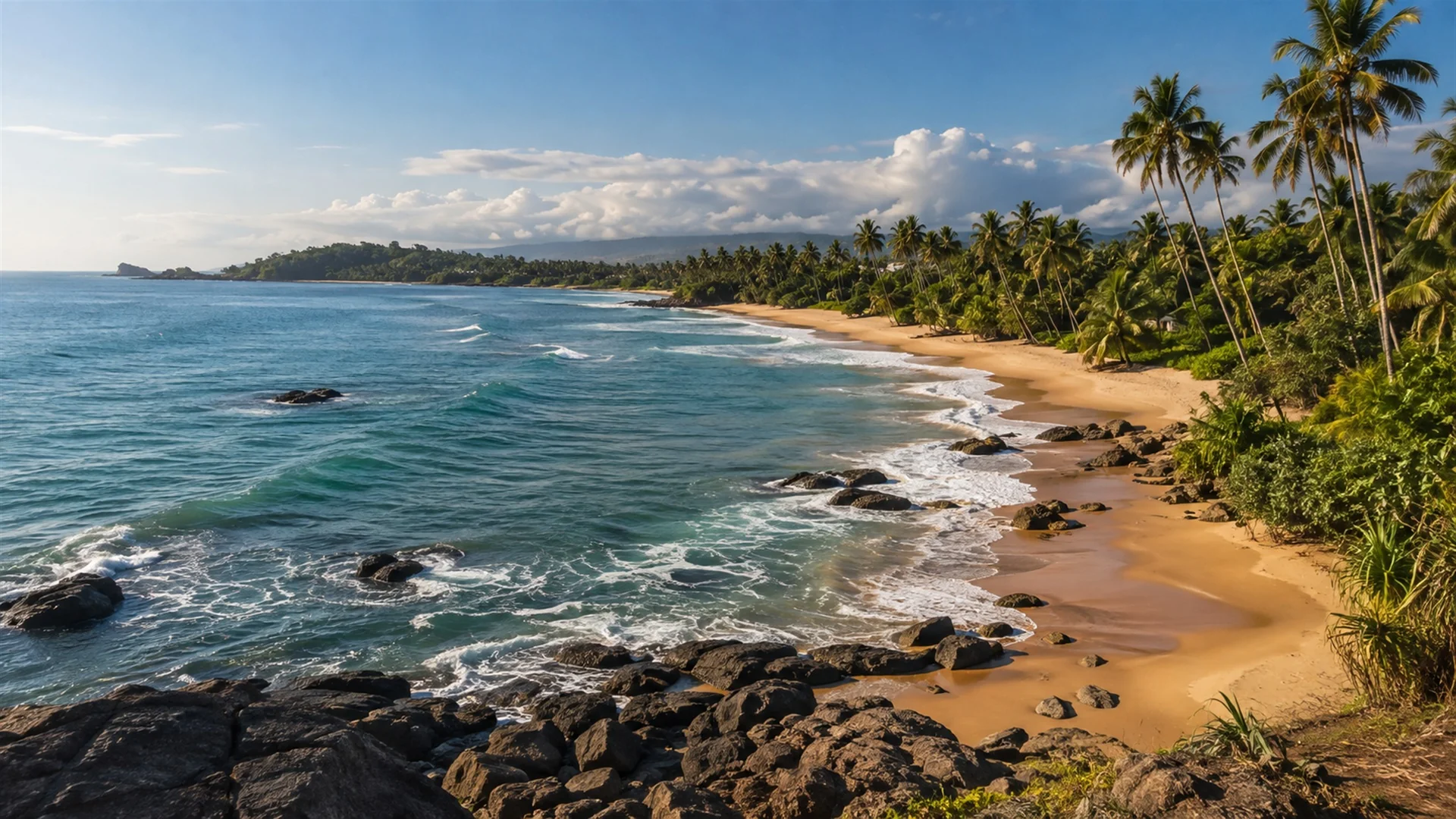
From roughly May to September, the southwest monsoon blows in from the Indian Ocean and meets the island’s western and southern shores first. Colombo, Galle and the southern coast receive heavy showers, rougher seas and higher humidity.
The rain rarely falls all day. Instead, it tends to come in heavy bursts followed by bright intervals, and the landscape turns a deep green. Nevertheless, the ocean on this side of the island is often too rough for comfortable swimming during these months.
In contrast, from December to March the same coast is at its finest. Skies clear, the sea calms and the colonial streets of the Galle Fort are warm and dry. This is the season most travelers picture when they think of Sri Lanka.
Because of this, the best time to visit Sri Lanka for a journey focused on Colombo and the southern coast falls between December and March, with April as a warmer and quieter extension.
The wet months on this coast still have a place in a considered journey. Galle and Colombo remain accessible throughout the year, and a short city stay at the start or end of a mid-year route is entirely practical, provided the beach days are planned for the other shore.
The Northeast Monsoon and the Eastern Shore
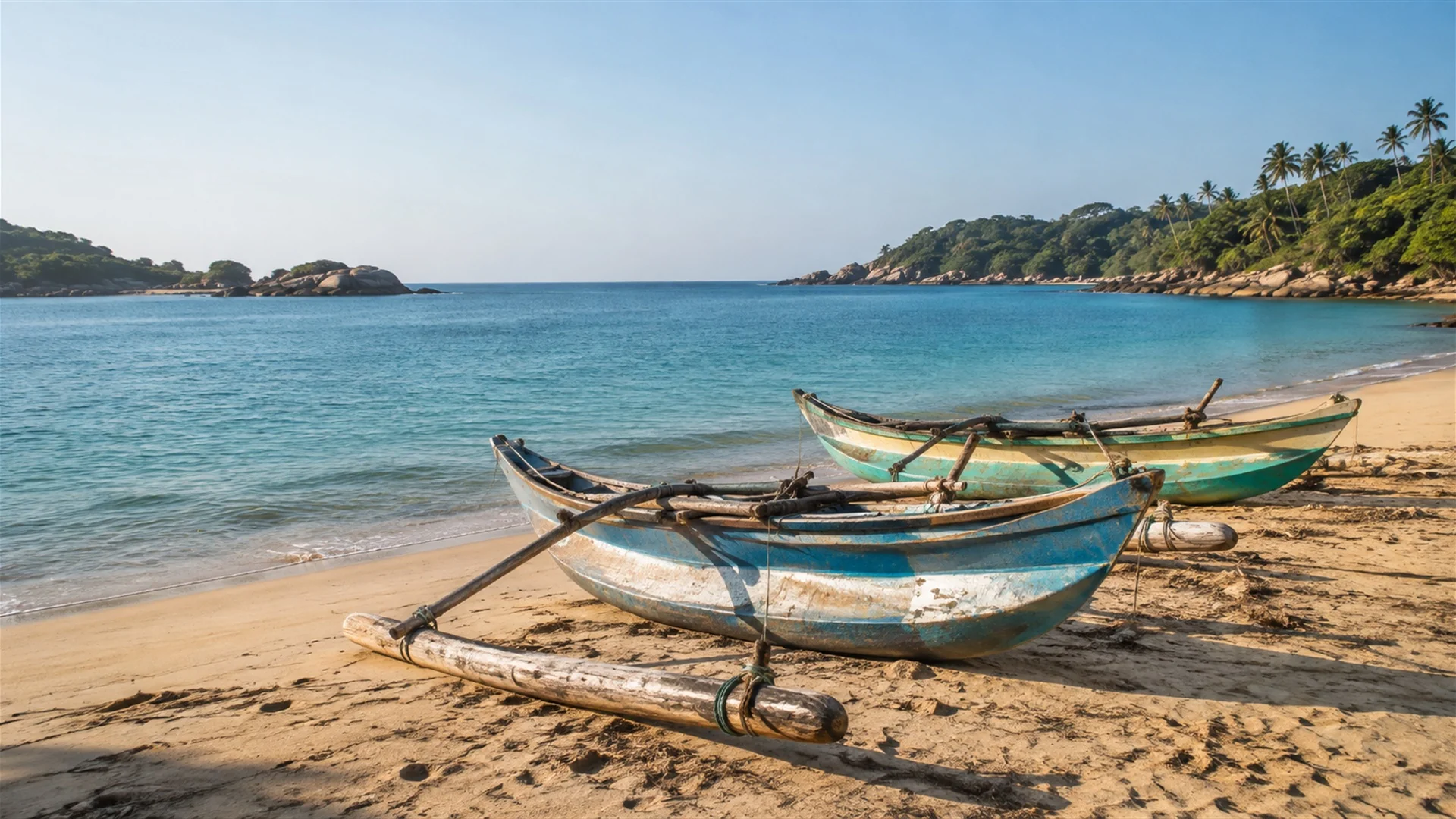
The eastern side of the island follows the opposite rhythm. From roughly November to January, the northeast monsoon brings wind and rain to Trincomalee, the east coast and the north, while the west enjoys its dry season.
Then the pattern reverses. From about May to September, when the western coast is wet, the east is sheltered by the central mountains and enjoys calm seas and long dry spells. Arugam Bay, on the southeast coast, is at its best in these months.
Meanwhile, the northeast monsoon also affects the Cultural Triangle in the north-central plains, where November and December bring the heaviest rain of the year. For most of the remaining months, this drier zone is warm and stable.
Therefore, a traveler who can only go in July or August is not facing a closed island. The best time to visit Sri Lanka in those months simply means shifting the route east, to Trincomalee and the calm bays around it.
The transition on the east is gradual. March and April often bring the first settled weeks, while late September can still be fine before the autumn storms begin. Because the region is less developed than the southwest, its finest stays are fewer and fill early in the mid-year window.
The Hill Country Keeps a Third Calendar
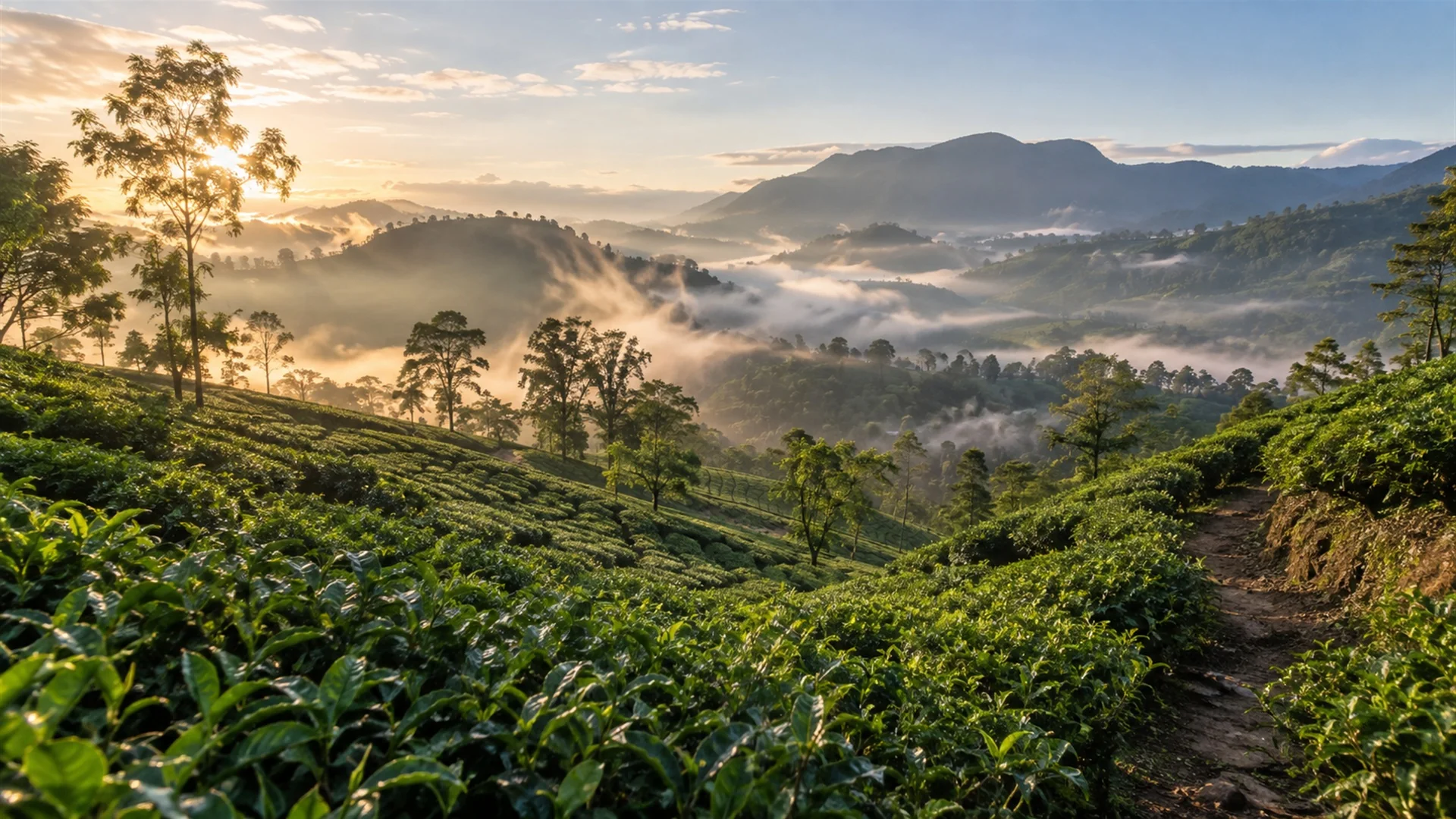
The central highlands sit between both monsoons, and they receive rain from each. As a result, the hill country around Nuwara Eliya, Hatton and Ella never follows either coast neatly.
On the western slopes, around Hatton and the estates that produce much of the island’s Ceylon tea, the driest weeks usually fall from January to April. This is also the pilgrimage season on Adam’s Peak, when the summit path is lit at night.
Later, from May, the southwest monsoon brings persistent cloud and rain to these western slopes. The eastern side of the highlands, around Ella, is often drier in the middle of the year, and wetter when the northeast monsoon arrives late in the year.
Temperatures fall with altitude throughout the year, and evenings in Nuwara Eliya can be cool even in the dry months. Because of this, the hill country is best timed on its own terms, not added to a coastal plan as an afterthought.
Here, Kandy marks the gateway to the highlands. It sits lower and warmer than the tea estates, and it is shaped by both monsoons in turn. In July or August, the Esala Perahera procession fills the city for several nights, so rooms need securing well in advance.
Yala and the Southern Parks
Yala, in the dry southeast, is the island’s most celebrated national park for leopard. Its best viewing typically runs through the dry months of the first half of the year, when vegetation thins and animals gather around the remaining waterholes.
The park has in recent years closed for several weeks in the late dry season, usually around September, to allow the wildlife a period of rest. Dates are announced locally, so this window needs checking well before travel.
Beyond Yala, the southern parks are drier than the western coast during the southwest monsoon, since the rain falls mostly on the other side of the mountains. Consequently, a safari can often be combined with the east coast in mid-year.
For wildlife travelers, the best time to visit Sri Lanka is therefore the dry first half of the year, with early morning and late afternoon game drives when the light is soft and the animals most active.
The Best Time to Visit Sri Lanka, Month by Month
Between the two monsoons, October and early November bring unsettled weather across much of the island, with warm mornings and sudden afternoon thunderstorms. April, the second transition, tends to be hot and humid, with scattered showers.
- December to March: West and south coasts dry and calm · East coast wet early, clearing by March · Western hill slopes drying
- April: Transition, hot with scattered showers · Hill country still dry in the west
- May to September: West and south wet · East coast and Arugam Bay at their best · Eastern hills drier
- October to November: Inter-monsoon storms island-wide · Northeast monsoon beginning in the east and north
Read together, the rows show the central point: whatever the month, the best time to visit Sri Lanka exists somewhere on the island. For official regional information, see https://www.srilanka.travel
Opposing winds, green highlands, and a coast always in season
Signature Experiences
- Dry season evenings inside the ramparts of Galle Fort
- Calm summer seas along the bays of Trincomalee
- Mid-year coastal days at Arugam Bay
- Leopard tracking in Yala during the dry months
- Cool highland mornings in Nuwara Eliya
- Tea estate walks above Hatton in the clear season
- Mid-year views from the eastern hills around Ella
- Heritage visits in Kandy between the two monsoons
- Arrival and first nights in Colombo from December to March
Ready for Something Extraordinary?
Sri Lanka rewards travelers who plan around its winds rather than against them. At EscapeXperts, we choose the right coast for your dates and build the route around it, combining seamless logistics, private experiences and curated exploration in every region.
Why Travel to Sri Lanka with EscapeXperts
In Sri Lanka, there is rarely a wrong month, only the wrong half of the island. At EscapeXperts, we read both monsoons and the highland calendar together, choosing the coast, the hills and the parks that are open for your dates. The result is a clear answer to the best time to visit Sri Lanka: always, with one half of the island in season.