Ideal stay: 3 to 4 nights
Altitude: roughly 1,200 to 2,000 meters
Country: Sri Lanka
Region: Kandy · Hatton · Bogawantalawa · Nuwara Eliya · Ella
Sri Lanka Tea Country: A Highland Stay Above the Island
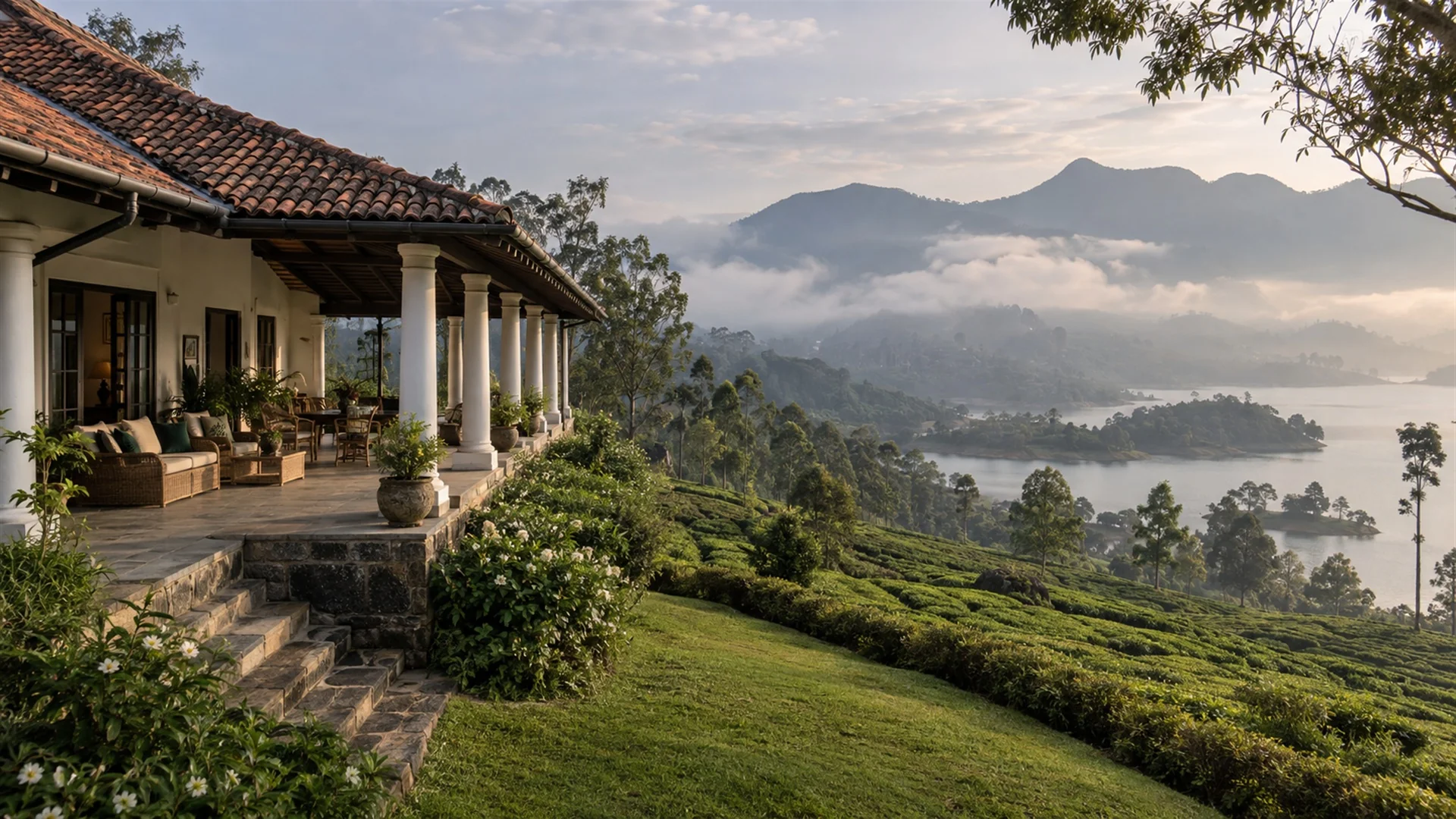
Sri Lanka tea country is the island’s central highland, a landscape of estates, reservoirs and forested ridges that rises from around 1,200 meters to close to 2,000 meters. Here, the air is cool, the slopes are combed with tea, and colonial planters’ bungalows have become some of the most private stays in Asia.
Many travelers know Sri Lanka for its coast and treat the hills as a single night between two beaches. In contrast, the highlands reward a proper stay, long enough to walk the estates, understand how the leaf becomes Ceylon tea and arrive by train at the pace the landscape deserves.
At EscapeXperts, we plan the hill country as a destination in its own right. The seasonal timing is covered in our separate guide to Sri Lanka’s two monsoons; this one focuses on where to stay, what to see and how to travel.
The Plantation Bungalow, From Planter’s Home to Private Retreat
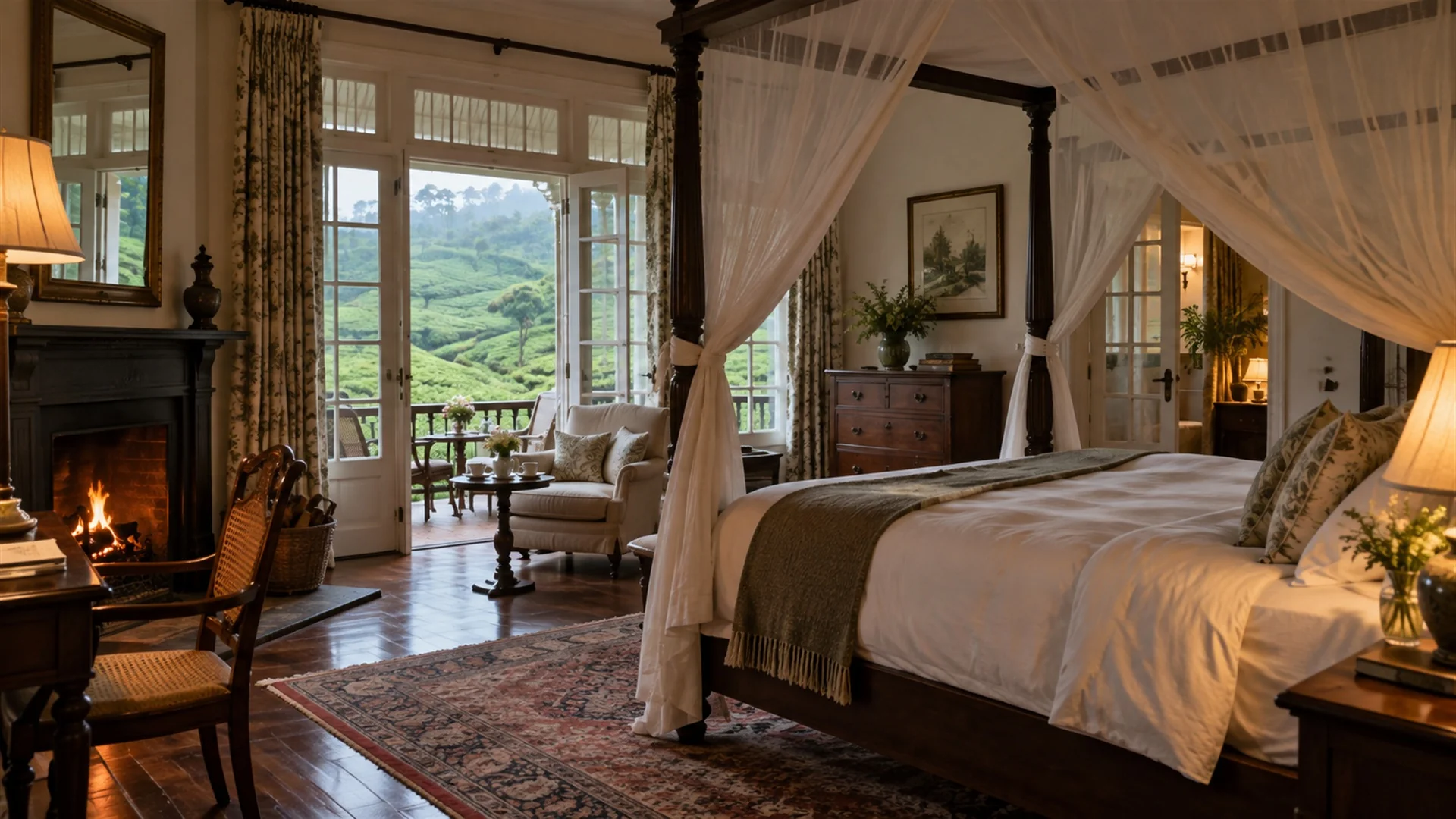
The plantation bungalow was built for the estate managers of the colonial era. Commercial tea planting began near Kandy in the 1860s, and as estates spread across the highlands, each was given a manager’s residence set above its slopes.
These houses were designed for a cool climate and a long view. Wide verandas, fireplaces, deep gardens and generous rooms reflect a way of life that has otherwise vanished, and several have been restored as small, fully staffed retreats.
Staying in one changes the character of Sri Lanka tea country. Rather than a hotel, the experience resembles a private house with a manager, a cook and a butler, where meals are served on the lawn and afternoon tea follows a walk through the estate.
Because most bungalows have only a handful of rooms, they suit couples and small groups seeking quiet. Therefore, they are best booked as a base for several nights, not as a stopover.
Bogawantalawa and Hatton: The Heart of Sri Lanka Tea Country
South of Hatton, the Bogawantalawa valley is known as one of the island’s most celebrated tea districts. Here, estates slope down to the Castlereagh reservoir, and the valley sits at roughly 1,250 meters, cool enough for fires in the evening.
The valley is home to Ceylon Tea Trails, the first property in Sri Lanka to join Relais & Châteaux. It comprises five restored bungalows spread across the estates, each with its own staff and connected by walking trails through the tea.
From the start, days here follow a gentle rhythm. Mornings suit estate walks and visits to working gardens, while afternoons may bring a lakeside picnic, a cooking class or simply time on the veranda. As a result, the valley becomes the calm center of the journey.
This combination of estate life and privacy is what distinguishes a stay in Sri Lanka tea country from a passing visit.
From Leaf to Cup: Inside a Working Tea Factory
A visit to a working tea factory explains the craft behind every cup. The process begins in the fields, where the youngest shoots, traditionally two leaves and a bud, are still plucked by hand.
Next, the leaf is withered on long troughs to reduce its moisture, then rolled to break the cells and release the natural juices. Oxidation follows, as the leaf darkens and develops its flavor, before drying halts the process and sorting divides the tea into its grades.
Meanwhile, the altitude of each estate shapes the character of the final tea. High-grown teas tend to be lighter and more fragrant, while those from lower slopes are usually fuller in body. A tasting at the end of the visit makes these differences clear.
The estates depend on the skilled work of their pluckers, many from Tamil communities whose families were brought from southern India during the colonial period. Their work is demanding, and a considered visit acknowledges it with respect rather than romance. For many travelers, this visit is the moment when Sri Lanka tea country moves from scenery to understanding.
Kandy to Ella by Train, at the Pace of the Hills
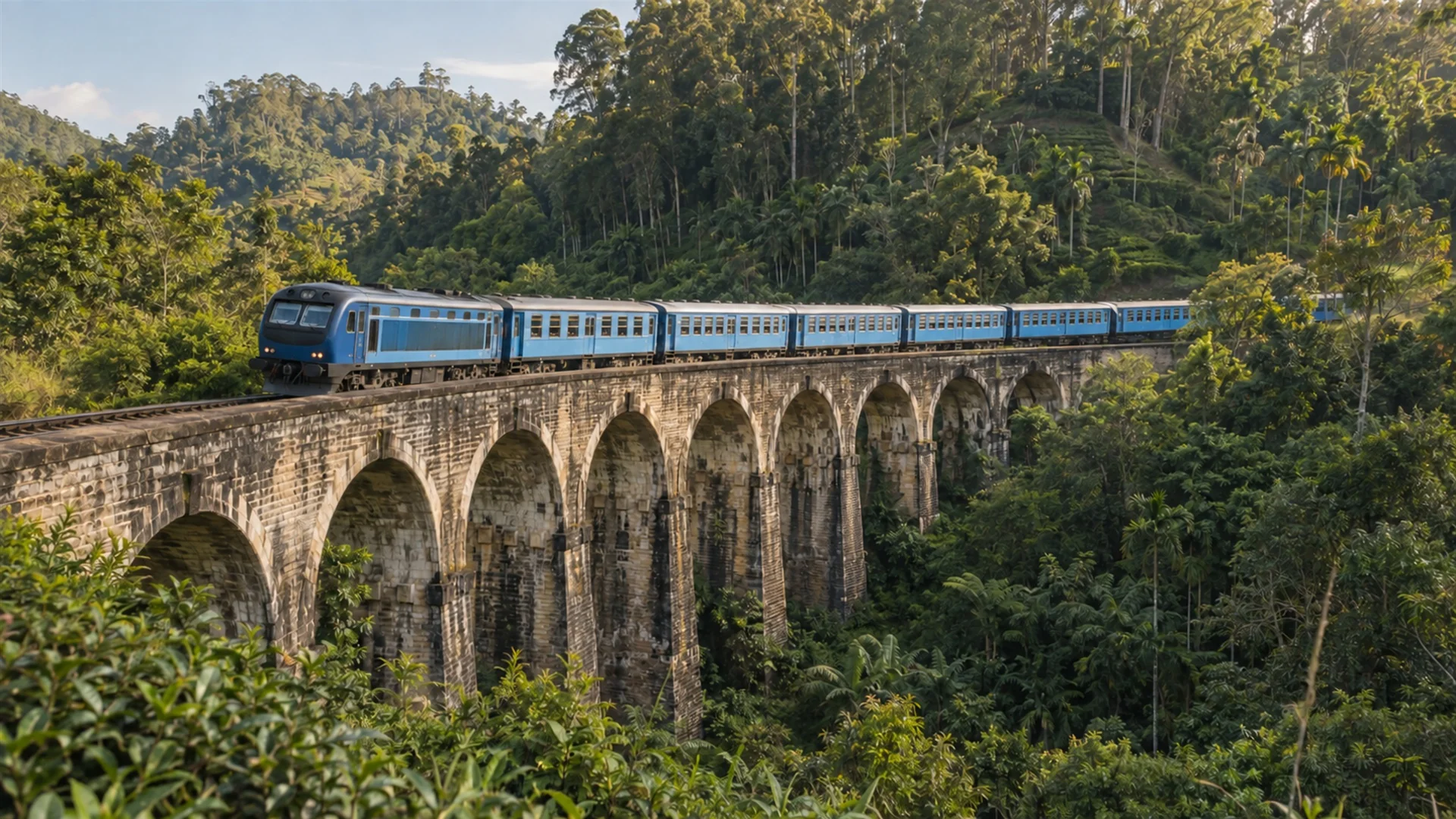
The railway from Kandy to Ella was built in the plantation era to serve the estates, and it remains one of the most scenic lines in Asia. The full journey usually takes six to seven hours, and delays are common, so it is best treated as an experience rather than a transfer.
The line climbs through estates, forest and small stations, passing Hatton and Nanu Oya before crossing the highest part of the route. Reserved seats in the observation or first-class carriages offer the most comfortable way to travel.
The journey begins in Kandy, the last royal capital of the island, set around a lake at the gateway to the hills. A night there before boarding allows an unhurried start, and the morning departure brings the best light across the estates.
Because the full journey is long, many travelers ride only one section, joining at Hatton or leaving at Nanu Oya. Just outside Ella, the stone Nine Arches Bridge spans a jungle ravine and is best seen on foot from the viewpoint above it.
This slow ascent is the natural way to reach Sri Lanka tea country, with the landscape unfolding outside the window rather than on a mountain road.
Nuwara Eliya, Horton Plains and Adam’s Peak
Nuwara Eliya, at close to 1,900 meters, was the colonial hill station of the island. Its mock-Tudor buildings, golf course and gardens still recall that era, and the town is the natural base for the highest parts of Sri Lanka tea country.
Nearby, Horton Plains National Park covers a high, windswept plateau of grassland and cloud forest. A circular walk leads to World’s End, a sheer escarpment best reached early, before the mist rises from the valleys below.
Later, travelers with stamina may consider Adam’s Peak, a sacred summit climbed at night by pilgrims to reach the top for sunrise. The ascent involves thousands of steps and several hours of steady effort, so it suits active travelers with good fitness.
Here, the temperature drop against the coast is most noticeable. Evenings in the highlands call for a sweater, while the coast below remains tropical, a contrast that makes the hills feel like another country.
Finally, Ella offers a gentler close to the highlands. The small town sits on the eastern edge of the hills, with walking trails to nearby viewpoints and the Nine Arches Bridge within easy reach. For official regional information, see https://www.srilanka.travel
Misty estates, colonial verandas, and a railway built for the view
Signature Experiences
- Several nights in a restored plantation bungalow
- Estate walks across the Bogawantalawa valley
- Guided visit to a working tea factory near Hatton
- Private tasting of high-grown Ceylon tea
- Scenic rail journey from Kandy toward Ella
- Morning walk to the Nine Arches Bridge viewpoint
- Colonial gardens and heritage streets of Nuwara Eliya
- Early walk to World’s End on Horton Plains
- Night pilgrimage climb of Adam’s Peak for sunrise
- Afternoon tea on a veranda above the estates
Let’s Design Your Experience
The highlands deserve more than a single night between beaches. At EscapeXperts, we plan the bungalow stays, reserved rail seats and private guides that make the hill country unhurried, combining seamless logistics, private experiences and curated exploration.
Why Travel to Sri Lanka with EscapeXperts
Sri Lanka’s highlands are best experienced slowly, from a veranda above the estates to a train window framing the hills. At EscapeXperts, we select the bungalows, arrange the factory visits and plan the rail sections that suit your pace. The result is Sri Lanka tea country as a destination of its own, not a mountain stop between two beaches.