Program length: From several nights to several weeks, depending on the tradition
Best months: November to April for Thailand and northern India · spring and autumn for Bhutan
Countries: Thailand · India · Bhutan
Region: Hua Hin · Koh Samui · Phuket · Kerala · Himalayan foothills · Paro Valley
Asia Wellness Retreats Are Programs, Not Spa Days
The best Asia wellness retreats are structured programs of several days, not a series of spa appointments. A stay begins with a consultation, follows a daily schedule of movement, nutrition, rest and treatments, and closes with guidance for the weeks after departure. In Thailand, India and Bhutan, each program draws on a distinct tradition.
Many travelers discover this format late. They book a massage at a resort spa and only then learn that some properties exist almost entirely around a program, with guests who arrive for a week or longer.
At EscapeXperts, we treat the retreat as the purpose of the journey rather than an afternoon within it. This guide explains the three traditions, how a program works and where each one is found.
What Separates a Retreat From a Spa
A spa offers individual treatments. A retreat offers a sequence. The difference is felt from the first day, when a consultation with a practitioner or wellness advisor sets the direction of the stay.
Several groups, including Six Senses, begin with a wellness screening or detailed questionnaire. The answers shape the schedule: which classes, which treatments, which meals and how much unstructured time.
Next, the days follow a rhythm. Mornings often start with yoga, meditation or a guided walk. Afternoons alternate treatments with rest, and evenings are deliberately quiet, with early dinners from a dedicated menu.
Finally, most programs close with a follow-up conversation and practical suggestions for home. This continuity is what the term program implies, and it is what distinguishes Asia wellness retreats from a long spa visit.
As a result, the length of stay matters. Contemporary programs often work within a week, while traditional approaches usually ask for considerably longer.
Three Traditions: Ayurveda, Traditional Medicine and Contemporary Wellness
The first tradition is ayurveda, India’s classical system of health, which considers diet, daily routine, herbal preparations and bodywork in relation to an individual’s constitution. Its most structured form, panchakarma, is a multi-week sequence of therapies, diet and rest supervised by trained ayurvedic doctors.
The second is traditional Asian medicine, a broad family that includes traditional Chinese medicine and Sowa Rigpa, the Himalayan medical tradition practiced in Bhutan. These systems emphasize balance, seasonal routines, acupuncture or herbal practice, depending on the lineage.
In contrast, contemporary wellness draws on physiotherapy, nutrition, fitness coaching, sleep guidance and mindfulness. It is the approach most familiar to Western travelers, and it tends to measure progress through practical goals rather than traditional concepts.
Many retreats combine two or three of these approaches under one roof. However, each asks something different of the guest. Ayurveda asks for time and a strict routine, while contemporary programs are more flexible. Understanding this is the first step in choosing among Asia wellness retreats.
Thailand: Chiva-Som, Kamalaya and Amanpuri
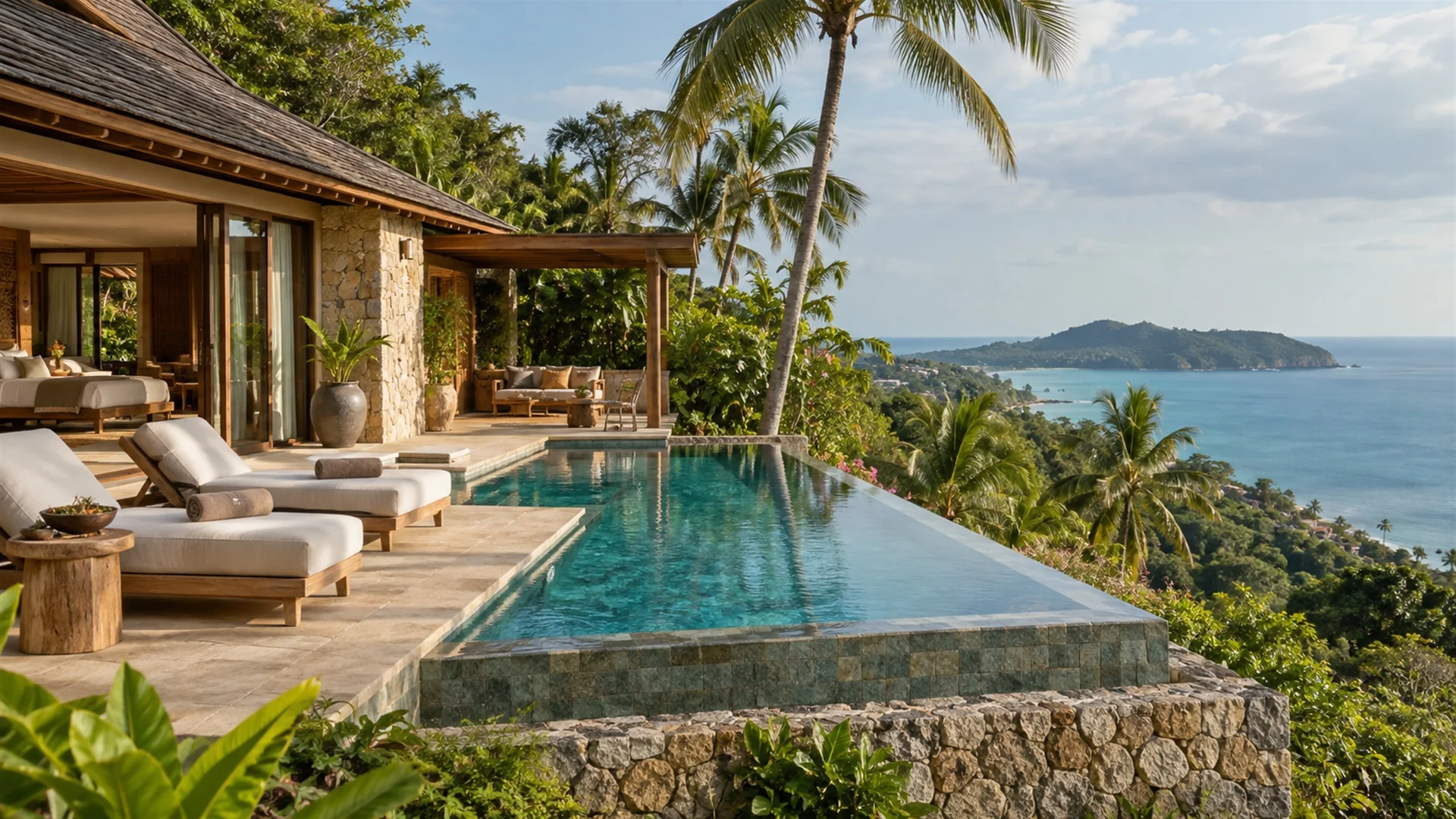
Thailand has one of the region’s most established retreat traditions. Chiva-Som, founded in Hua Hin in 1995, pairs each guest with a health and wellness advisor, who shapes a personal program across fitness, physiotherapy, nutrition and spa disciplines.
On Koh Samui, Kamalaya occupies a hillside above the sea around a cave once used by monks for meditation. Its programs blend Asian healing traditions with contemporary approaches, and guests typically follow a set theme for their stay.
Meanwhile, Amanpuri, the original Aman resort on Phuket, offers wellness immersions within a classic beach setting. This suits couples when one partner follows a full program and the other prefers a lighter schedule.
Therefore, Thailand works well for a first retreat. The programs are clear, the settings are restful and the dry season from November to April suits outdoor practice.
In addition, Six Senses runs wellness programs at Yao Noi in Phang Nga Bay and on Koh Samui, where the retreat sits within a broader resort stay. This format suits travelers who want structure in the mornings and freedom in the afternoons.
India: Ayurveda in Kerala and the Himalayan Foothills
India is the home of ayurveda, and Kerala, on the southwest coast, holds one of the strongest traditions of ayurvedic practice. Official information on the state’s approach is available at https://www.keralatourism.org/ayurveda/
In the north, Ananda in the Himalayas sits in the foothills above Rishikesh, on the grounds of a former royal estate. Its programs combine ayurveda, yoga and contemporary wellness, and they are built around consultations with in-house practitioners.
A full panchakarma program is measured in weeks rather than days. It involves a controlled diet, a fixed daily schedule and very little sightseeing. Because of this, it is best planned as a journey of its own.
Timing follows local custom as well. Kerala tradition regards the monsoon months as a favored period for ayurvedic therapies, when the air is cool and humid. Many travelers still prefer the drier winter months, which allow a program to be combined with the backwaters.
For shorter stays, ayurvedic principles can shape a week of meals, massage and yoga without the full protocol. The key is to choose the depth before choosing the property among the Asia wellness retreats India offers.
Bhutan: Mountain Lodges and the Hot Stone Bath
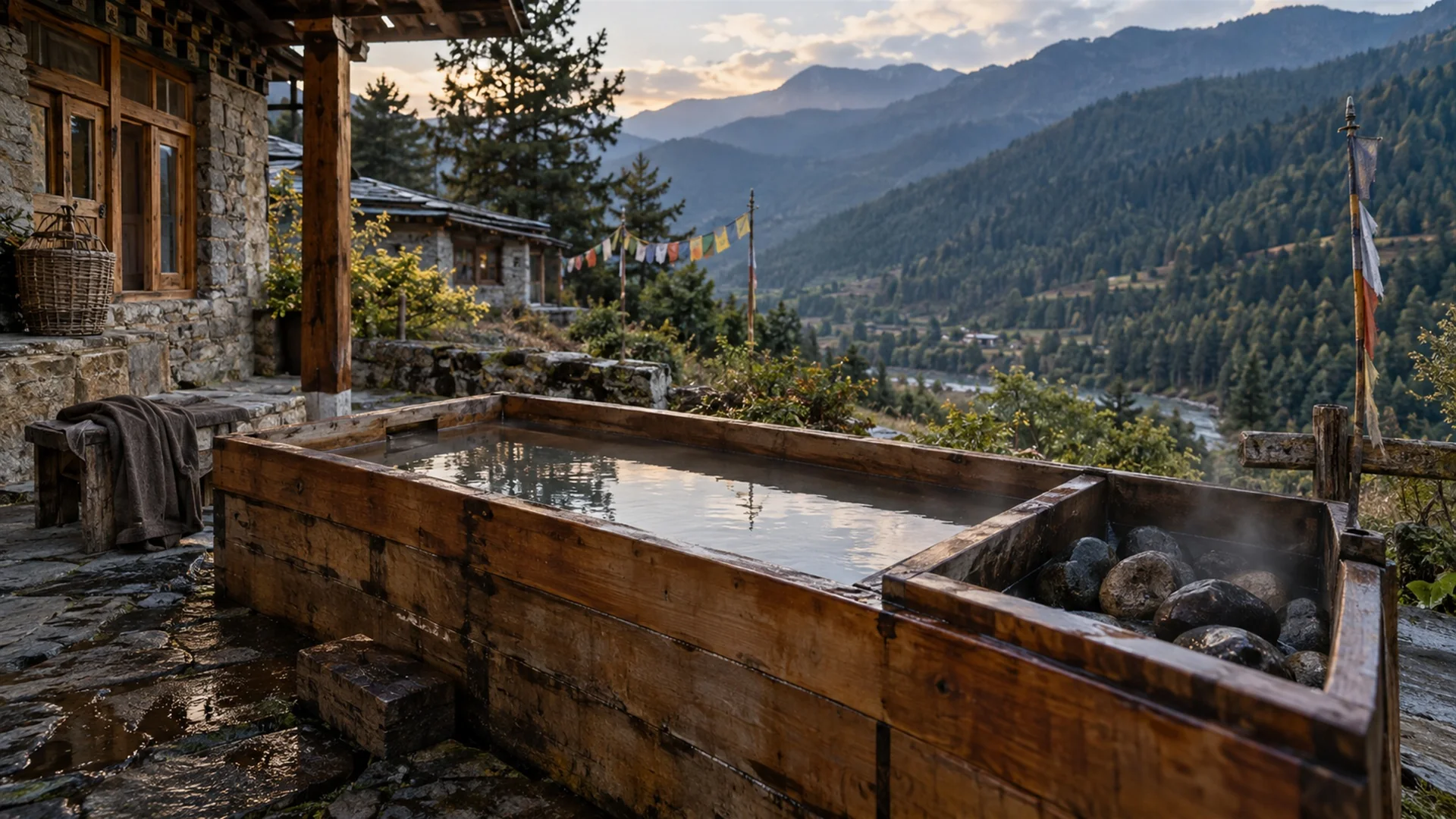
Bhutan offers a quieter model. Retreat time is set within a journey through the valleys, rather than in a single resort. Six Senses operates lodges across five valleys, while COMO has properties in Paro and Punakha, and Amankora follows a similar valley-by-valley pattern.
The signature local practice is the dotsho, a hot stone bath. River stones are heated in a fire and placed in a wooden tub of water with local herbs, a custom long rooted in Bhutanese rural life.
In addition, the country’s traditional medicine, Sowa Rigpa, continues alongside modern healthcare. Meditation with monastic teachers, forest walks and simple mountain cuisine complete a program that feels culturally grounded.
Days usually pair a valley walk or a monastery visit with an afternoon of treatments. Because many valleys lie above 2,000 meters, the first day is kept deliberately gentle.
Spring and autumn bring the clearest skies. Here, Asia wellness retreats become inseparable from the landscape itself.
Choosing and Preparing for Asia Wellness Retreats
The right retreat depends on three questions: how many nights are available, how structured the days should be and which tradition feels most relevant. A week in Thailand, three weeks in Kerala and ten days across Bhutan are very different commitments.
Preparation matters as well. Programs work best with a clear itinerary before and after, so the retreat is not squeezed between long flights and busy city stays.
Finally, retreats describe support for well-being rather than medical care. Any existing health condition should be discussed with a personal physician before travel.
Quiet mornings, ancient traditions, and time returned
Signature Experiences
- Personal consultation with a wellness advisor at Chiva-Som
- Hillside program above the sea at Kamalaya on Koh Samui
- Beachfront wellness immersion at Amanpuri in Phuket
- Traditional ayurvedic stay on the backwaters of Kerala
- Yoga and ayurveda at Ananda in the Himalayas
- A full panchakarma program planned as its own journey
- Meditation with monastic teachers in the valleys of Bhutan
- Evening dotsho hot stone bath beside a Bhutanese farmhouse
- Valley-to-valley lodge circuit with Six Senses or COMO
- Early dinners from a dedicated wellness menu
Ready for Something Extraordinary?
A wellness journey succeeds when the program, the setting and the pace align. At EscapeXperts, we match travelers to the right tradition and property, combining seamless logistics, private experiences and curated exploration before and after the retreat.
Why Travel to Asia for Wellness with EscapeXperts
Asia offers three distinct ways to rest with purpose, and each asks for a different commitment. At EscapeXperts, we help travelers choose between ayurveda, traditional medicine and contemporary programs, then shape the journey around the retreat. The result is a considered approach to Asia wellness retreats, aligned with how you want to travel.