
Best months (north): October to November, and March to April
Best months (center): February to August
Best months (south): December to April
Regions covered: Hanoi and the north · Hue, Hoi An and Da Nang · Ho Chi Minh City and the south
Best Time to Visit Vietnam: Three Climates, No Perfect Month
The best time to visit Vietnam depends on the region. The north is finest in autumn and spring, the center is driest from February to August, and the south is dry from December to April. Because the three rarely align, no single month is ideal for the whole country, and every route involves a trade-off.
Vietnam stretches more than 1,600 kilometers from the Chinese border to the Gulf of Thailand. Over that distance, the country crosses three distinct climate zones, each with its own rains and its own calm season.
At EscapeXperts, we do not promise a perfect month. Instead, this guide explains how the three climates work, where the typhoons and the lunar new year change the plan, and what each travel window asks couples to accept.
Why the Best Time to Visit Vietnam Is a Trade-Off
Most seasonal advice describes Vietnam as if it had one wet and one dry season. That is accurate only for the south. The north has four seasons, including a cool winter, and the central coast receives its heaviest rain when the rest of the country is drying out.
The reason is the northeast monsoon. From autumn, it brings cool air to the north and pushes moisture onto the central coast, where the mountains hold the clouds against the shore. Meanwhile, the south is entering its driest months.
As a result, a route from Hanoi to Ho Chi Minh City will almost always meet one region outside its best weeks. The planning question is not how to avoid that, but which compromise suits the journey.
Therefore, the best time to visit Vietnam is the window whose trade-off matters least to the traveler.
The North: Hanoi, Halong Bay, Ninh Binh and Sapa
Northern Vietnam has a true winter. From December to February, Hanoi is cool and often gray, with fine drizzle, and mist can soften the views across Halong Bay. The mountains around Sapa can be cold enough for frost.
Spring, from March to April, brings milder air and green landscapes in Ninh Binh, although haze can linger over the water. Summer, from May to September, is hot and humid, with heavy downpours and the highest storm risk of the year.
Autumn is the most admired season. From late September to November, skies clear, humidity falls and the rice terraces of the northern mountains turn gold before the harvest.
For a journey centered on the north, this is the best time to visit Vietnam, with Hanoi at its most pleasant for walking.
The Center: Hue, Hoi An and Da Nang
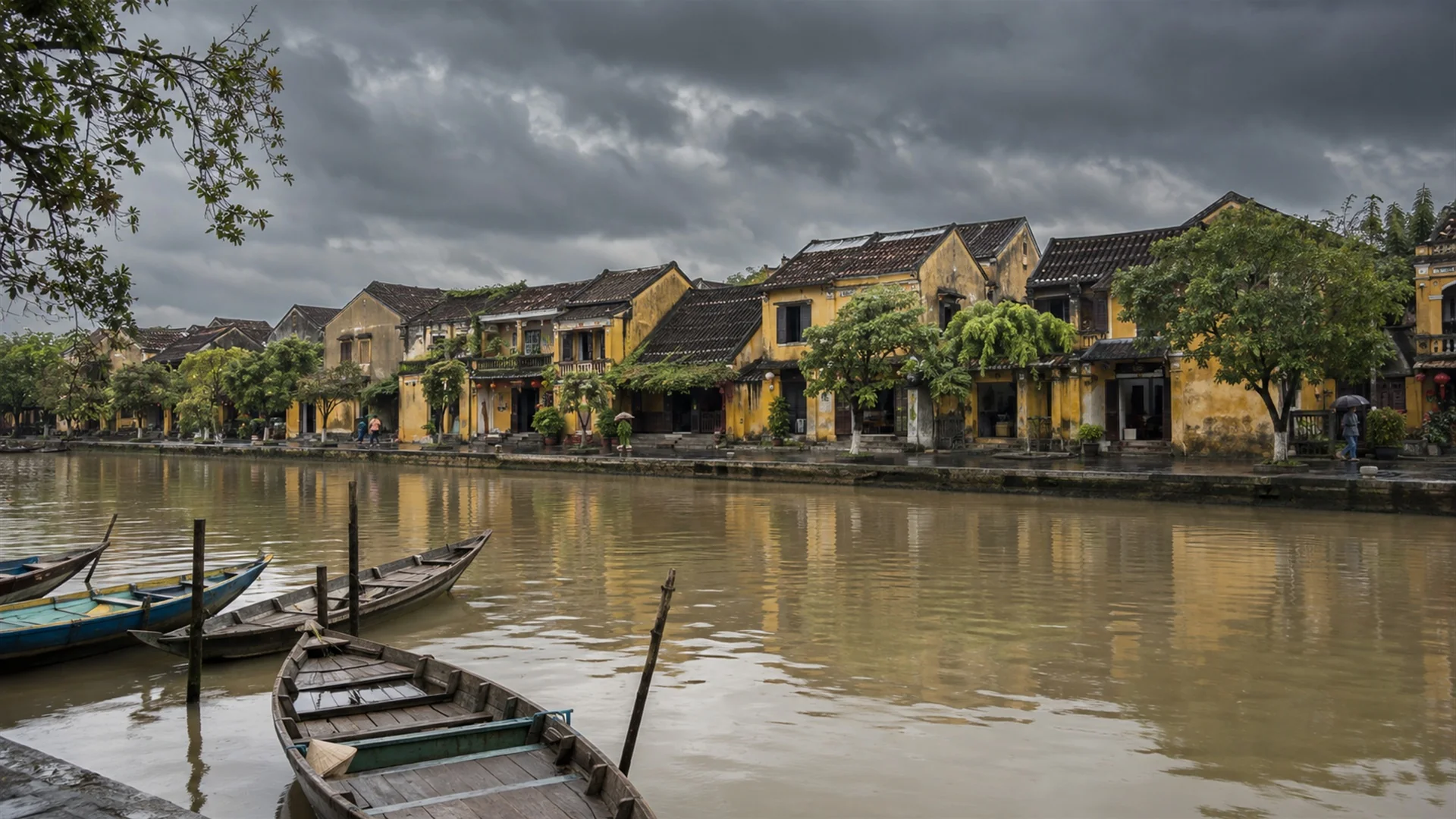
The central coast runs on its own calendar. From February to August, Hue, Hoi An and Da Nang are largely dry, with the hottest weather arriving in June and July.
From September to December, the pattern reverses. The northeast monsoon and passing storms bring the heaviest rainfall in the country, and the lower streets of Hoi An’s old town can flood after prolonged rain, typically in October and November.
In contrast, these are the months when the north is at its clearest. This is the core contradiction of Vietnamese travel: the autumn that suits Hanoi is the season that challenges the center.
Because of this, the best time to visit Vietnam for the imperial city and the central coast falls between February and August.
The South: Ho Chi Minh City and the Mekong Delta
The south is tropical and warm all year. Its dry season runs from December to April, when Ho Chi Minh City and the Mekong Delta enjoy clear mornings and steady conditions for river travel.
March and April are the hottest months before the rains. From May to November, the wet season brings short, heavy afternoon storms rather than days of continuous rain, and mornings often remain usable.
Therefore, the south is the most forgiving region. It is rarely the reason a date fails, and it adapts well to either end of a north-south route. For a journey that begins or ends in the south, the dry months from December to April are the best time to visit Vietnam without compromise.
Typhoon Season and Halong Bay

The typhoon season affects Vietnam broadly from June to November. Storms most often reach the northern coast in the summer months and the central coast later in the autumn, though each year differs.
For Halong Bay, the practical effect is clear. When a storm warning is issued, port authorities suspend cruise departures, sometimes at very short notice. An overnight cruise can be shortened, postponed or cancelled on the day of travel.
This is why we never place the bay at the end of a northern itinerary between July and October. A flexible day before the international flight allows the cruise to move if departures are suspended.
Finally, winter brings a gentler constraint. Mist between January and March rarely stops departures, but it can soften the famous views of the karsts.
Tet: When the Whole Country Goes Home
Tet, the lunar new year, is the most important holiday in Vietnam. It falls between late January and mid-February, and its dates move each year with the lunar calendar.
For travelers, Tet is a question of availability rather than weather. Millions of people travel home, domestic flights and trains fill weeks in advance, and many family restaurants, shops and workshops close for several days.
In addition, cities become unusually quiet during the main days of the holiday. Some travelers enjoy the decorations and the flower markets of the preceding week, yet a first visit is usually better planned outside the festival.
The Best Time to Visit Vietnam, and What Each Window Sacrifices
- October to November: The north at its finest · The center in its wettest weeks · The south still rainy
- December to February: The south dry and ideal · The center drying out · The north cool and gray · Tet to avoid
- March to April: The north mild · The center dry · The south hot · The broadest compromise
- May to August: The center at its sunniest · The north hot, wet and exposed to storms · The south in its wet season
Read honestly, March and April come closest to a single answer, at the cost of heat in the south and haze in the north. October and November give the finest north and ask the traveler to shorten or skip the center.
That candor is the most useful answer to the best time to visit Vietnam: choose the region that matters most, and accept what the other two ask in return. For official travel information, see https://vietnam.travel
Autumn light in the north, lanterns on the central coast, and a south that never quite cools
Signature Experiences
- Clear autumn walks through the streets of Hanoi
- Golden rice terraces around Sapa before the harvest
- Spring river journeys among the karsts of Ninh Binh
- A carefully timed overnight cruise on Halong Bay
- Dry season visits to the imperial monuments of Hue
- Summer evenings along the river in Hoi An
- Coastal stays near Da Nang between February and August
- Clear dry season mornings in Ho Chi Minh City
- River life of the Mekong Delta in the dry months
Ready for Something Extraordinary?
Vietnam rewards travelers who plan with its three climates rather than against them. At EscapeXperts, we choose the direction of travel and the right weeks for each region, combining seamless logistics, private experiences and curated exploration with the flexibility the weather sometimes requires.
Why Travel to Vietnam with EscapeXperts
Vietnam has no perfect month, and a good plan starts by saying so. At EscapeXperts, we read the monsoon, the typhoon calendar and the lunar new year together, then order the regions so that each is met in its most rewarding season. The result is an honest, well-built answer to the best time to visit Vietnam for the journey you have in mind.