Best months: May to October (dry season, high water)
Country: Botswana
Region: Okavango Delta · Moremi · Chobe · Linyanti · Kalahari
Best for: Exclusivity, water safaris, low-density game viewing
A Botswana Safari: The Okavango Delta and Beyond
A botswana safari is the purist’s choice in Africa. The country trades volume for value: few vehicles, vast private concessions, and a water world at its heart. The best months run from May to October, when the Okavango Delta floods and the dry season concentrates wildlife along the channels.
At Escape Xperts, we design Botswana journeys for travelers who prize space and privacy above all. This is a place of low-impact, high-value tourism — where a single camp may hold exclusive rights over tens of thousands of acres, and where the sound at dawn is birdsong, not engines.
The Water Cycle and When to Go
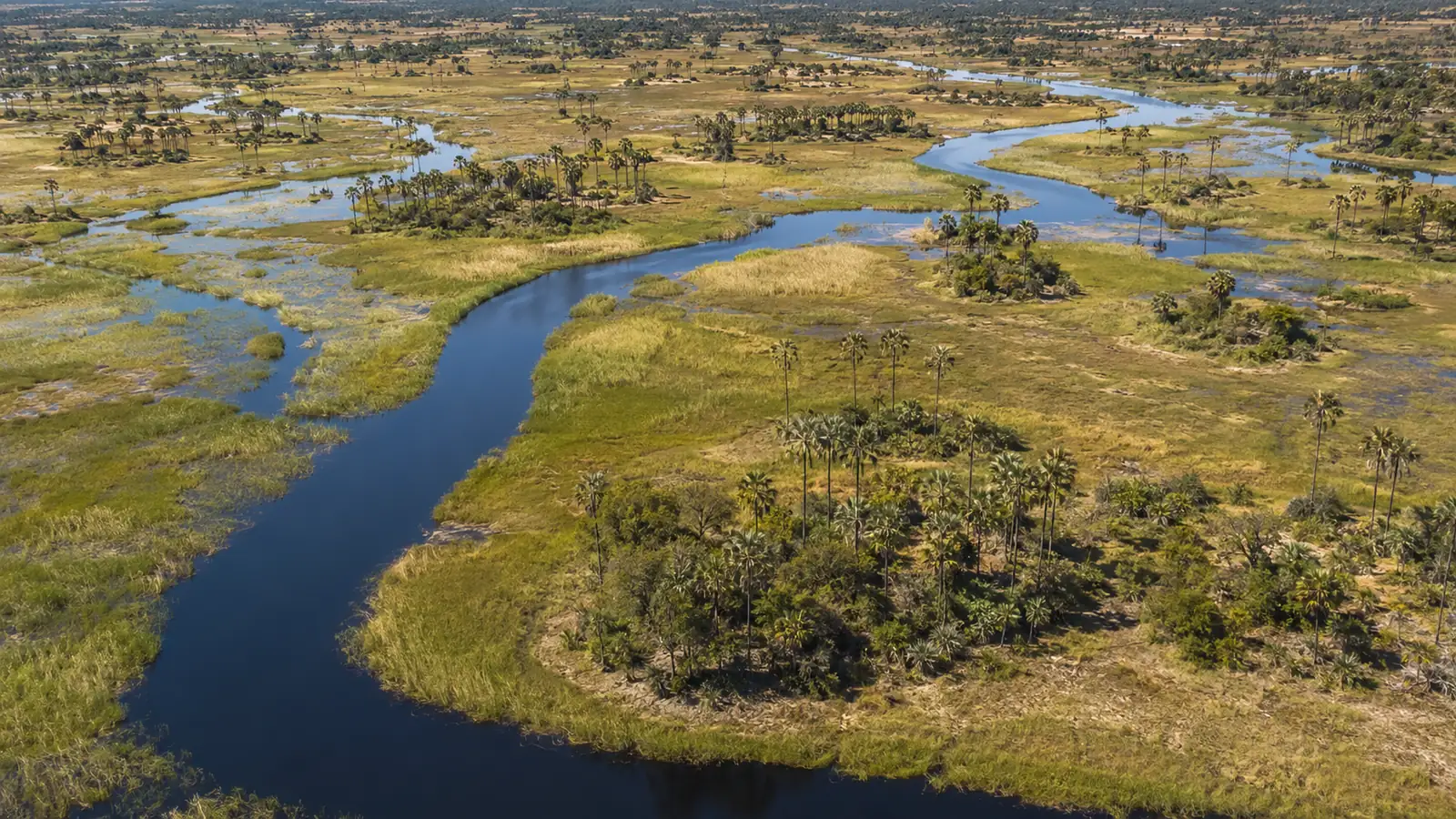
Botswana’s calendar is governed by water. Rain falls over the Angolan highlands from December, then takes months to travel south, so the Okavango Delta reaches its highest levels between May and August — long after the local rains have stopped.
Because of this delay, the finest game viewing on a botswana safari aligns with the dry season from May to October. As the surrounding bush dries, animals crowd toward the permanent water, and the flooded channels open up for boat and mokoro travel.
Meanwhile, the green season from November to March brings dramatic skies, newborn animals and superb birding, along with lower rates and thinner crowds. In the Kalahari, this is actually the prime window, when the rains draw game onto the pans.
The shoulder months of April and November bridge the two. April follows the rains with lush landscapes and rising water, while November carries the first storms and the start of the calving season. Both offer value and fewer guests for those willing to trade a little predictability.
Therefore, the ideal timing depends on region: the Okavango Delta and Chobe peak in the dry months, while the desert comes alive in the green season.
A Low-Impact, High-Value Model
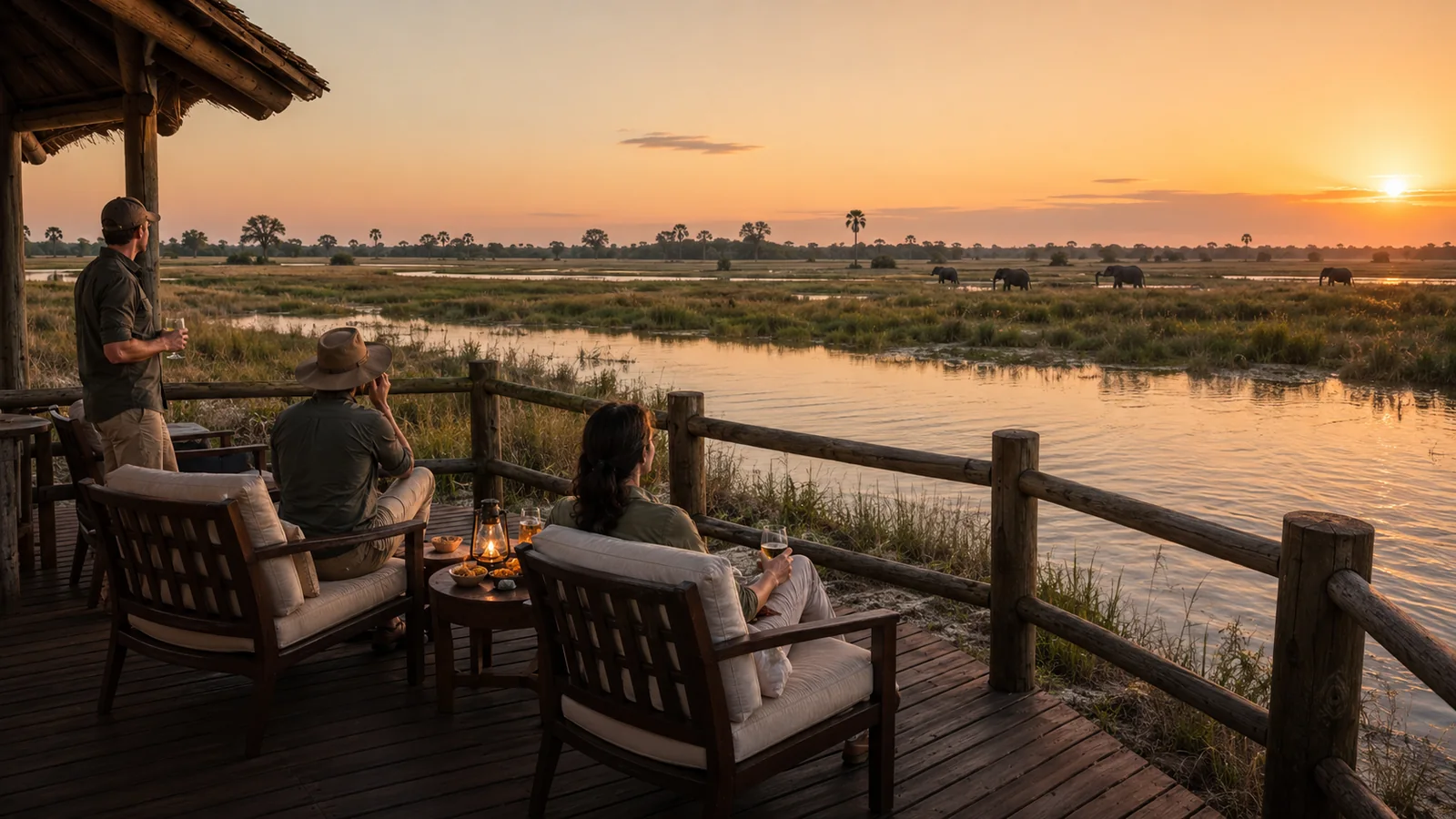
Botswana made a deliberate choice decades ago: rather than mass tourism, it built a model of low-impact, high-value travel. Much of the wilderness is divided into private concessions leased to a limited number of small camps.
As a result, a botswana safari feels genuinely exclusive. Off-road driving, night drives and guided walks — restricted or banned in many national parks — are all possible in these private areas, and vehicle numbers at a sighting are strictly controlled.
In addition, this approach channels tourism revenue into conservation and local communities, keeping the ecosystem intact. The result is one of the last places where wilderness on this scale remains almost entirely undisturbed.
The trade-off is that Botswana is not a budget destination, nor does it try to be. The value lies in what money does not usually buy: solitude, access and a guide who may share a sighting with no other vehicle in view.
For travelers who have safaried before and want something quieter and more intimate, this model is the whole point.
The Okavango Delta: Mokoro and Beyond
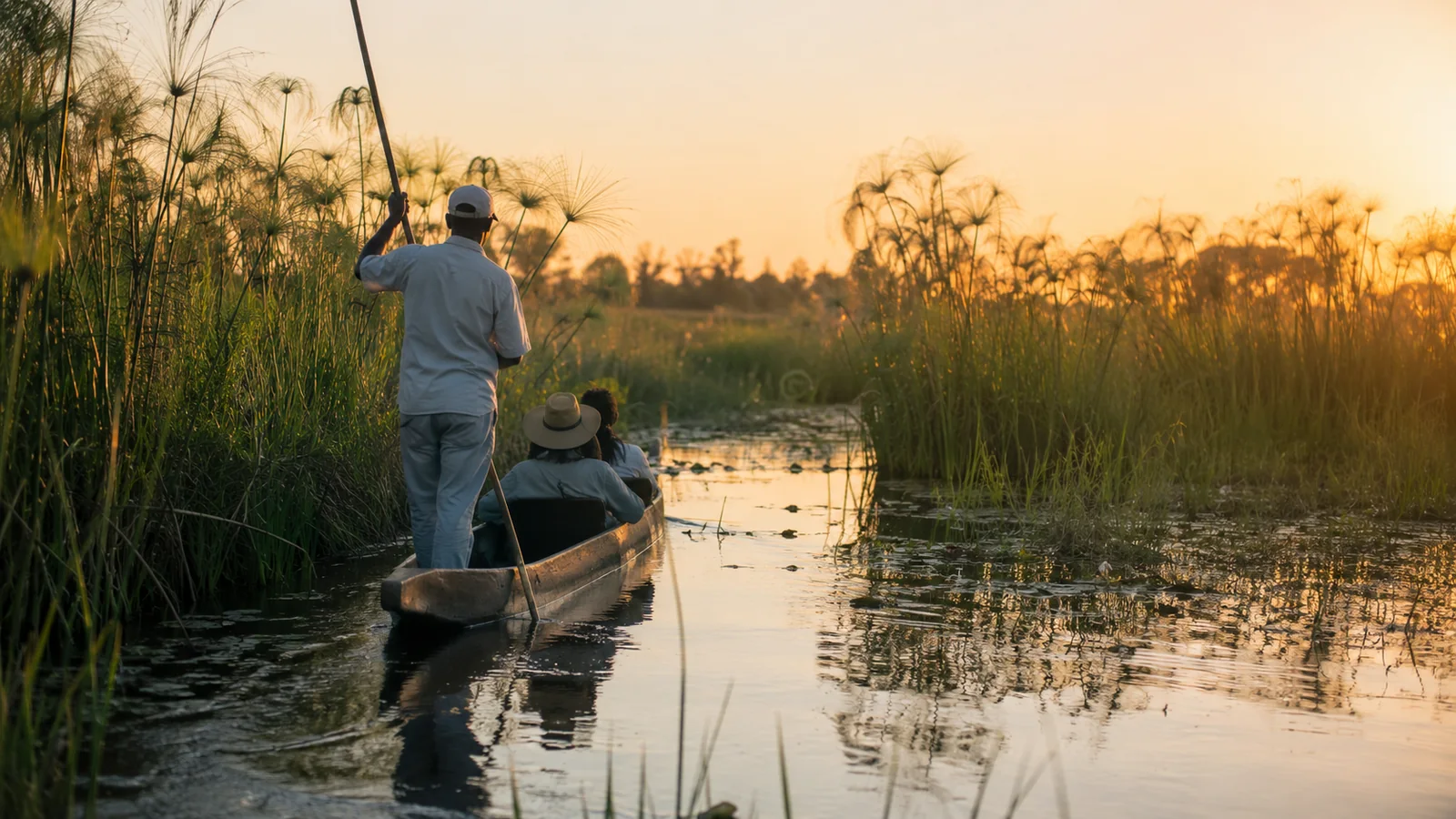
The Okavango Delta is the world’s largest inland delta — a UNESCO World Heritage site where the Okavango River fans out across the Kalahari sands rather than reaching the sea. It is the emotional core of any journey here.
Here, the signature experience is the mokoro: a shallow dugout canoe, poled silently through the reeds. Gliding at water level past lily pads and frogs, with elephants feeding on the banks, is unlike any game drive.
Beyond the water, the Moremi Game Reserve on the Delta’s eastern edge offers classic land-based game viewing, with strong populations of lion, leopard and wild dog. Many itineraries pair a water camp with a dry-land camp for contrast.
The Delta also shifts with the water. Early in the flood, boating and mokoro dominate; as levels drop later in the year, game drives and walking come to the fore. A guide reads these changes daily, adapting the day’s activity to where the wildlife has moved.
Finally, the productive concessions of the inner Delta — around Mombo and Vumbura Plains — rank among the richest predator territories on the continent.
Chobe, Linyanti and the Kalahari
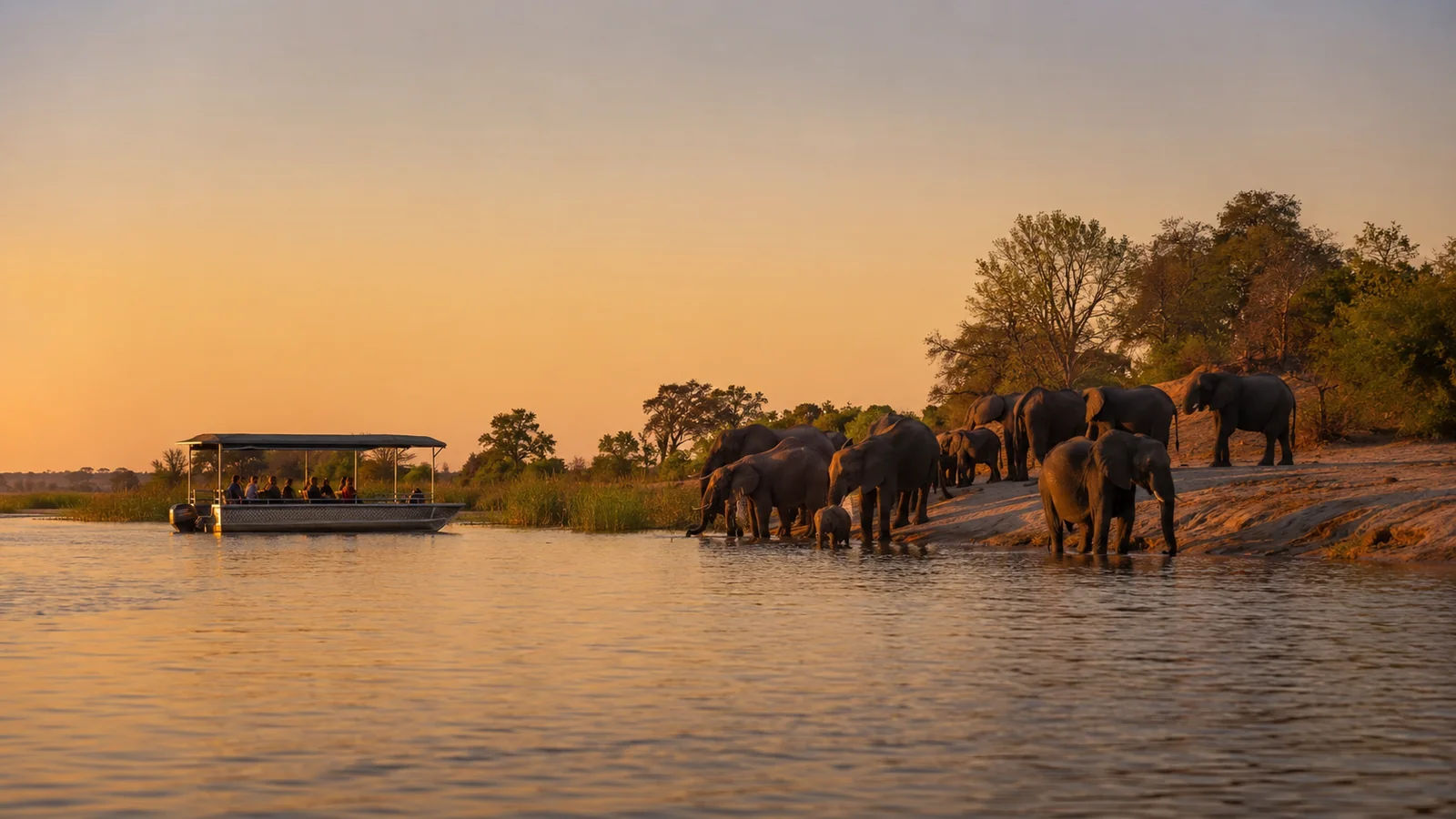
North of the Delta, Chobe National Park is famous for its elephants — among the largest concentrations on earth — gathering along the Chobe River in the dry season. A boat cruise here delivers game viewing from the water.
Between Chobe and the Delta, the Linyanti and Savute regions offer wild, low-density concessions known for elephant, lion and dramatic predator dynamics. These are the connoisseur’s corners of a botswana safari.
In contrast, the Kalahari and the Makgadikgadi salt pans belong to another world entirely — vast, silent and starkly beautiful. Meerkats, desert-adapted wildlife and one of the darkest night skies anywhere reward those who venture there.
Chobe also pairs naturally with a wider circuit. Its northern position places it within easy reach of Victoria Falls, and many travelers combine the two, ending a botswana safari with the thunder of the falls just across the border.
Most journeys begin in Maun, the safari gateway, from where light aircraft fly guests directly into the concessions.
Where to Stay: Camps and Concessions
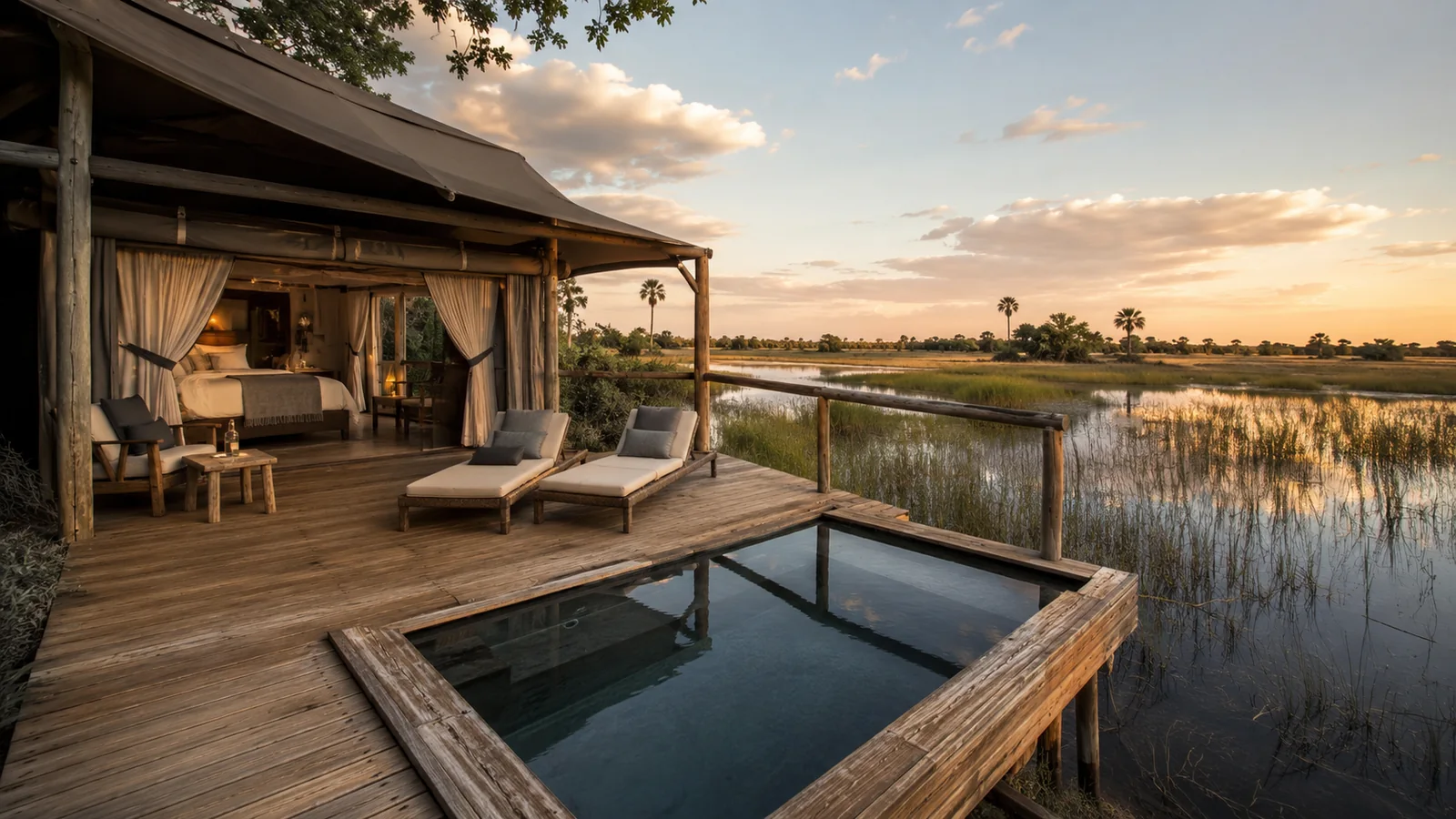
Accommodation defines a botswana safari as much as the wildlife. Camps here are small by design — often fewer than a dozen tents — and their location within a private concession matters more than any star rating.
The finest properties in Mombo, Vumbura Plains and the Linyanti combine barefoot elegance with world-class guiding. Raised on platforms above the floodplain, they blur the line between comfort and wilderness.
Because these camps are so limited, the best of them book out a year or more ahead for the dry-season peak. Early planning is essential, not optional.
Access is almost always by light aircraft, and the fly-in transfers themselves — low over the Delta’s channels — become part of the experience.
Silent water, endless sky, and wilderness with almost no one else in it
Signature Experiences
- Mokoro glide through the Okavango Delta channels
- Boat cruise among the elephants of Chobe
- Guided bush walk in a private concession
- Night drive for leopard and other nocturnal game
- Predator tracking around Mombo
- Fly-in transfer low over the Delta floodplains
- Meerkat encounter on the Makgadikgadi pans
- Stargazing under the dark skies of the Kalahari
- Sundowners on a remote Linyanti floodplain
- Wild dog sighting in Moremi
Ready for Something Extraordinary?
Botswana rewards travelers who value exclusivity over checklists. At Escape Xperts, we build journeys around seamless fly-in logistics, private concession access and expert guiding — pairing water and land camps so the Delta, Chobe and the desert flow into one seamless whole.
Why Travel to Botswana with Escape Xperts
Botswana offers a wilderness few places can still match — the flooded channels of the Okavango Delta, the elephant herds of Chobe and the silence of the Kalahari, all under a low-impact model built for privacy. At Escape Xperts, we secure the finest concession camps, time the journey to the water cycle, and coordinate every fly-in so a botswana safari becomes the purest expression of the African wild. Reference: https://whc.unesco.org/en/list/1432