Best months: October to April (Cape summer) · May to September (cooler, fewer crowds)
Country: South Africa
Region: Cape Town · Stellenbosch · Franschhoek · Constantia · Cape Peninsula
Best for: Safari pairing, wine and gastronomy, city and coast
Cape Town and the Winelands: The Other Half of a South Africa Safari
Cape Town and the Winelands are the complement that transforms a South African safari from a wildlife trip into a complete journey. Where the bush delivers adrenaline and early starts, the Cape delivers beauty, culture and the kind of slow, refined days that close an itinerary well — Table Mountain on one side, the vineyards of Stellenbosch and Franschhoek on the other.
At Escape Xperts, we pair Cape Town and the Winelands with Kruger or the Sabi Sands as the opening or closing chapter of every South Africa itinerary. The contrast between bush and Cape is the point — and the short flight between Johannesburg and Cape Town makes the transition seamless.
Cape Town: Table Mountain and the Peninsula
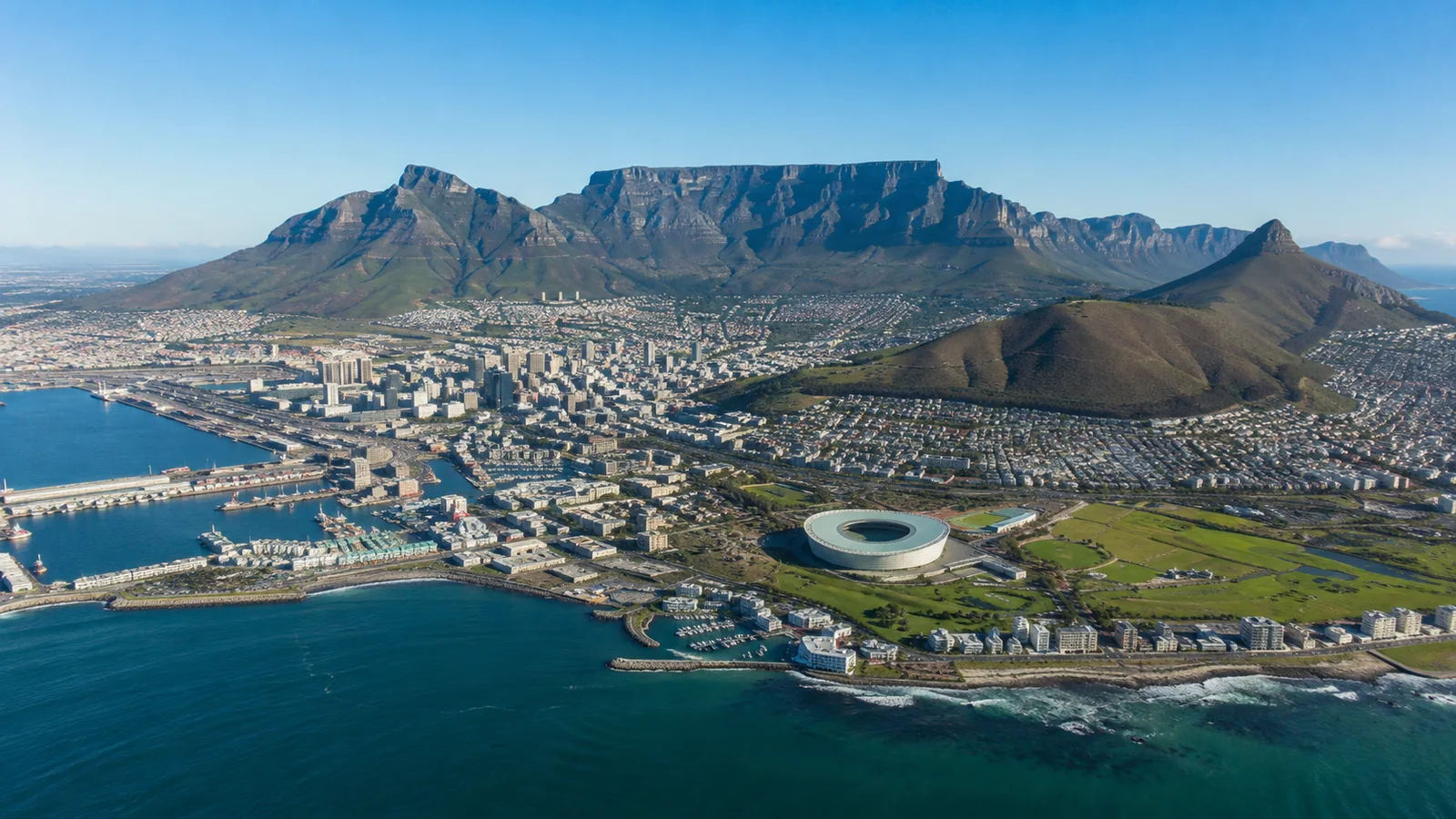
Two to three days in Cape Town cover the essentials. Table Mountain anchors the city — a flat-topped massif visible from almost every angle, reached by cable car or on foot for those who prefer to earn the view.
The Cape Peninsula drive is the day trip that defines the Cape: along Chapman’s Peak, past the penguin colony at Boulders, through the fynbos of the Cape Point reserve and back via the False Bay coast. Meanwhile, the V&A Waterfront offers a concentrated experience — restaurants, the Zeitz MOCAA gallery and harbour-front walks within easy reach of any hotel.
Because of this density, Cape Town rewards a considered schedule more than an exhaustive one. The best days here have two activities, not five — a morning on the mountain, an afternoon at the waterfront, and a rooftop sundowner as the light turns gold.
The Wine Towns: Stellenbosch, Franschhoek and Constantia
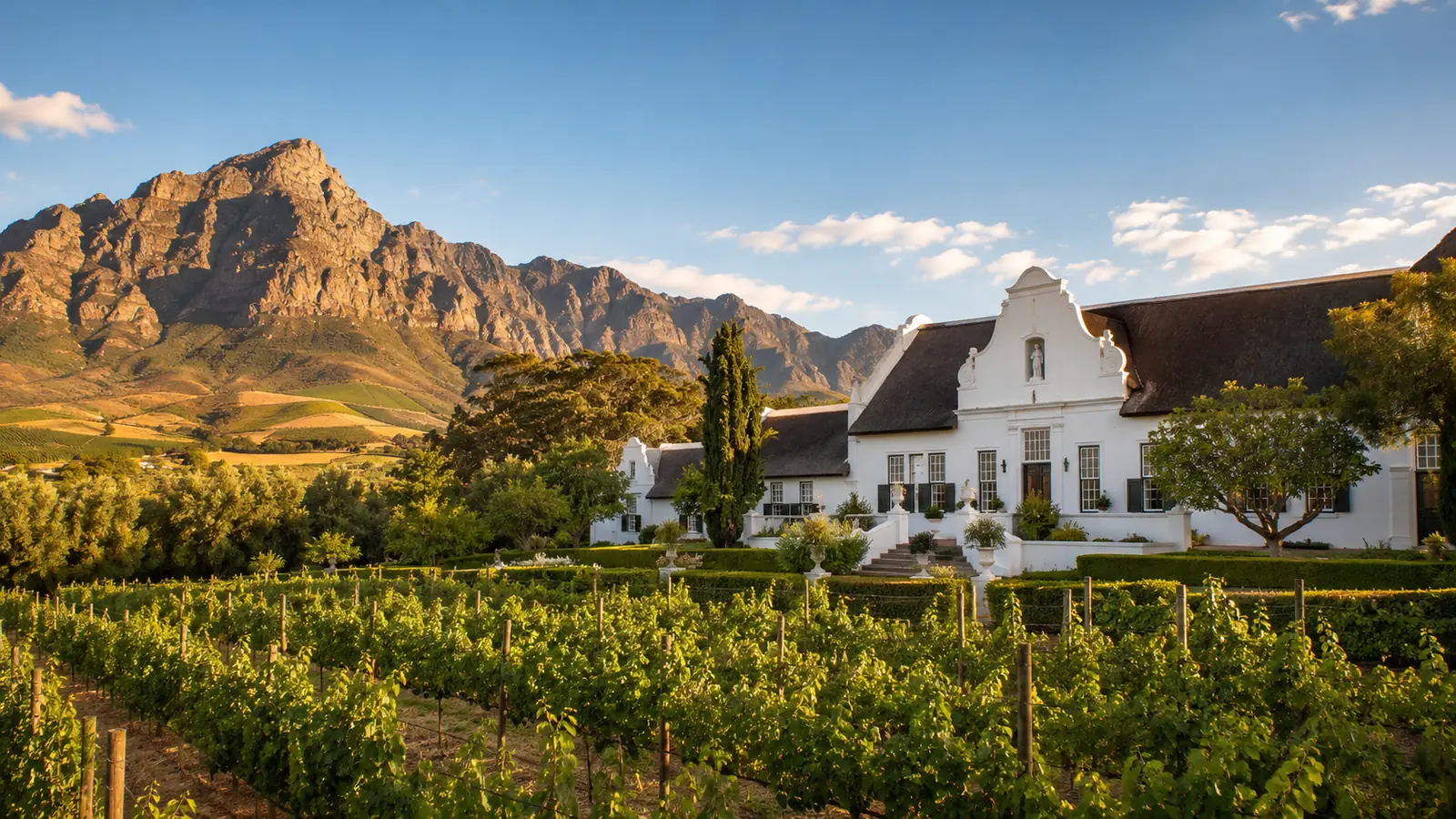
The Winelands sit forty-five minutes inland from Cape Town, and the three main wine towns each offer a different register.
Stellenbosch is the oldest — oak-lined streets, Cape Dutch architecture and a university town energy. The estates here are large and established, and the tastings tend toward the formal. In addition, Stellenbosch produces some of South Africa’s finest reds, particularly Cabernet Sauvignon and Bordeaux-style blends.
Franschhoek is the gastronomic capital. The main street alone holds more fine-dining restaurants per block than almost anywhere in the Southern Hemisphere, and the wine tram — a hop-on, hop-off route through the valley — connects the estates without the need for a car. As a result, Franschhoek is where the food and the wine meet most naturally.
Next, Constantia sits on the back slopes of Table Mountain, within Cape Town itself. Its estates are the country’s oldest, and the setting — vineyards against mountain and sea — feels closer to Europe than to Africa. For travelers short on time, Constantia offers a Winelands experience without leaving the city.
The Food: From Farm Tables to Fine Dining
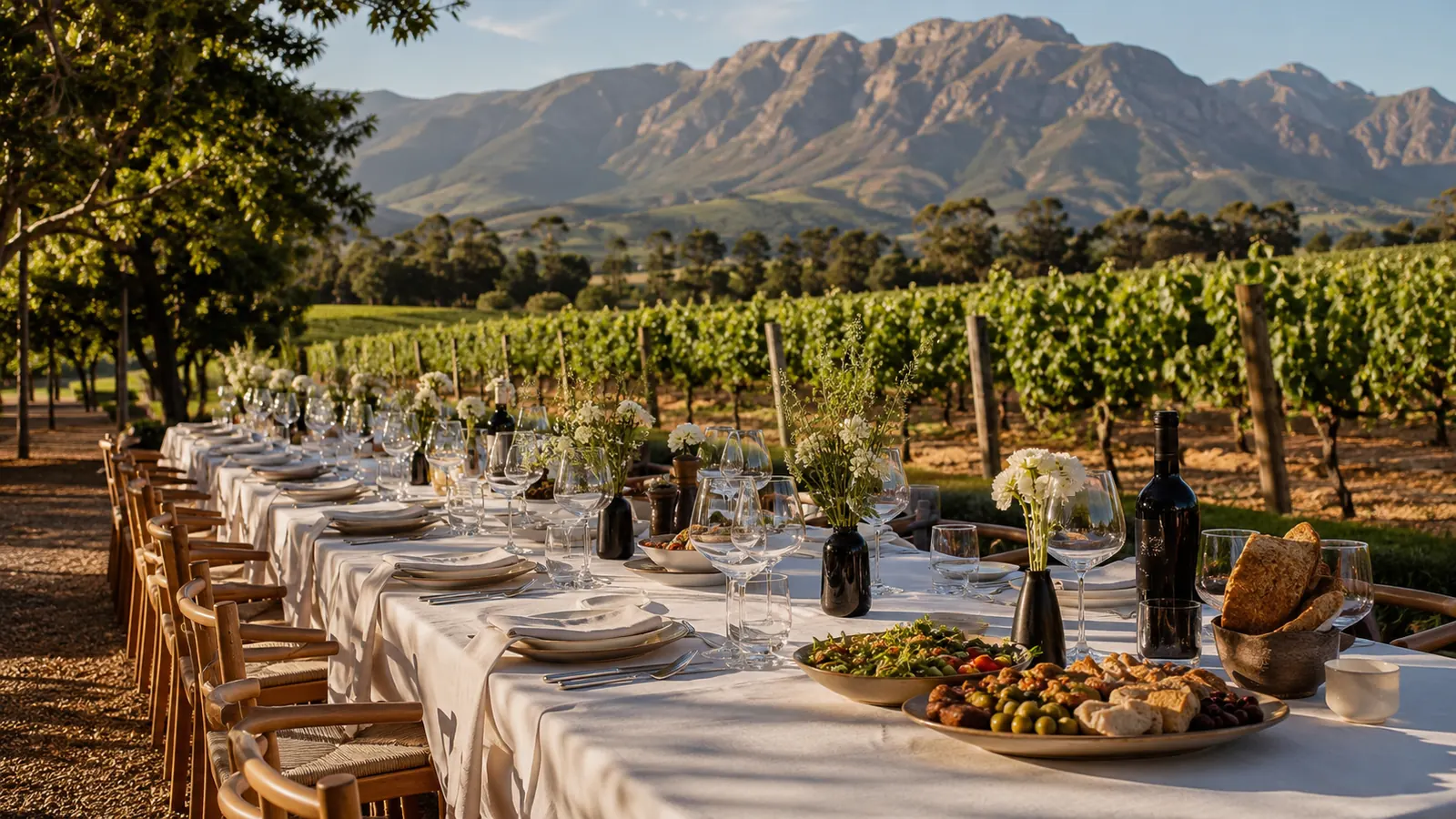
The food scene across Cape Town and the Winelands is one of the strongest reasons to extend a South Africa journey beyond the safari. Farm-to-table cooking, local cheeses, olive oils and charcuterie drive the menus, and the proximity of producer to plate is visible everywhere.
In Franschhoek, multi-course tastings paired with estate wines are the norm, and the standard rivals anywhere in the world. Meanwhile, Cape Town’s own restaurant scene — from Bree Street to Woodstock — adds global influences, seafood and a creative energy that feels distinctly contemporary.
Because of this concentration, the Cape chapter of a South Africa journey often becomes the most memorable at the table. The bush feeds the spirit; the Winelands feed everything else.
When to Visit: The Cape Seasons
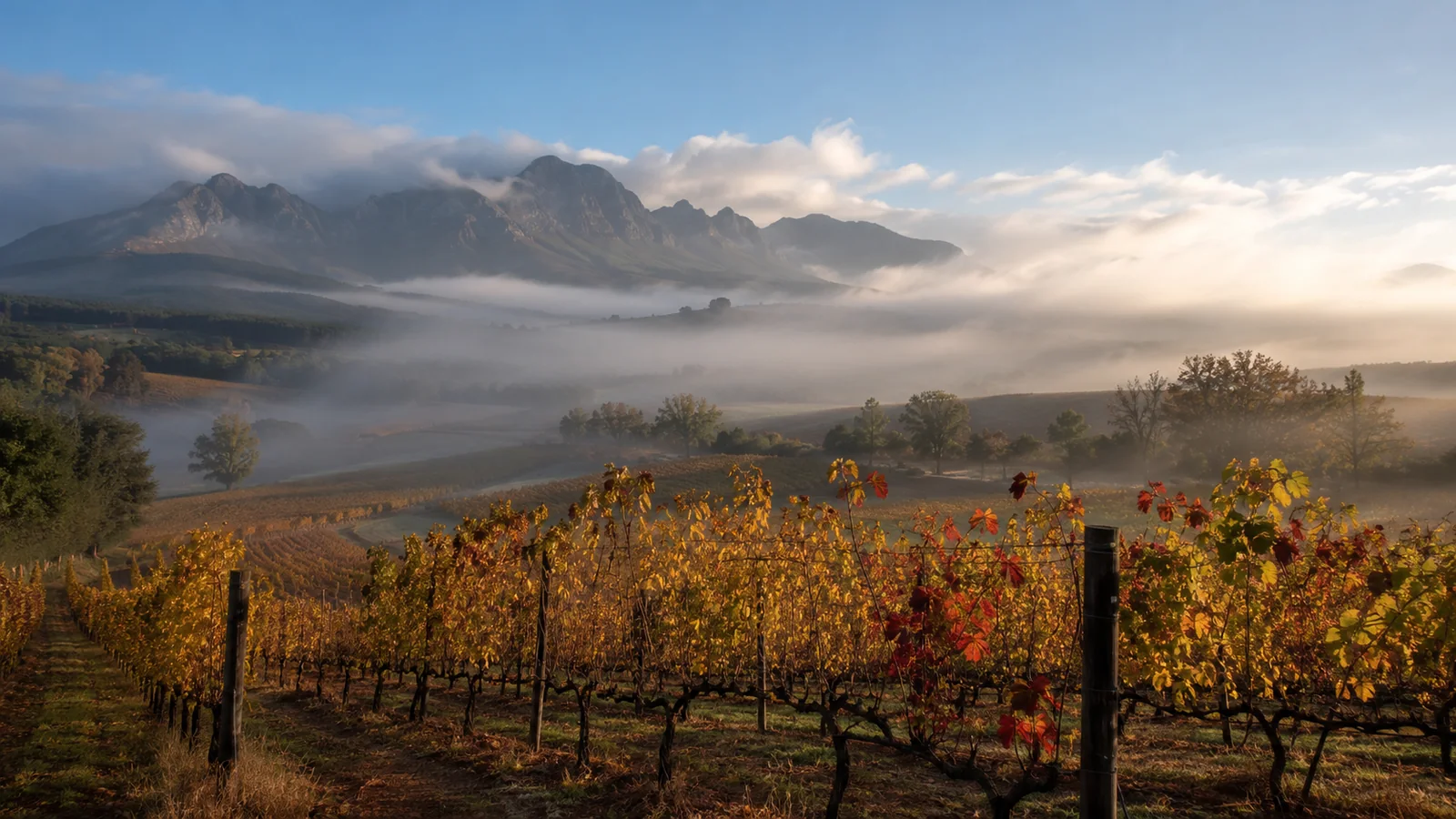
The Cape operates on a Mediterranean climate, roughly opposite to the safari calendar. The dry summer months from October to April bring warm, clear days — ideal for the peninsula, the beaches and outdoor tastings.
In contrast, the winter months from May to September are cooler and wetter, but the Winelands take on a different beauty: mist on the mountains, fireside tastings and far fewer visitors. Therefore, the timing often depends on the safari pairing: a May-to-October dry-season safari in Kruger aligns with the Cape’s quieter, cooler months — a comfortable combination that avoids the peak summer crowds.
For travelers who want both sun and safari, the shoulder months of October and April offer the best overlap — warm enough in the Cape, dry enough in the bush.
Pairing with a Kruger or Sabi Sands Safari
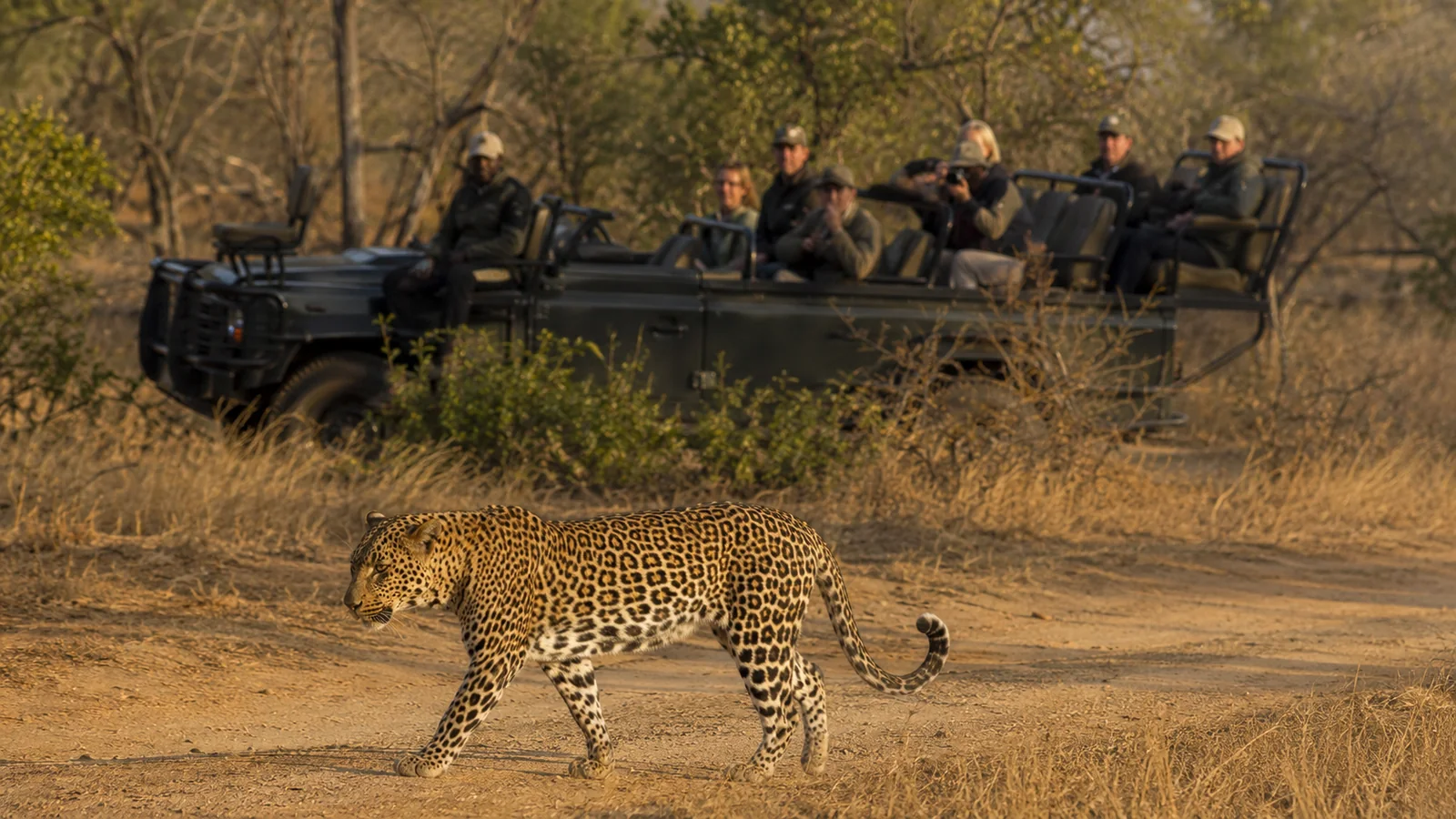
The classic South Africa itinerary pairs three to four nights in the greater Kruger or Sabi Sands with three to four nights in the Cape. The flight between Johannesburg and Cape Town takes two hours, and internal transfers from Kruger connect through Johannesburg or Nelspruit.
At Escape Xperts, we typically place the safari first — the intensity of the bush, the early mornings and the wildlife encounters. The Cape then becomes the decompression: a slower rhythm, long lunches, the mountain and the coast.
In addition, the Garden Route offers an alternative for travelers who want to drive between the two — a scenic road journey along the southern coast from Port Elizabeth toward Cape Town, with stops for whale watching, forest walks and coastal towns. However, most luxury itineraries fly between Kruger and the Cape, saving the driving time for the Winelands themselves.
Cape Town and the Winelands are not a detour — they are the other half of a South Africa journey, and the half that lingers longest.
Mountain light, vineyard gold, and a table set between both
Signature Experiences
- Sunrise hike on Table Mountain above the clouds
- Peninsula drive to Cape Point and the Boulders penguin colony
- Wine tram through the Franschhoek valley
- Private cellar tasting at a Stellenbosch estate
- Long lunch at a Cape Dutch farm table overlooking the vines
- Sunset at the V&A Waterfront with Table Mountain behind
- Constantia estate visit without leaving Cape Town
- Zeitz MOCAA gallery and harbour walk
- Whale watching from Hermanus (seasonal, June to November)
- Chapman’s Peak coastal drive at golden hour
Ready for Something Extraordinary?
The Cape transforms a South Africa safari into a complete journey — mountain, coast, vineyard and table in one seamless arc. At Escape Xperts, we design Cape Town and Winelands extensions around curated tastings, the finest estates and the restaurants that matter, connected to the bush by a single short flight.
Why Travel to Cape Town and the Winelands with Escape Xperts
Cape Town and the Winelands deliver the perfect counterpoint to the African bush — Table Mountain, the peninsula, the vineyards of Franschhoek and Stellenbosch, and a food scene that rivals any in the world. At Escape Xperts, we pair the Cape seamlessly with Kruger and the Sabi Sands, so the journey moves from safari to vineyard without missing a beat. For destination information, see https://whc.unesco.org/en/list/1007