Best months: May to October (dry season, wildlife at the waterholes)
Country: Namibia
Region: Northern Namibia · Etosha Pan · Ongava · Onguma
Best for: Waterhole game viewing, black rhino, night waterholes
Etosha National Park: Namibia’s Great White Place
Etosha National Park takes its name from the vast, shimmering salt pan at its center — a dried lakebed so large it is visible from space, bleached white under the Namibian sun. Around this otherworldly emptiness, wildlife gathers at the waterholes that dot the pan’s edge, creating one of Africa’s most concentrated and reliable game-viewing experiences.
At Escape Xperts, we include Etosha National Park in Namibia itineraries as the wildlife counterpoint to Sossusvlei’s landscapes. Where the dunes deliver scale and silence, Etosha delivers animals — and it does so on its own terms, drawing the game to the water rather than chasing it across the bush.
The Waterhole Model: How Etosha Works
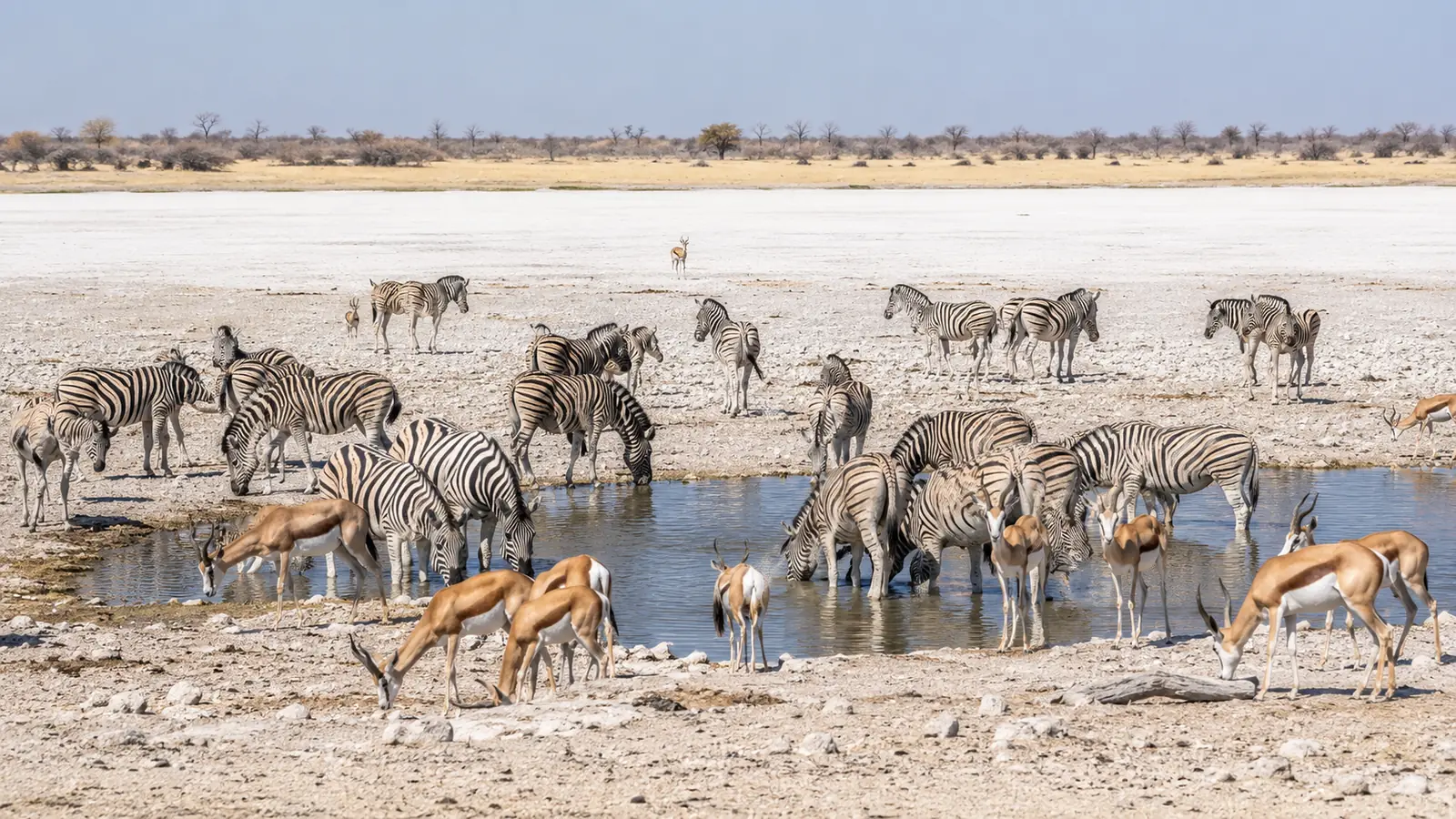
Etosha’s game viewing revolves around its waterholes. During the dry season, these natural and man-made water points become the stage on which the park’s drama unfolds — elephants arriving in family groups, springbok herds by the hundred, giraffes splaying their legs to drink, and predators waiting in the scrub nearby.
Because of this concentration, the rhythm of a day in Etosha National Park differs from a typical safari. Rather than covering ground on long game drives, the strategy is often to choose a waterhole, park, and wait. The wildlife comes to you — and the patience is rewarded with encounters that are close, unhurried and remarkably photogenic.
In addition, the park is large — over 22,000 square kilometers — but the game-viewing areas are concentrated along the southern edge of the salt pan, making the logistics manageable even on a short visit.
When to Visit: The Dry Season Window
The best time for Etosha National Park is the dry season from May to October. As the bush dries out and surface water disappears, animals become increasingly dependent on the permanent waterholes — and the concentrations build month by month.
June to August offers the most comfortable temperatures: warm days, cool nights and clear, dry air. Meanwhile, September and October bring the highest wildlife density but also the most intense heat — temperatures above forty degrees are common, and the landscape is stripped to dust. Therefore, the trade-off is clear: the driest months deliver the best game viewing but demand an early-morning, late-afternoon rhythm.
The green season from November to March transforms the park. Migratory flamingos gather on the pan when the rains fill it, and the bush is lush and alive with birdlife. However, the animals disperse across the landscape, and the waterhole drama fades until the dry season returns.
Where to Stay: Camps and Private Reserves
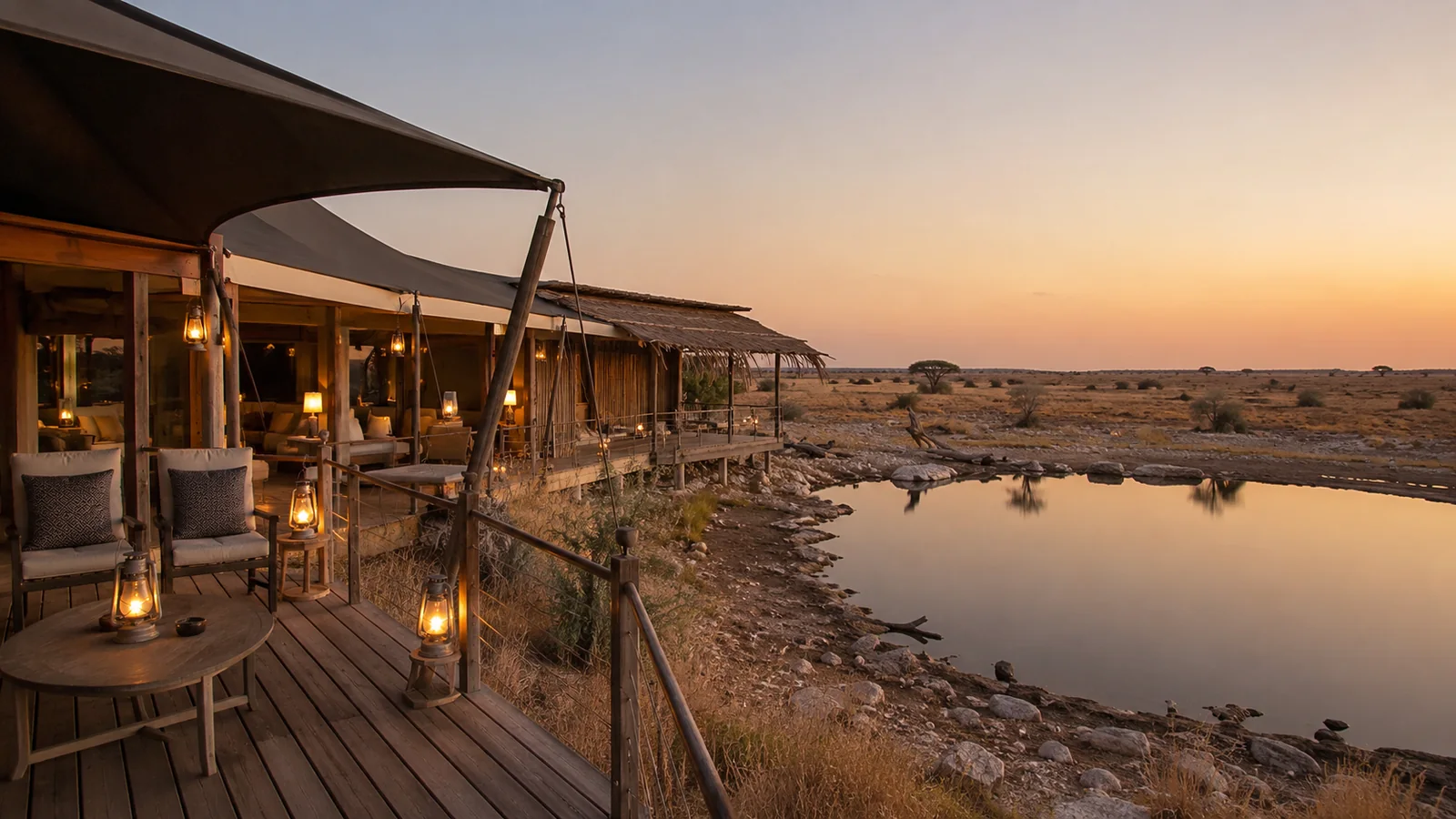
Accommodation in Etosha National Park falls into two categories: the national camps inside the park and the private reserves along its borders.
Okaukuejo, the park’s main rest camp, holds the most famous floodlit waterhole in Africa. After dark, the waterhole is illuminated, and the night parade begins — elephants drinking under the stars, black rhino emerging from the scrub, hyenas circling the edges. This after-dark spectacle is one of the most compelling experiences in Namibian safari.
In contrast, Halali camp sits in the center of the park, quieter and with its own lit waterhole. As a result, it draws fewer visitors and offers a more intimate night-viewing experience.
Next, the private reserves on the southern boundary — Ongava foremost among them — add the exclusivity that the national camps cannot offer. Andersson’s Camp and its neighbors provide guided game drives, walking safaris and private waterhole access, with the kind of lodge quality and service that fits a luxury itinerary.
Black Rhino and the Night Waterholes
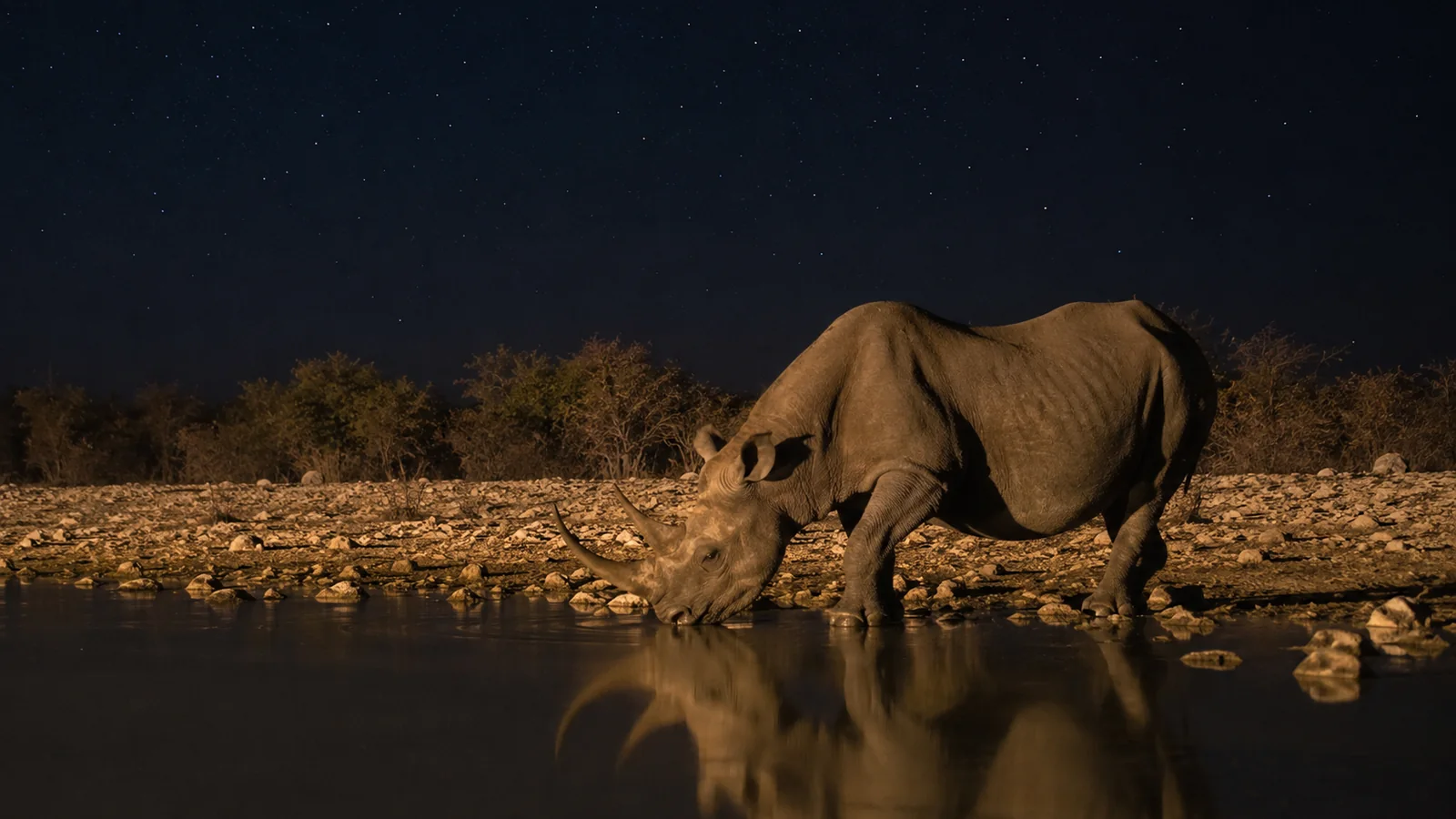
Etosha holds one of the largest populations of black rhino in Africa — a critically endangered species that is notoriously difficult to find during daylight hours. Because of this, the floodlit waterholes at Okaukuejo and Halali become the best place on the continent to see black rhino at close range.
The routine is simple and deeply satisfying. After dinner, visitors walk to the waterhole bench, take a seat, and wait. The floodlights cast a soft glow, and the animals arrive on their own schedule — sometimes within minutes, sometimes after an hour. Meanwhile, the silence of the Namibian night presses in, broken only by the sounds of drinking and the occasional grunt of a rhino asserting its space.
For many travelers, this is the single most memorable experience in all of Etosha National Park — the rare rhino, the lit water, the stars above.
Combining with Sossusvlei and the Skeleton Coast
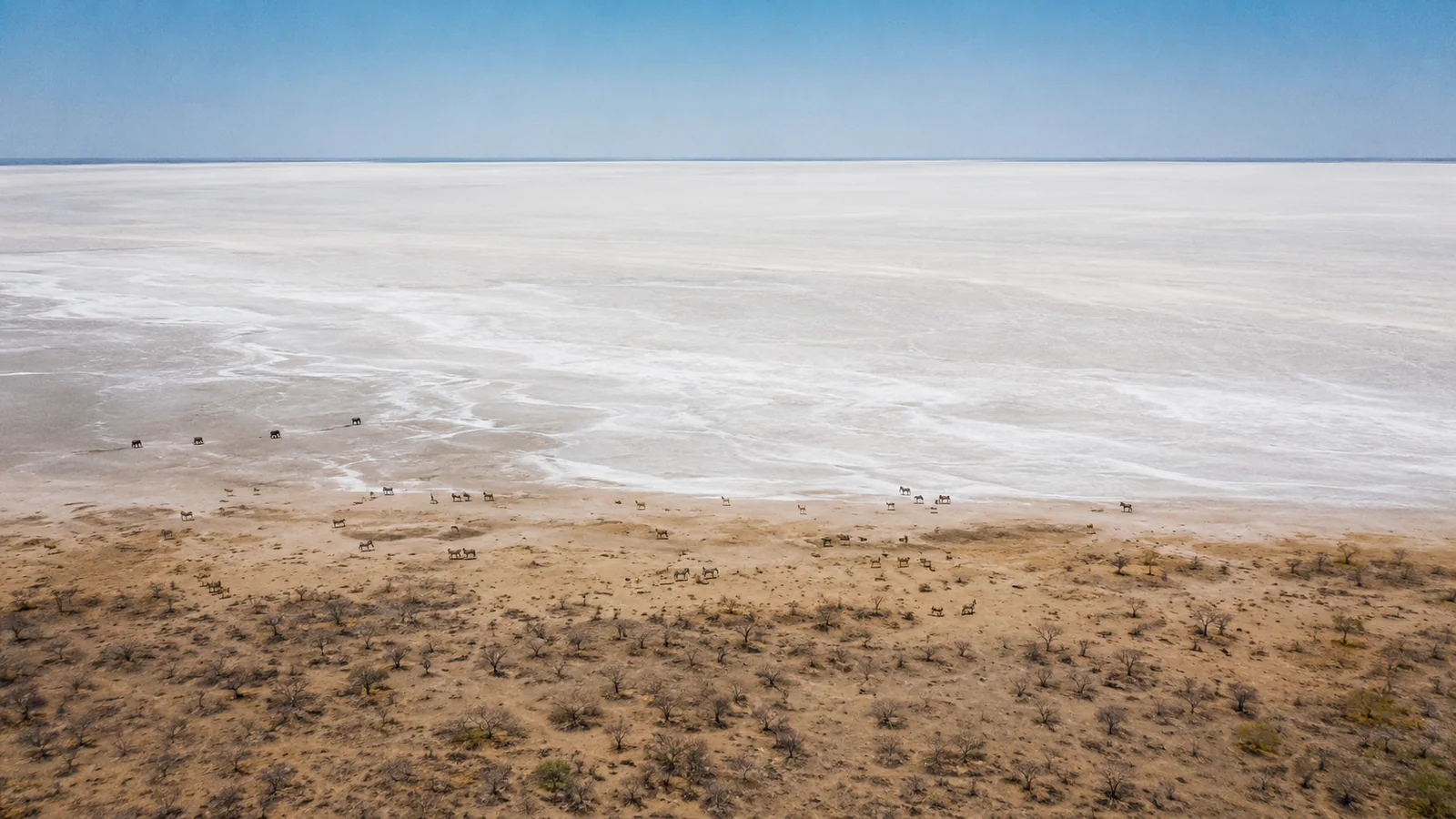
Etosha works as one chapter of a Namibia circuit that typically includes Sossusvlei’s dunes and the Skeleton Coast’s wild shoreline. The combination covers Namibia’s three dimensions: landscape at Sossusvlei, wildlife at Etosha, and the sea at the coast.
Two to three nights in Etosha National Park are enough to experience the waterhole rhythm and the night viewing. A fly-in or self-drive route connects the park to the south and west, and the road between Etosha and the coast passes through Damaraland — home to desert-adapted elephants and some of Namibia’s most striking rock art.
At Escape Xperts, we design Namibia itineraries that balance Etosha’s fauna with the country’s extraordinary landscapes, connecting the waterholes, the dunes and the coast into one unhurried journey.
The white pan, the lit waterhole, and Africa’s rarest silhouette at the water’s edge
Signature Experiences
- Night vigil at the Okaukuejo floodlit waterhole
- Black rhino sighting under the stars
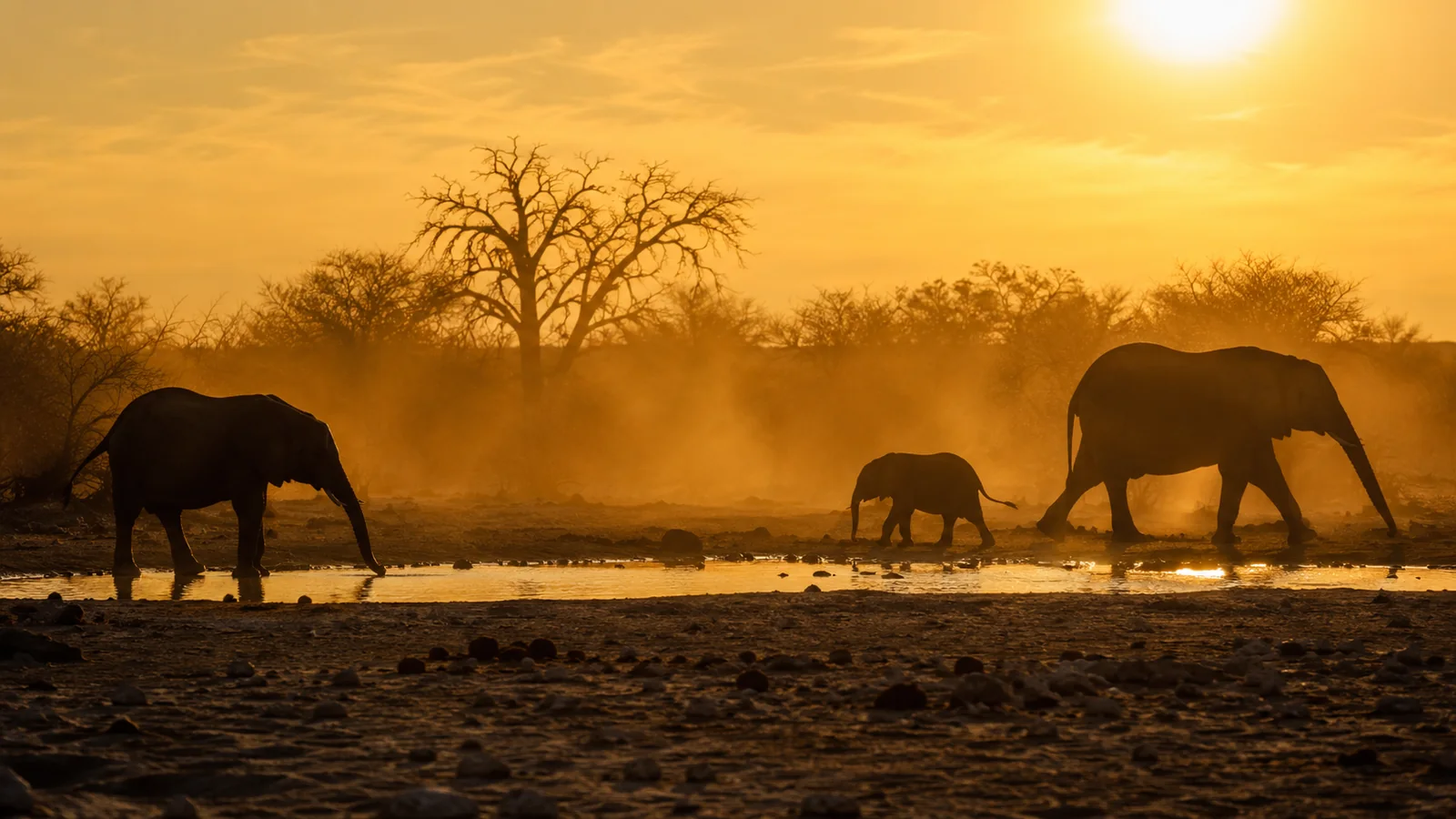
- Elephant herds arriving at a sunset waterhole
- Springbok migration across the edge of the salt pan
- Guided game drive in the Ongava private reserve
- Walking safari with a tracker at Andersson’s Camp
- Flamingos on the flooded pan (seasonal, after rains)
- Sunset overlooking the vast Etosha Pan from the southern lookout
- Lion pride at a waterhole at dawn
- Self-drive between waterholes at your own pace
Ready for Something Extraordinary?
Etosha turns the safari on its head — the game comes to the water, the rhino comes at night, and the patience of a waterhole bench delivers encounters no game drive can match. At Escape Xperts, we design Etosha stays around the best camps, the right waterholes and seamless connections to Sossusvlei and the coast.
Why Travel to Etosha with Escape Xperts
Etosha National Park delivers Namibia‘s finest game viewing — the waterhole drama, the black rhino at night and the shimmering salt pan that gives the park its name. At Escape Xperts, we pair Etosha with the country’s desert landscapes and coastal wilderness, designing a Namibia journey that moves from dunes to wildlife to ocean in one considered arc. For destination information, see https://www.namibiatourism.com.na/