Suggested stay: Seven nights minimum, ten to see the island
Bases required: Two, occasionally three
Country: Greece
Regions: Chania & the west · Rethymno · Heraklion · Lasithi & Elounda
Crete Luxury Travel Starts With the Map, Not the Hotel
Crete is 260 kilometers long. That single figure decides everything about how the island is traveled, and it is the one most itineraries ignore. Driving from the western harbor to the eastern gulf takes the better part of three and a half hours, which is longer than several flights between Greek islands.
The consequence is structural. Crete luxury travel built around one hotel and a rental car delivers a series of long, hot drives and half the island unseen, because the four regions are not variations on a theme. They differ in landscape, in architecture, in cuisine and in the century they most visibly belong to.
At Escape Xperts, we plan Crete as a two-base or three-base journey with the drives treated as part of the design rather than as an afterthought.
Chania and the West: The Venetian Harbor and the Roads Beyond It
Chania is the most complete town on the island and the usual first base. Its Venetian harbor curves around a sixteenth-century lighthouse, and the lanes behind it hold Ottoman doorways, a covered market and a shipyard arcade built for galleys.
The west is also where the landscape is at its most dramatic. The White Mountains rise directly behind the town and hold snow into May, so a morning at sea and an afternoon at altitude are an hour apart.
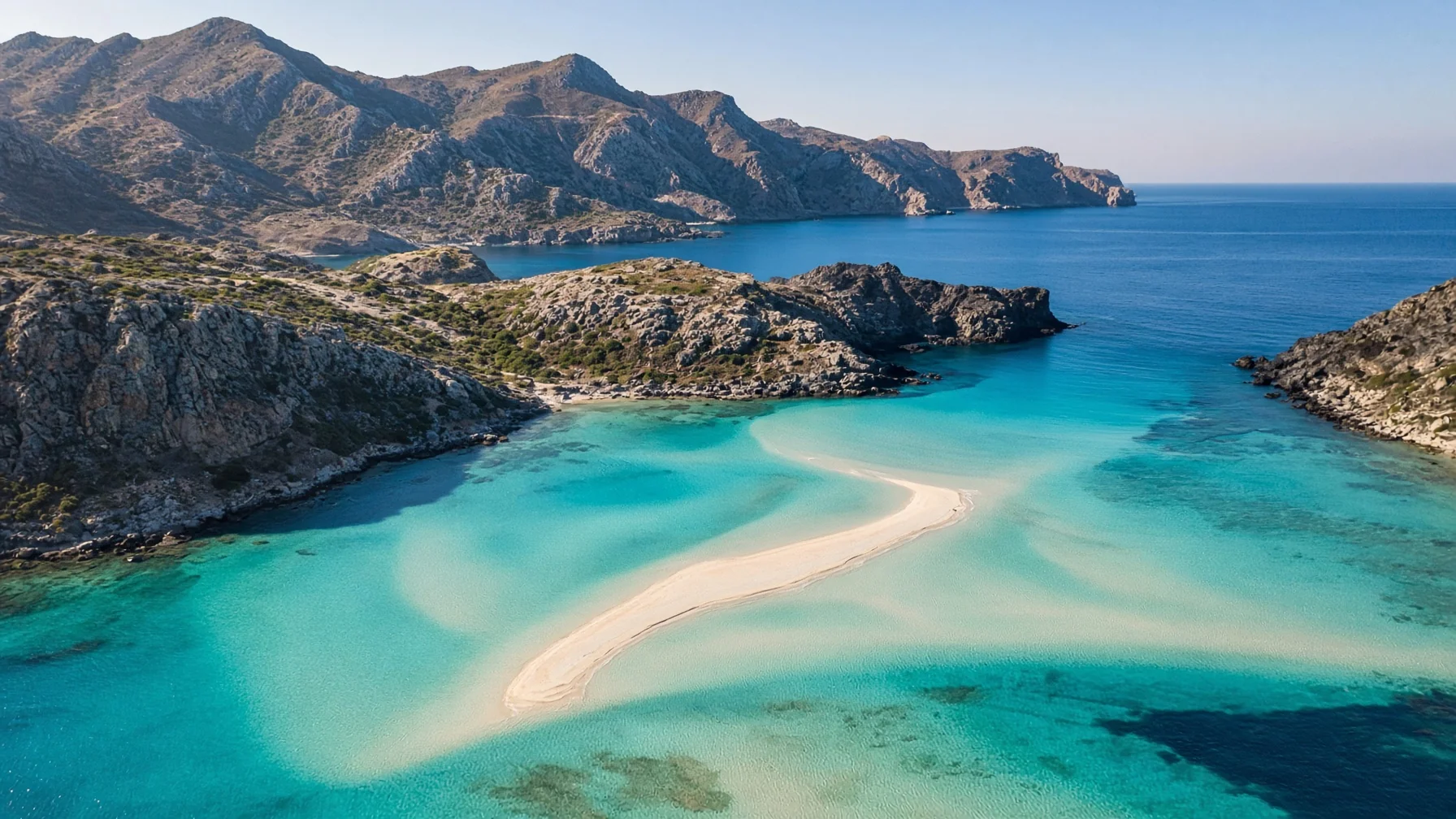
Next, Balos lies at the northwestern tip, a shallow lagoon of pale sand and layered turquoise water reached either by a rough unpaved track or, more sensibly, by boat from Kissamos, roughly an hour west of town. It is the most photographed place in Crete and it is genuinely remote.
Because of this, the west deserves three nights rather than one. Chania town, the lagoon, the mountain villages of the Apokoronas and the beaches of the far west cannot be compressed, and the roads here are slower than their distances suggest.
Therefore, Crete luxury travel that begins in the west tends to begin correctly: with the island’s densest concentration of interest inside a one-hour radius.
Rethymno: The Quietest Base and the Shortest Drives
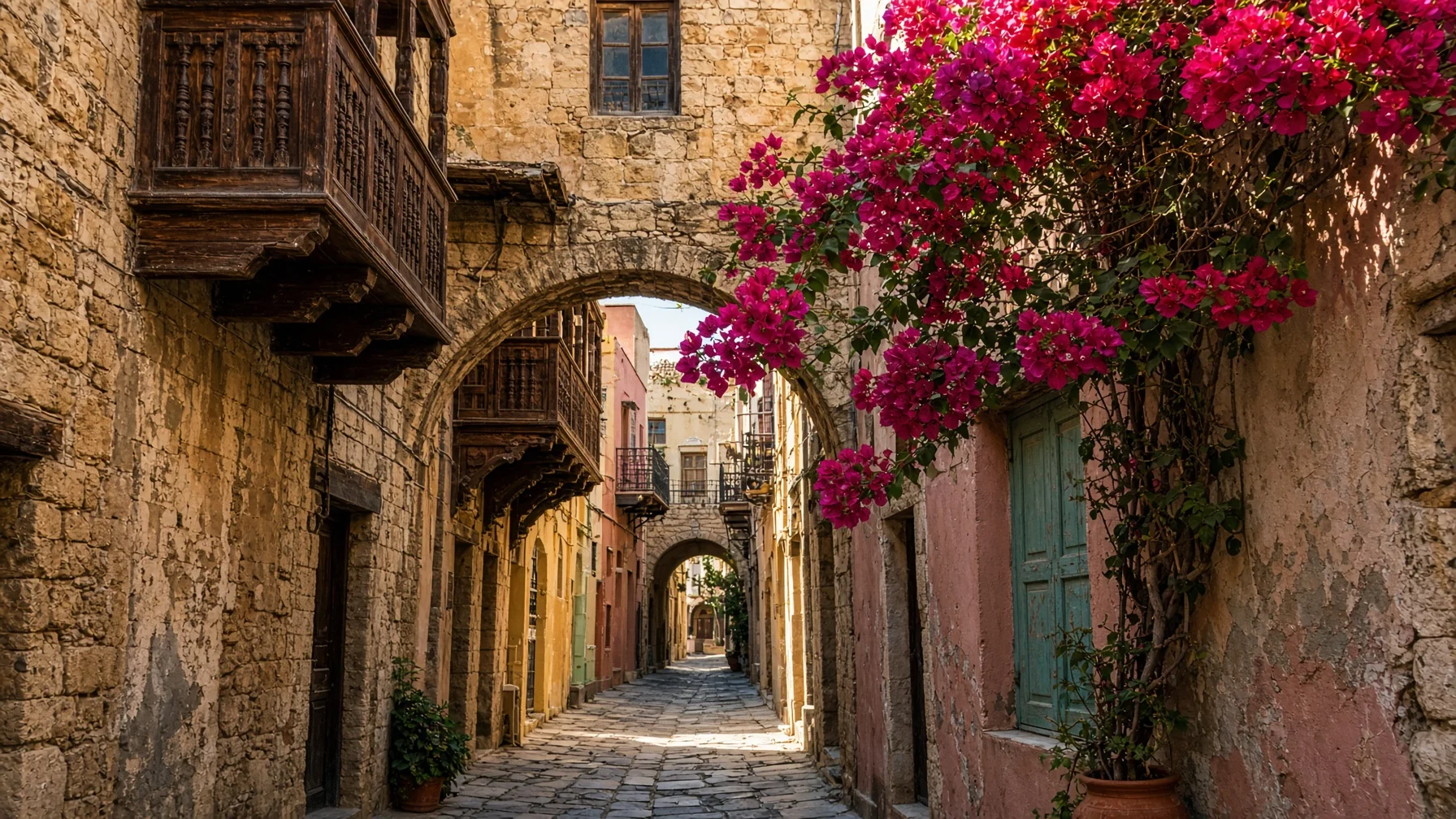
Rethymno sits an hour east of Chania and is the least demanding base on the island. Its old town is smaller, quieter and architecturally denser, with Ottoman balconies overhanging Venetian stonework and a fortress occupying the headland above.
Its practical advantage is position. Rethymno is within an hour of both major towns, which makes it the only base from which the north coast can be covered without a relocation.
Meanwhile, the interior behind the town is the island at its most agricultural: olive terraces, mountain villages such as Argyroupoli with its spring-fed streams, and the monasteries of the Amari valley. This is also where raki is still distilled in autumn as a household event rather than a demonstration.
In addition, the Cretan diet is not a marketing phrase here. It is the reason the island has been studied for decades: wild greens, sheep’s cheese, barley rusk, oil in quantities that alarm visitors, and very little meat.
As a result, a middle base suits travelers who prefer fewer hotel changes, and families in particular, since the drives from Rethymno rarely pass the one-hour mark. For that reason it is the base we recommend most often for a first experience of Crete luxury travel.
Heraklion and Knossos: A Half Day, Correctly Spent
Heraklion is the island’s capital, its port and its airport, and it is generally treated as a place to pass through. That is fair for the city and unfair for what it holds.
Knossos sits five kilometers south of the center and is the largest Bronze Age site in Greece. Its reputation is complicated by Arthur Evans’s concrete reconstructions, which are archaeologically contested and visually decisive: the red columns and repainted frescoes are his, not Minoan.
Here, the criterion matters. Visited cold, Knossos reads as a confusing ruin with modern additions. Visited with a guide who separates the excavation from the interpretation, it becomes the clearest surviving picture of a civilization that ran the Aegean for six centuries.
Next, the Heraklion Archaeological Museum completes it, and the order is fixed: the site first, the museum after, because the museum holds the originals that Evans copied.
Finally, half a day covers both properly. Well-planned Crete luxury travel stops here on the way east rather than dedicating a base to it.
Elounda and the East: The Gulf of Mirabello
Elounda, an hour and fifteen minutes east of Heraklion, is where the island’s hotel industry concentrates. The Gulf of Mirabello is deep, sheltered and almost windless, and the hillsides above it hold the highest density of serious properties in Greece.
Blue Palace occupies a terraced slope facing the islet of Spinalonga, the Venetian fortress that served as a leper colony until 1957 and can be reached by boat from the hotel’s own jetty.
Meanwhile, Daios Cove sits in a private bay further along the gulf, cut into the cliff with a funicular to its own beach, and it works particularly well for families who want the sea accessible without a drive.
Inland, the Lasithi plateau lies an hour above the coast, a flat bowl of farmland at 850 meters ringed by mountains and dotted with the frames of its old windmills. It is the coolest place on the island in summer and the least visited.
Because of this, the east functions as the resting half of the trip. The drives shorten, the sea calms, and the itinerary stops moving, which is why most Crete luxury travel ends here rather than beginning here.
The South Coast and Why One Base Never Works
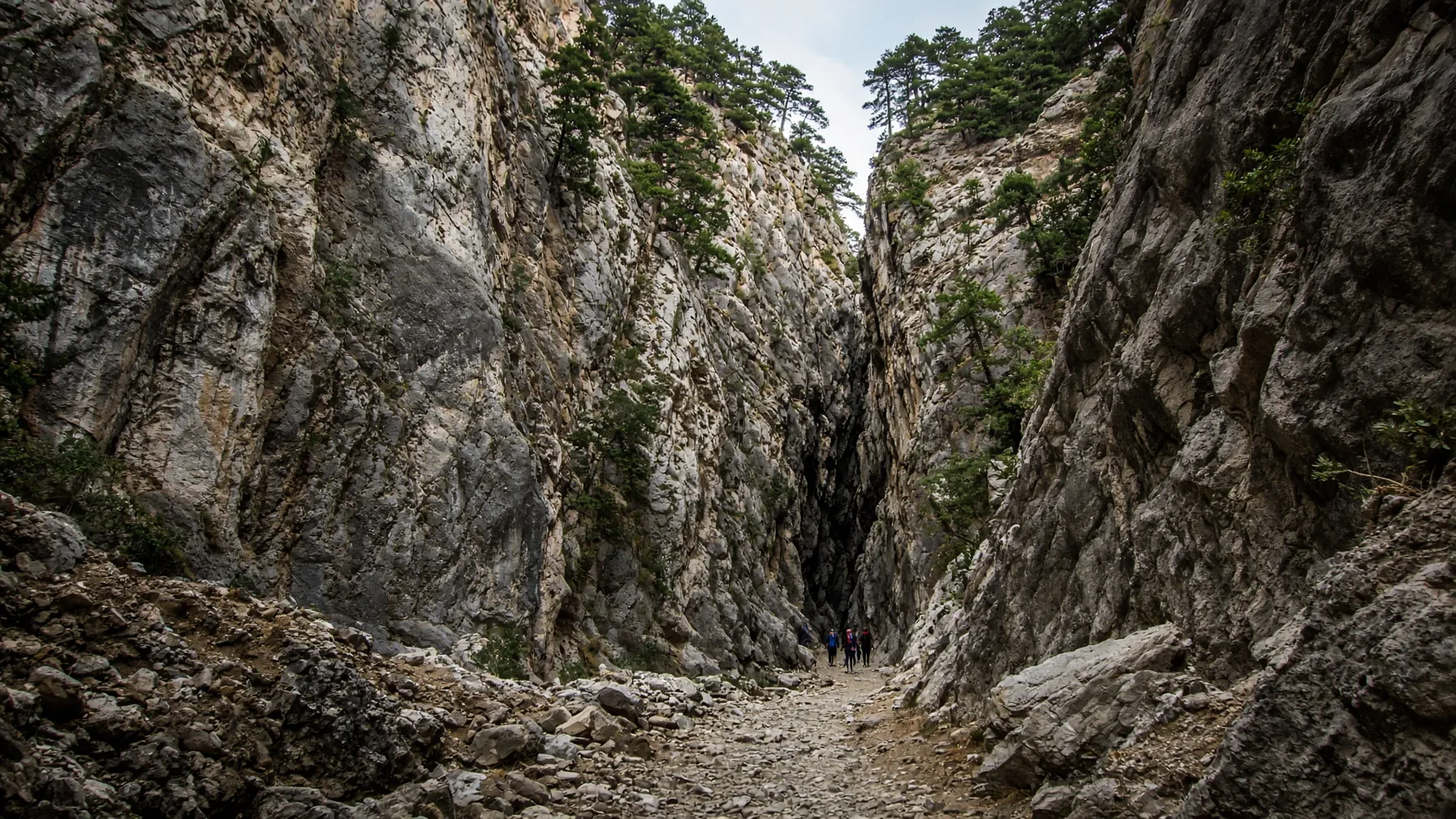
Everything above sits on the north coast. The south is a different island: the mountains fall straight into the Libyan Sea, several villages have no road at all, and the connections between them run by ferry.
The Samaria Gorge is the clearest example. Sixteen kilometers of descent from the Omalos plateau, an hour south of Chania, ending at a village on the south coast from which the only exit is a boat. It takes five to seven hours and a full day of logistics.
In contrast, the villages further east along that coast, Loutro among them, are reached only from the water, which is exactly why they have stayed as they are.
Therefore, the arithmetic settles the question. A single base leaves either the west or the east at three hours’ distance, and the south unreachable in a day at all.
Well-designed Crete luxury travel uses two bases as the minimum and three when the south is included, with the drives placed as short morning transfers rather than lost afternoons. For regional practicalities, see https://www.visitgreece.gr
Venetian harbors, Minoan palaces, mountain plateaus, and a coastline reached by boat
Signature Experiences
- Evening on the Venetian waterfront of Chania
- Boat crossing to the lagoon at Balos from Kissamos
- Spring-fed streams and shaded tavernas at Argyroupoli
- Ottoman lanes and the fortress headland of Rethymno
- Autumn distilling of raki in a mountain village
- Guided reading of the excavation at Knossos
- Minoan originals at the Heraklion Archaeological Museum
- Private boat to the fortress island of Spinalonga from Blue Palace
- Cliffside bay and funicular beach at Daios Cove
- Windmill frames and cool air on the Lasithi plateau
- Full-day descent of the Samaria Gorge to the Libyan Sea
- Table of wild greens, rusk and oil in the Cretan diet tradition
Ready to Begin the Journey?
Crete is planned in drive times before it is planned in hotels. At Escape Xperts, we set the bases against the map, combining seamless logistics, private guiding and curated exploration so that the island’s four regions arrive in sequence rather than in competition.
Why Travel to Crete with Escape Xperts
Crete is not an island in the sense that most travelers arrive expecting. It is a small country with four regions, two mountain ranges and two seas, and it punishes itineraries designed for something smaller. At Escape Xperts, we build the route around the distances first, which is what separates functional Crete luxury travel from a week of driving.