Suggested stay: Four to six nights
Best for: Archaeology, neighborhood walking, coastal afternoons
Country: Greece
Areas covered: Acropolis & Plaka · Kolonaki · Athenian Riviera · Cape Sounion
Things to Do in Athens Once You Stop Treating It as a Stopover
The most useful of the things to do in Athens is to stay longer than two nights. The city is routinely compressed into an airport transfer with a ruin attached, which is why most visitors leave with one photograph and no sense of the place.
Athens holds a classical axis, a set of genuinely distinct neighborhoods, a serious contemporary cultural institution and thirty kilometers of reclaimed coastline. Those are four different cities, and they do not fit into a single afternoon.
At Escape Xperts, we build Athens as a destination in its own right, with the archaeology handled early in the day and the coast held back for the hours when the city is at its least comfortable. Read that way, the things to do in Athens arrange themselves by hour rather than by list.
First Light on the Acropolis
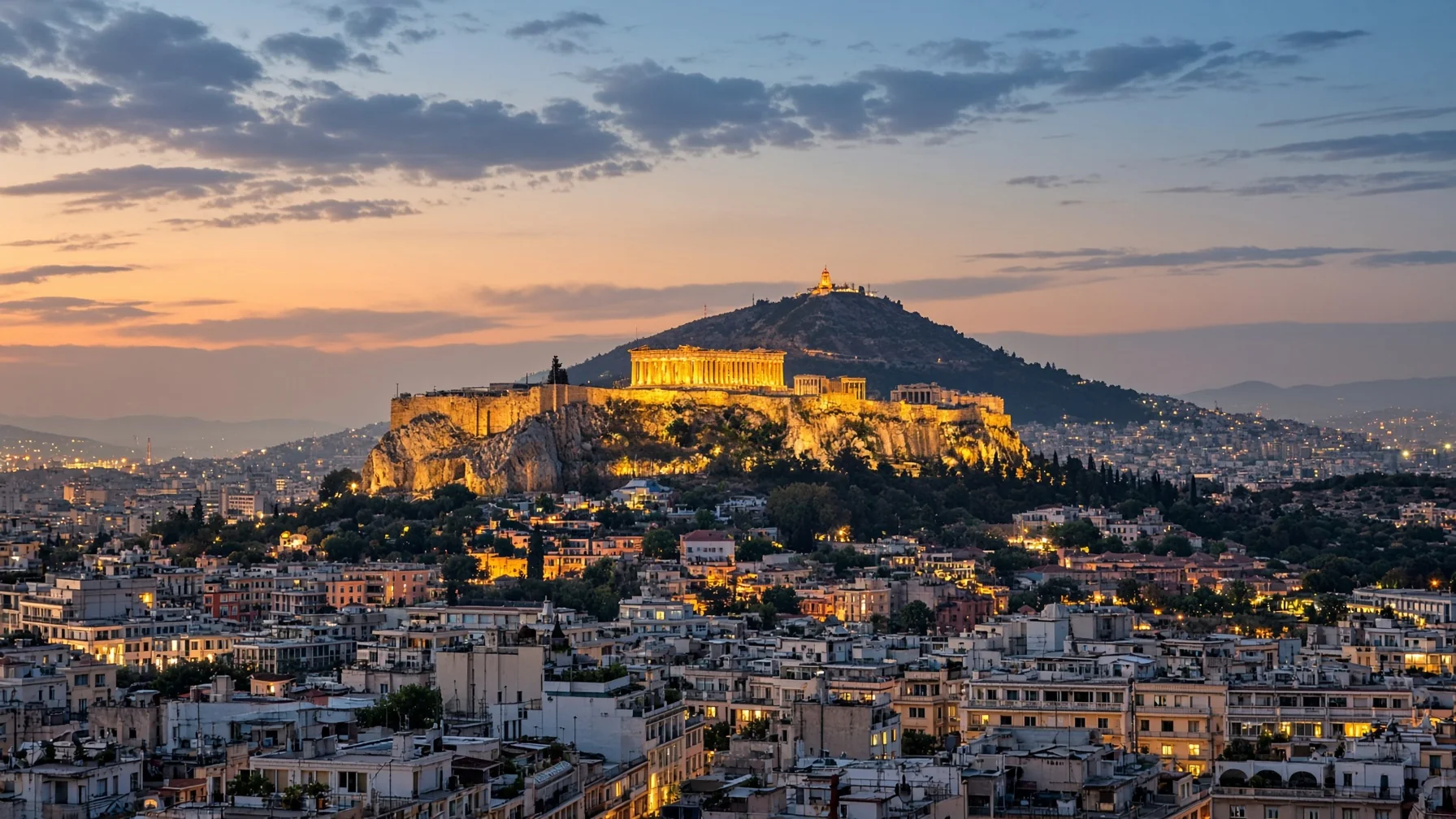
The Acropolis opens early, and the first hour is a different monument from the one most people describe. The marble is cool, the light is low and horizontal, and the terraces are close to empty.
By late morning the site is crossed by cruise groups moving in single file, the stone radiates heat, and the Parthenon is photographed over shoulders rather than approached. The difference is not marginal. It is the difference between a monument and a queue.
Therefore, the first-light visit is the single arrangement that most changes an Athens itinerary. A private guide who is waiting at the gate rather than meeting you inside gains the full hour, and the Propylaea, the Erechtheion and the south slope can all be walked before the temperature turns.
Next, the Acropolis Museum takes the second half of the morning. Its top floor is aligned with the hill itself, so the frieze is read in the same orientation it held on the building, with the original visible through the glass. Seeing the site first and the museum second is the correct order and rarely the one offered, and it sets the standard for how the rest of the things to do in Athens should be sequenced.
For context on the site’s standing, the UNESCO listing sits at https://whc.unesco.org/en/list/404/
Plaka, Anafiotika and Kolonaki: Three Neighborhoods, Three Cities
Athens is best understood on foot, neighborhood by neighborhood, and the three that sit closest together could not be less alike.
Plaka is the oldest continuously inhabited quarter of the city, wrapped around the northern slope of the rock. Its lower streets are commercial and busy; its upper lanes, climbing toward the site, are residential, quiet and shaded by citrus trees.
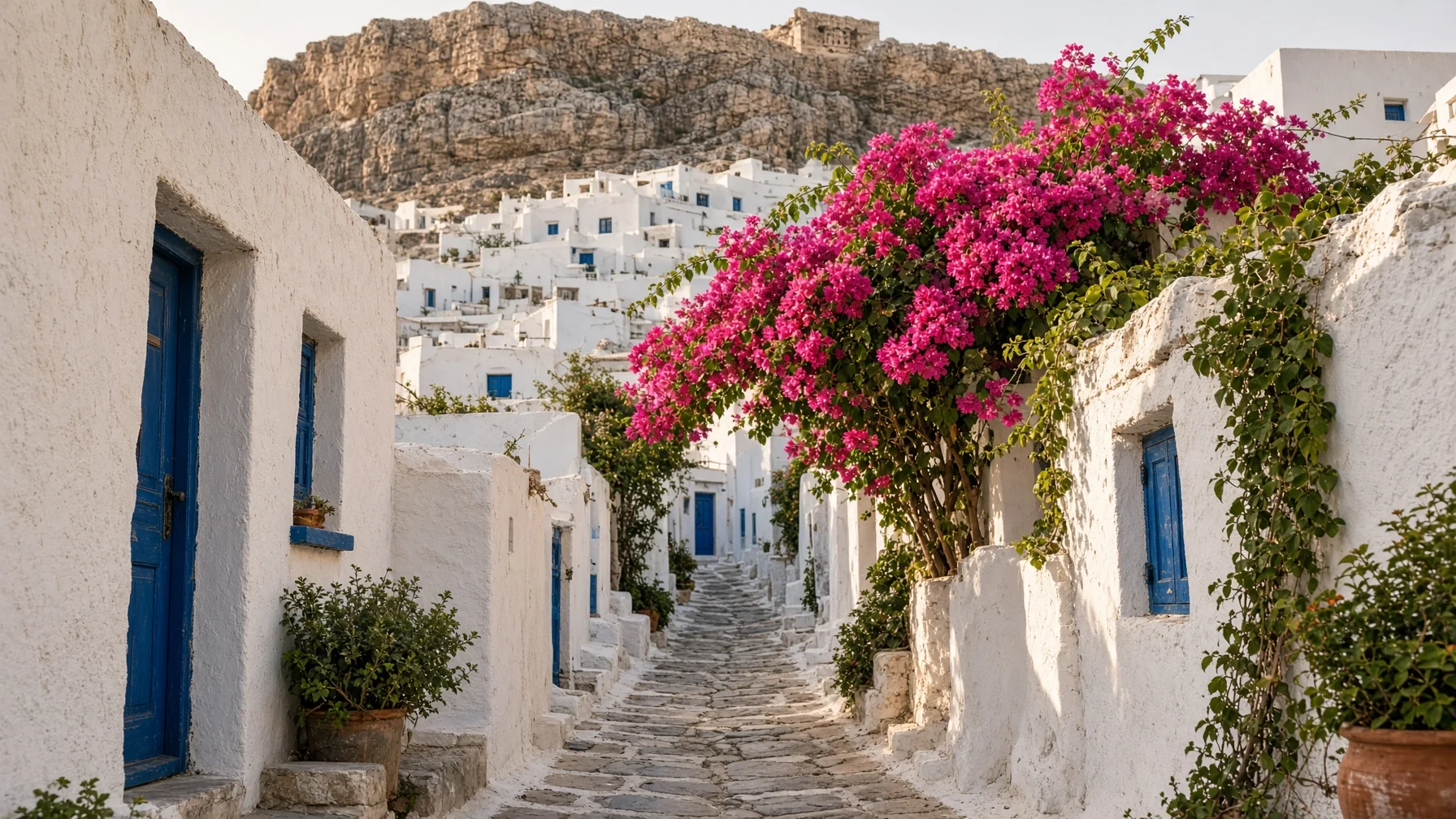
Above Plaka sits Anafiotika, which is not Athenian at all. It was built in the nineteenth century by stonemasons brought from the island of Anafi to work on the royal palace, and they built what they knew: whitewashed cubes, blue shutters, stepped lanes barely wide enough for two people. It is a Cycladic village standing directly beneath the Acropolis, and it takes fifteen minutes to walk through.
In contrast, Kolonaki is the city at its most current. It climbs the lower slopes of Lycabettus in a grid of galleries, tailors, jewelers and cafés where the tables face the street, and it is where Athenians go rather than where visitors are sent.
Because of this, the neighborhoods are worth splitting across separate days rather than chained into a single walking route. Among the things to do in Athens, unhurried time in Kolonaki is the one most consistently underrated by itineraries built around monuments.
The Athenian Riviera: The Coast the City Reclaimed
Athens has a coastline, and for most of the twentieth century it behaved as though it did not. The Athenian Riviera runs south from the city through Glyfada, Vouliagmeni and Varkiza, and its recovery over the past decade is the most significant change in how the city can be traveled.
The stretch is now the reason to stay four nights instead of two. Mornings belong to the archaeology in the center; afternoons move forty minutes south to swimming, a long lunch and sea air, which is precisely what the marble hours require afterward.
One&Only Aesthesis occupies a pine-covered former beach club at Glyfada with private sand and low buildings set among the trees, and it functions as a resort with a capital city attached rather than a city hotel with a pool.
Meanwhile, Lake Vouliagmeni sits a short drive further along the coast: a brackish thermal lake at the foot of a cliff, fed from below at a constant temperature and swimmable year round.
As a result, the coast reframes the whole visit. Among the things to do in Athens, a sea afternoon is not a filler between sites; it is the mechanism that makes several days in the city comfortable.
Cape Sounion and the Drive Along the Coast
The coastal road continues south beyond the Riviera for another hour to Cape Sounion, where the Temple of Poseidon stands on a headland above open water on three sides.
The drive is the point as much as the destination. The road runs at the edge of the sea for most of its length, past coves, small harbors and headlands, and it is one of the more scenic approaches to any ancient site in Europe.
Sounion is timed for the end of the day. The temple faces west across the Saronic Gulf, the columns take the last of the light, and the site empties as the tour coaches leave for the return leg into the city.
In addition, the cape pairs naturally with a late lunch on the way down and dinner on the way back, which turns a monument visit into a full afternoon rather than a detour. Few of the things to do in Athens reward a late start as generously as this one.
The Modern City: Stavros Niarchos, Dinner and Where to Base Yourself
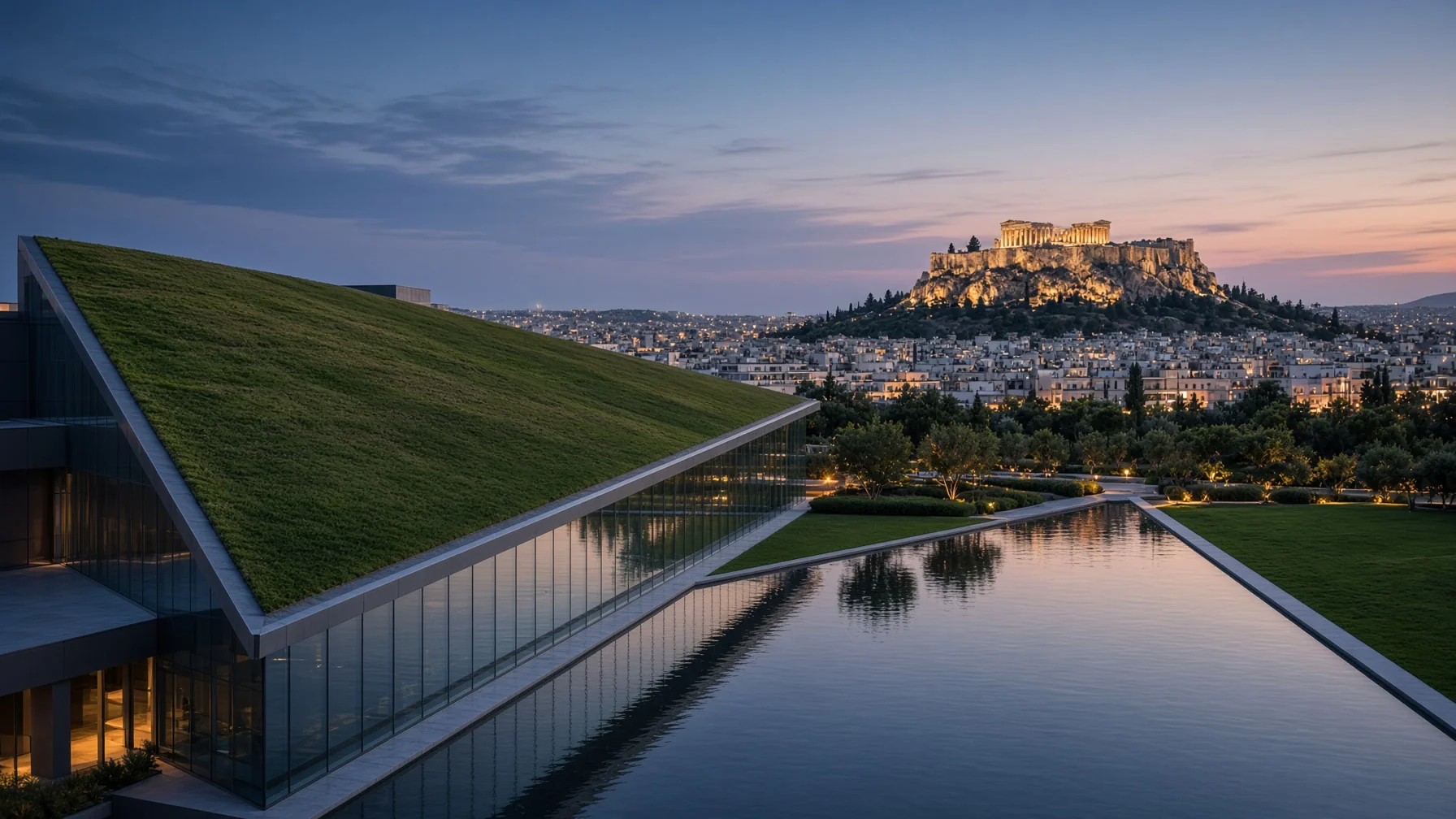
The Stavros Niarchos Foundation Cultural Center sits between the city and the port at Faliro, a Renzo Piano complex holding the National Library and the National Opera under a sloping park that climbs to a roof terrace with the Acropolis on one horizon and the sea on the other.
Its grounds are the best public space in Athens and its opera and concert program runs at a level the city is not generally credited with, particularly through the cooler months when the outdoor stages move indoors.
For a base in the center, Hotel Grande Bretagne has faced Syntagma Square since 1874, and its rooftop is the standard reference point for a first evening in the city, with the lit Acropolis directly opposite. Its quieter neighbor, King George, shares the same corner and the same view with a smaller and more discreet operation.
Finally, the dining is now a reason to travel here on its own. The restoration scene runs from the tavernas of Petralona to tasting rooms in Kolonaki, and it has moved a long way from the moussaka circuit that Athens is still associated with.
Cool marble at first light, neighborhoods on foot, and the sea by afternoon
Signature Experiences
- Private first-light access to the Acropolis before the gates fill
- The Parthenon frieze read in sequence at the Acropolis Museum
- Morning walk through upper Plaka and its citrus lanes
- The stepped Cycladic quarter of Anafiotika beneath the rock
- Gallery hours and street tables in Kolonaki
- Swimming afternoons on the Athenian Riviera
- Pine-shaded private sand at One&Only Aesthesis
- Thermal water at Lake Vouliagmeni in any season
- Sunset at the Temple of Poseidon on Cape Sounion
- Rooftop dinner at Hotel Grande Bretagne facing the lit Acropolis
- Opera and park terraces at the Stavros Niarchos Foundation
Let’s Design Your Experience
Athens rewards travelers who give it more than a transfer window. At Escape Xperts, we sequence the city around the light and the heat, combining private early access, seamless logistics and curated exploration across the historic center and the coast.
Why Travel to Athens with Escape Xperts
Athens is a city of hours rather than sights. The same monument, neighborhood or shoreline changes entirely depending on when it is approached, and that sequencing is not something a booking engine arranges. At Escape Xperts, we hold the gates early, keep the afternoons on the coast and place the evenings where the view earns them, which is what the best things to do in Athens ultimately depend on.