Suggested stay: Seven nights, two bases
Reads best: East to west, Menton to Saint-Tropez
Country: France
Areas covered: Menton & Monaco · Cap Ferrat · Nice · Antibes · Cannes · Saint-Tropez
French Riviera Luxury Travel, Read Town by Town
The Côte d’Azur is a hundred and twenty kilometers of coastline that changes character every fifteen minutes, and reducing it to Nice and Monaco removes most of what makes it worth the week.
Read from east to west, the coast moves from a botanical border town to a principality, then to a series of sheltered capes, a working city, two art towns, a festival port and finally a village that becomes something else entirely each August.
At Escape Xperts, we plan french riviera luxury travel in that order, because the geography is a sequence rather than a set of destinations, and because two weeks of the calendar rewrite the whole coast.
Menton and Monaco: The Eastern Corner
Menton sits against the Italian frontier and is the warmest town on the coast, sheltered by mountains that fall almost into the water. Its microclimate is the reason citrus grows here and nowhere else on the Riviera at this scale.
The town is also the quietest of the named stops. Its old town climbs in ochre and pink toward a baroque church, the Cocteau collection sits on the seafront, and the botanical gardens above the town hold subtropical species that survive nowhere further west.
Next, Monaco lies fifteen minutes along the coast and is best understood as a city-state built vertically on two square kilometers. The old town on its rock, the harbor below and the Casino square are three separate places connected by public lifts.
Meanwhile, the principality rewards a short visit rather than a base. Because of this, most well-planned french riviera luxury travel stays on the surrounding coast and treats Monaco as an evening rather than a home.
Èze, Villefranche-sur-Mer and Cap Ferrat
This stretch is the most discreet on the coast and the one experienced travelers return to.
Èze stands four hundred meters directly above the sea, a medieval village compressed onto a rock outcrop with a cactus garden at the summit and a footpath descending to the shore. It is best in the first and last hours of the day, when the coaches are elsewhere.
Below it, Villefranche-sur-Mer occupies one of the deepest natural harbors in the Mediterranean, which is why navies have used it for four centuries. Its waterfront is a single row of tall ochre houses, and the fishermen’s chapel was decorated by Cocteau.
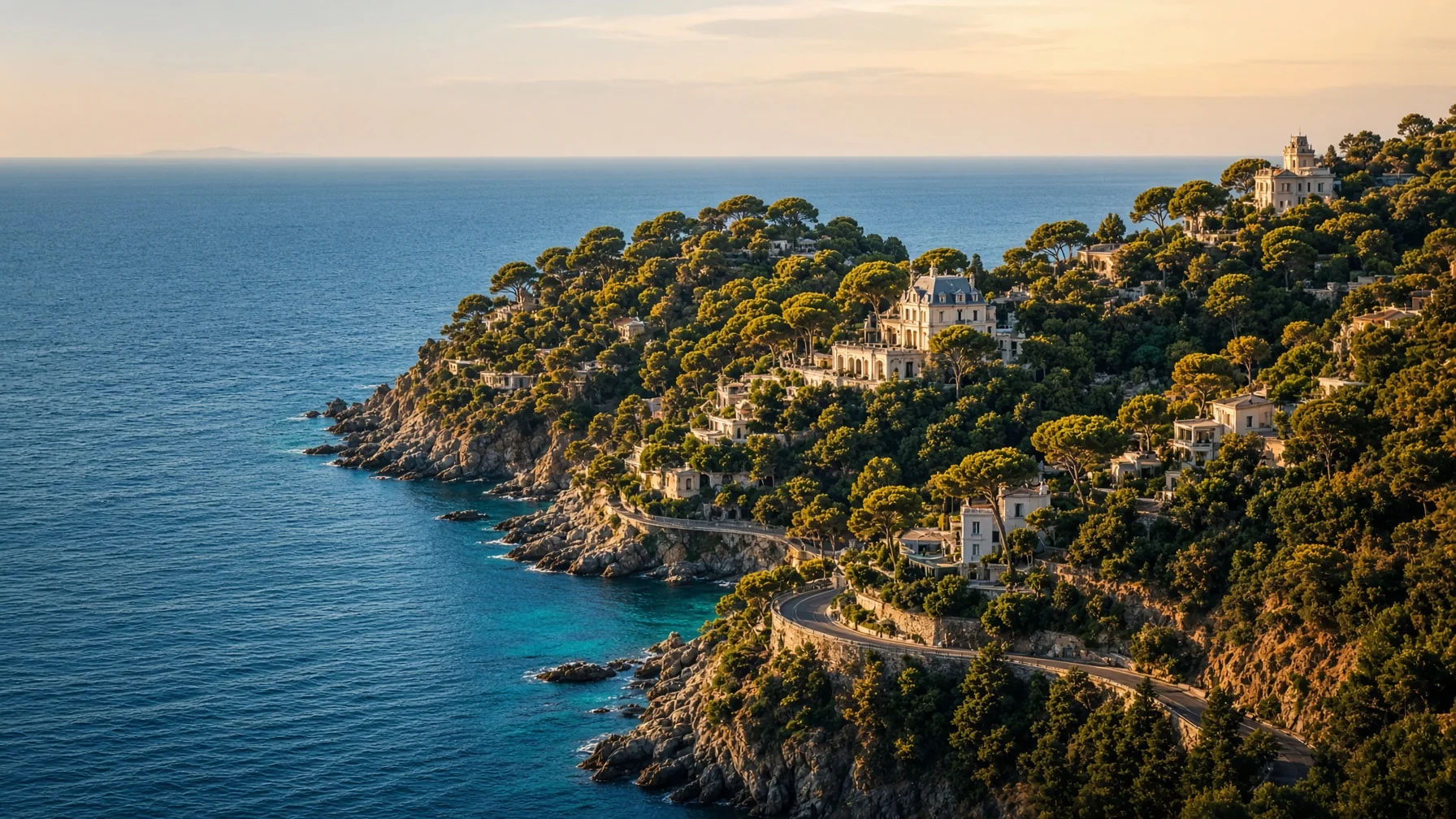
Beyond it, Saint-Jean-Cap-Ferrat is a wooded peninsula of pine and villa walls with a coastal footpath running its full circumference. The Grand-Hôtel du Cap-Ferrat holds the southern tip with its own cliffside pool, and the Villa Ephrussi de Rothschild occupies the ridge above with nine gardens laid out around a rose-colored palace.
Therefore, this is where the coast is at its calmest. In french riviera luxury travel, the capes are the argument for a base rather than a drive-through.
Nice, Antibes and the Art Towns Inland
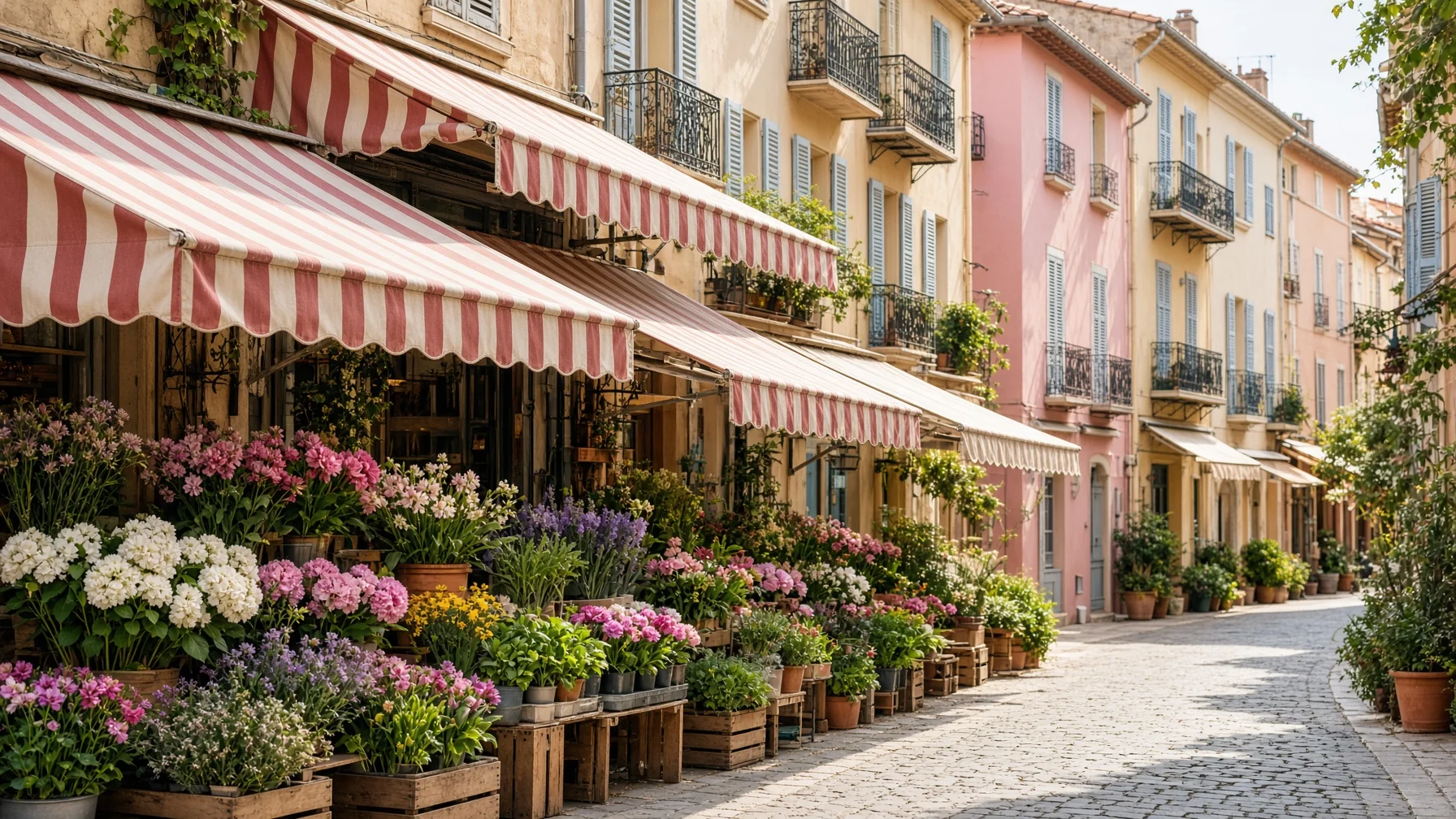
Nice is the only real city on the coast, which is exactly its value. It has a working old town, a daily market on the Cours Saleya, an airport with direct long-haul routes and a museum holding the largest Matisse collection anywhere.
Its long pebble shoreline is not the reason to come. The reason is the density: dinner, a gallery, a market and a night flight are all within the same square kilometer.
West of the airport, Antibes keeps the largest yacht harbor on the coast behind sixteenth-century ramparts, with the Picasso museum installed in the castle where he worked in 1946, and Cap d’Antibes reaching south in a wooded headland of private walls and a public coastal path.
In addition, the art continues inland. The Fondation Maeght at Saint-Paul-de-Vence is one of the most important private collections of modern art in Europe, purpose-built among the pines with Giacometti figures in the courtyard and a Miró labyrinth on the terraces.
As a result, a day away from the water is not a compromise here. Considered french riviera luxury travel uses the hills behind the coast for the collections that the shoreline cannot hold.
Cannes, the Lérins Islands and Saint-Tropez
Cannes is a bay town organized around a single boulevard and a working port, and it functions on an event calendar rather than a season. Outside its congress weeks it is unexpectedly ordinary, and it is at its best when treated as a departure point.
The Lérins islands lie twenty minutes offshore. Sainte-Marguerite holds a fortress with the cell of the masked prisoner and a shoreline of eucalyptus and pine, while Saint-Honorat is still a working Cistercian monastery whose monks farm eight hectares of vines. Neither has a road.
Further west, Saint-Tropez is a fishing village of some four thousand residents that receives a multiple of that number daily in summer. Its old port, the Annonciade collection and the Tuesday and Saturday markets on the Place des Lices are the village; the beach clubs of Pampelonne, several kilometers south, are the phenomenon.
Because of this, the timing matters more here than anywhere on the coast. In June or late September the village functions normally; in August the peninsula has one road in and one road out. Few decisions in french riviera luxury travel change the experience as completely as the week chosen for this one village.
The Two Weeks in May, and What They Do to the Coast
Two events sit within a fortnight of each other in the second half of May, and together they change the entire coast rather than only their host towns.
The Cannes film festival runs for about twelve days in mid-May. During it, the Croisette is closed to ordinary movement, the hotels are contracted out months ahead, restaurant tables are held by the studios, and the coastal road backs up as far as Antibes.
The Monaco Grand Prix follows within the same fortnight. The principality’s streets become the circuit from the Wednesday, access is by accreditation across large sections, helicopter traffic runs continuously from Nice, and the harbor is full to capacity.
Therefore, the practical guidance is simple and rarely given. Travelers who want either event should plan around it a year out. Travelers who do not should avoid the second half of May entirely and take early June instead, when the weather is identical and the coast has emptied. This single adjustment does more for french riviera luxury travel than any choice of hotel.
Finally, the rest of the calendar is straightforward: May and October are the coast’s best weather with the fewest people, July and August belong to European holidays, and February brings the Menton lemon festival and the Nice carnival within days of each other. For regional practicalities, see https://www.france.fr
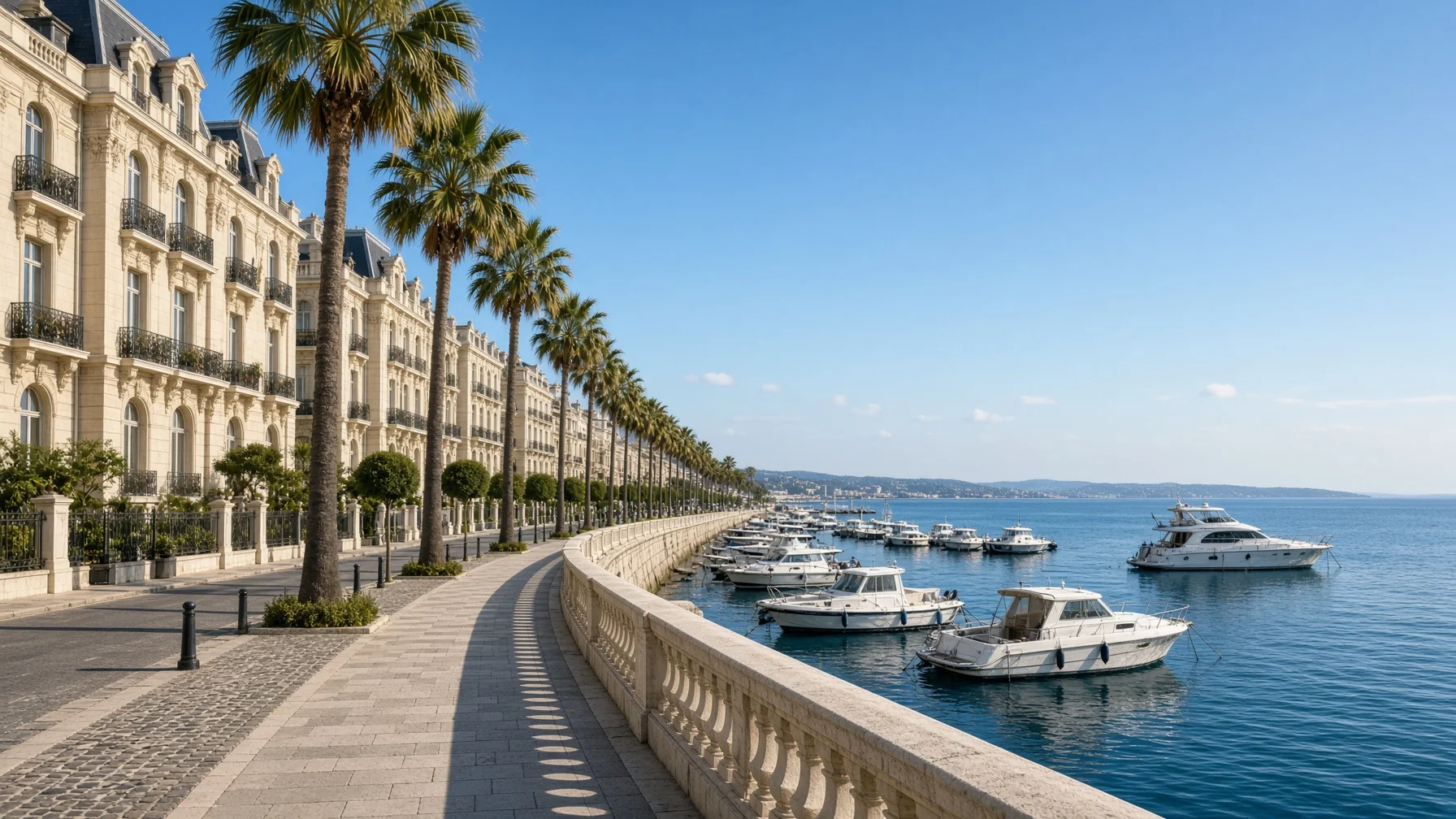
Citrus gardens in the east, pine capes in the middle, and one road into the peninsula
Signature Experiences
- Subtropical gardens above the old town in Menton
- Evening on the Casino square in Monaco without staying there
- First light on the rock village of Èze
- Cocteau’s fishermen’s chapel on the quay at Villefranche-sur-Mer
- The full coastal path around Saint-Jean-Cap-Ferrat
- Nine gardens at the Villa Ephrussi de Rothschild
- Cliffside pool and pine terraces at the Grand-Hôtel du Cap-Ferrat
- Flower stalls on the Cours Saleya in Nice
- Picasso in the castle where he painted in Antibes
- Giacometti courtyard and Miró terraces at the Fondation Maeght
- Monastery vines on Saint-Honorat, offshore from Cannes
- Tuesday market on the Place des Lices in Saint-Tropez
Let’s Design Your Experience
The Riviera is a sequence of very different towns rather than a single destination. At Escape Xperts, we read the coast in order and against the calendar, combining seamless logistics, private guiding and curated exploration from the Italian border to the western peninsula.
Why Travel to the French Riviera with Escape Xperts
The coast is easy to reach and difficult to read. Two towns apart by fifteen minutes can belong to different countries in temperament, and a fortnight in May can make half of it unusable without warning. At Escape Xperts, we place each stretch against the week it is seen in, which is what turns french riviera luxury travel into a coherent journey rather than a drive along a famous road.