Suggested stay: Six to eight nights
Lavender window: Late June to mid-July in the Luberon, later at altitude
Country: France
Areas covered: Luberon · Valensole · Aix-en-Provence · Avignon · Alpilles
Provence Luxury Travel Runs on Two Calendars
Provence is planned around two schedules that no hotel booking reflects: the lavender bloom, which lasts a matter of weeks, and the market week, which assigns a different village to each day. Miss either and the region is still beautiful; catch both and it is a different place entirely.
This is the inland south, not the coast. The distinction matters, because most guides fold the two together and end up describing neither properly.
At Escape Xperts, we date provence luxury travel before we place it, fixing the week against the bloom and the market days and then choosing the base that fits inside it.
The Lavender Window: Real Dates and Two Different Plateaus
Lavender is treated as a season in the marketing and is in fact a window of about three weeks, which moves by altitude and by year.
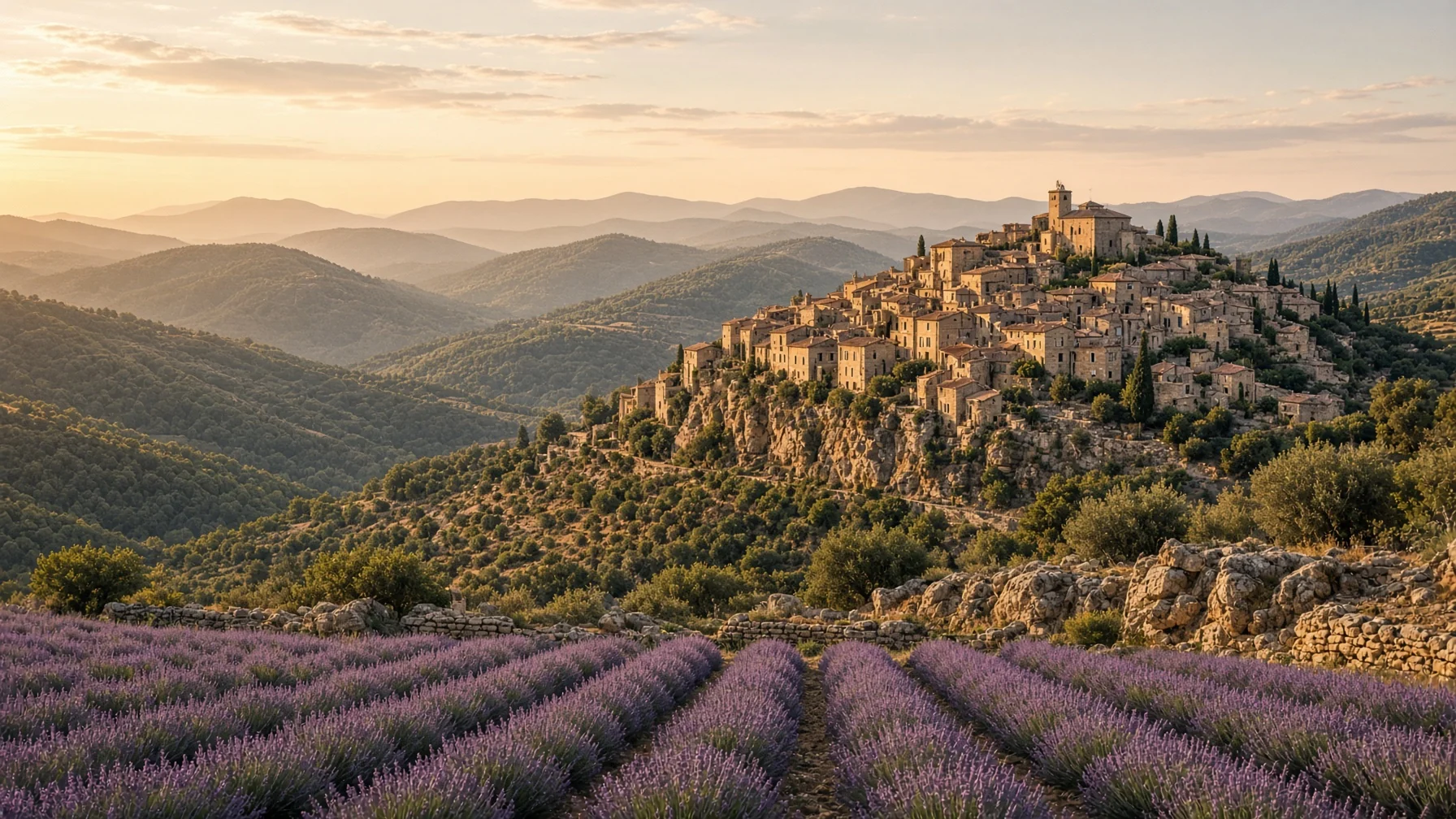
Valensole sits low and hot, and its plateau is generally in flower from the last days of June through mid-July. Harvest follows immediately, and machines can be in the fields by the third week of July, which is why late-July visitors so often find rows of cut stubble.
In contrast, the Sault plateau lies several hundred meters higher and runs two to three weeks behind, holding color from mid-July into the first half of August. Travelers who cannot move their dates should move their altitude instead.
Within the Luberon itself, the fields around the abbey below Gordes bloom from late June and are usually cut in the first half of July, earlier than most itineraries assume.
Therefore, the single most useful decision in provence luxury travel is to confirm the bloom locally in the weeks before departure rather than trusting a published calendar. The plants respond to spring rainfall, and the window shifts by up to ten days from one year to the next.
The Market Week: Which Village on Which Day
The weekly markets are the region’s actual institution, and they rotate on a fixed calendar that has barely changed in decades. Building the week around them is the difference between visiting Provence and using it.
Tuesday belongs to Gordes, with the stalls set out on the square below the castle. Thursday is Ménerbes and Roussillon. Friday is Bonnieux and, on a far larger scale, Carpentras.
Saturday runs in Apt, the biggest market in the Luberon and the one where the producers of the valley actually sell. Meanwhile, Sunday is Isle-sur-la-Sorgue, where the food market shares the town with one of the largest permanent antiques trades in Europe, some three hundred dealers spread through courtyards and old factories along the water.
Monday is the quiet day. Cavaillon and Forcalquier hold theirs, but most villages rest, which makes it the right day for driving, for a long lunch or for the vineyards.
As a result, the market calendar should dictate the shape of the week, not the reverse. Well-planned provence luxury travel arrives at each village on its own morning, before nine, and leaves before the coaches reach the parking.
Four Villages of the Luberon, and How They Differ
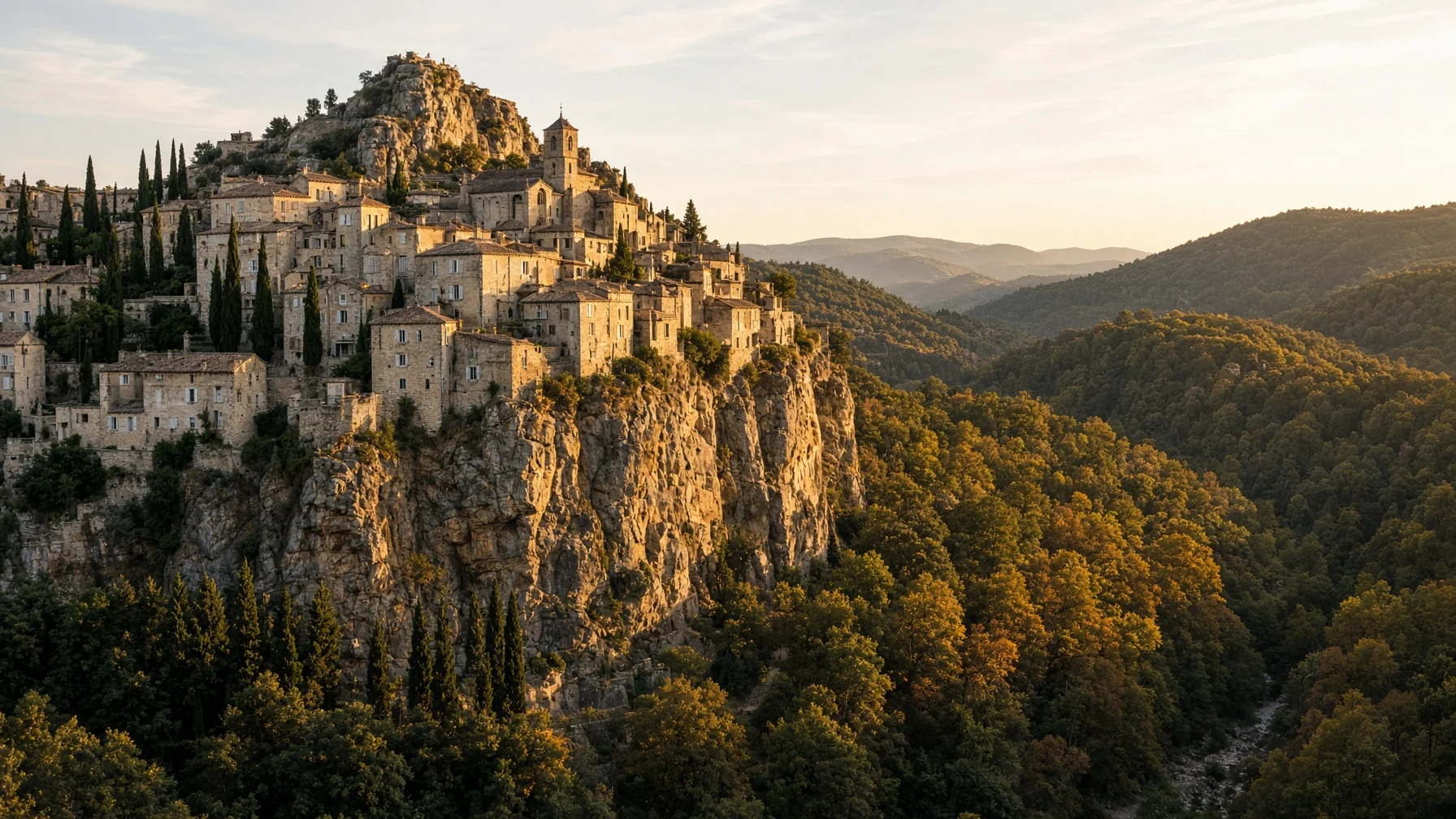
The hill villages are routinely described as a set. They are not: four of them within twenty minutes of each other have almost nothing in common beyond the stone.
Gordes is the spectacle, a village stacked in dry grey limestone on a spur above the valley, best seen from the road that approaches from the south. It is also the busiest, which argues for staying rather than visiting. La Bastide de Gordes is built into the ramparts themselves, with terraces looking straight down the valley.
Roussillon is its opposite in color and in mood. The village sits on the largest ochre deposit in Europe, and the facades run from pale yellow through burnt orange, with old quarry trails cut through the pigment behind the houses.
Next, Ménerbes is the quiet one, a long ridge village with a single street, a corkscrew museum and none of the coach traffic, which is precisely its argument. Lourmarin sits on the southern side of the massif, flatter and more sociable, with a Renaissance château and the best restaurant density in the valley.
Because of this, one base does not serve all four equally. The northern villages are best from Gordes or Roussillon, the southern ones from Lourmarin, and the drive between them crosses the massif on a road that takes longer than the map suggests. Two bases are the usual answer in provence luxury travel for a week of this length.
Aix, Avignon and the Alpilles: The Towns That Anchor the Region
Away from the hill villages, three towns carry the weight of the region and each is worth a full day.
Aix-en-Provence is a university town built for walking, with plane-shaded avenues, a fountain at every intersection and hôtels particuliers behind the shutters of the Mazarin quarter. Its markets run several mornings a week, and the produce market on the Place Richelme operates every day of the year.
Avignon holds the Papal Palace, the largest Gothic building in Europe, and a summer theater festival that takes over the entire city for three weeks in July, which is a factor to plan around in either direction.
Meanwhile, Baux-de-Provence sits in the Alpilles to the south, a ruined fortress on a limestone crest with quarries below that now hold immersive projection shows in the rock chambers. The surrounding valley produces some of the most respected olive oil in France.
In addition, the Châteauneuf-du-Pape vineyards lie half an hour north of Avignon for those who want them, though the wine country deserves its own journey rather than an afternoon. Anchoring provence luxury travel on these three towns keeps the hill villages from becoming the whole trip.
The Table: Rosé, Oil and the Long Lunch
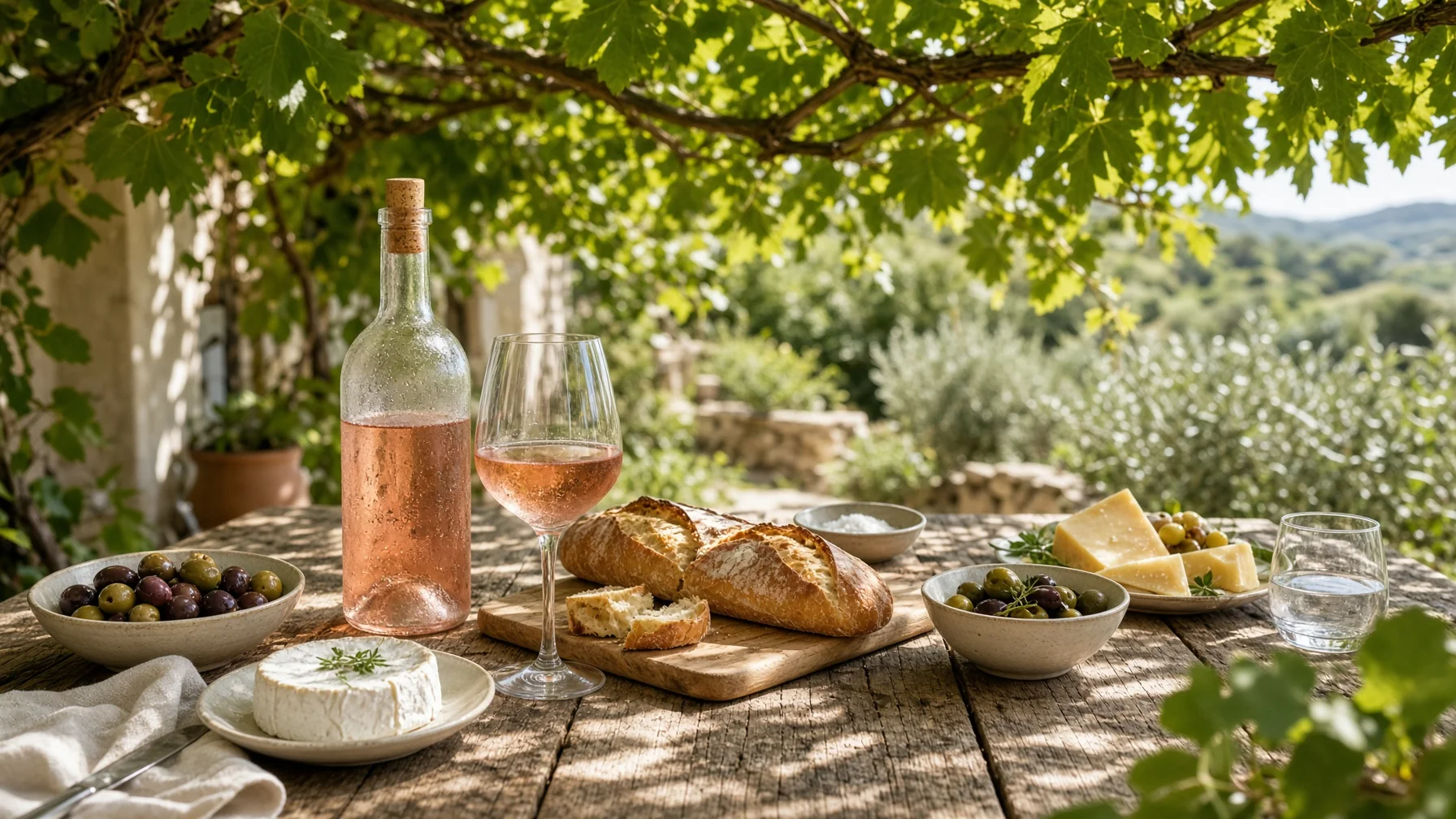
Provençal cooking is agricultural rather than elaborate, and it is at its best in the middle of the day. The long lunch is not a habit here; it is the structure the day is built on.
Rosé de Provence accounts for the great majority of the region’s production and is drunk almost exclusively young, cold and local. The serious estates lie in the Coteaux d’Aix and around the Sainte-Victoire, and their tasting rooms are quiet on weekday mornings.
Here, the olive oil is the other pillar. The Alpilles mills press between November and January, and the fresh oil of that season bears no resemblance to what leaves the region in bottles a year later.
Finally, the produce follows a tight calendar of its own: asparagus in April, cherries in May, melons through July, figs in September and truffles from December. Each is the reason to be here in a particular month, which is the recurring logic of provence luxury travel. For regional practicalities, see https://www.france.fr
Fields cut by mid-July, market squares by nine, and lunch that lasts until four
Signature Experiences
- Lavender rows in flower on the Valensole plateau in early July
- Higher fields at Sault holding color into August
- Tuesday stalls below the castle in Gordes
- Sunday antiques dealers along the water at Isle-sur-la-Sorgue
- Ochre quarry trails behind Roussillon
- The single ridge street of Ménerbes without a coach in sight
- Terraces built into the ramparts at La Bastide de Gordes
- Fountain squares and shuttered mansions in Aix-en-Provence
- The Papal Palace and the July festival in Avignon
- Projection chambers in the quarries below Baux-de-Provence
- Weekday tastings of rosé de Provence beneath the Sainte-Victoire
- New-season olive oil straight from an Alpilles mill
Ready to Begin the Journey?
Provence is a question of dates before it is a question of addresses. At Escape Xperts, we fix the week to the bloom and the market calendar, combining seamless logistics, private guiding and curated exploration across the Luberon and the towns that frame it.
Why Travel to Provence with Escape Xperts
Provence rewards precision more than any other part of southern France. The fields are cut on a schedule, the markets meet on fixed mornings and the produce arrives in narrow windows, none of which appears on a hotel calendar. At Escape Xperts, we build the week around those dates first, which is what separates considered provence luxury travel from a drive between pretty villages.