Season span: Late January in Okinawa to early May in Hokkaido
Full bloom per city: About one week
Booking window: Six to twelve months ahead for the main cities
Region: Kyushu · Tokyo · Kyoto · Osaka · Tohoku · Hokkaido
The Japan cherry blossom season runs from late January in Okinawa to early May in Hokkaido, yet each city enjoys only about a week of full bloom. Tokyo and Kyoto usually peak in late March or early April. Because the timing is forecast each year rather than fixed, the season is best planned as a window, not a date.
For most travelers, sakura is the image that first draws them to Japan. Few realize that the flowers last so briefly, that they arrive at different times in each region, or that the best rooms are committed long before the first forecast appears.
At EscapeXperts, we treat the blossom as a question of margin and of reservation. This guide explains how the bloom moves, how to read the forecast and how to plan so that the trip succeeds even when the flowers do not keep to schedule.
How the Bloom Front Moves Up the Country
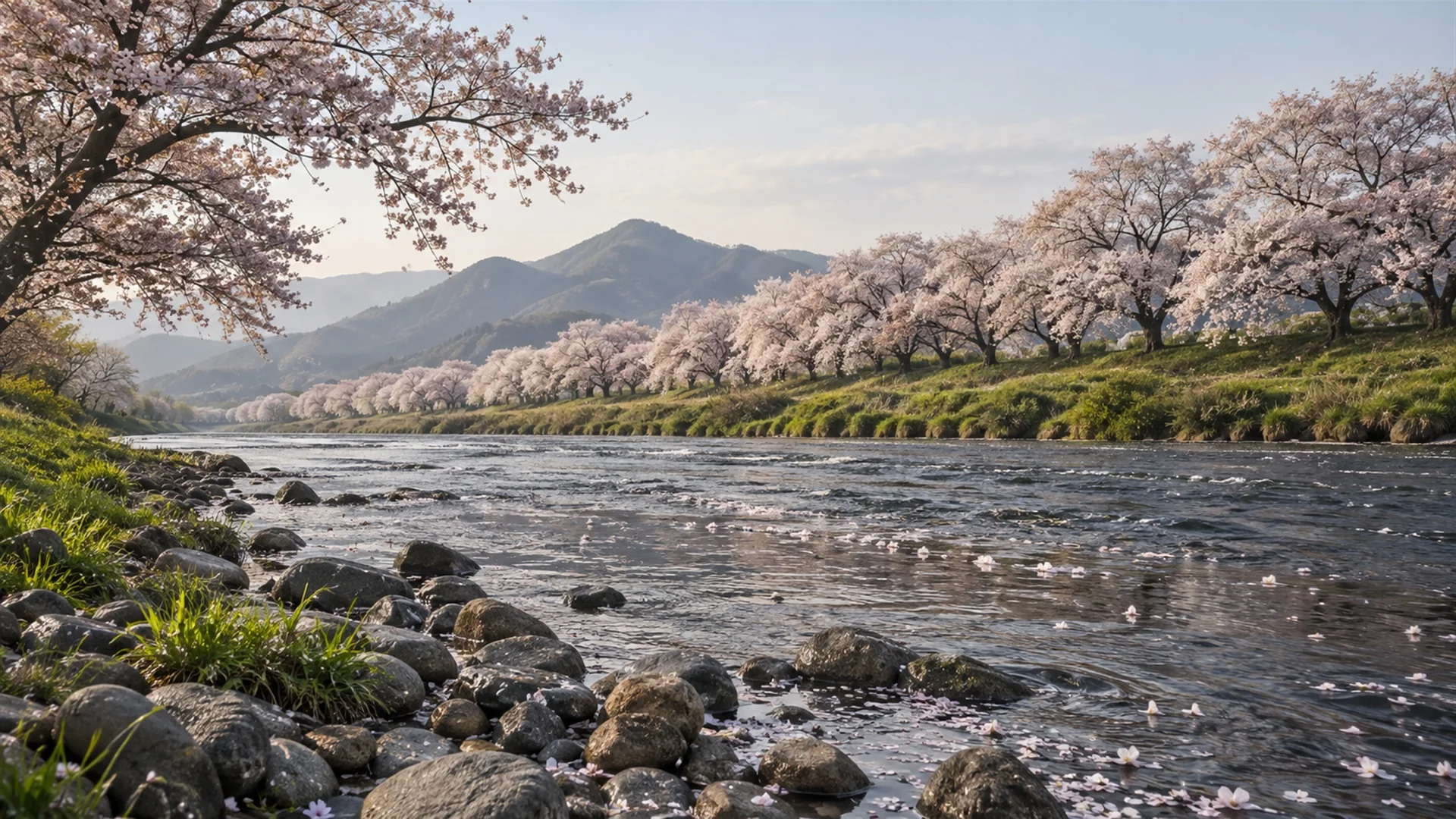
The bloom advances as a front. It opens in the subtropical south, reaches the main cities of Honshu in late March, and climbs north and uphill for roughly another five weeks before it arrives in Hokkaido.
The very first flowers appear in Okinawa in late January, on a deeper pink variety that belongs to a separate, earlier rhythm. For most journeys, the season that matters begins on the main islands two months later.
Most of the trees along that path are somei-yoshino, the pale pink cultivar planted across the country. Because they descend from the same original stock, trees in one area tend to open almost together, which is why whole cities seem to turn pink within days.
As a result, the front is predictable in pattern but not in date. A warm late winter brings it forward, a cold spell holds it back, and recent seasons have generally trended earlier.
The official opening in Tokyo is declared when a reference tree at Yasukuni Shrine shows its first flowers. Full bloom usually follows about a week later.
Regional Windows for the Japan Cherry Blossom Season
The windows below are indicative, drawn from the usual pattern. They are forecast afresh every year and can shift by a week or more in either direction.
- Kyushu and Tokyo: usually late March
- Kyoto and Osaka: late March to early April, Osaka often a few days after Kyoto
- Mount Fuji lakes, Kanazawa and the Japan Alps: early to mid-April
- Tohoku, including Hirosaki: late April
- Hokkaido: late April to early May
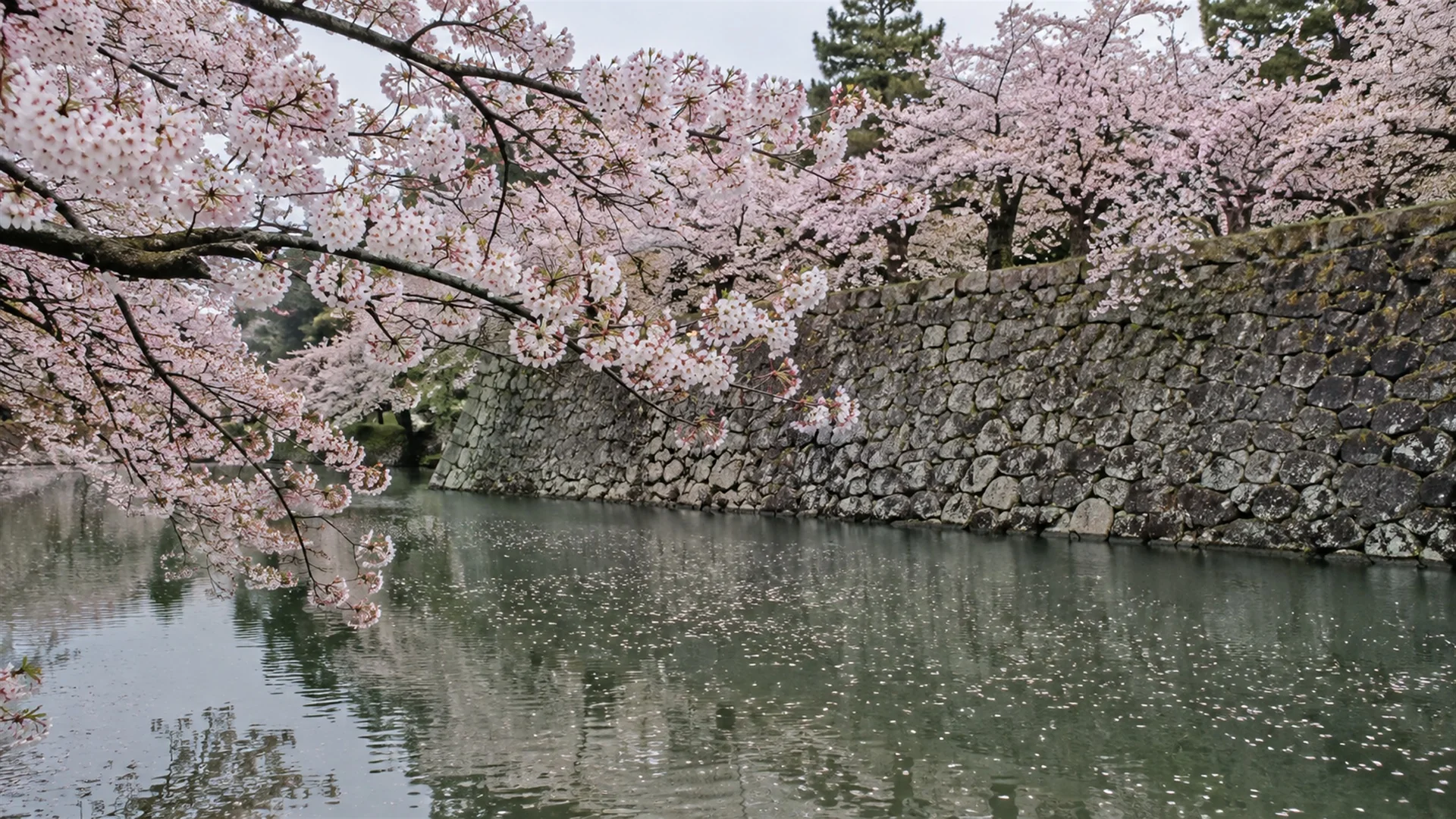
Two places illustrate the range. Yoshino, in the mountains of Nara, blooms in stages from the lower slopes to the upper ones, so its season stretches over several weeks. In the north, the castle park of Hirosaki blooms weeks after Tokyo, around its moats and stone walls. In Osaka, the castle park and the riverbanks remain the classic settings.
Therefore, the Japan cherry blossom season is less a single spring moment than a sequence of local ones.
Reading the Bloom Forecast
The first bloom forecast of the year appears during the winter, published by private forecasters such as the Japan Meteorological Corporation. It is then revised regularly as temperatures develop.
Each forecast usually reports two moments for every city: the first flowering and full bloom, typically about a week apart. It is the second date that matters when planning where to be.
Early forecasts are useful for orientation, not for booking a single day. By early March, the updates are usually far more reliable, although a sudden change in the weather can still move the peak by several days.
Meanwhile, the flowers themselves are brief. Full bloom holds for around a week, and the whole cycle, from the first petals to the last, lasts roughly two weeks in any one place. Rain or strong wind can shorten it further.
Because of this, the forecast should shape the order of a route, not its fixed dates. Official seasonal information is available at https://www.japan.travel
The Booking Window Closes Before the Flowers Open
This is the central paradox of the Japan cherry blossom season. The rooms must be secured long before anyone knows when the flowers will open.
For the likely peak weeks in Tokyo, Kyoto and Osaka, the finest hotels and inns are typically committed six to twelve months ahead. The most sought-after restaurants, private guides and reserved experiences follow a similar pattern.
Traditional inns close first. A ryokan in a blossom region may have only a handful of rooms, and returning guests often reserve the same spring weeks year after year.
Consequently, the sound approach is to reserve a slightly wider window than the forecast suggests, usually around ten days, and to design the route so that each city can be visited in the order the bloom dictates.
Planned this way, the Japan cherry blossom season becomes a matter of preparation rather than luck.
Hanami, Away from the Crowded Parks
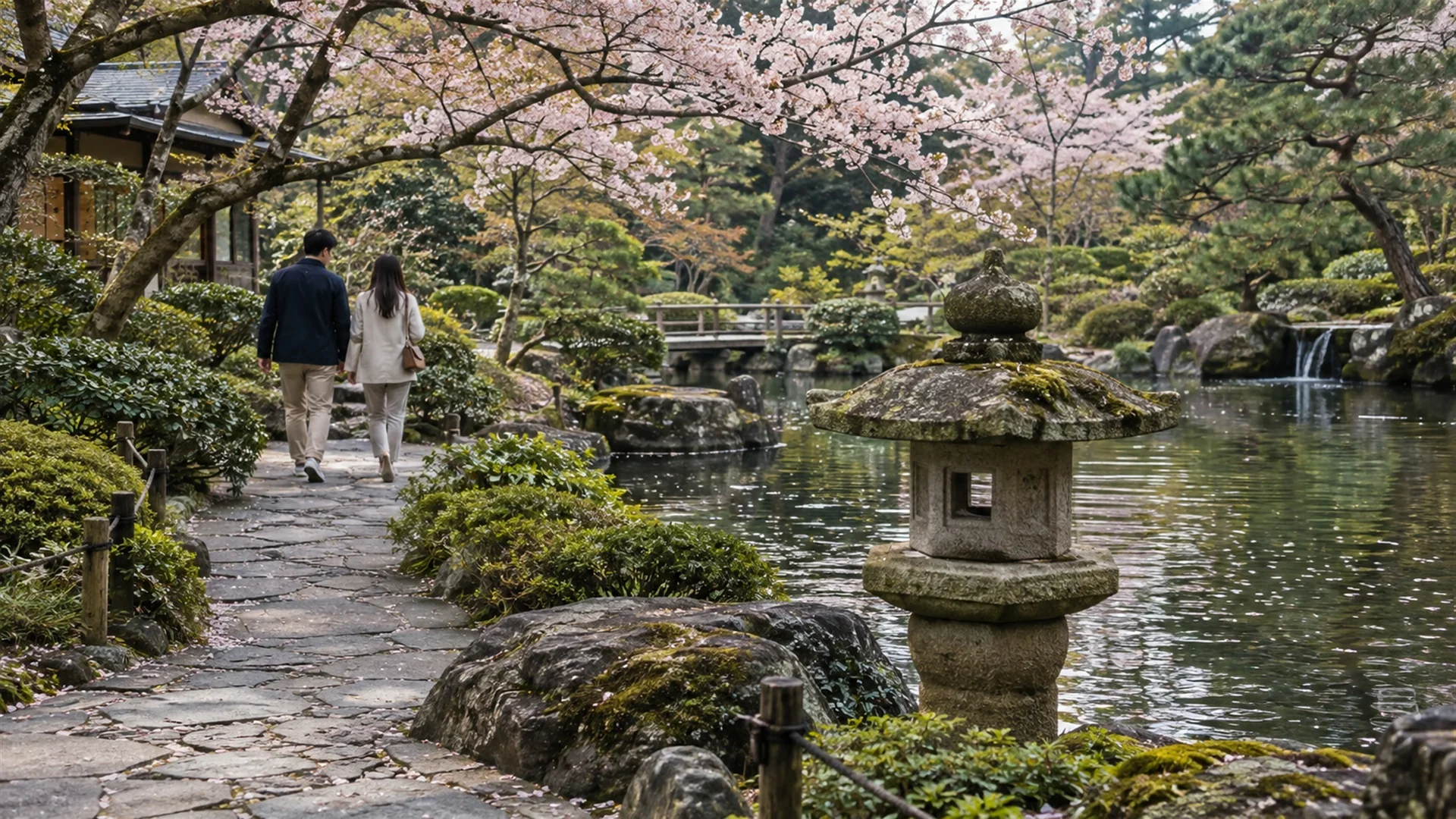
Hanami, the custom of gathering beneath the blossom, is the heart of the season. In the most famous parks, it also means dense crowds and reserved picnic spaces from early morning.
After dark, many castle grounds, gardens and canals illuminate their trees, a custom known as yozakura, or night blossom. The evening light, the cooler air and the thinner crowds give the season a quieter, more intimate character.
There are calmer ways to enjoy it. The historic Japanese garden of the Hotel New Otani in Tokyo offers blossom beside ponds and waterfalls within the hotel grounds. Similarly, private boats on city rivers and early morning walks before breakfast show the flowers without the crowds.
In addition, many temples and smaller neighborhood parks hold a few old trees each. These are rarely photographed, and they often leave the deepest impression.
When the Bloom Comes Early or Late
Even the best plan must allow for a season that does not cooperate. The answer is flexibility built in from the start.
If the bloom comes early, the front can be followed north. Tohoku, Hirosaki and eventually Hokkaido will still be ahead of it. Higher elevations, such as the Japan Alps, offer the same reprieve.
If it comes late, the early cities simply wait. Next, the later-flowering double-petal cultivars, known as yaezakura, open one to two weeks after the somei-yoshino and extend the season in many gardens.
Finally, the staggered slopes of Yoshino and the northern castle towns ensure that a flexible route almost always meets the blossom somewhere.
For this reason, a route that begins in Tokyo or Kyoto and ends in Tohoku gives the greatest number of chances. It keeps the front ahead of the traveler and turns the uncertainty of the Japan cherry blossom season into a sequence of opportunities.
Pale blossom, brief weeks, and a season followed north
Signature Experiences
- Following the bloom front from Tokyo to the north
- Early morning walks beneath the blossom in Kyoto
- Private hanami in the garden of the Hotel New Otani
- The staggered mountain slopes of Yoshino
- Castle moats and old trees at Hirosaki
- A river cruise beneath the blossom in Osaka
- Late spring flowers in Hokkaido
- Double-petal yaezakura in quiet temple gardens
- Evening illuminations of blossom-lined canals
Ready to Begin the Journey?
The blossom rewards those who plan early and travel flexibly. At EscapeXperts, we secure the rooms months ahead, follow the forecast as it develops and adjust the route to the bloom, combining seamless logistics, private experiences and curated exploration.
Why Travel to Japan with EscapeXperts
The blossom cannot be scheduled, but a journey around it can. At EscapeXperts, we reserve early, build in the margin the forecast requires and order the route so that each city is reached in its best days. The result is a calm, well-timed Japan cherry blossom season rather than a race against the petals.