Ideal stay: Four nights, planned by hour and by district
Best hours: Before 8 a.m. and after 5 p.m. at the famous sites
Country: Japan
Region: Fushimi · Northern Kyoto · Higashiyama · Arashiyama · Ohara
Things to Do in Kyoto: Planning the City by the Hour
The best things to do in Kyoto depend less on which sites you choose than on when you reach them. Fushimi Inari at dawn, the northern temples at opening time, the eastern hills in the afternoon and Gion at dusk turn a crowded city into a calm one. Kyoto rewards timing above everything else.
Kyoto was the imperial capital for more than a thousand years, and seventeen of its temples, shrines and gardens, together with sites in neighboring Uji and Otsu, form the Historic Monuments of Ancient Kyoto World Heritage property. Most visitors try to see them in the same few midday hours.
At EscapeXperts, we plan Kyoto by district and by time of day. This guide follows that rhythm, from the first light on the shrine paths to the lantern-lit lanes of the evening.
First Light: Fushimi Inari or Arashiyama
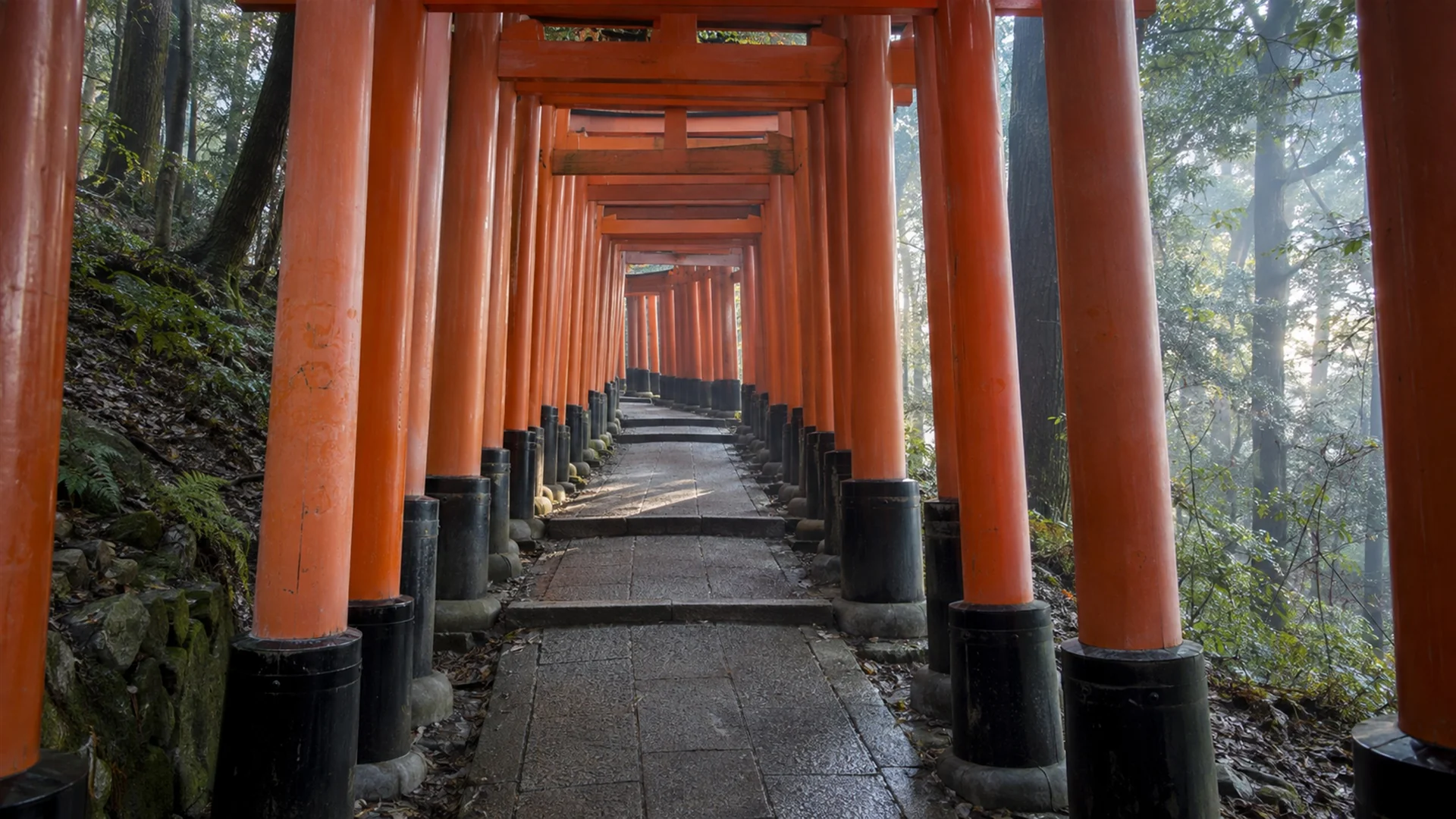
The day begins early. Fushimi Inari, the great shrine to the deity of rice and prosperity, is famous for its thousands of vermilion torii gates climbing the slopes of Mount Inari. Its paths are open at all hours, and before 7 a.m. they are often almost empty.
Beyond the first gates, the crowds thin further with every level. As a result, a walk toward the upper shrines rewards those who keep climbing, with forest shade, stone foxes and views back over the city.
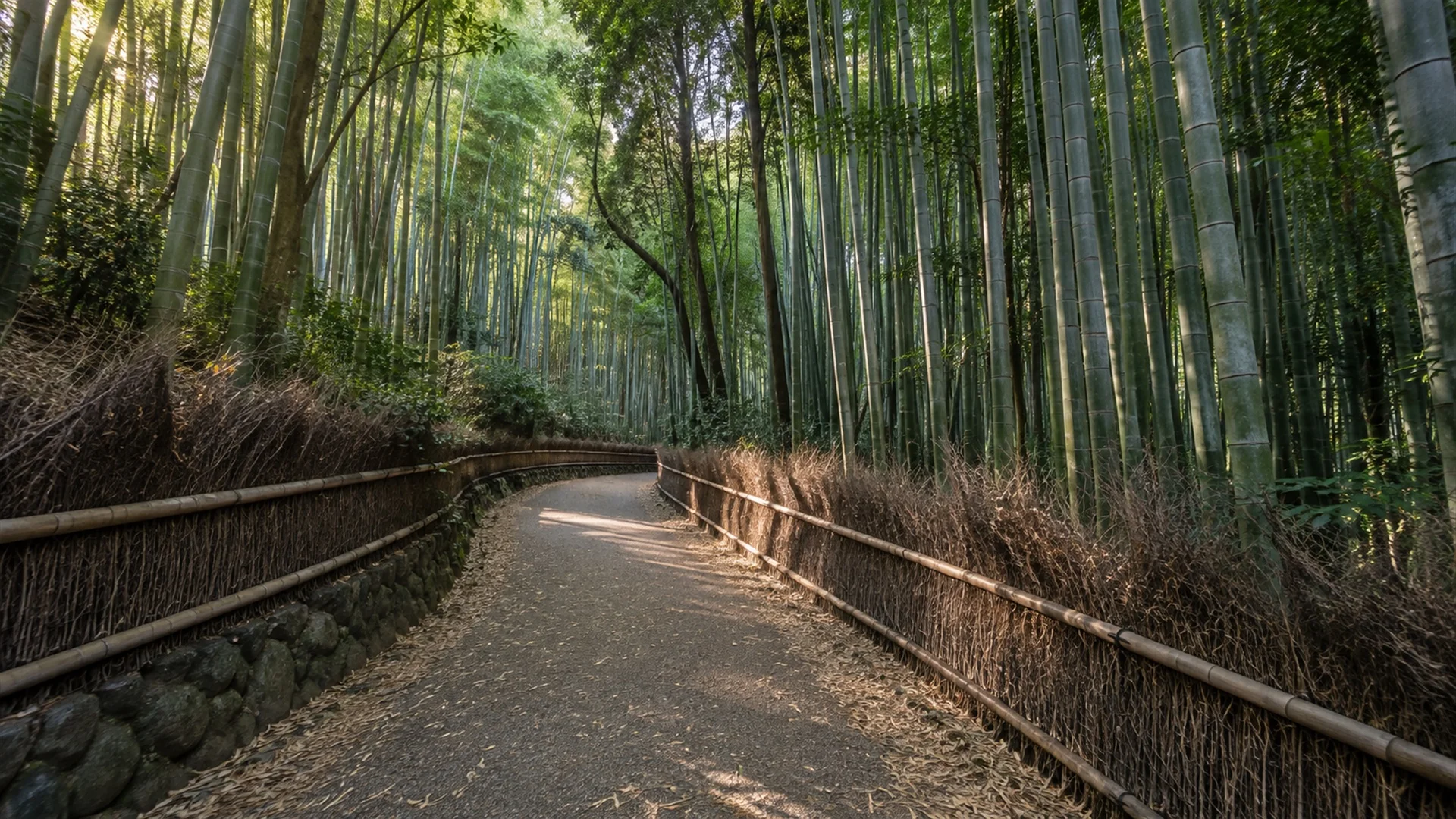
Alternatively, the western district of Arashiyama offers the same reward at the same hour. The bamboo grove is serene at dawn and crowded by mid-morning, and Tenryu-ji, one of the heritage temples, sits at its edge with a garden that frames the hills beyond.
Therefore, the first of the essential things to do in Kyoto is simply to be somewhere famous before everyone else.
Morning in the North: Kinkaku-ji and Daitoku-ji
Next, the northern temples. Kinkaku-ji, the Golden Pavilion, opens at 9 a.m., and arriving at that moment, before the tour groups, makes a marked difference to the experience.
A short drive away, Daitoku-ji offers a quieter counterpoint. This large Zen complex contains many sub-temples, a few of which open their dry gardens to visitors, and it remains far less visited than the celebrated names nearby.
Here, raked gravel, moss and clipped shrubs are composed to be viewed from a wooden veranda, often in near silence. Because of this, the northern morning offers both of Kyoto’s temple characters: the spectacular and the contemplative.
Meanwhile, Ryoan-ji and its famous rock garden lie on the same side of the city for travelers who wish to add a third. Its garden of fifteen stones is arranged so that, from the veranda, at least one always remains out of view.
Midday in the Center: Nishiki Market and Kaiseki
By late morning, the famous sites are at their busiest, which makes this the hour to move indoors and toward the table. Nishiki Market, a narrow covered street of pickles, tofu, knives and sweets, has supplied the city’s kitchens for generations.
After the market, a kaiseki lunch offers the refined multi-course cuisine of Kyoto at a calmer pace than dinner. Each course follows the season and is served on carefully chosen ceramics and lacquerware.
The market is best walked slowly and respectfully. Many stalls ask visitors to eat at the counter rather than while walking, which suits an unhurried pace.
In addition, midday is a natural moment to consider where to stay. Tawaraya, a historic inn in the old downtown, remains a reference for refined hospitality, while Hoshinoya Kyoto sits on the river in Arashiyama and is reached by boat.
For many travelers, this quiet midday pause is among the most memorable things to do in Kyoto.
Afternoon in the East: Nanzen-ji and the Philosopher’s Path
In the afternoon, the eastern hills come into their own. Nanzen-ji combines a monumental Zen gateway with a brick aqueduct from the late nineteenth century, a striking meeting of temple and engineering.
From there, the Philosopher’s Path follows a stone-lined canal north past small temples, cafés and residential gardens. The walk ends at Ginkaku-ji, the Silver Pavilion, another of the heritage monuments. The full list of the seventeen is set out at https://whc.unesco.org/en/list/688/
For travelers who prefer an earlier start in the east, Kiyomizu-dera, with its wooden stage above the hillside, is calmest before 8:30 a.m. or during its evening openings.
Later in the day, the tour groups begin to leave the eastern temples. Consequently, the final hours before closing are often the calmest of the day in Higashiyama, and the light across the gardens softens.
This eastern afternoon is one of the most balanced things to do in Kyoto, blending temples, gardens and a gentle walk.
Things to Do in Kyoto Beyond the Circuit: Ohara
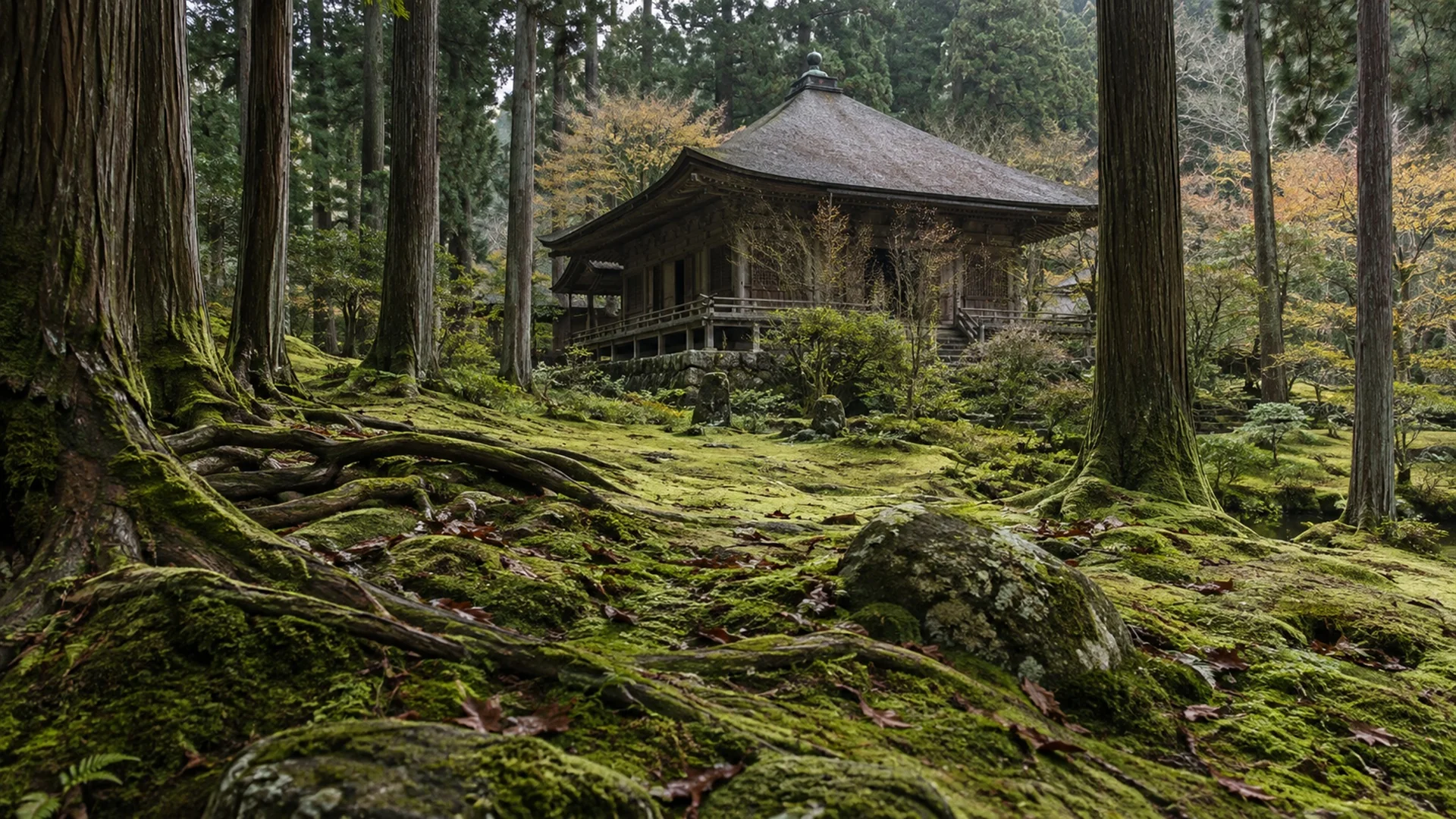
For a full day away from the crowds, Ohara lies roughly an hour north of the center, in a valley of farms, cedar forests and small temples.
Sanzen-in, the best known of them, is set among moss gardens and tall trees, while Hosen-in frames the valley through its open rooms. The pace here is slow, and the setting feels far from the city.
The road north follows the river into wooded hills, and the change of scene is immediate. A slow lunch in the valley, followed by a return in the late afternoon, keeps the day unhurried.
As a result, Ohara suits a second or third day in Kyoto, once the essential sites have been seen at their best hours. Combined with Daitoku-ji, it gives the northern side of the city real depth, and it is one of the quieter things to do in Kyoto.
Gion at Dusk, and How to Walk It
Finally, the evening belongs to Gion. As the light fades, the lanterns come on along the wooden teahouses of Hanamikoji and the willow-lined Shirakawa canal.
Gion is a living district, not a stage. Several of its private lanes are now closed to visitors, and photography without permission is prohibited on private streets. The geiko and maiko seen walking to appointments are working professionals, and they should never be followed, stopped or photographed.
Across the Kamo River, the narrow lane of Pontocho offers a similar evening atmosphere, lined with restaurants whose terraces look over the water. In addition, an early dinner followed by a quiet walk along the canal keeps the evening calm and respectful.
Therefore, the finest way to experience the district is from the inside: a reserved dinner, or a private evening arranged through an established teahouse.
Dawn shrines, silent gardens, and lantern-lit evenings
Signature Experiences
- Walking the torii paths of Fushimi Inari at dawn
- Early morning in the Arashiyama bamboo grove
- The Golden Pavilion of Kinkaku-ji at opening time
- Quiet Zen gardens at Daitoku-ji
- A late morning tasting walk through Nishiki Market
- A seasonal kaiseki lunch in the old center
- The brick aqueduct of Nanzen-ji
- An afternoon on the Philosopher’s Path
- A slow day among the temples of Ohara
- A private evening in Gion
Ready to Begin the Journey?
Kyoto rewards travelers who plan its hours as carefully as its sites. At EscapeXperts, we shape each day around timing and district, combining seamless logistics, private experiences and curated exploration so the city feels calm from dawn to dusk.
Why Travel to Kyoto with EscapeXperts
Kyoto and its neighbors hold seventeen heritage monuments, and the city countless quieter temples, and the difference between a crowded visit and a serene one is almost always the hour. At EscapeXperts, we sequence the city by time and by district, secure the right inn and open doors that stay closed to casual visitors. The result is a calm, considered selection of the best things to do in Kyoto.