Best months: May to October (dry season, cool days)
Country: Namibia
Region: Namib · Sossusvlei · Etosha · Skeleton Coast · Damaraland
Best for: Desert landscapes, dark skies, photography
A Namibia Safari: Sossusvlei, Etosha and the Skeleton Coast
A namibia safari is unlike any other in Africa. Here, the wildlife shares the stage with the land itself — towering dunes, a fog-bound coast and one of the darkest night skies on earth. It is the most photogenic journey the continent offers.
At Escape Xperts, we design Namibia journeys for travelers who want scale, silence and space over the density of the Big Five. This is a country of vast horizons, where the appeal is as much landscape as game.
Sossusvlei and Deadvlei
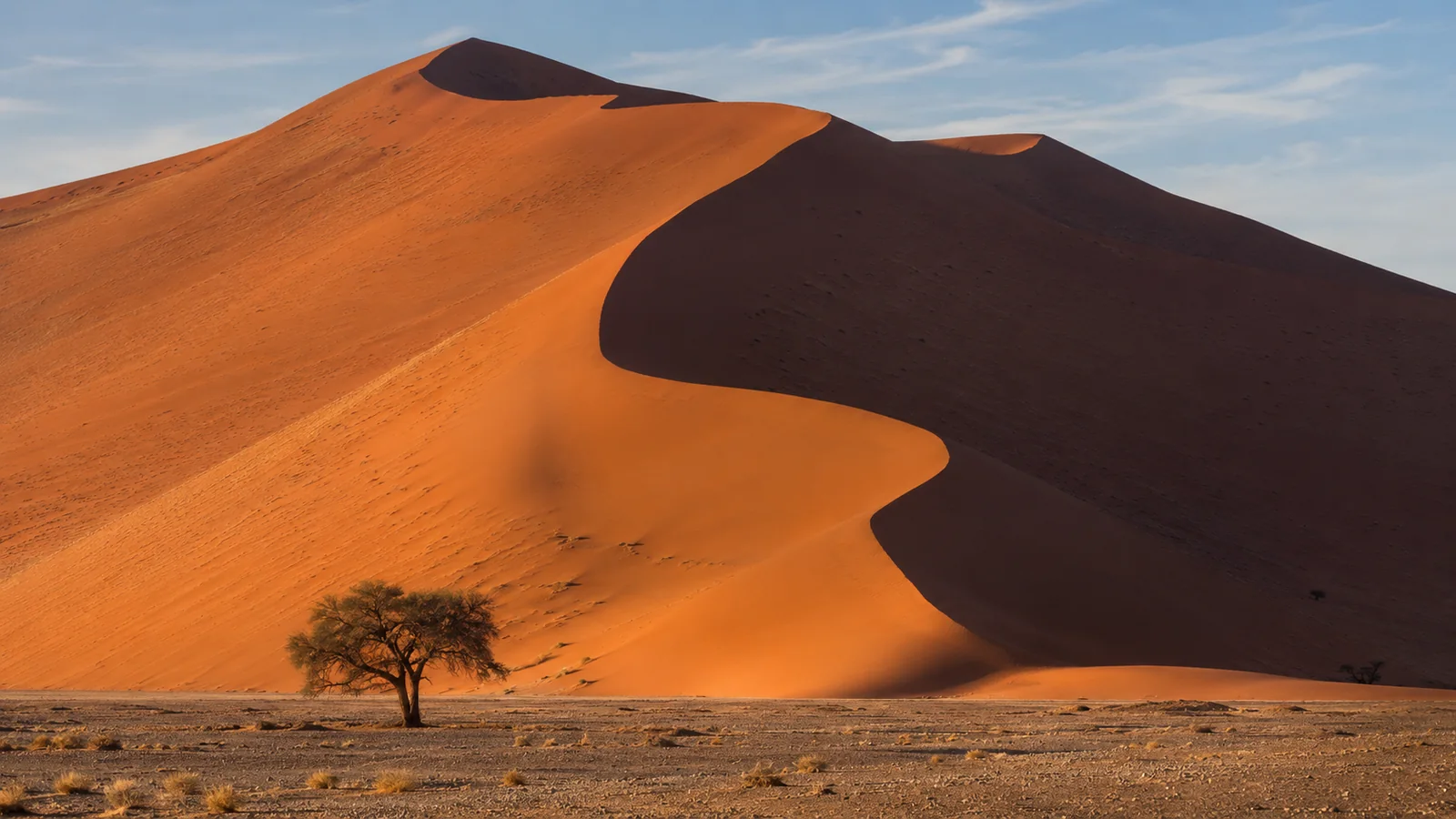
The heart of a namibia safari is Sossusvlei, where the world’s tallest dunes rise from the Namib Desert in waves of burnt orange. At dawn, the low sun carves the ridgelines into sharp light and shadow.
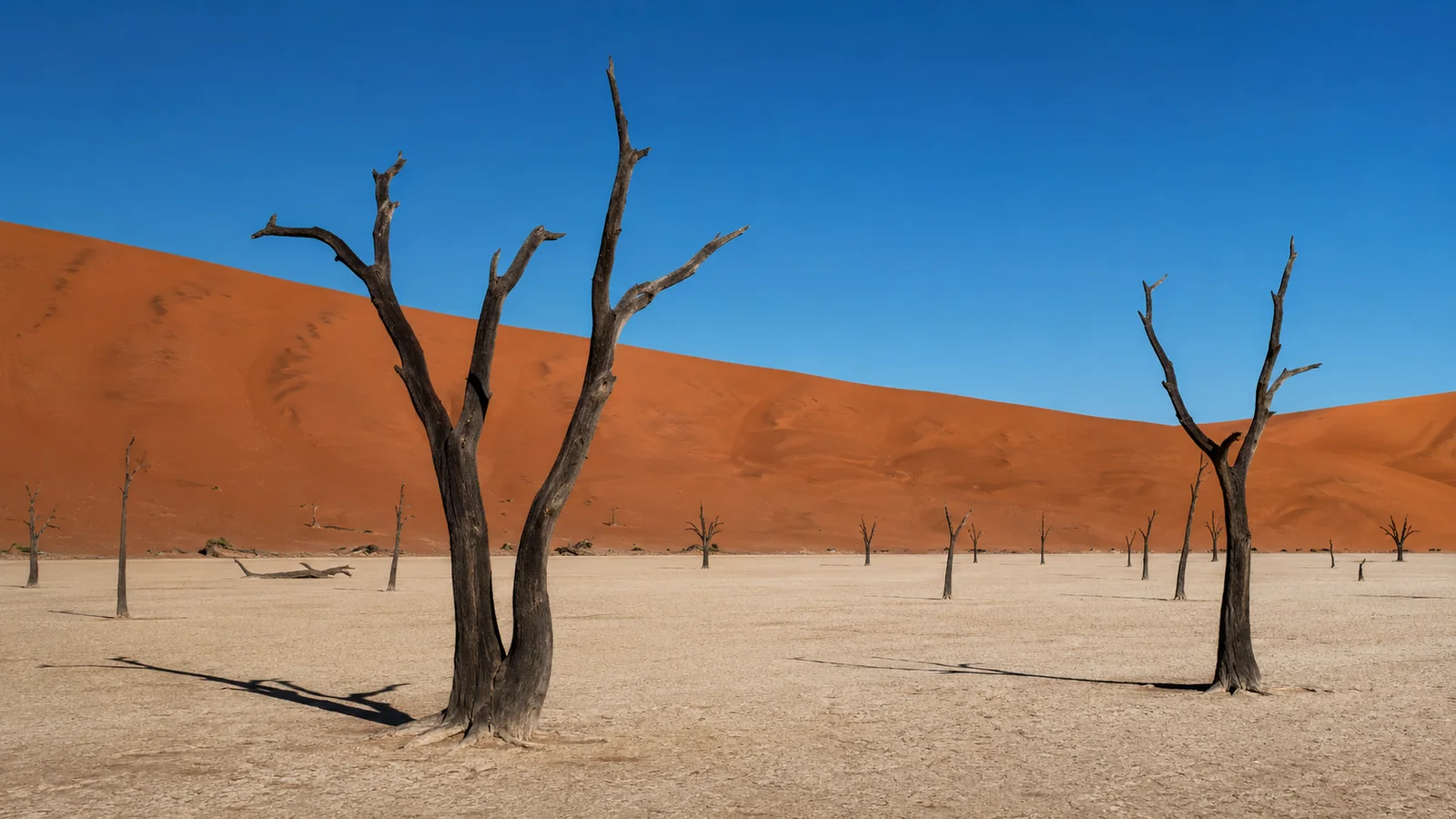
Nearby, Deadvlei is the most photographed spot in the country: a white clay pan studded with blackened, nine-hundred-year-old camel thorn trees, framed by apricot dunes. It is surreal and utterly still.
Because the light is everything here, the climb up Dune 45 or Big Daddy is timed for sunrise, before the heat and the crowds arrive. The Sesriem canyon offers a cool counterpoint later in the day.
The dunes belong to the Namib-Naukluft, part of the wider Namib Sand Sea — a UNESCO World Heritage site and one of the oldest deserts on earth. Staying inside or beside the park gains a crucial head start on the gates each morning.
Therefore, the desert core rewards early starts and patience — the reward is imagery found nowhere else on the planet.
When to Go and the Desert Light
The dry winter months, May to October, are the classic window for a namibia safari. Days are cool and clear, nights cold, and the light exceptional for photography.
Meanwhile, the summer months bring heat and occasional dramatic storms, along with the chance of green flushes in the desert. The shoulder seasons offer a balance of comfort and quiet.
In addition, Namibia‘s clear, dry air and near-total absence of light pollution make it one of the world’s premier stargazing destinations. The NamibRand reserve is a certified International Dark Sky Reserve.
As a result, a night under the stars here is as memorable as any daytime sight.
Etosha and Desert-Adapted Wildlife
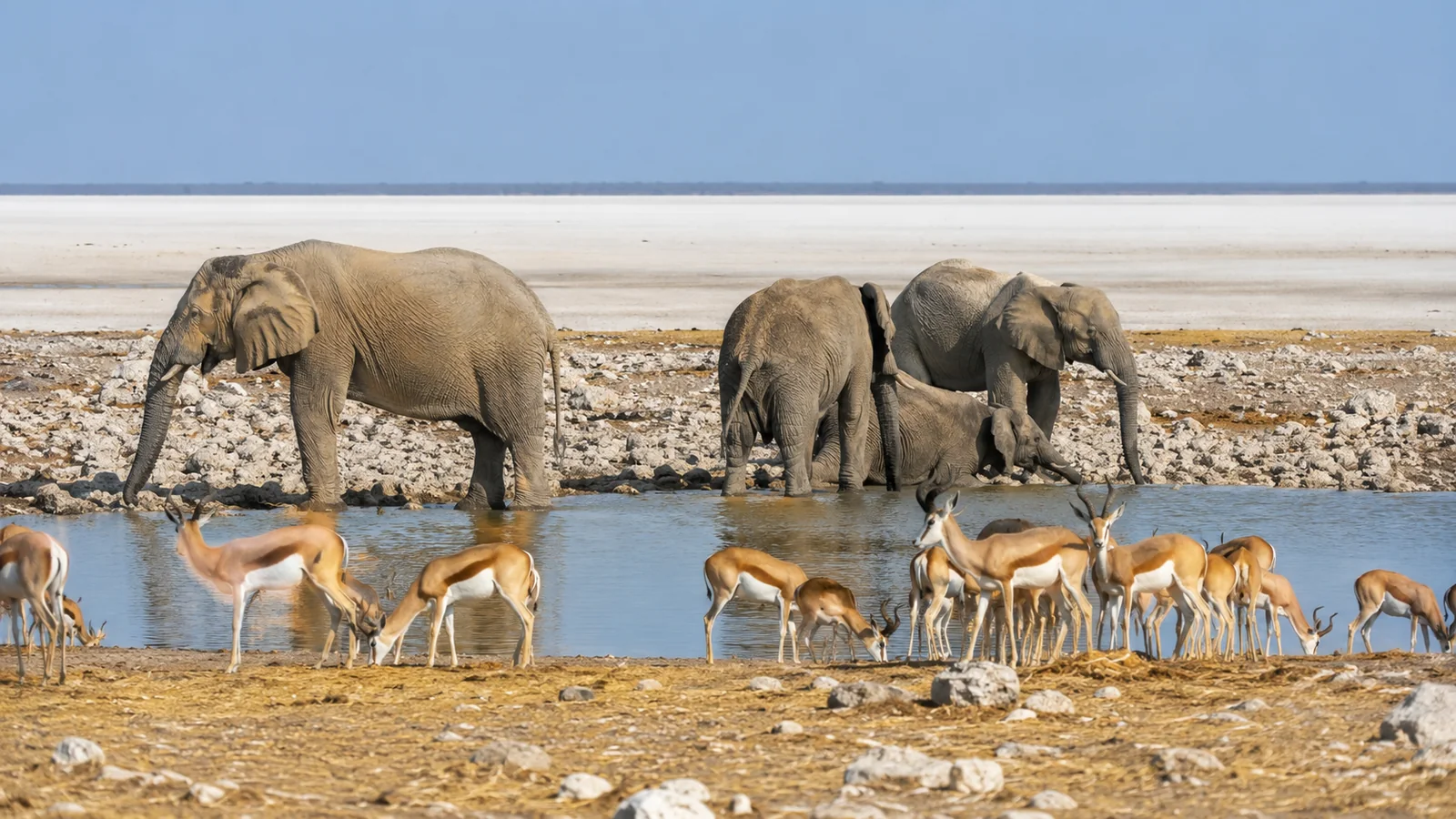
A namibia safari is not only landscape. Etosha National Park, in the north, is one of Africa’s great game-viewing destinations, built around a vast salt pan.
Here, wildlife gathers at floodlit waterholes, where in the dry season elephants, lions, rhino and springbok come to drink. The game viewing is passive and reliable — you wait, and the animals come to you.
Meanwhile, in the northwest, Damaraland shelters the famous desert-adapted elephants and rare desert rhino, animals that have learned to survive in near-waterless terrain. Tracking them on foot is a highlight for many.
Etosha’s dry season, from June to October, is the prime window, when thinning water forces game to the pans’ edges. The park works beautifully as a wildlife counterpoint to the pure landscape of the south.
Because this fauna is so specialized, it offers something the classic savanna parks cannot — wildlife shaped by one of the harshest environments on earth.
The Skeleton Coast and Damaraland
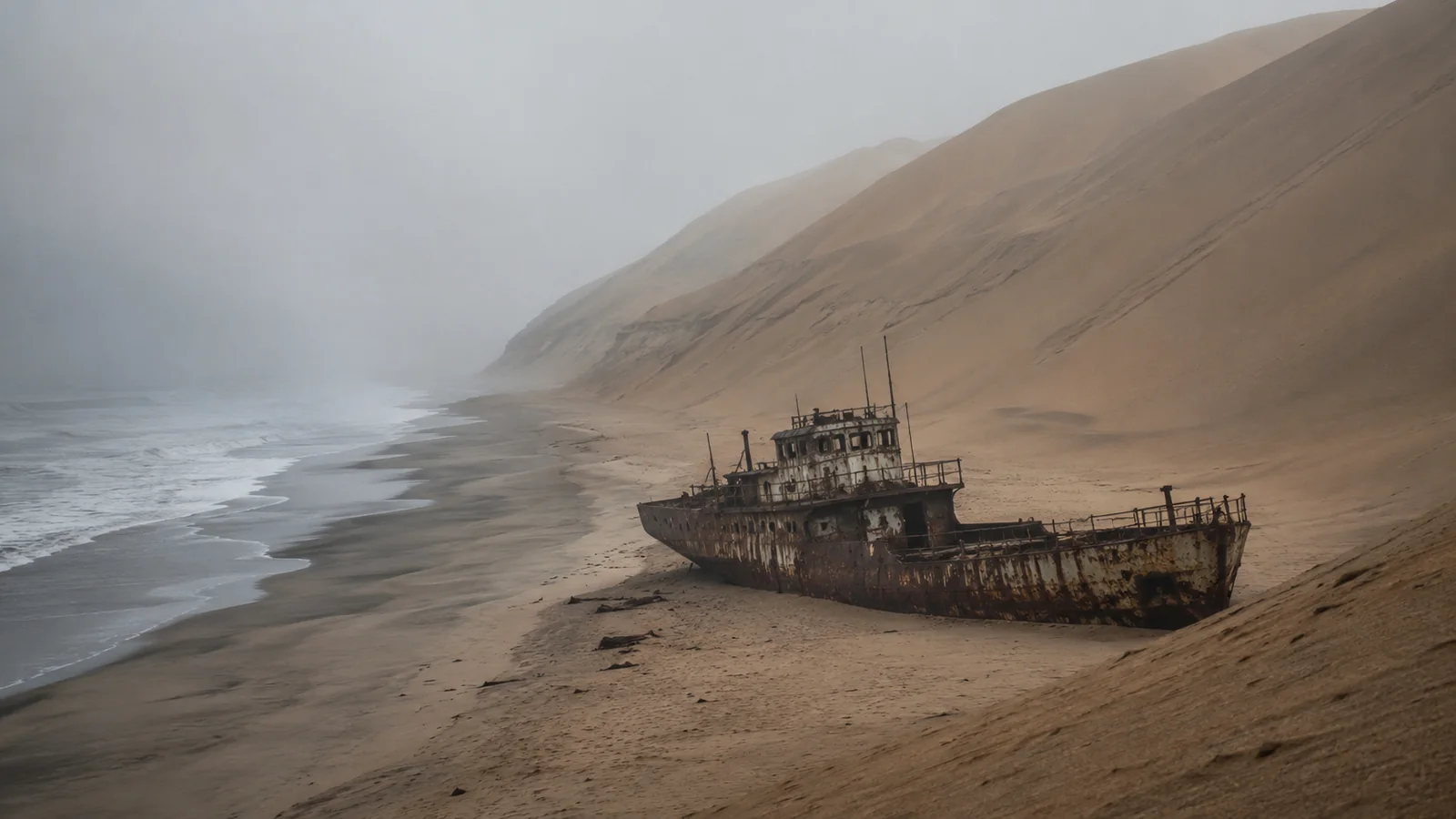
Few landscapes are as haunting as the Skeleton Coast, where the Namib Desert meets the cold Atlantic in fog, shipwrecks and endless empty sand.
Seal colonies, desert lions and the bleached bones that gave the coast its name lend it an end-of-the-earth atmosphere. Scenic flights here are among the most dramatic in Africa.
Inland, Damaraland combines rust-red rock formations, ancient rock art at Twyfelfontein and the desert-adapted wildlife into one of the country’s most rewarding regions.
Access to the deep Skeleton Coast is restricted and largely by air, which keeps it pristine. A handful of remote camps offer the only real way to experience its solitude at length.
Next, this remote northwest is where a namibia safari feels most like exploration — few roads, fewer people, and horizons that seem to go on forever.
Where to Stay
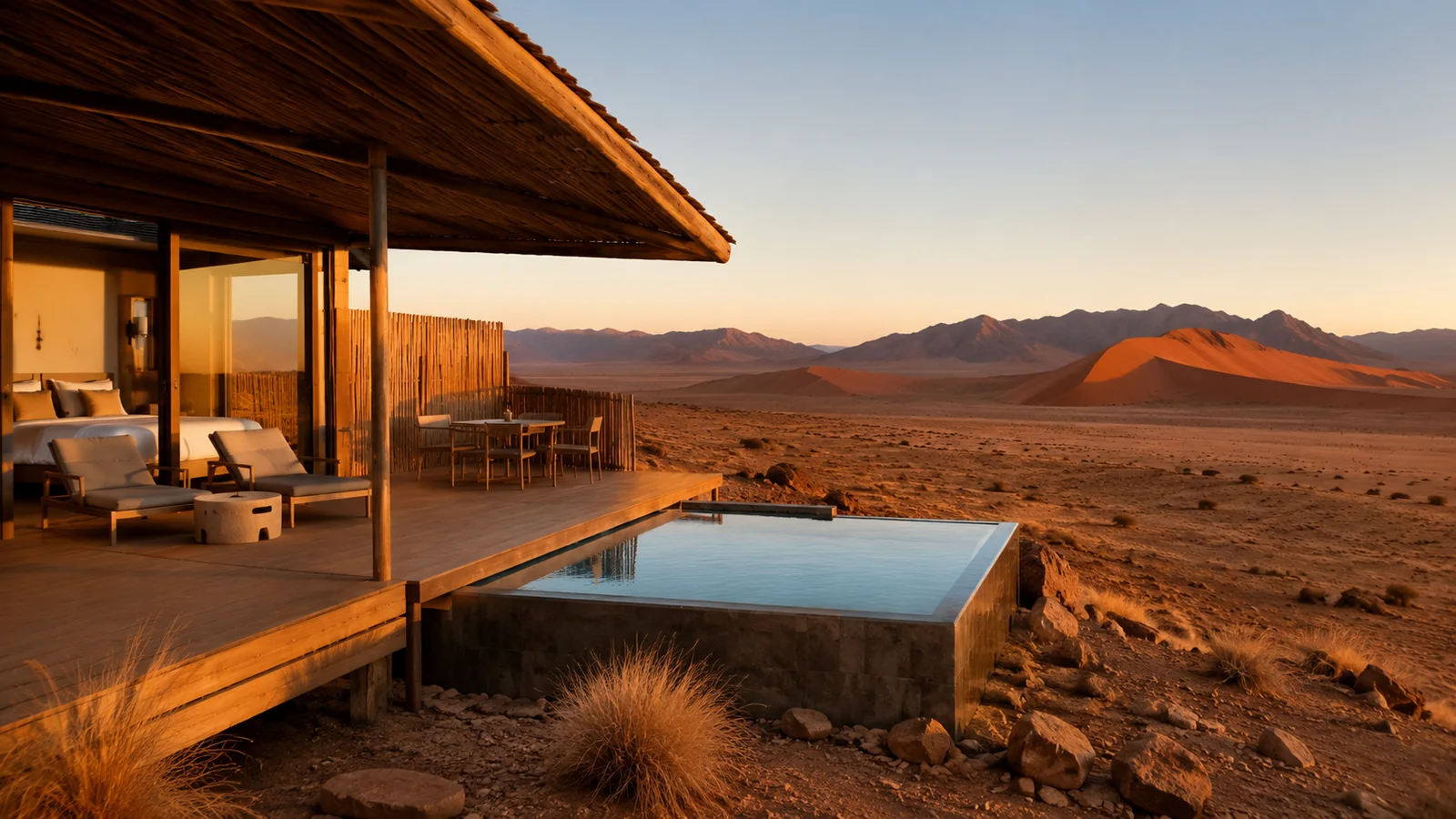
Namibia’s finest lodges are designed to frame the emptiness rather than fill it. Low, minimalist and remote, they turn the desert itself into the luxury.
Wolwedans, in the private NamibRand reserve, and Little Kulala, at the gates of Sossusvlei, are among the most celebrated — each pairing understated design with direct access to the dunes.
Because distances are so great, most journeys move between three or four lodges, often by light aircraft. Each occupies a distinct landscape, from red dunes to salt pan to fog coast.
These lodges are small and remote, and the best fill early for the dry-season months. Their limited capacity is part of the appeal, but it makes advance planning essential.
In addition, many lodges offer star beds and rooftop decks, so guests can sleep beneath the extraordinary desert sky.
How to Travel Namibia
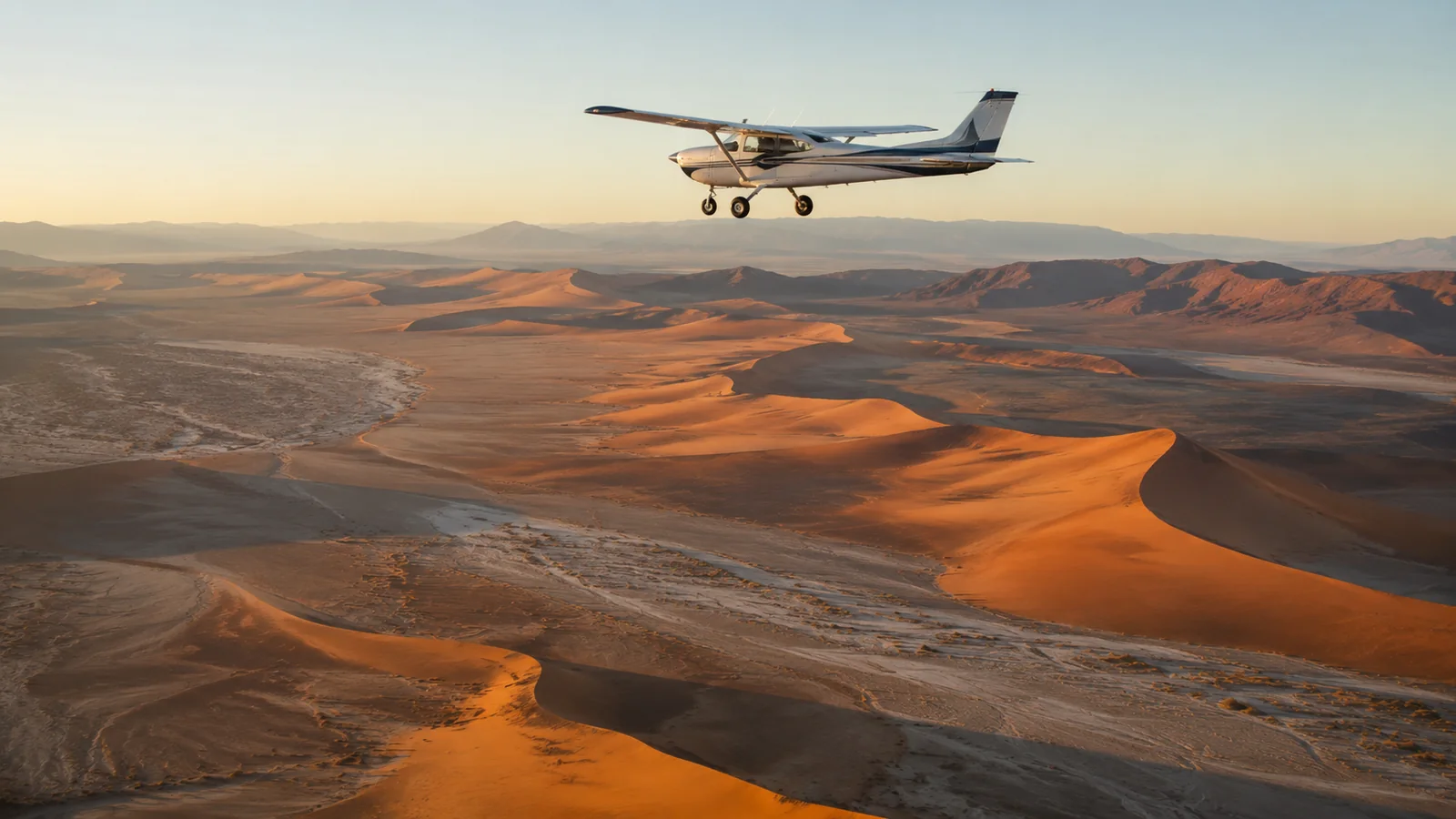
Namibia is one of the few African countries where self-drive is genuinely feasible — its roads are good and its distances, though long, are manageable. For independent travelers, this freedom is part of the appeal.
However, the scale of the country makes fly-in safaris the more relaxed option, trading days of driving for short scenic flights over the dunes. Many itineraries blend the two.
Because Namibia is so vast, a rewarding namibia safari needs time — ten days to two weeks to move from the desert to Etosha and the coast without rushing.
Finally, the roads and flights themselves become part of the journey, each transfer a chance to watch the landscape transform. For destination information, see https://whc.unesco.org/en/list/1430
Endless dunes, a fog-bound coast, and the darkest, brightest sky on earth
Signature Experiences
- Sunrise climb on the dunes of Sossusvlei
- The blackened trees of Deadvlei at first light
- Floodlit waterhole game viewing in Etosha
- Tracking desert elephants in Damaraland
- Scenic flight over the Skeleton Coast
- Stargazing in the NamibRand Dark Sky Reserve
- Ancient rock art at Twyfelfontein
- Seal colony at Cape Cross on the coast
- Star bed night under the desert sky
- Quad or e-bike across the gravel plains
Let’s Design Your Experience
Namibia rewards travelers who value landscape and silence as much as wildlife. At Escape Xperts, we design journeys around seamless fly-in logistics, remote design-led lodges and curated exploration — linking the desert, the coast and Etosha into one seamless, unhurried route.
Why Travel to Namibia with Escape Xperts
Namibia offers the most photogenic journey in Africa — the dunes of Sossusvlei, the game of Etosha, the haunting Skeleton Coast and skies of extraordinary clarity. At Escape Xperts, we time the light, secure the finest desert lodges and coordinate every flight, so a namibia safari unfolds as a study in scale, silence and space.