Valley floor altitude: around 2,800 meters, against roughly 3,400 in Cusco
Ideal stay: Three to four nights, before Machu Picchu and Cusco
Country: Peru
Region: Pisac · Urubamba · Moray · Maras · Chinchero · Ollantaytambo
Sacred Valley Luxury Travel: A Base, Not an Excursion
Sacred Valley luxury travel begins with a simple reversal. Instead of landing in Cusco and visiting the valley for a day, you sleep in the valley first. At around 2,800 meters, it sits roughly 600 meters lower than the city, and that difference shapes how the first days of a Peruvian journey feel.
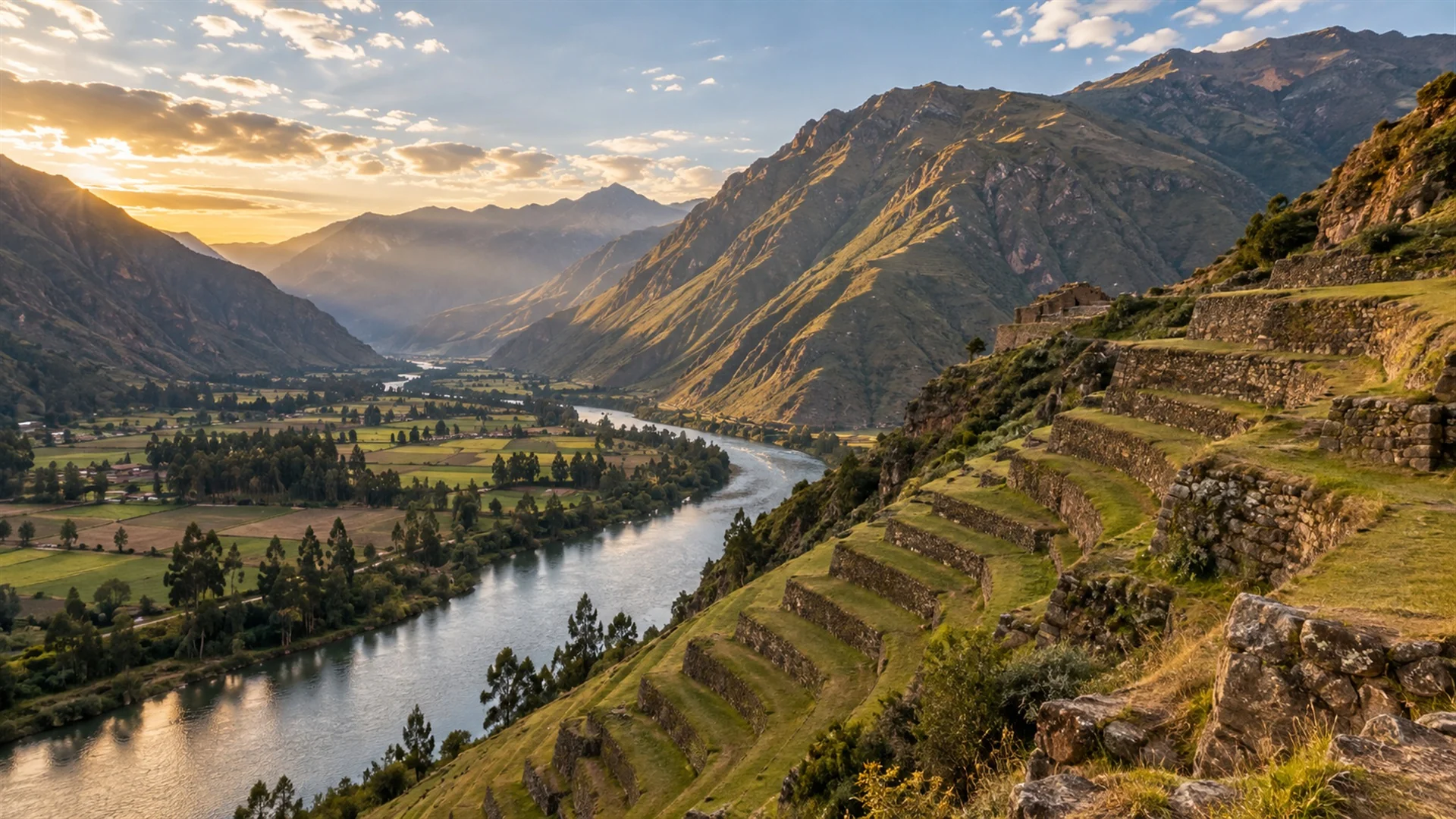
The valley follows the Vilcanota river, known further downstream as the Urubamba, between two ranges of the Andes. Inca terraces, market towns and riverside estates line its length, and each part of it rewards a slower pace.
At EscapeXperts, we treat the valley as the foundation of a Peruvian itinerary. This guide explains the altitude logic, organizes the valley by town and site, and shows how it connects to the train onward.
The Altitude Argument: Why the Valley Comes First
Most flights arrive in Cusco, and most travelers stay there by habit. Yet the city sits at roughly 3,400 meters, high enough for many visitors to feel breathless, tired or unwell during the first night or two.
The valley floor, by contrast, lies at around 2,800 meters. The drive down from the airport takes around an hour and a half, and the lower altitude allows the body to adjust more gradually while the days remain full.
As a result, the common pattern of two difficult days in Cusco can be avoided entirely. Travelers who acclimatize in the valley tend to reach Cusco at the end of the journey rested and able to walk its hills with ease.
The valley is also warmer, particularly at night, and noticeably greener. Because of this, Sacred Valley luxury travel is as much a question of comfort as of logistics: the first nights of the trip are spent well rather than recovered from.
Medical advice on altitude remains a matter for each traveler’s physician. What the itinerary can do is set the order, and here the order makes a real difference.
Urubamba and the Valley Floor: Where to Stay
Urubamba is the working center of the valley, and the finest properties sit around it rather than in it. Here, the choice is less about location than about style.
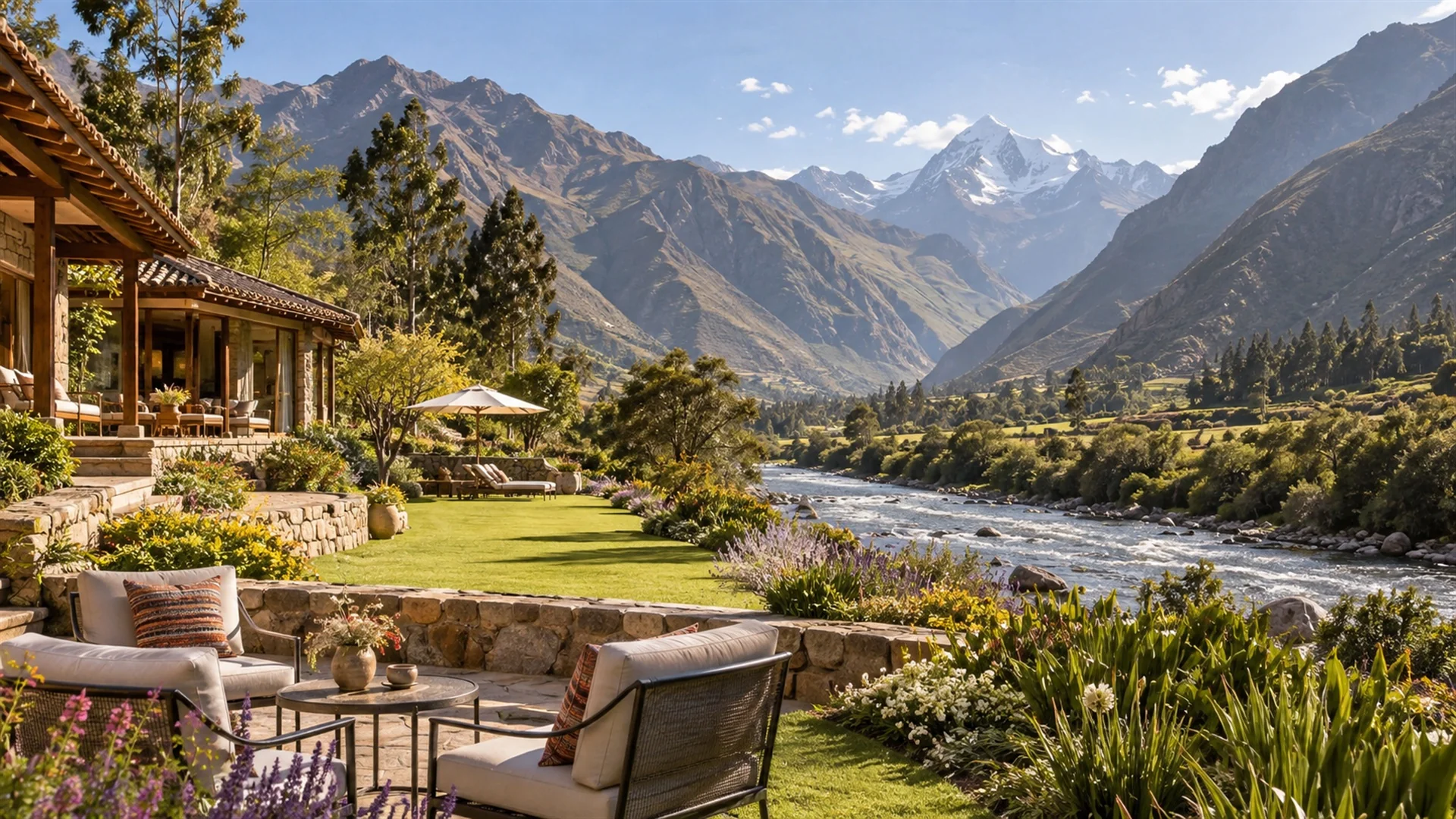
Belmond Rio Sagrado lines the riverbank with casitas and gardens, with the sound of the water present throughout the stay. It suits couples who want quiet, a spa and an easy connection to the railway.
In contrast, Explora Valle Sagrado works as an exploration lodge. Guided outings on foot and by bicycle are planned each day, and the property sits among cultivated fields where maize and quinoa terraces still frame the view.
Inkaterra brings its conservation-minded approach to Hacienda Urubamba, a former estate on the slopes above the river. Meanwhile, Willka T’ika offers a smaller garden retreat centered on wellness and yoga.
Each property answers a different question, and matching the stay to the traveler is the first decision of Sacred Valley luxury travel.
Pisac: Terraces Above the Market Town
Pisac marks the eastern entrance to the valley. The town is known for its market, where textiles, ceramics and produce change hands, and it is liveliest on the main market days.
Above the town, the archaeological complex of Pisac climbs the mountainside in sweeping agricultural terraces. Temples, ceremonial areas and residential sectors sit along the ridge, with wide views down the valley.
An early start makes the difference here. The paths are steep, the light is softer in the morning, and the site is considerably quieter before midday.
Therefore, Pisac works best as the first outing from a valley base, easing travelers into the region’s history with a short drive and a gentle walk down through the terraces.
Moray, Maras and Chinchero: The High Plateau
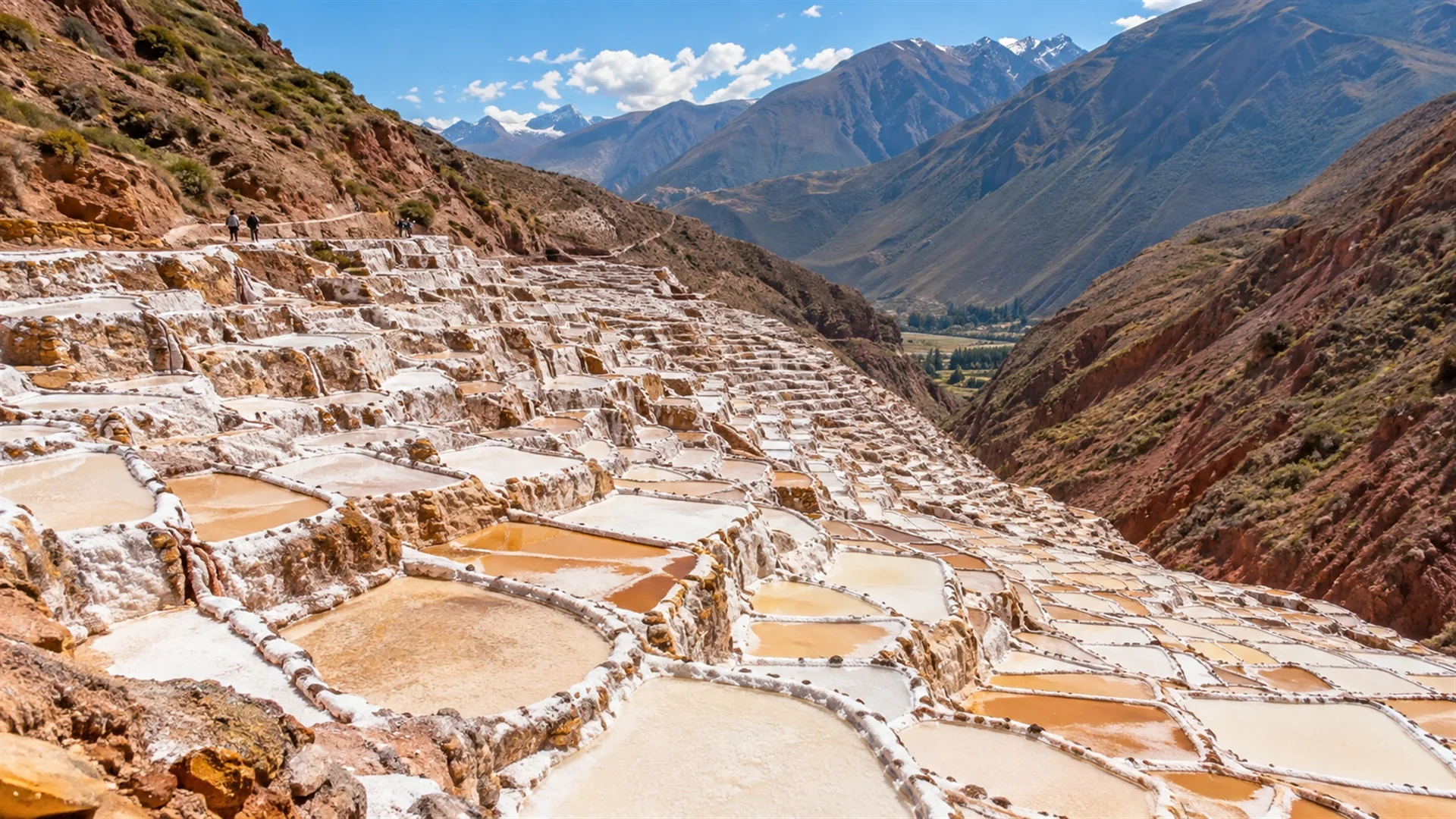
Above the valley floor, a high plateau holds three of the region’s most distinctive sites. They sit higher than the valley itself, which is why they are visited by day rather than slept at.
Moray is a set of circular terraces descending into natural hollows in the ground. The concentric rings are widely interpreted as an Inca agricultural site, where different levels offered different growing conditions.
Nearby, the Maras salt pans spill down a hillside in hundreds of small pools fed by a saline spring. Local families still work them by hand, and the colors shift from white to ochre with the light.
Next, Chinchero stands on the plateau above both, higher even than Cusco. Its colonial church rises on Inca foundations, and its weaving cooperatives keep traditional techniques in daily use.
Taken together, these sites form a single day that shows the valley’s agricultural and cultural depth, a defining part of Sacred Valley luxury travel.
Ollantaytambo and the Train to Machu Picchu
At the western end of the valley, Ollantaytambo is one of the few towns in Peru that still follows its Inca street plan. Stone channels carry water through narrow lanes, and the great terraces of the temple complex rise directly above the square.
The town is also the valley’s railway hub. From its station, trains follow the river down the gorge toward Machu Picchu, and the ride takes around an hour and a half. For a valley base, the station is a short drive away.
Finally, this is what makes the valley such a natural launch point. Travelers can spend a final morning in Ollantaytambo and board the train in the afternoon, without an early start from Cusco.
Sacred Valley Luxury Travel at the Right Pace
Three nights is the minimum that allows the valley to do its work. The first day is kept light, the second and third carry the main outings, and the altitude has time to settle before anything strenuous is attempted.
Four nights allow a more generous rhythm. You may add a riverside afternoon at the lodge, a longer walk between villages, or a cooking session built around the valley’s maize, potatoes and quinoa.
In addition, the order of the outings matters. Pisac and the valley floor suit the first full day, because the drives are short and the terraces can be walked gently downhill. Moray, Maras and Chinchero, higher on the plateau, are better placed later, once the body has adjusted.
Ollantaytambo then closes the valley stay naturally, on the morning of the train. The sequence builds gradually in effort and moves from east to west, so the same road is rarely retraced.
This is the practical core of Sacred Valley luxury travel: fewer hotel changes, shorter drives and days shaped around how the traveler actually feels at altitude. For official regional information, see https://www.peru.travel
River light, stone terraces, and the quiet ease of lower ground
Signature Experiences
- Riverside nights at Belmond Rio Sagrado on arrival
- Guided valley explorations from Explora Valle Sagrado
- Early morning walk through the terraces above Pisac
- Private visit to the circular terraces of Moray
- Salt harvest views across the Maras salt pans
- Weaving demonstration with a cooperative in Chinchero
- Lunch among maize and quinoa fields near Urubamba
- Walking the Inca lanes of Ollantaytambo
- Afternoon train along the Vilcanota river gorge
- Garden and wellness time at Willka T’ika
Explore more Latin America journeys: EscapeXperts curates luxury Latin America journeys across the region. To shape the next itinerary, speak with an EscapeXperts travel advisor.
Ready to Begin the Journey?
The Sacred Valley is where a Peruvian journey finds its footing. At EscapeXperts, we build the valley stay around altitude and pace, combining seamless logistics, private guiding and curated exploration before the train carries you onward.
Why Travel to the Sacred Valley with EscapeXperts
The Sacred Valley changes how Peru is experienced, simply by changing where the journey begins. At EscapeXperts, we place the right property on the right stretch of river, sequence the sites around the light and the crowds, and time the train with care. The result is Sacred Valley luxury travel that turns the first days of the journey into its most restorative.