Best hours: First light, late afternoon and after dark
Best months: April to early June · late September to November
Country: Italy
Neighborhoods: Ancient Rome · Vatican · Centro Storico · Aventine · Trastevere · Testaccio
Things to Do in Rome, Ordered by the Hour Rather Than the Ranking
The most useful list of things to do in Rome is not ranked by importance but by time of day. The Colosseum at eight in the morning and the same monument at noon are two different experiences, and only one of them is worth the journey. Access and pacing decide the day.
At Escape Xperts, we build Roman days around light and crowd rhythm rather than around a checklist. The city rewards travelers who arrive early, retreat at midday and come back out when the stone starts to glow.
First Light: Ancient Rome Before the Queues
The Colosseum opens shortly after dawn, and the first ninety minutes are unlike the rest of the day. Group tours have not yet arrived, the temperature is manageable, and the low sun rakes across the travertine in a way that disappears entirely by mid-morning.
A private early entry changes the experience in concrete terms. It brings access to the arena floor and, on many mornings, to the underground hypogeum where the machinery and animal lifts sat. Standing at the level of the gladiators rather than looking down from the tiers is a different building altogether.
Next, the Roman Forum and Palatine Hill follow naturally on the same ticketed circuit. The Forum is disorienting without narration and unforgettable with it, because almost nothing in it is self-explanatory. Morning also means shade on the eastern paths, which vanishes by eleven.
Because of this, the first slot of the day should be protected. Among the things to do in Rome, ancient sites are the ones that degrade fastest as the hours pass, and the ones that improve most with a guide who can rebuild the missing walls in conversation.
Late Morning: The Vatican Museums on a Different Clock
The Vatican Museums hold one of the densest art collections in the world inside corridors that were never designed for the traffic they now receive. The standard visit involves several thousand people moving in one direction toward a single room.
Early or after-hours access rewrites that. Before opening, the Gallery of Maps and the Raphael Rooms can be walked at conversational volume, and the Sistine Chapel can be seen with dozens of people rather than hundreds. The custodians stop calling for silence because it is already silent.
Meanwhile, an after-hours evening visit offers the opposite pleasure: artificial light on the ceiling, empty staircases and the Cortile della Pigna in the dark. Both versions are worth arranging months in advance, because the allocations are small and fixed.
In addition, the museums pair badly with anything else. A serious Vatican morning fills the slot completely, and pushing St. Peter’s Basilica into the same block usually means rushing the part that deserves the time.
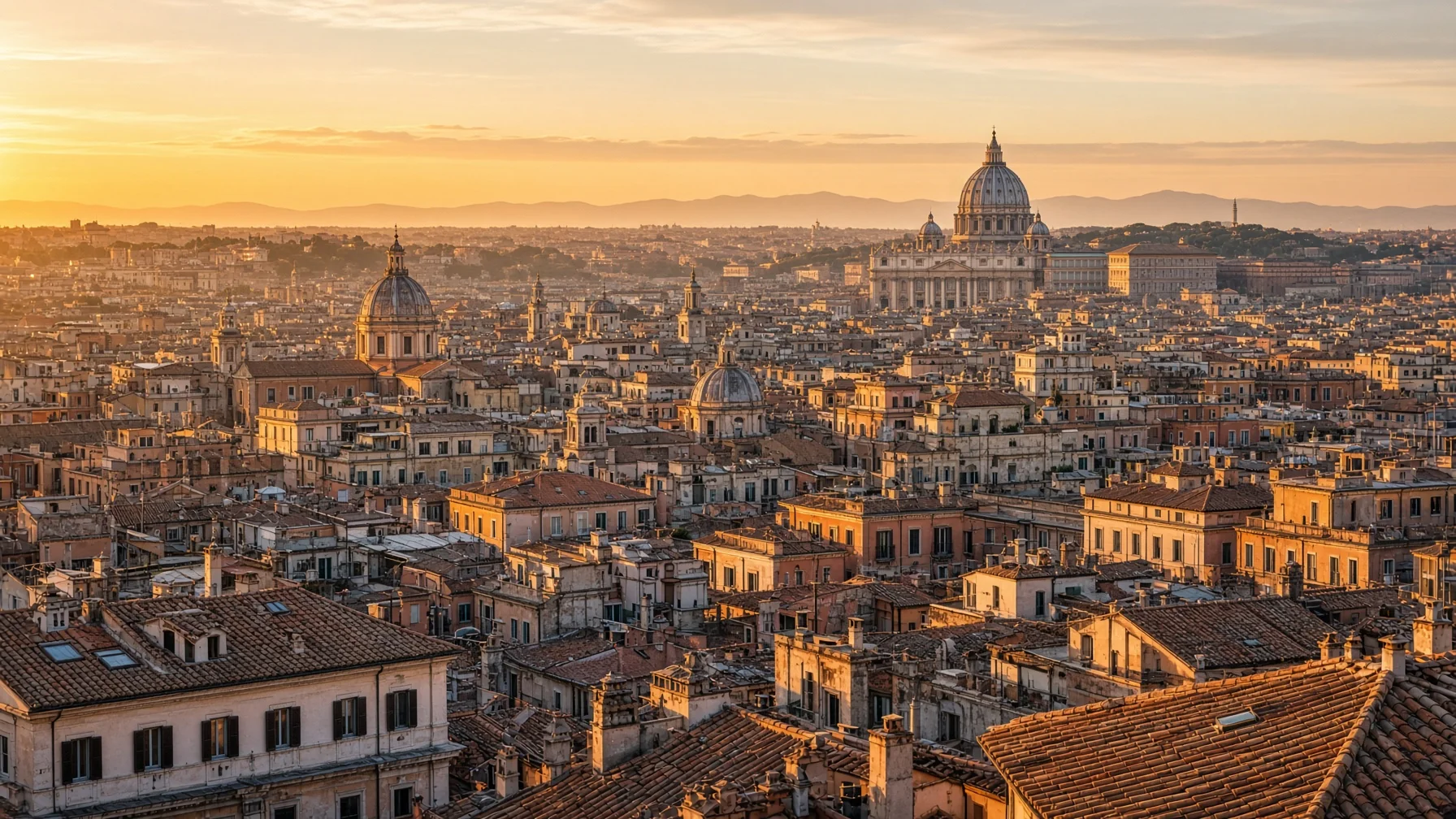
St. Peter’s therefore works better as its own return, ideally at opening or in the final hour. The dome climb runs to five hundred and fifty steps in a narrowing shell, and the reward at the top is the only vantage point from which the Roman street plan reads as a single design.
Midday: Piazzas, Shade and the Pantheon’s Oculus
The midday things to do in Rome belong to interiors, shade and long lunches. The city empties into the restaurants between one and three, and travelers who fight that rhythm spend the hottest part of the day in the sun with everyone else who has done the same.
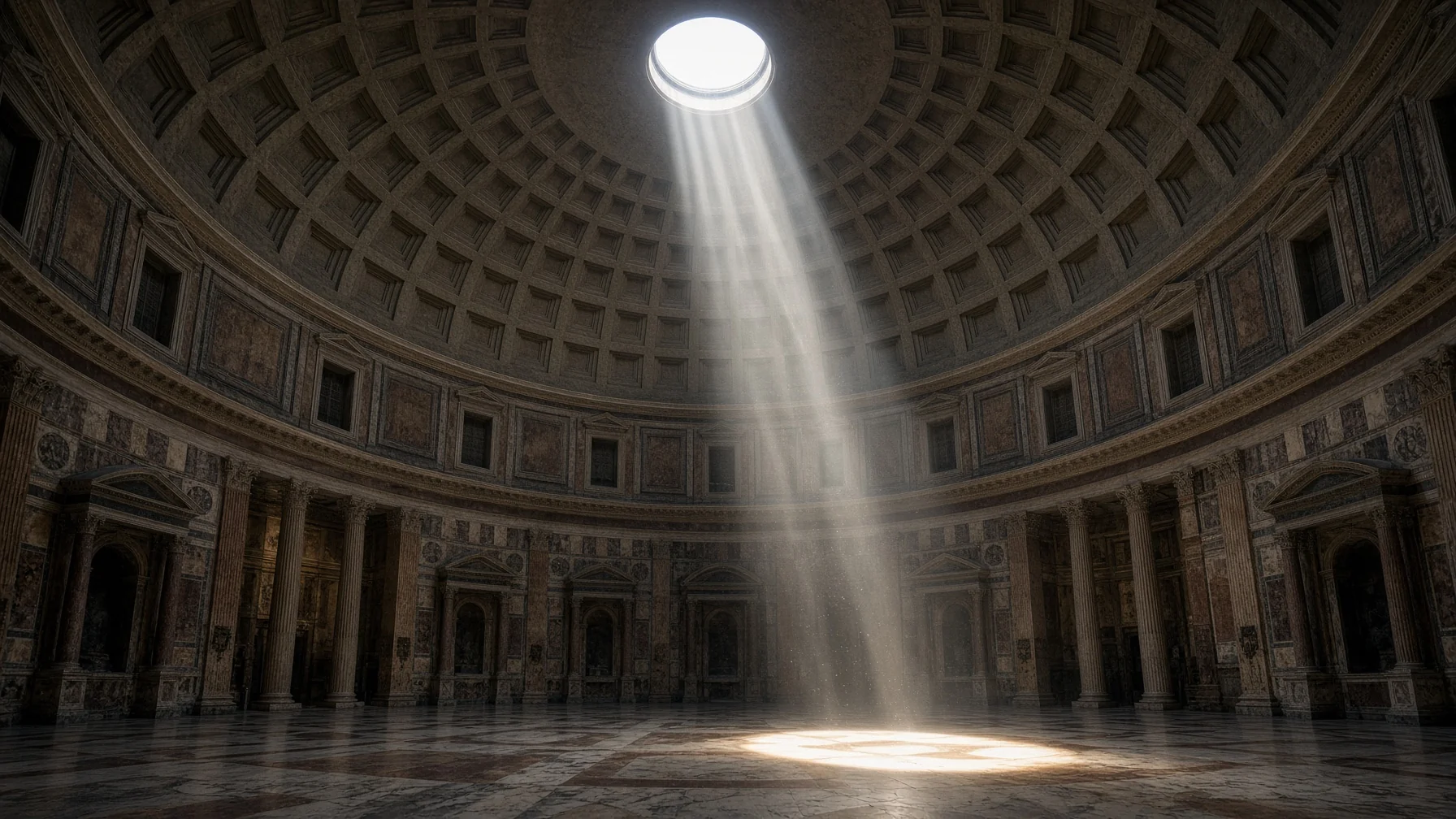
The Pantheon is the exception worth making. Its oculus performs differently as the sun crosses, and around midday the beam lands with the most force on the floor and the coffering. The building is also cool inside, which the piazzas are not.
From there, the walk through the Centro Storico works in short segments: Piazza Navona, the churches with Caravaggios that cost nothing to enter, and the Trevi Fountain approached from the back streets rather than the main artery. Therefore, the midday hours reward interiors over monuments.
Rome’s central hotels earn their position precisely here. Hotel de Russie holds a terraced garden between Piazza del Popolo and the Pincio that functions as a private oasis in the middle of the day, and Hotel Hassler sits directly at the top of the Spanish Steps, which turns a difficult address into a two-minute return.
Late Afternoon: Borghese Light and the Aventine Hush
Villa Borghese operates on timed two-hour entries, and the last slots of the day are the quietest. The Bernini sculptures in particular need circling to be understood, and that is only possible when the room is not full.
Beyond the gallery, the park itself is one of the more underrated things to do in Rome. The umbrella pines throw long shadows by five, the Pincio terrace looks west over the domes, and the walk down into Piazza del Popolo takes ten minutes.
In contrast, the Aventine offers silence rather than spectacle. The Giardino degli Aranci looks across the Tiber toward St. Peter’s, and the keyhole at the Priory of the Knights of Malta frames the dome with a precision that feels deliberate because it is.
As a result, the late afternoon is where a Roman day recovers its pace. The heat drops, the light warms, and the city becomes walkable again for the two hours before dinner.
Evening: Trastevere, Testaccio and the Roman Table
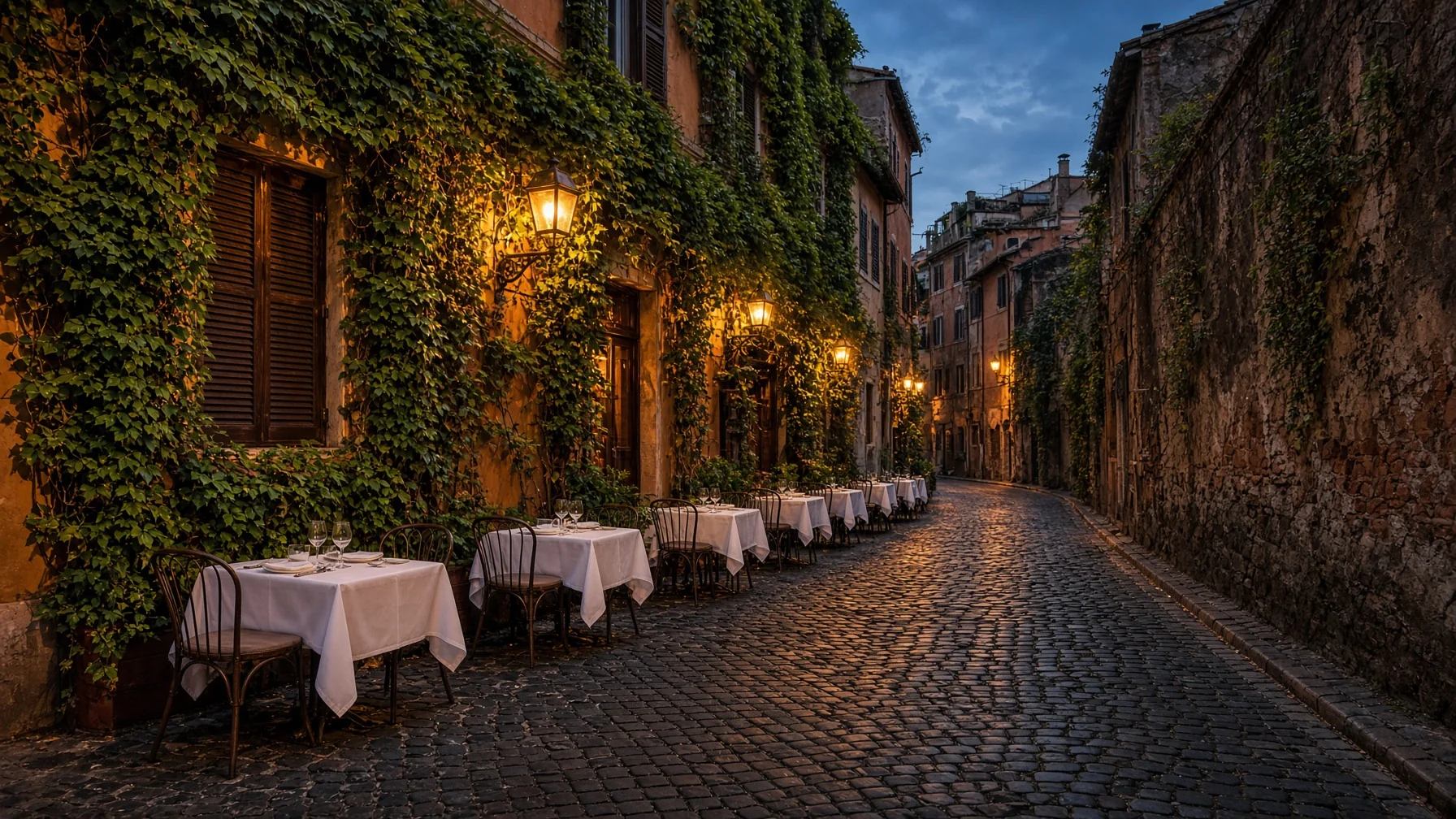
Trastevere changes character after dark. The daytime version is a photogenic grid of ochre facades; the evening version is where Romans actually eat, particularly on the quieter side beyond Viale di Trastevere.
The city’s cooking, however, is clearest in Testaccio market and the streets around it. This is the old slaughterhouse quarter, and the four canonical Roman pastas along with the offal-based cucina povera dishes are made here with more conviction than in the center.
Finally, an evening at the market stalls with a cook, followed by dinner in a neighborhood trattoria, teaches more about Rome than any tasting menu. Michelin has a real presence in the city, but it is not where the Roman table lives.
Timing applies to dinner as well. Roman kitchens open late and fill later, and a table booked for eight sits in an empty room while the same table at nine thirty sits in the middle of the neighborhood. Among the things to do in Rome, eating on local hours is the least expensive adjustment with the largest return.
The things to do in Rome after dark also include the monuments themselves. The Forum is lit at night, the Colosseum is at its most theatrical from the Oppian Hill after sunset, and the piazza fountains run all night to an audience of almost no one. For heritage context, see https://whc.unesco.org/en/list/91/
Early light, long lunches, and a city that returns after dark
Signature Experiences
- Arena floor and hypogeum access at the Colosseum at opening
- Guided sunrise circuit of the Roman Forum and Palatine Hill
- Before-hours entry to the Vatican Museums
- The Sistine Chapel in near silence
- Midday oculus light inside the Pantheon
- Caravaggio hunting in the churches of the Centro Storico
- Garden lunch at Hotel de Russie between engagements
- Last timed entry at the Villa Borghese gallery
- Aventine keyhole view across to St. Peter’s at dusk
- Market walk and cooking session in Testaccio market
- Late trattoria dinner in Trastevere beyond the tourist grid
- Night view of the lit Forum from the Oppian Hill
Let’s Design Your Experience
Rome does not need to be seen quickly, only in the right order. At Escape Xperts, we hold the access, place the meals and set the pace, combining seamless logistics, private entry and curated exploration across the city.
Why Travel to Rome with Escape Xperts
The best things to do in Rome are rarely a question of what, and almost always a question of when. At Escape Xperts, we secure the early slots, the after-hours galleries and the tables that do not appear on any list, so that the Eternal City arrives unhurried rather than queued.