Ideal stay: Three nights, not a single stopover
Reserve ahead: Central and Maido, months rather than weeks
Country: Peru
Region: Barranco · Miraflores · Historic Center · Pueblo Libre
Things to Do in Lima Beyond the Airport Transfer
The most rewarding things to do in Lima fall into three worlds: the kitchen, the coast and the colonial core. Two of the world’s most acclaimed tasting menus, clifftop districts above the Pacific and a historic center of churches and cloisters make the capital a destination in its own right, not a stop on the way to Cusco.
Many itineraries still treat Lima as an overnight connection. Travelers arrive late, sleep near the airport and leave at dawn, missing the city that redefined South American dining.
At EscapeXperts, we plan Lima as a stay of three nights. It allows time for one or two landmark dinners, unhurried walks along the ocean and a morning among the colonial monuments, without compressing any of them.
Book the Tasting Menus: Central and Maido
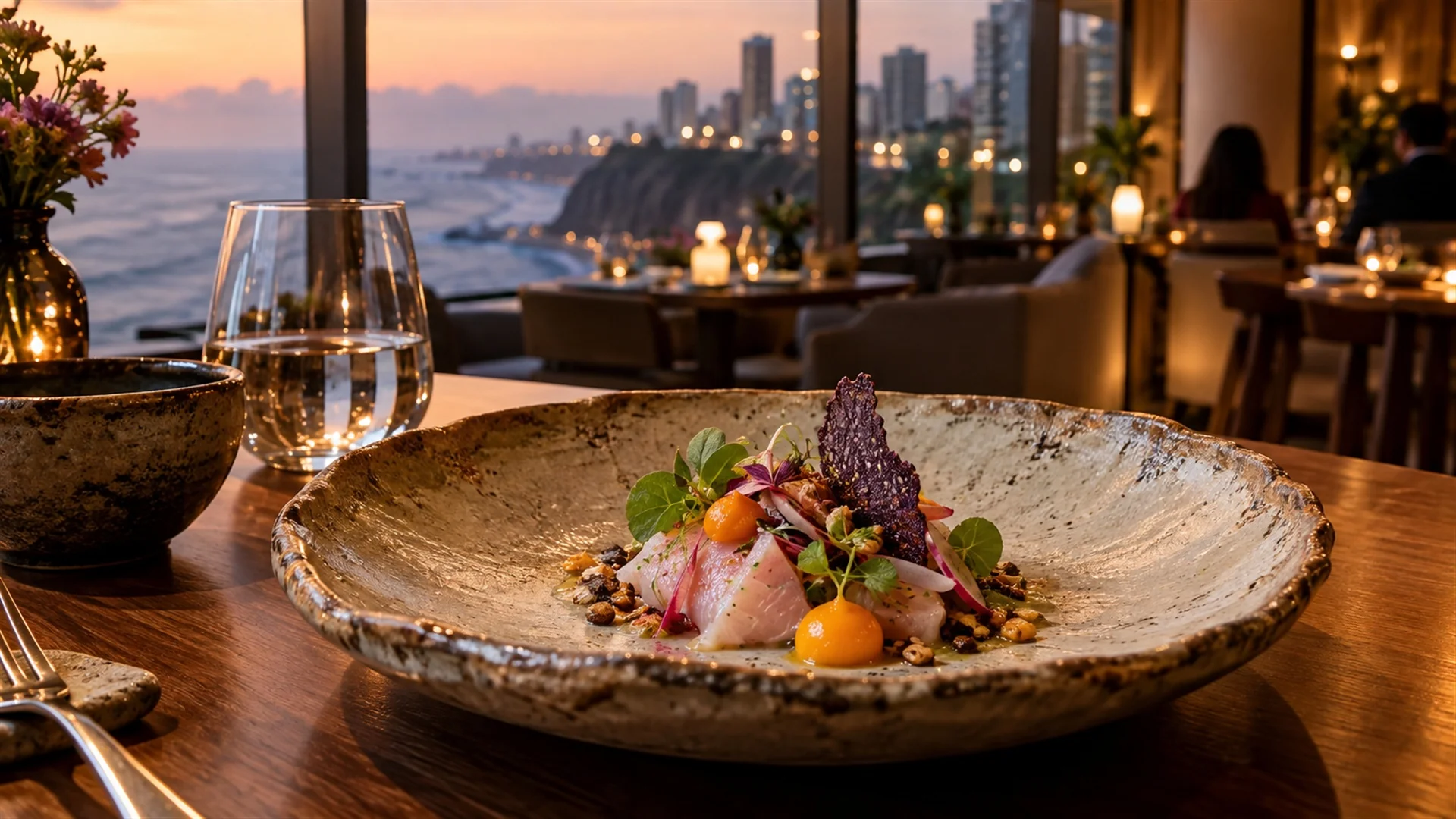
Lima’s dining scene is the first reason to stay. Central, led by Virgilio Martínez and Pía León in Barranco, builds its tasting menu around Peru’s altitudes, moving from the ocean floor to the high Andes course by course.
Meanwhile, Maido, in Miraflores, is the reference for Nikkei cuisine, the long-standing fusion of Japanese technique and Peruvian produce. Chef Mitsuharu Tsumura’s menu reads as a portrait of that shared history.
Both restaurants consistently rank among the most acclaimed in the world, and few capitals can claim two tables of that standing. As a result, a dinner at either is a reason to plan the trip, not a detail added at the end.
Reservations open well in advance and the most sought-after dates disappear quickly. Therefore, tables are secured as soon as the travel dates are fixed, often before the rest of the itinerary is complete.
In addition, the wider dining scene rewards curiosity. Chefs across the city draw on the same extraordinary pantry, from Amazonian fruits to Andean tubers and Pacific seafood, and a lunch at a relaxed neighborhood restaurant often reveals as much as the formal menus.
Among the essential things to do in Lima, these dinners come first, and the rest of the stay is arranged around them.
Barranco: Bridges, Galleries and Old Mansions
Barranco is the city’s most characterful district. Once a seaside retreat for Lima’s families, it keeps its colorful republican-era mansions, its tree-lined squares and a pace that feels closer to a village than a capital.
The wooden Bridge of Sighs crosses a ravine that leads down toward the sea, and the lanes around it hold galleries, design studios and small bars. In addition, several contemporary art spaces now occupy restored mansions, adding a serious cultural dimension to the neighborhood.
Evenings here are relaxed and rewarding. A pisco sour on a terrace above the ocean, followed by dinner at Central, is a natural way to experience the district at its best.
For couples, Barranco is also a strong base. Its boutique hotels are intimate, walkable and removed from the busier streets of the city center.
Miraflores and the Malecón Above the Costa Verde
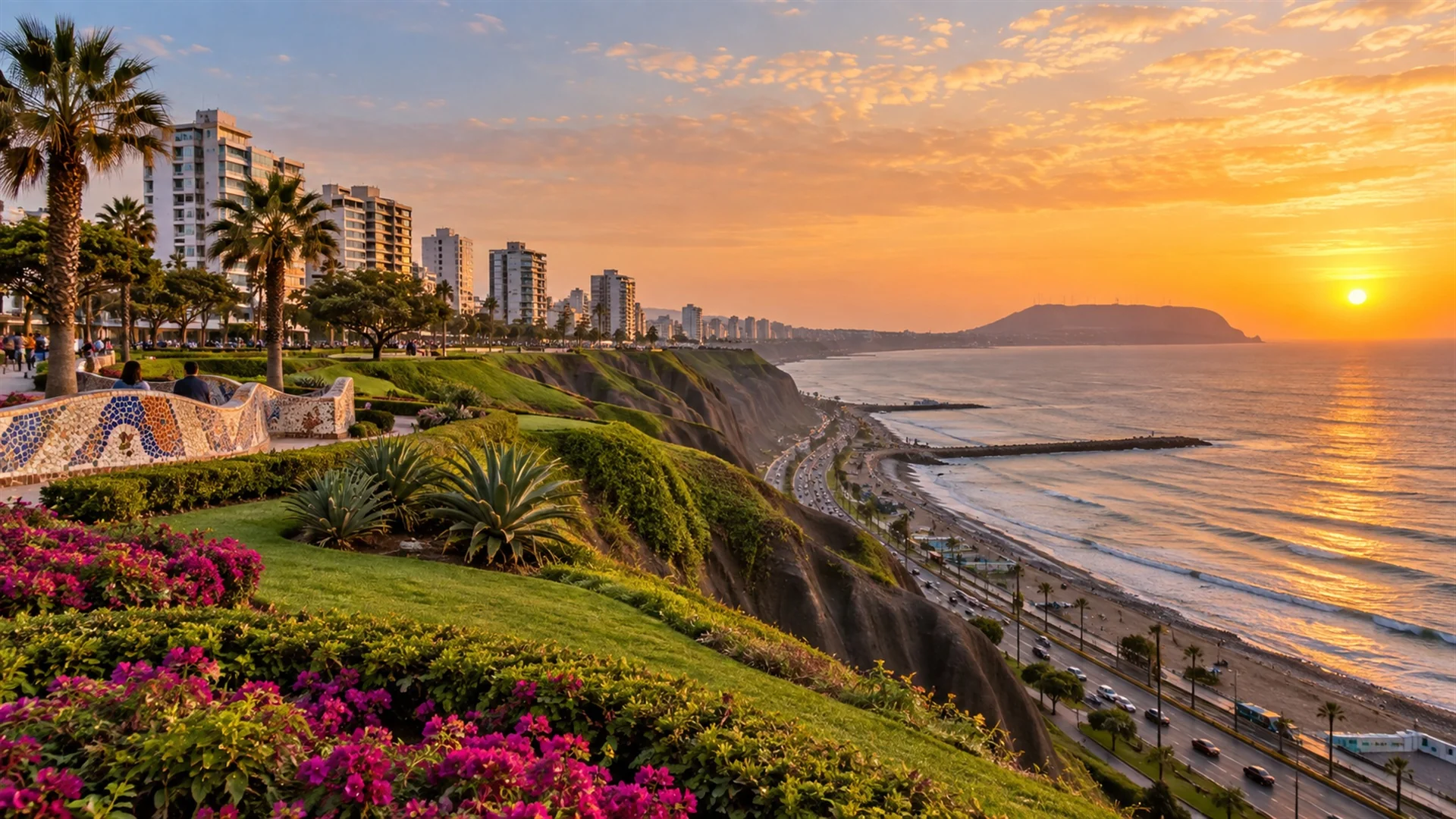
Miraflores sits on the cliffs above the Pacific. Along its edge runs the Malecón, a chain of gardens, walkways and viewpoints that stretches for several kilometers above the ocean.
Below the cliffs lies the Costa Verde, the coastal road and pebble beaches where surfers gather through the day. From above, the view spans the full curve of the bay, and paragliders often drift along the cliff line.
Next, the district rewards simple pleasures: a morning walk from park to park, a coffee with an ocean view, or a bicycle ride between Miraflores and Barranco along the clifftop path.
These unhurried hours are among the most underrated things to do in Lima, and they show a calmer, more residential side of the city.
Huaca Pucllana: A Pyramid in the Middle of the City
In the heart of Miraflores, surrounded by apartment buildings, stands Huaca Pucllana. This great adobe platform was built by the Lima culture centuries before the Incas, and archaeological work continues on the site today.
Guided visits explain how the structure was built from small handmade bricks set in a distinctive pattern, and how the site served ceremonial and administrative roles. Here, the city’s pre-Hispanic past appears in plain sight.
The contrast is what makes the visit memorable. Traffic and apartment towers surround the site on every side, yet the terraces of clay and the quiet excavation areas feel entirely removed from the modern city around them.
In the evening, the pyramid is illuminated, and dinner on a terrace overlooking the excavations offers one of the city’s most memorable settings.
The Colonial Core: Plaza Mayor and San Francisco
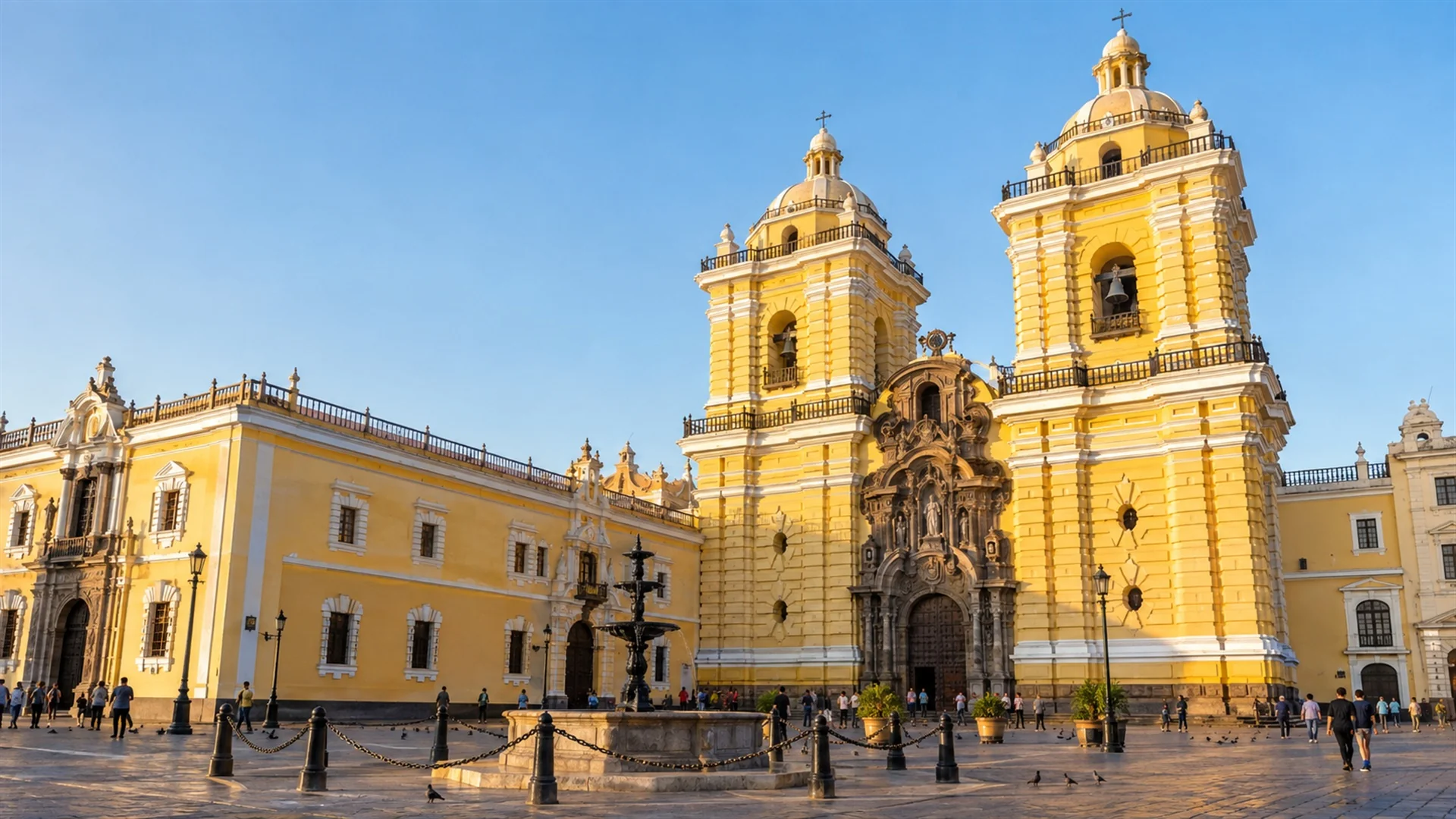
The historic center shows the Lima of the viceroyalty. The Plaza Mayor is framed by the cathedral, the archbishop’s palace with its carved wooden balconies and the government palace, where the changing of the guard takes place.
A short walk away, the Convento de San Francisco holds one of the finest colonial ensembles in South America. Its cloisters are lined with tilework, its historic library is remarkable, and the catacombs beneath the church add a solemn dimension to the visit.
Beyond these two landmarks, the streets of the center hold colonial churches, republican-era mansions and busy commercial arcades. The district is at its best in the morning, before the traffic builds, and it pairs naturally with a lunch in the city center.
Because of this, a morning in the center with a private guide provides the context that the rest of Lima lacks. For heritage context, see https://www.peru.travel
The colonial core completes the picture, and it remains one of the essential things to do in Lima for travelers who value history.
Things to Do in Lima on the Final Day: Larco and Ceviche
The Larco Museum, in the district of Pueblo Libre, houses one of the most important collections of pre-Columbian art in the Americas. Its ceramics, textiles and gold work are displayed in an eighteenth-century mansion surrounded by gardens.
The museum rewards an unhurried visit with a private guide, who can trace the cultures of the Peruvian coast and highlands across several thousand years. Its storerooms, open to visitors, reveal the sheer scale of the collection, and its garden café is a calm place to pause afterward.
Finally, the city’s culinary tradition continues at lunchtime. Ceviche is traditionally eaten at midday, when the morning’s catch is at its freshest, and a classic cevichería is as much a part of Lima as its tasting menus.
Together, the museum and the long lunch make an ideal final day, and they round out the most rewarding things to do in Lima before the journey continues to the Andes.
Ocean cliffs, colonial cloisters, and a table worth crossing the world for
Signature Experiences
- Tasting menu dinner at Central in Barranco
- Nikkei tasting menu at Maido in Miraflores
- Sunset pisco sour on a Barranco terrace
- Clifftop walk along the Malecón above the Pacific
- Bicycle ride along the Costa Verde cliff path
- Evening dinner overlooking Huaca Pucllana
- Private guided morning in the Plaza Mayor
- Cloisters and catacombs of the Convento de San Francisco
- Pre-Columbian collections at the Larco Museum
- Lunchtime ceviche at a classic Lima cevichería
Ready for Something Extraordinary?
Lima rewards travelers who give it time. At EscapeXperts, we build the stay around the tables that matter, combining seamless logistics, private guiding and curated exploration so that the capital becomes a highlight of the journey rather than a connection.
Why Travel to Lima with EscapeXperts
Lima is the rare capital where a single dinner can define an entire journey. At EscapeXperts, we secure the reservations early, choose the district that suits each traveler and pace the days between the ocean, the museums and the colonial center. The result is a curated selection of things to do in Lima that turns a stopover into a destination.