Duration: 4 to 5 nights
Best months: Spring and autumn, covered in our Argentina seasonal guide
Country: Argentina
Neighborhoods: Recoleta · Palermo · San Telmo · Puerto Madero
Things to Do in Buenos Aires, Organized by Barrio and by the Hour
The most useful list of things to do in Buenos Aires is organized by neighborhood and by the local clock. The city runs later than almost any other capital: dinner begins around ten, and the dance halls fill after midnight. Travelers who adjust to that rhythm see a different city.
Many visitors arrive expecting stage tango and a list of steakhouses. Instead, they find a capital of distinct barrios, each with its own pace, and a day that starts slowly and ends very late. Because of this, the order in which the city is seen matters as much as what is seen.
At EscapeXperts, we build Buenos Aires around four neighborhoods and one timetable. The result is a stay that follows the city’s own hours rather than a visitor’s.
Recoleta: Avenues, Marble and the Teatro Colón
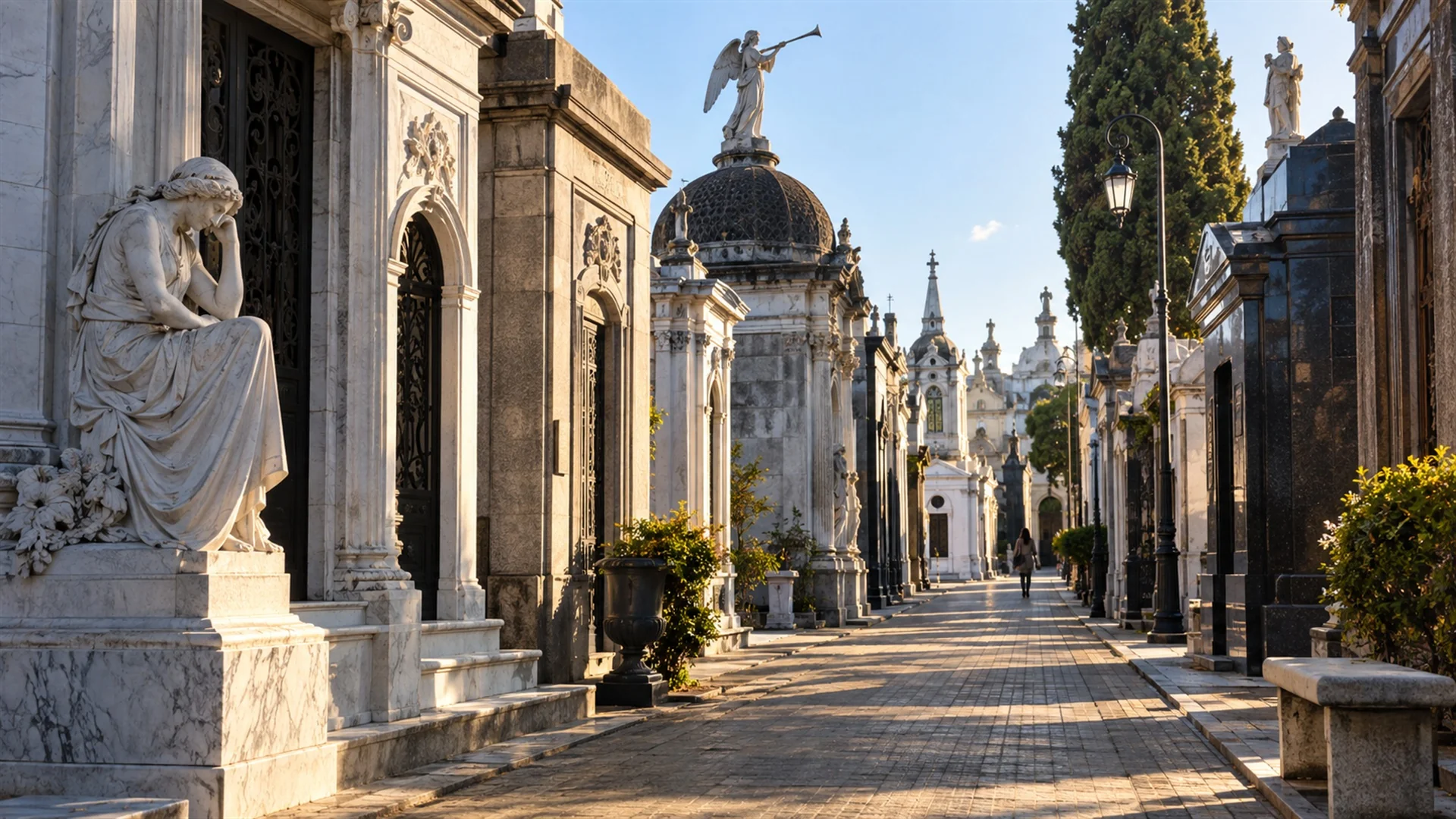
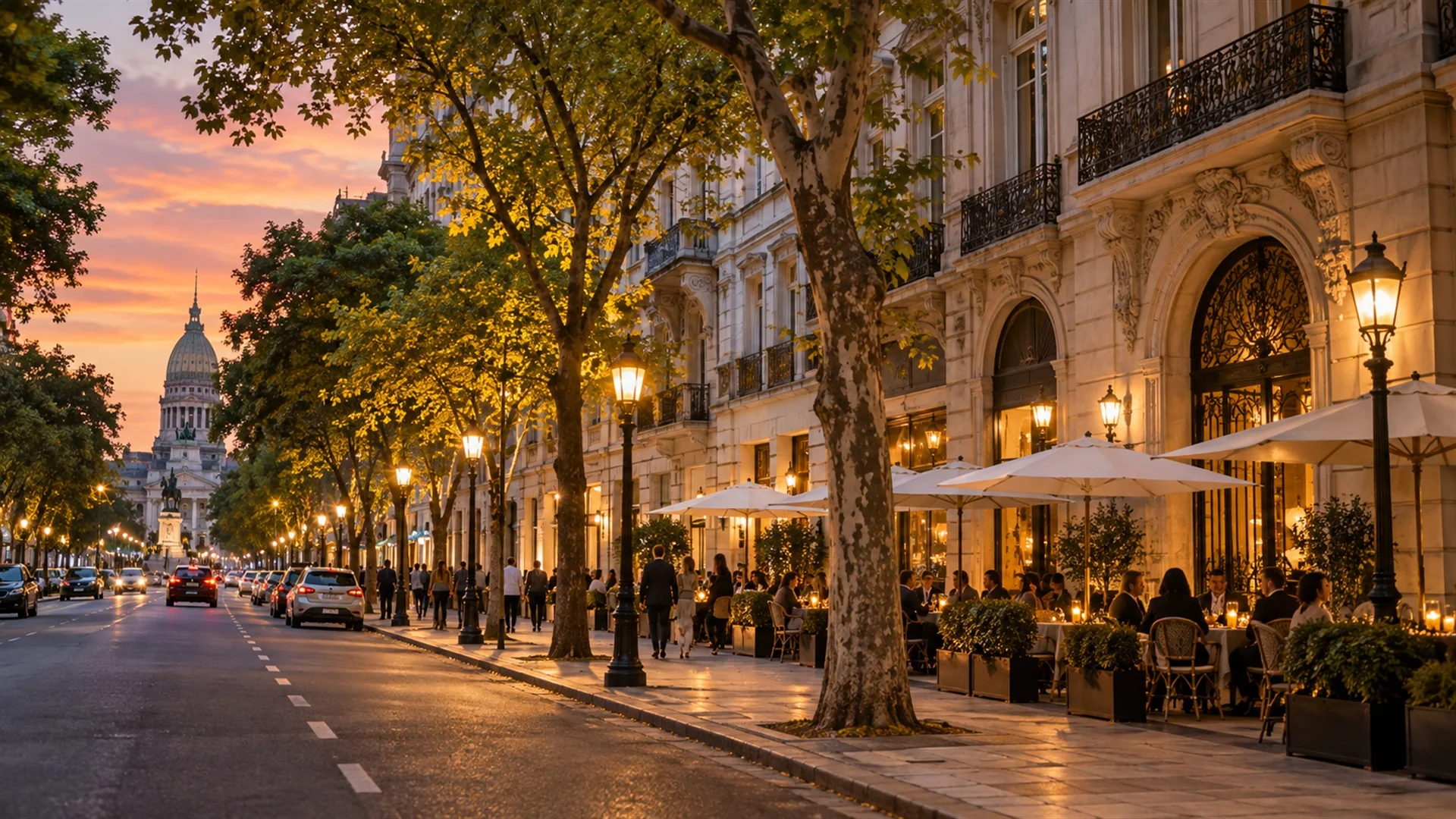
Recoleta is the city’s most formal neighborhood and the natural place to begin. Its avenues, French-style facades and quiet plazas set the tone for the grand, European-minded side of the capital.
The Recoleta Cemetery is the essential morning visit. Its lanes of marble mausoleums read like a street plan of Argentine history, and the Duarte family vault, where Eva Perón rests, is only one of many. Early hours bring softer light and far fewer visitors.
From there, Avenida Alvear leads past embassies, private palaces and the country’s most established boutiques. It is a walk best taken slowly, with a coffee stop along the way.
Meanwhile, the Teatro Colón sits a short drive away on the edge of the center. The opera house is renowned for its acoustics, and a guided tour of the auditorium and foyers is worthwhile even without a performance. When the season allows, an evening at the opera or ballet is among the most memorable things to do in Buenos Aires.
Nearby, El Ateneo Grand Splendid occupies a former theatre, with books lining the tiers and a café on the old stage. Four Seasons Buenos Aires, set partly in a Belle Époque mansion in Recoleta, places all of this within walking distance.
Palermo: Parks, Studios and the Porteño Table
Palermo is the largest barrio and the one where the city eats. It divides into several distinct areas: the parks and rose garden to the north, the leafy streets of Palermo Soho, and the restaurant blocks of Palermo Hollywood.
Late morning suits the green side. The Bosques de Palermo and the Rosedal offer lakes, shade and joggers, while MALBA, the museum of Latin American art, sits at the edge of the park with a strong permanent collection.
Next, the afternoon belongs to Palermo Soho. Independent designers, small galleries and cafés occupy low houses on cobbled corners. It is a neighborhood for wandering rather than for sightseeing.
In the evening, Palermo turns into the city’s table. Don Julio, a corner parrilla known for its aged beef and its patient sidewalk queue, is the best-known reference, and reservations there are planned well in advance. Around it, a generation of chefs cooks Argentine produce with far more range than the classic steakhouse.
Therefore, among the things to do in Buenos Aires, a long Palermo dinner is closer to a cultural experience than a meal. The key is timing, which is explained further below.
San Telmo: Cobblestones, Antiques and the Sunday Fair
San Telmo is the oldest part of the city that still feels lived in. Colonial houses, antique shops and faded mansions line cobbled streets that lead down toward the port.
Sunday is the day to go. The Feria de San Telmo spreads along Calle Defensa and around Plaza Dorrego, with antiques, silverware and old photographs mixed with street musicians and couples dancing in the square.
In contrast, a weekday visit is quieter and better suited to browsing. The antique dealers have time to talk, and the Mercado de San Telmo, an iron-roofed market hall, shows the neighborhood at its most local.
San Telmo is also where the difference between tango for visitors and tango for residents becomes clear. The dinner shows along the main streets are polished productions. The real dance, however, happens in the milongas described in the final section.
As a result, San Telmo deserves an unhurried half day. Among the things to do in Buenos Aires, it offers the clearest sense of the city before the grand avenues were built.
Puerto Madero and the Costanera: The River Side of the City
Puerto Madero is the city’s newest barrio, built on its old docks. Red-brick warehouses now hold restaurants and offices, and the white Puente de la Mujer footbridge crosses the water between them.
The neighborhood is best on foot in the late afternoon. The docks are calm, the promenade is wide, and the light over the water is softer than in the dense streets inland.
Beyond the docks, the Costanera runs along the river. The Costanera Sur ecological reserve, a large area of reeds, lagoons and birdlife, lies just behind the towers and feels far removed from the city it borders.
Because of this, Puerto Madero works as a pause between the older barrios. It shows a quieter, more open side of the capital and balances the intensity of Palermo and San Telmo.
The Porteño Clock: Dinner at Ten, the Milonga After Midnight
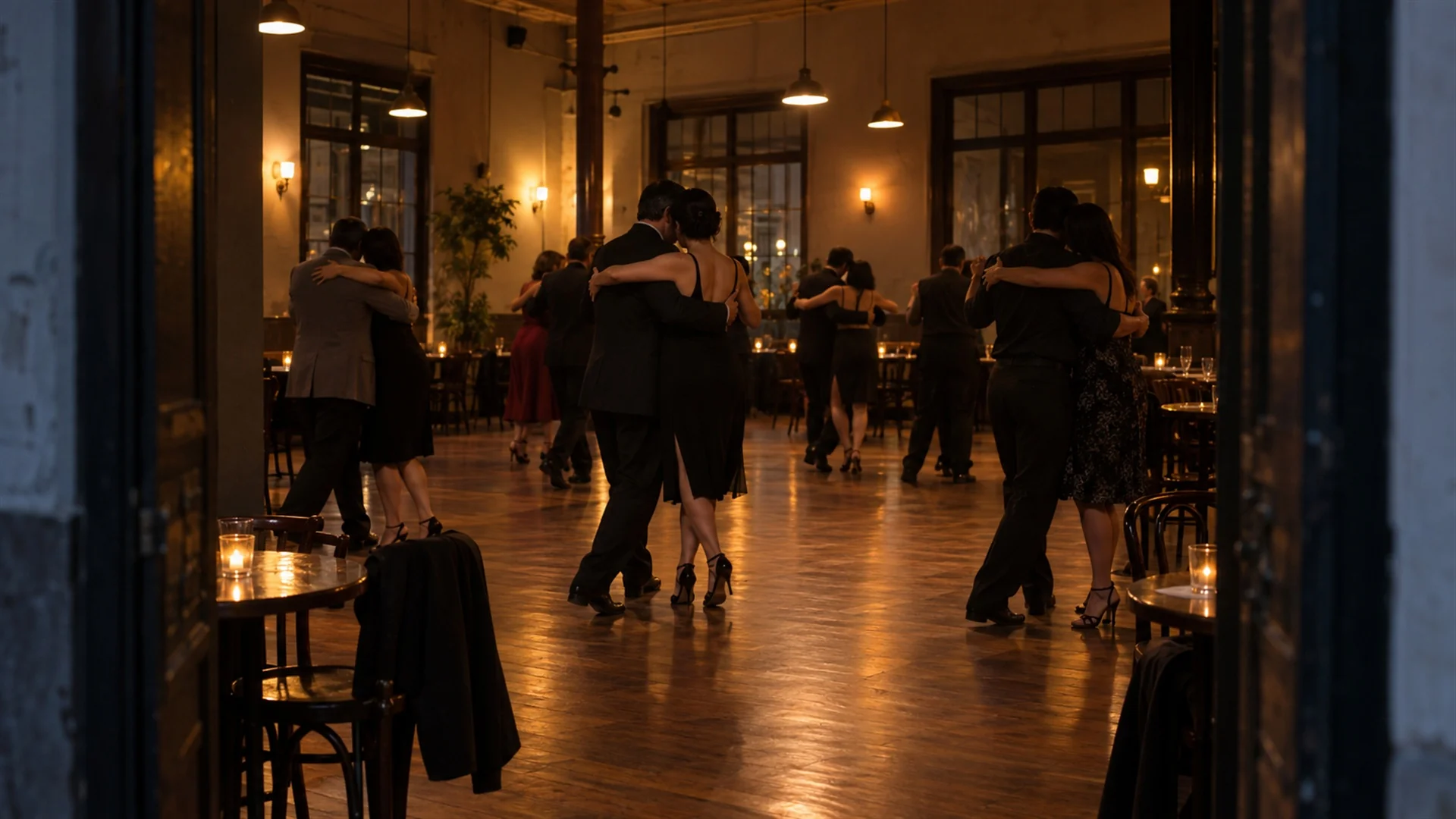
Understanding the local clock is the most valuable of all the things to do in Buenos Aires. The day starts late, pauses in the early evening for merienda, coffee with medialunas, and only then moves toward dinner.
Most restaurants open around eight, but the dining rooms stay nearly empty until half past nine. From ten onward, they fill with families, couples and friends, and tables often turn over well past midnight.
The milonga follows the same logic. A milonga is a social dance evening, not a show. Many begin with a class in the early evening, but the floor fills later, often from around eleven, and the dancing continues into the early hours.
Here, the etiquette is part of the experience. Invitations are made with a glance across the room, the music is played in sets, and the regulars dance with a quiet seriousness that no stage production can reproduce. Salón Canning in Palermo and La Catedral in Almagro are two well-known halls.
Finally, a private guide makes the milonga approachable. Watching from a table, with context on the codes and the music, is enough to understand why tango here is a social ritual rather than a performance.
For official visitor information, see https://www.argentina.travel
Grand avenues, late dinners, and a dance that begins after midnight
Signature Experiences
- Early morning walk through Recoleta Cemetery
- Guided tour of the auditorium at Teatro Colón
- An evening of opera or ballet in season
- Coffee on the former stage of El Ateneo Grand Splendid
- Boutique walk along Avenida Alvear
- Late morning in the Bosques de Palermo and MALBA
- Dinner at Don Julio on porteño hours
- Sunday antiques at the Feria de San Telmo
- Sunset walk along the docks of Puerto Madero
- Birdlife in the Costanera Sur ecological reserve
- A late night at a traditional milonga with a guide
Ready to Begin the Journey?
Buenos Aires rewards travelers who follow its hours. At EscapeXperts, we arrange the reservations, the guides and the late evenings, combining seamless logistics, private access and curated exploration across every barrio.
Why Travel to Buenos Aires with EscapeXperts
Buenos Aires is not a city to be rushed, only to be timed correctly. At EscapeXperts, we organize each stay by neighborhood and by the local clock, from quiet mornings in Recoleta to midnight in the milonga, so that the best things to do in Buenos Aires are experienced on the city’s own terms.