Best months: October to November · March to April
Shortest window: Chilean Patagonia, roughly October to April
Regions covered: Atacama · Central Valleys · Lake District · Chiloé · Chilean Patagonia
Book by: Nine to twelve months ahead for Patagonian lodges in peak season
Best Time to Visit Chile: Three Climates on One Calendar
The best time to visit Chile depends on which Chile is in question, because the country runs from the driest non-polar desert on earth to the glaciers of the far south. For a single trip covering north and south, October to November and March to April are the months that serve the most regions at once.
No season works everywhere. The Atacama is open all year, the central wine valleys peak with the harvest, and Chilean Patagonia offers a short, firm window each austral summer. Therefore, the real planning question is not which month is best, but which regions can share the same month.
At EscapeXperts, we treat Chile as three calendars rather than one. This guide sets them side by side and states plainly which combinations hold together and which should wait for another year.
Why One Season Never Covers the Whole Country
Chile stretches roughly 4,300 kilometers from north to south while rarely exceeding a few hundred kilometers in width. As a result, a single week can bring desert sun, Mediterranean warmth and sub-Antarctic wind, depending only on where the flight lands.
The north is governed by altitude and aridity. The center follows a classic Mediterranean pattern of dry summers and wet winters. Meanwhile, the south is shaped by the Pacific westerlies, which bring rain to the Lake District and relentless wind to the Patagonian steppe.
The seasons are also reversed for travelers from the Northern Hemisphere. The austral summer runs from December to February, and the southern winter falls between June and August, when much of Patagonia closes.
Because of this, the best time to visit Chile is really a negotiation between regions. A traveler who wants the harvest, the desert and the granite towers of the south in one journey needs a specific slice of the year, and it is narrower than most itineraries assume.
The Desert North: The Atacama Has No Wrong Season
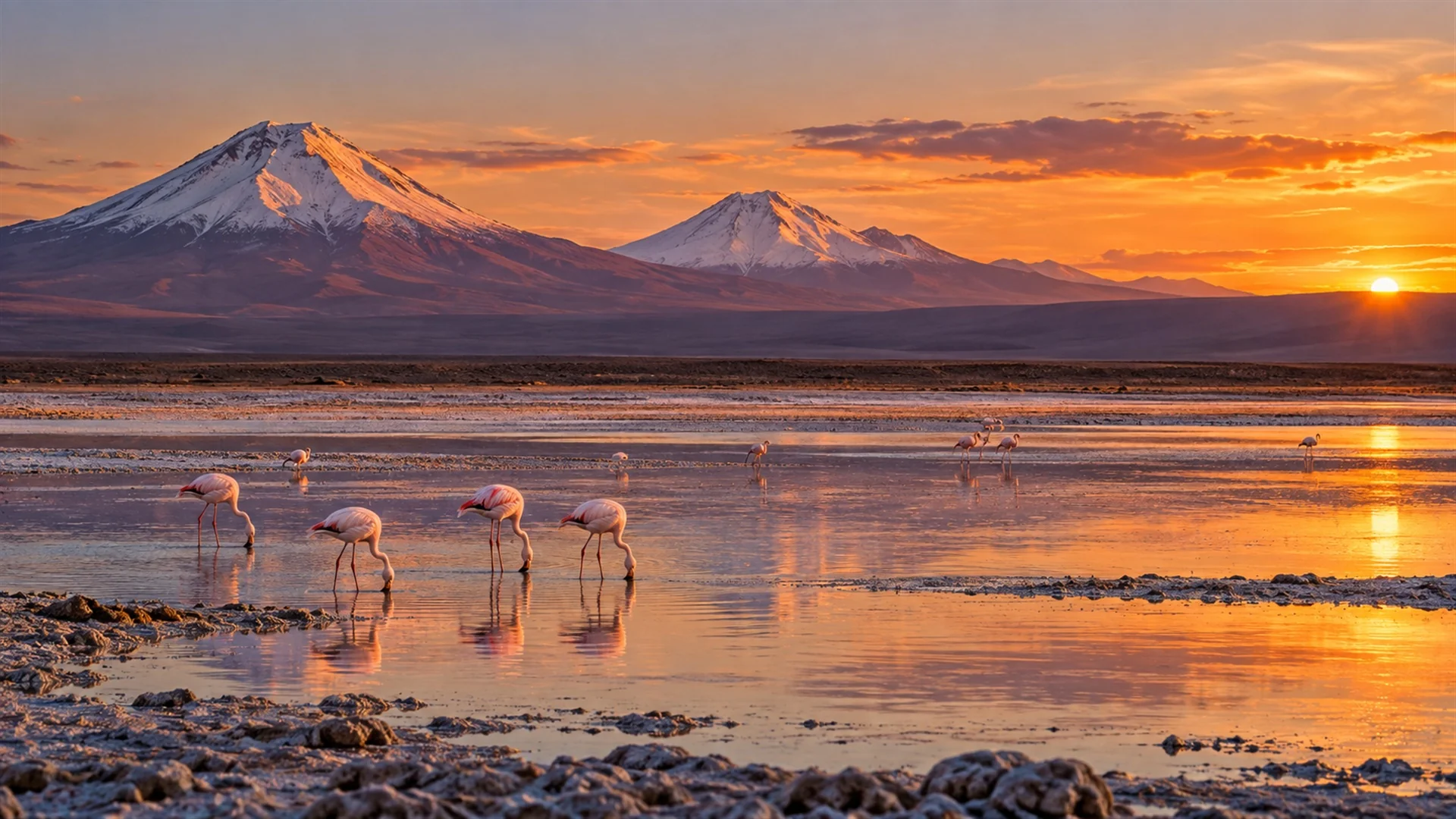
The Atacama is the one region of Chile without a true window. Clear skies are the norm throughout the year, which is why the high plateau hosts some of the world’s major astronomical observatories. Stargazing is excellent in every month.
What changes is temperature and access. In the southern winter, days remain bright and mild, but nights at altitude fall well below freezing. Dawn visits to the geyser fields become a genuinely cold undertaking, although the light and the empty trails reward the effort.
In contrast, the height of summer brings the altiplanic winter, a period of afternoon storms in the high Andes, typically in January and February. Some high-altitude lagoons and passes can close for days at a time. The lower desert around San Pedro stays largely unaffected.
Therefore, the Atacama adapts to whatever month the rest of the trip requires. It is the flexible piece of any Chilean itinerary, and the one that should be scheduled last, once the less forgiving regions have claimed their dates.
The Central Valleys: Santiago, Valparaíso and the Vendimia
Central Chile is where most journeys begin, and its calendar is the gentlest in the country. Santiago has hot, dry summers and cool, occasionally wet winters. Spring and autumn are the most comfortable seasons for walking the city and its neighborhoods.
The wine valleys follow the same rhythm. The vendimia, or grape harvest, runs broadly from late February into April, depending on the variety and the valley. In the Colchagua Valley, the harvest festival usually falls in March, and estates are at their most animated during these weeks.
Meanwhile, the coast has its own logic. Valparaíso, with its hillside neighborhoods and funiculars, can be visited throughout the year, though coastal fog is common on summer mornings. Spring and early autumn offer the clearest views across the bay.
As a result, March and April stand out for travelers who value wine. The harvest is under way, summer heat has eased in Santiago, and the timing aligns with the autumn weeks in the south. Few other months deliver this alignment.
The Lake District and Chiloé: A Summer Region
South of the central valleys, the landscape turns green and volcanic. The Lake District, with Puerto Varas as its most refined base, is shaped by Pacific rain. Showers fall in every season, but the summer months are markedly drier and the volcano views clearer.
December to March is therefore the practical window. Outside it, low cloud often hides the Osorno volcano for days, and lake excursions depend heavily on the weather. The region still has appeal in autumn, but it rewards flexibility rather than a fixed plan.
Next, Chiloé follows the same pattern with more intensity. The island’s wooden churches and stilt houses are atmospheric in any light, yet summer is the only season when crossings, coastal walks and island-hopping run reliably.
Because of this, the Lake District fits naturally into a summer itinerary and awkwardly into any other. It is the region most often squeezed into a spring trip, and the one most often disappointing when it is.
Chilean Patagonia: A Short Window Worth Planning Around
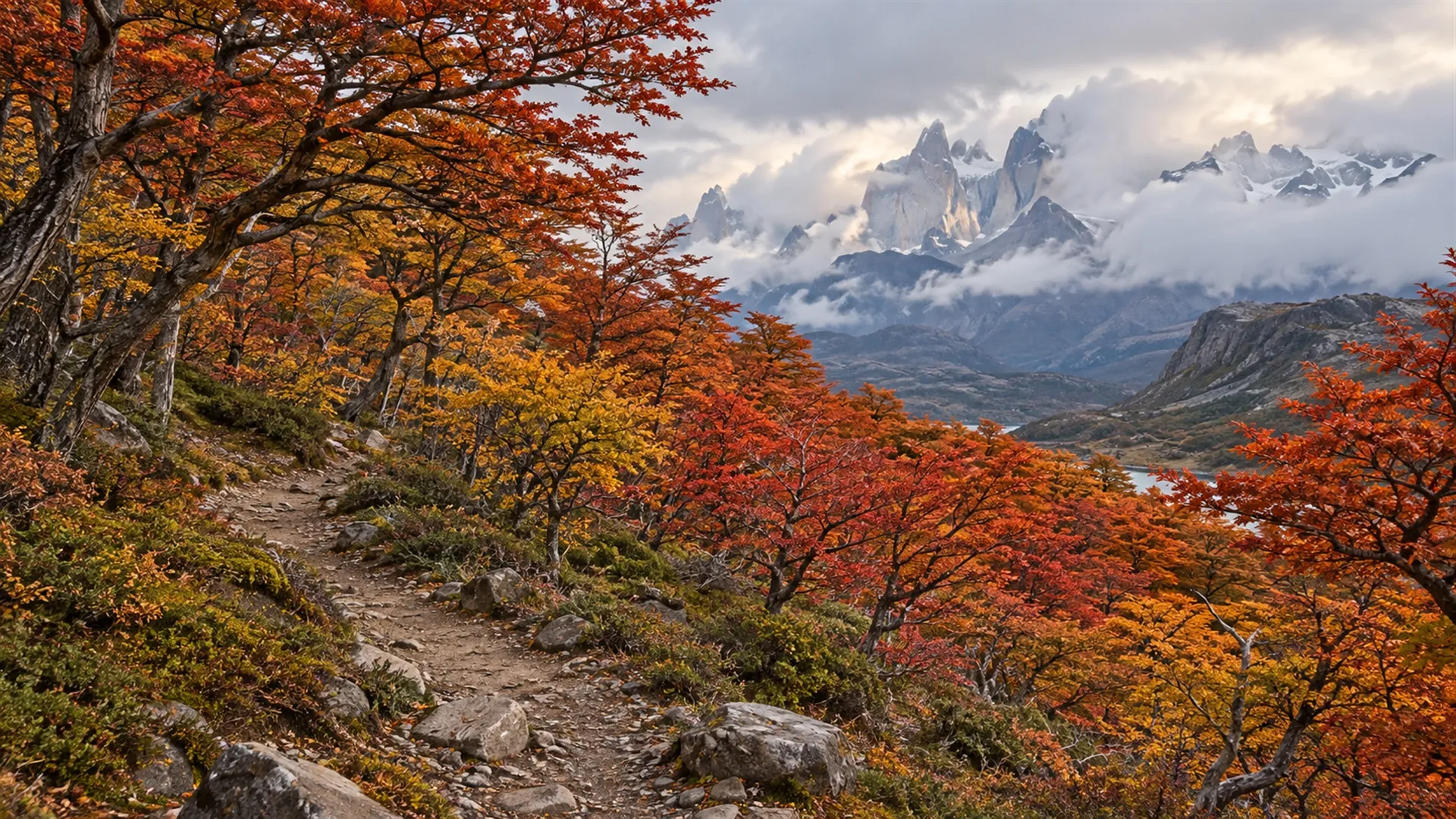
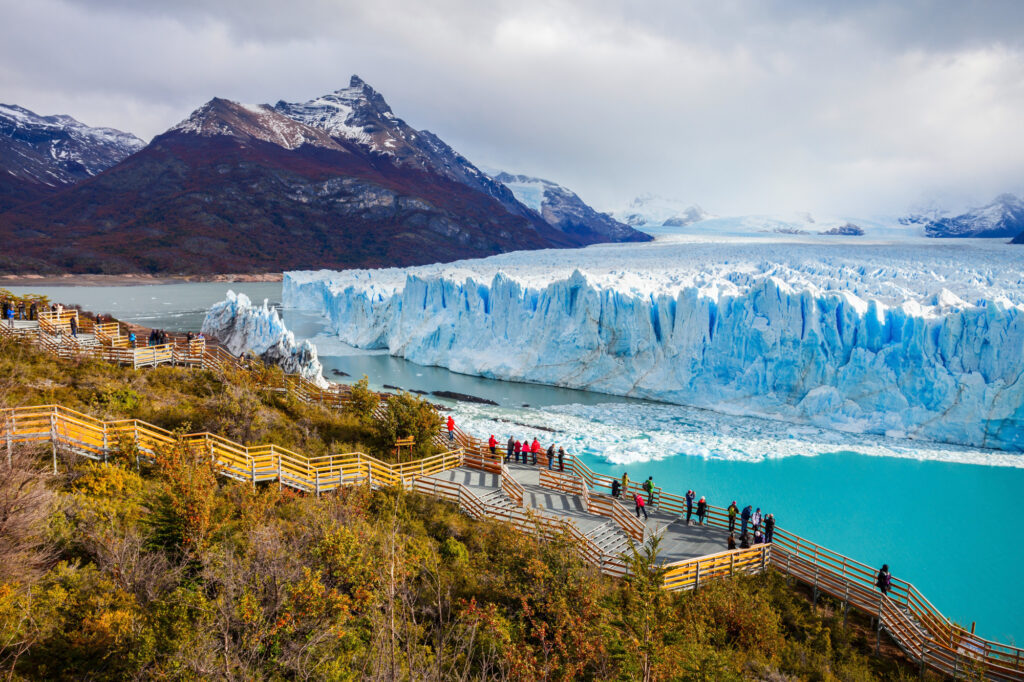
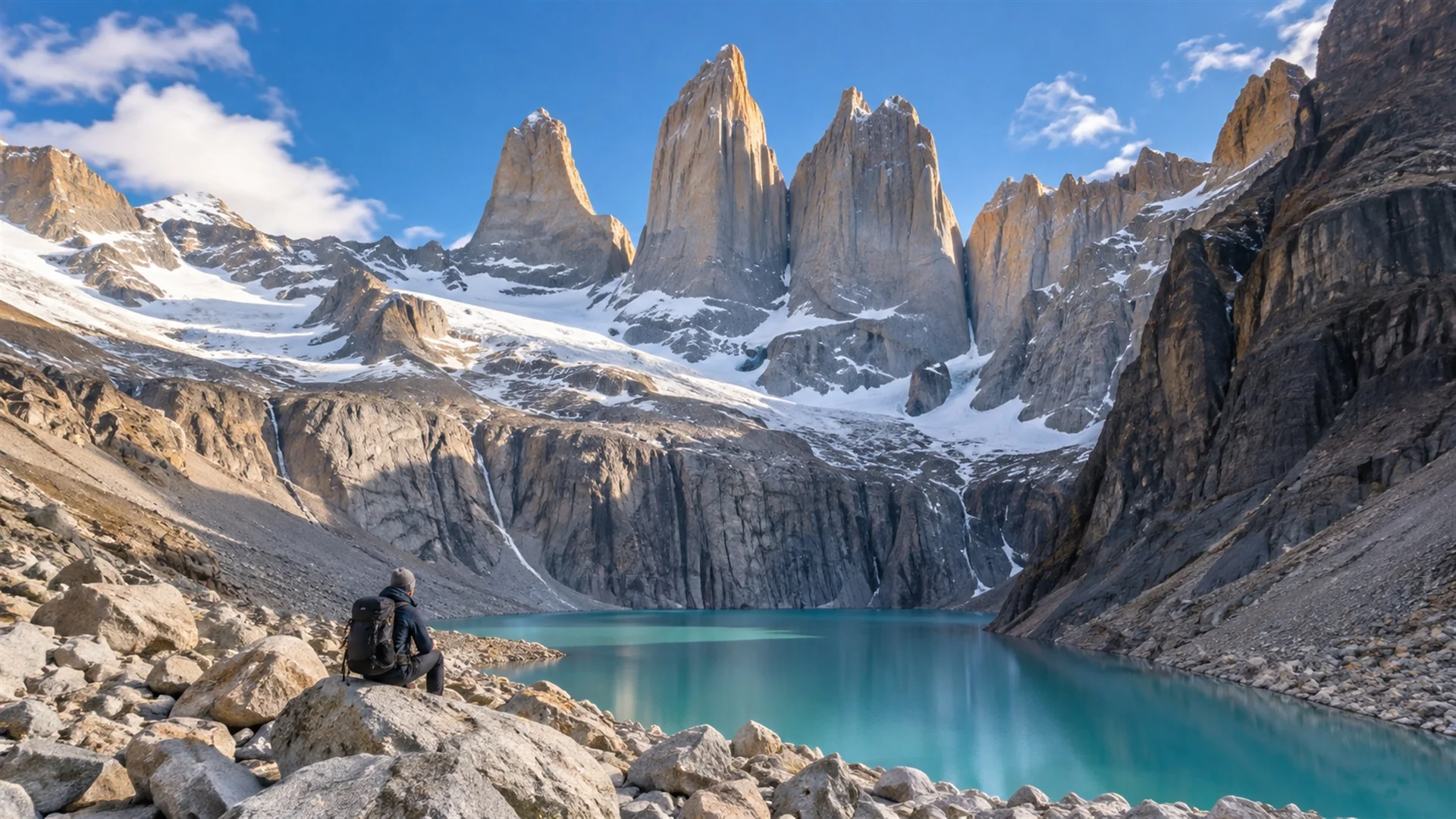
Chilean Patagonia sets the terms for every north-to-south journey. The main season runs roughly from October to April, and many of the lodges around Torres del Paine close or operate at reduced capacity through the southern winter. This is the least negotiable calendar in the country.
Within that window, each segment feels different. December to February brings the longest days, reaching late into the evening, along with the busiest trails and the strongest winds. October and November are fresher, quieter and bright with early spring flowers.
Later, March and April offer the most photographic weeks. The lenga forests turn red and gold, the light softens, and visitor numbers fall. The wind usually eases as well, although Patagonian weather never settles into full predictability.
Finally, the lodges fill first for the peak months. For the best time to visit Chile in the far south, rooms should be secured nine to twelve months ahead, before anything else in the itinerary is fixed.
Combinations That Work, and Those That Do Not
March to April is the strongest single choice for a full north-to-south journey. The vendimia is under way in the central valleys, Patagonia is in its autumn colors, and the Atacama has moved past the altiplanic storms. For many travelers, this is the best time to visit Chile in one continuous trip.
October to November works nearly as well. Patagonia is open and quiet, Santiago is in spring, and the desert is clear. The only loss is the harvest itself, although the wineries continue to host tastings throughout the season.
December to February suits a southern focus, pairing the Lake District and Chiloé with Patagonia at its longest days. The Atacama can still join, provided the high-altitude excursions remain flexible.
In contrast, June to August does not work for a complete journey. Patagonia is largely closed and the Lake District is at its wettest, leaving the desert and the capital. Easter Island, reached by a long flight from Santiago, follows its own calendar and is best treated as a separate conversation. Knowing what to leave out is part of choosing the best time to visit Chile.
Desert skies, harvest valleys, and the granite edge of the south
Signature Experiences
- Private stargazing session under clear Atacama skies
- Dawn excursion to the high-altitude geyser fields
- Harvest-season visit to a family estate in the Colchagua Valley
- Guided walk through the hillside neighborhoods of Valparaíso
- Lakeside stay in Puerto Varas facing the Osorno volcano
- Summer crossing to the wooden churches of Chiloé
- Autumn hiking among lenga forests in Torres del Paine
- Long-evening boat excursion to Patagonian glaciers in the austral summer
- Private wine tasting in the vineyards outside Santiago
- Photography mornings in the soft light of Patagonian autumn
Ready for Something Extraordinary?
Chile rewards travelers who plan by region rather than by month. At EscapeXperts, we align the desert, the valleys and the far south within a single calendar, combining seamless logistics, private experiences and curated exploration so every region is visited at its best.
Why Travel to Chile with EscapeXperts
Chile is too long for a single season, and the most successful journeys accept that from the start. At EscapeXperts, we secure the Patagonian lodges early, time the valleys to the harvest and let the Atacama adapt to both. For national travel resources, see https://www.chile.travel. The result is a clear answer to the best time to visit Chile, built around how you want to travel.