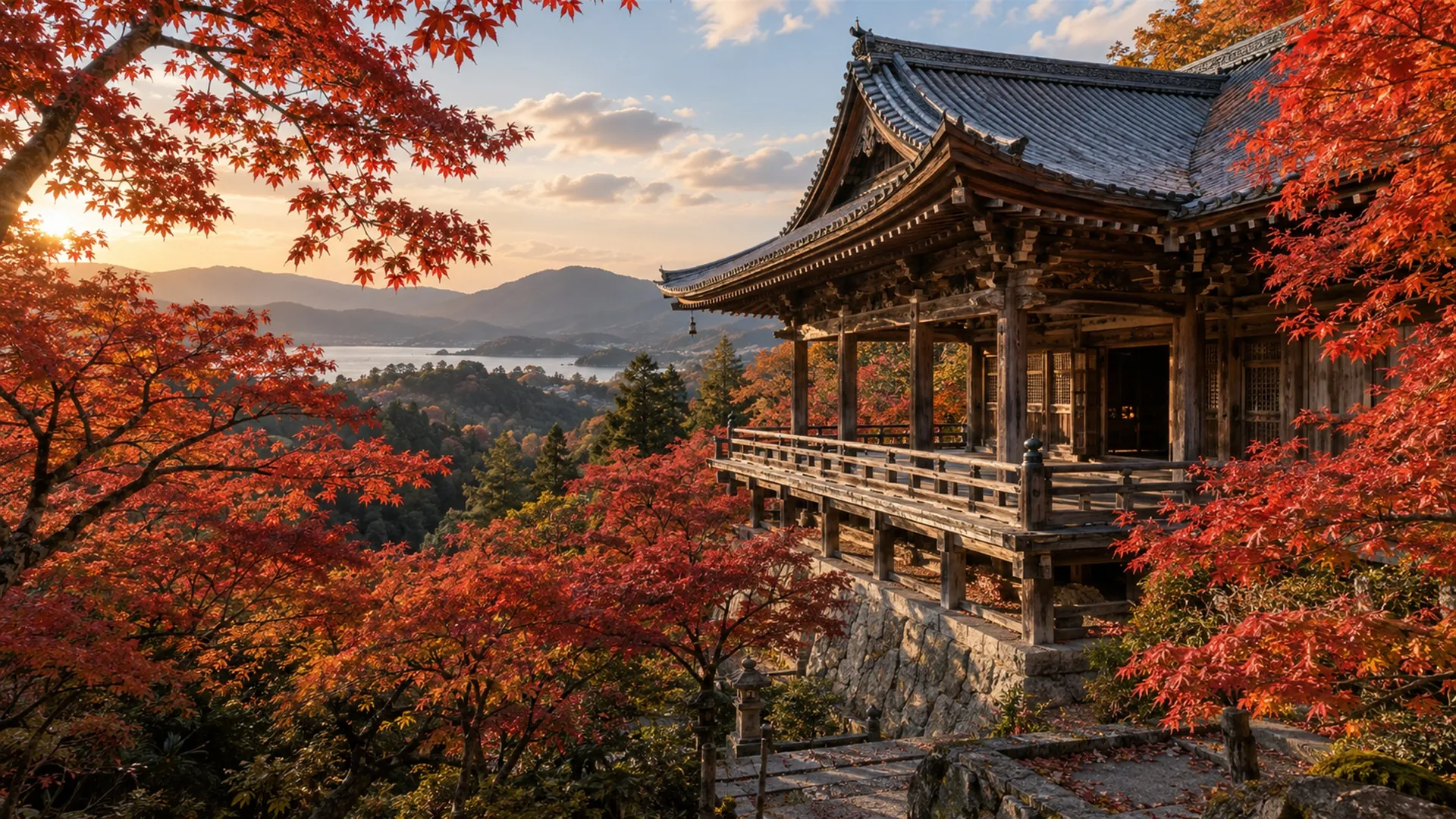
Best months: Late March to mid-May and October to early December
Weeks to avoid: Golden Week and Obon, when the country travels at once
Country: Japan
Region: Tokyo · Kyoto · Japan Alps · Hokkaido
Best Time to Visit Japan: A Country That Changes Season in Stages
The best time to visit Japan is spring, from late March to May, and autumn, from October to early December. Yet neither season arrives everywhere at once. The blossom moves north across the country in spring, and the autumn color moves south, so the right week depends on where you plan to be.
Most seasonal guides divide Japan into four tidy seasons, as though the whole archipelago turned together. In practice, the country stretches from subtropical islands to snowbound northern plains, and each season travels across it for weeks.
At EscapeXperts, we plan Japan around those two moving fronts and around the holiday weeks that close it to independent planning. This guide explains both, together with the rain, the typhoons and the booking horizon that shape every journey.
Why the Best Time to Visit Japan Is Never a Single Date
Japan runs roughly 3,000 kilometers from south to north, and its interior rises into high mountain ranges. As a result, the same week can bring early summer warmth in the south and lingering snow in the north.
Latitude sets the first rhythm. Altitude sets the second. A valley in the Japan Alps often reaches spring or autumn weeks later than the coastal plain only a few hours away by train.
Therefore, the familiar question of when to visit Japan becomes a question of sequence. A journey that begins in the south and moves north in spring, or the reverse in autumn, can follow the finest conditions for far longer than a single city allows.
Between the two fronts sit the shoulder seasons. Mid-May to early June, once Golden Week has passed and before the rains begin, brings fresh green landscapes and calmer temples. Late September and early October offer a similar interval in autumn, when the summer heat has eased and the color has not yet drawn the crowds.
This is the logic behind every well-planned route, and it is the most useful way to think about the best time to visit Japan.
The Blossom Front, Moving South to North
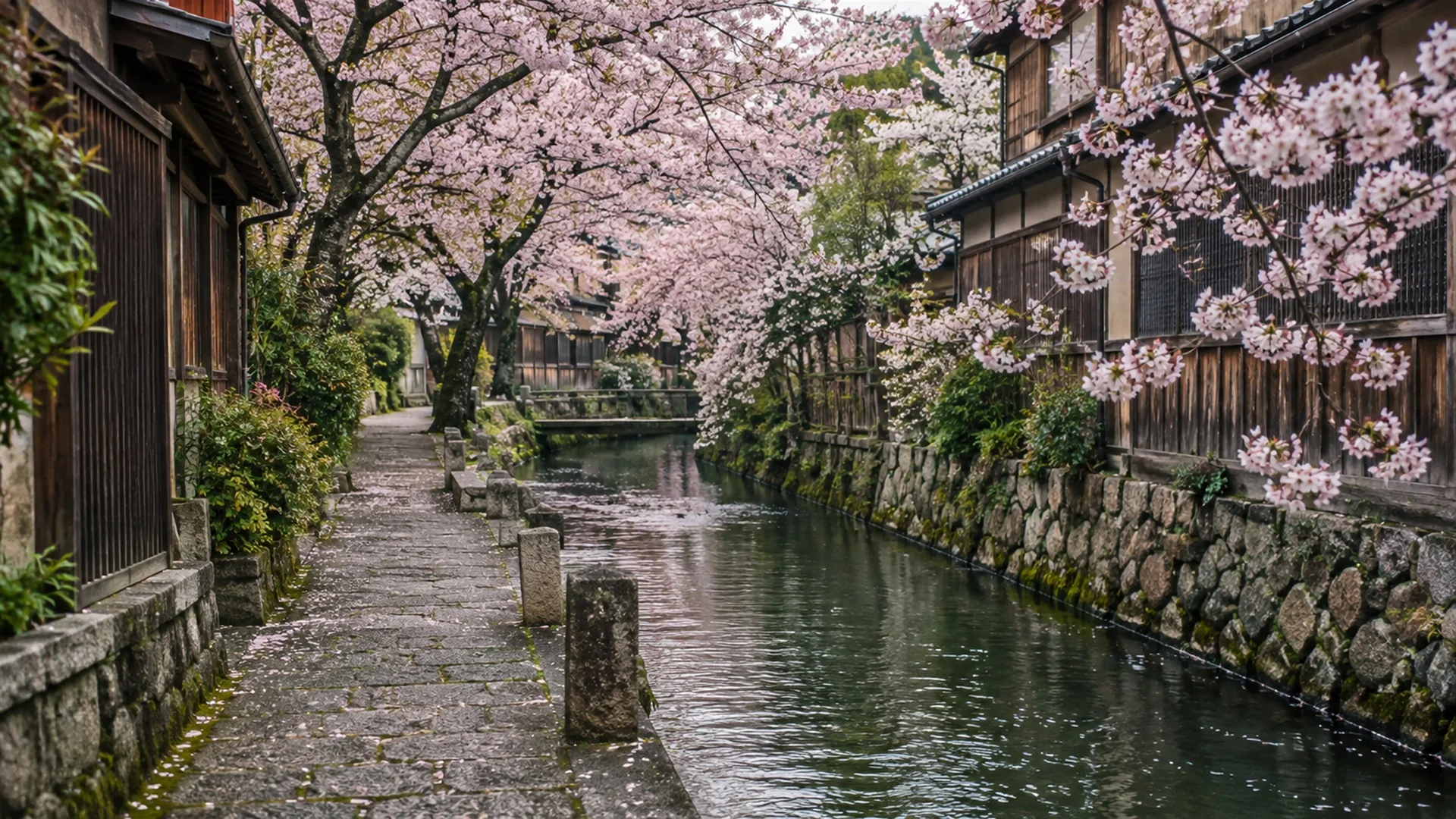
The first front is the sakura front, the blossom line that crosses the country each spring. It opens in the southern islands of Okinawa in late winter, reaches the main cities in late March or early April, and arrives in Hokkaido in late April or early May.
Along the way, Tokyo and Kyoto usually bloom within days of each other. Northern Honshu and the higher towns follow over the next few weeks. Each region holds its peak for only about a week.
The front is forecast every year, never fixed. The timing shifts with the winter, and recent seasons have trended earlier. The blossom season itself, with its forecasts and booking pressures, deserves its own planning and is covered in a dedicated guide.
Here, the essential point is structural. Spring in Japan is not a month but a moving line, and the traveler who follows it gains weeks.
The Autumn Color Front, Moving North to South
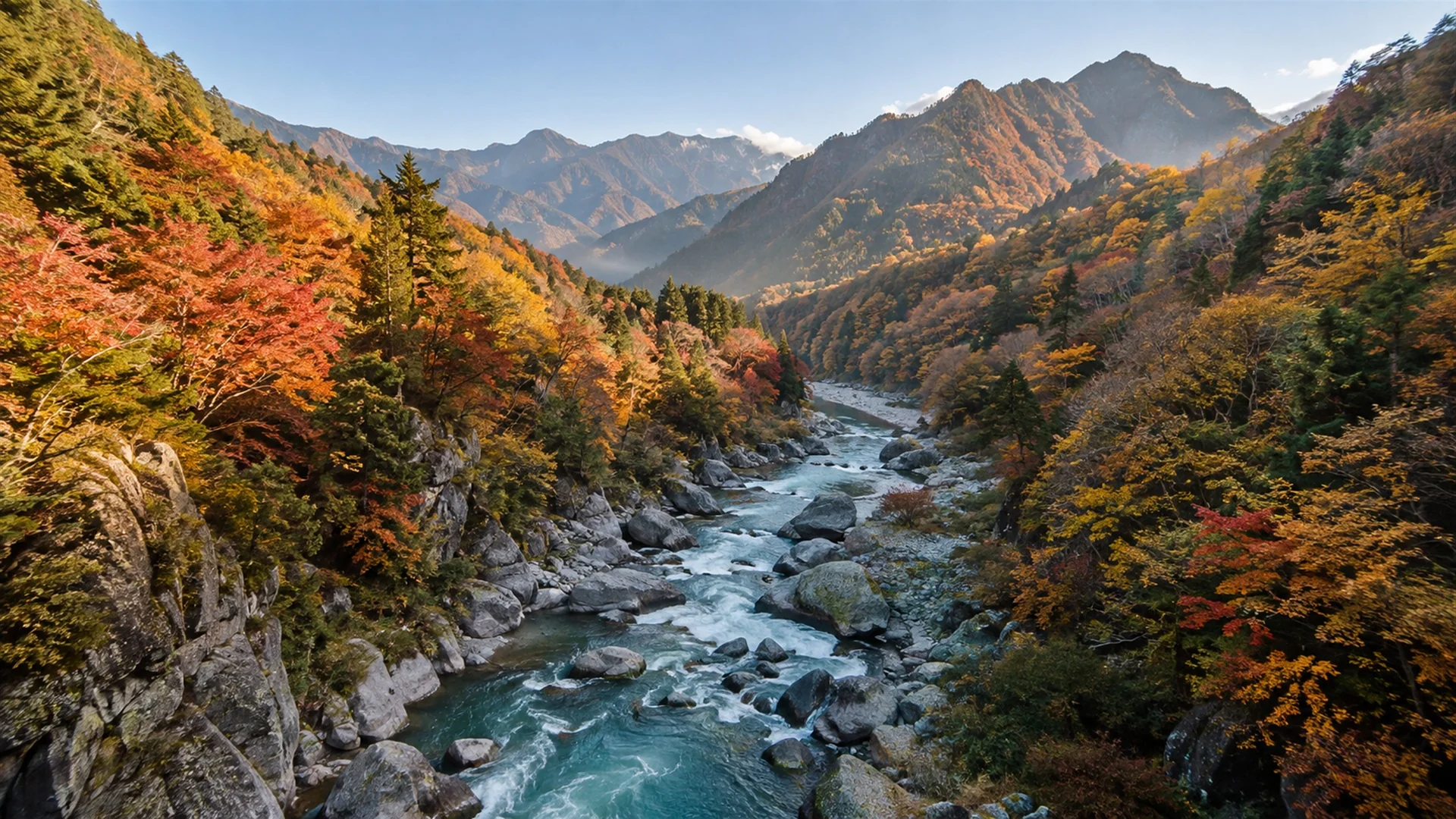
The second front runs in the opposite direction. Koyo, the turning of the leaves, begins in the mountains of Hokkaido from late September and descends through the country over roughly two months.
Next, the color reaches the high ground of the Japan Alps and the hills around Nikko in October. By November it has spread to Hakone and the lower valleys, and the temple gardens of Kyoto and the parks of Tokyo typically peak from mid-November into early December.
Because of this, autumn rewards the same logic as spring, reversed. A route that begins in the north in October and ends in Kyoto in late November can stay inside the finest color for most of its length.
Autumn also brings drier air and steadier skies than early summer. For many travelers, this makes it the most comfortable answer to the best time to visit Japan.
Tsuyu, Typhoons and the Summer Months
Early summer belongs to the tsuyu rainy season. On the main island it usually runs from early June into mid or late July, bringing humid days and frequent rain rather than constant storms. Hokkaido largely escapes it.
Meanwhile, the typhoon season spans roughly June to October, with the greatest activity usually in August and September. Most storms pass within a day or two, yet they can suspend flights, ferries and some rail lines.
In contrast, high summer in Hokkaido and in the Japan Alps is fresh and green. Mountain walking, alpine routes and cooler evenings make these regions the natural summer choice.
Summer also brings the festival season. Towns across the country hold their matsuri processions and firework evenings in July and August, and these give the warmest months a distinctly local character.
Therefore, June to September is not a season to avoid entirely. It simply favors the north and the mountains, with flexible days built into the route.
Winter, and Where the Snow Falls
Winter divides the country clearly. Tokyo and the Pacific side are often dry, cold and bright, with some of the clearest views of Mount Fuji of the year.
On the Sea of Japan side and in the north, the picture changes. Hokkaido and the Japan Alps receive heavy, dry snow that draws skiers from around the world. Kanazawa, with its gardens bound against the snow, takes on a quiet winter character.
As a result, January and February suit two very different journeys: a calm cultural stay in the cities, or a mountain stay built around snow and hot springs. For travelers who value calm over color, winter offers its own version of the best time to visit Japan.
Golden Week, Obon and the Booking Horizon
Two holiday periods close Japan to easy planning. Golden Week, a cluster of national holidays from late April to early May, and Obon, the mid-August period when families return home, see much of the country travel at the same time.
During these weeks, trains, domestic flights and the finest hotels are effectively full. They are best treated as total availability blocks, and a route should step around them. Finally, the New Year holidays follow the same pattern.
Beyond the holidays, Japan requires a longer booking horizon than most of Europe. For the blossom and autumn color weeks, the most sought-after rooms in Kyoto and at leading inns are often committed six months or more in advance, and sometimes close to a year. Official seasonal information is available at https://www.japan.travel
Planning early is therefore part of choosing the best time to visit Japan, not an afterthought to it.
Blossom rising north, color falling south, and a country in motion
Signature Experiences
- Following the spring blossom north from Tokyo toward Hokkaido
- Late autumn temple gardens across Kyoto
- October color on the mountain roads of Nikko
- Clear winter views of Mount Fuji from Hakone
- Summer alpine walks in the Japan Alps
- Snowbound gardens and old districts of Kanazawa
- Early autumn foliage in the mountains of Hokkaido
- Quiet city days between the holiday peaks
- Hot spring evenings after a day in the snow
Ready to Begin the Journey?
Japan rewards travelers who move with its seasons rather than against them. At EscapeXperts, we align each route with the fronts and the holidays, combining seamless logistics, private experiences and curated exploration so that every region is reached in its best weeks.
Why Travel to Japan with EscapeXperts
Japan does not change season all at once, and a journey that treats it as a single calendar misses its finest weeks. At EscapeXperts, we read the blossom front, the autumn color and the holiday blocks together, then secure the rooms early. The result is a clear, personal answer to the best time to visit Japan.