Ideal stay: Four nights, built around two or three districts
Reserve ahead: Counter dining in Ginza, weeks to months in advance
Country: Japan
Region: Ginza · Shibuya · Yanaka · Asakusa · Aoyama
Things to Do in Tokyo: Reading the City District by District
The best things to do in Tokyo are found by district, not by list. The capital is a web of neighborhoods with distinct characters: the counters and galleries of Ginza, the crossings of Shibuya, the temple lanes of Yanaka and Asakusa. Choosing two or three, and knowing them well, gives a far better Tokyo than chasing thirty stops.
Most visitors open a map of Tokyo and see a single, endless city. In reality, it is many cities layered together, each with its own rhythm, food and architecture.
At EscapeXperts, we plan the capital as a sequence of districts rather than a checklist of attractions. This guide explains each of them, and how to decide which deserve your time.
The Scale Problem, and Why Two Districts Are Enough
The metropolis spreads across 23 special wards before it reaches its suburbs, and the rail network that binds it is among the busiest in the world. Consequently, a list of sights scattered across the map becomes a list of train transfers.
Here, the historical divide helps. The old shitamachi, or low city, lies to the east along the river, while the high city of former estates and residential hills rises to the west. The two still feel different today.
Therefore, the most rewarding things to do in Tokyo come from depth rather than distance. A morning and an evening in the same district reveal more than a day spent crossing the city.
In practice, most journeys combine one district of the old center, one of the busy west and one quieter residential quarter. That balance holds the city’s range without the fatigue.
Ginza and the Old Center: Counters, Craft and Reservations
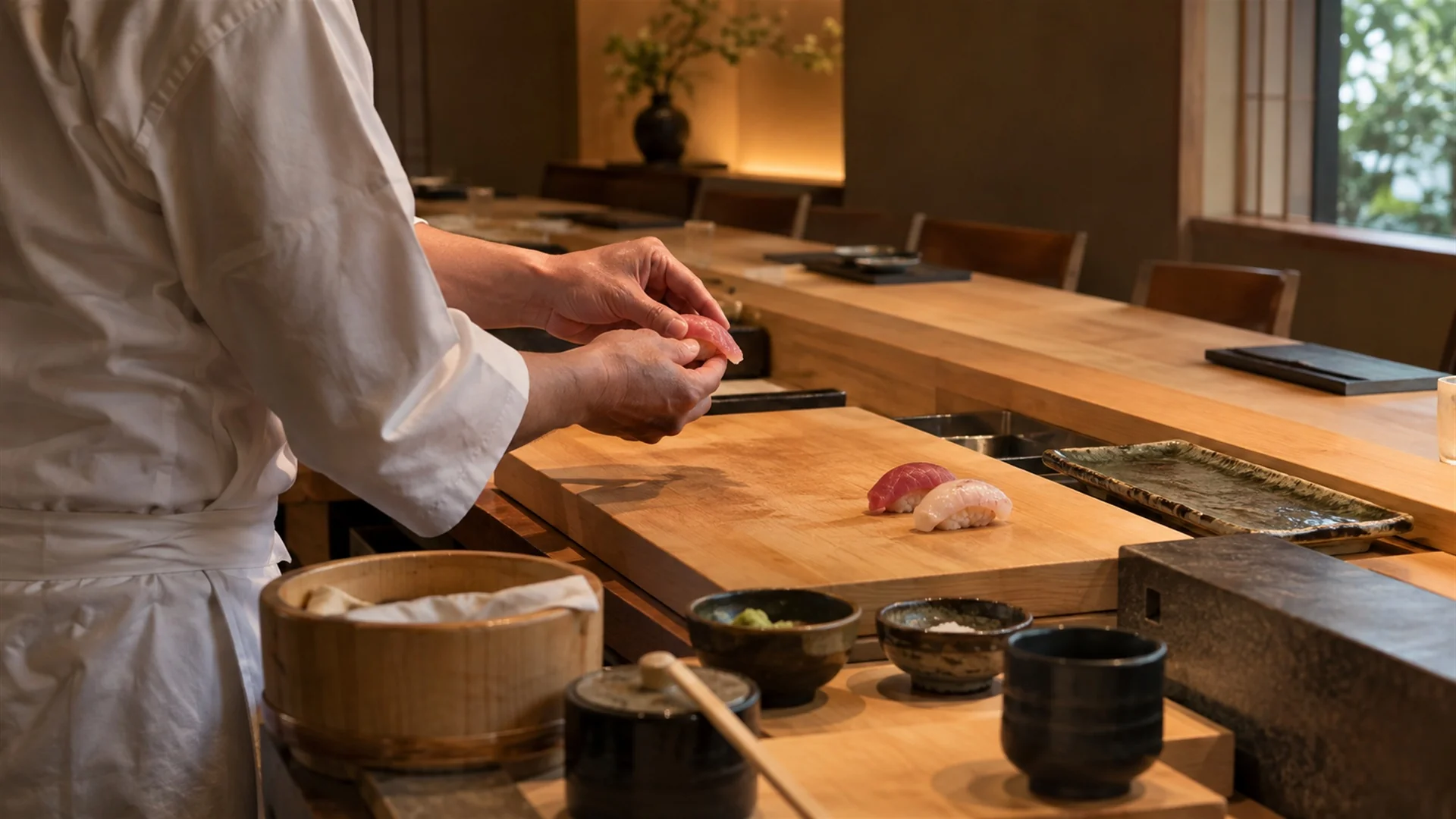
Ginza is the refined heart of the old center. Its broad avenues hold department stores, galleries and specialist craft shops, and the Kabukiza Theatre stages traditional performances within walking distance of the main crossing.
Above all, Ginza is a district of counters. Sushi, tempura and kaiseki are often served at a single wooden bar with only a handful of seats, where the chef prepares each course in front of the guest. Tokyo is consistently among the most decorated cities in the Michelin Guide, and many of these counters explain why.
However, the finest counters are notoriously difficult to reserve from abroad. Many accept bookings only through a hotel concierge or a trusted intermediary, and the most sought-after seats are committed weeks or months ahead.
Just to the north, Nihonbashi was the starting point of the great highways of the Edo period. Long-established merchants there still sell knives, lacquerware and dashi, and some of them have traded on the same street for centuries.
Nearby, the Tsukiji outer market remains an early morning pleasure of knife shops, tamagoyaki stalls and seafood counters, even though the wholesale market itself moved to Toyosu. Because of this, the old center rewards travelers who plan their tables first and their sightseeing second, and dining here ranks among the essential things to do in Tokyo.
Things to Do in Tokyo’s West: Shibuya and Shinjuku
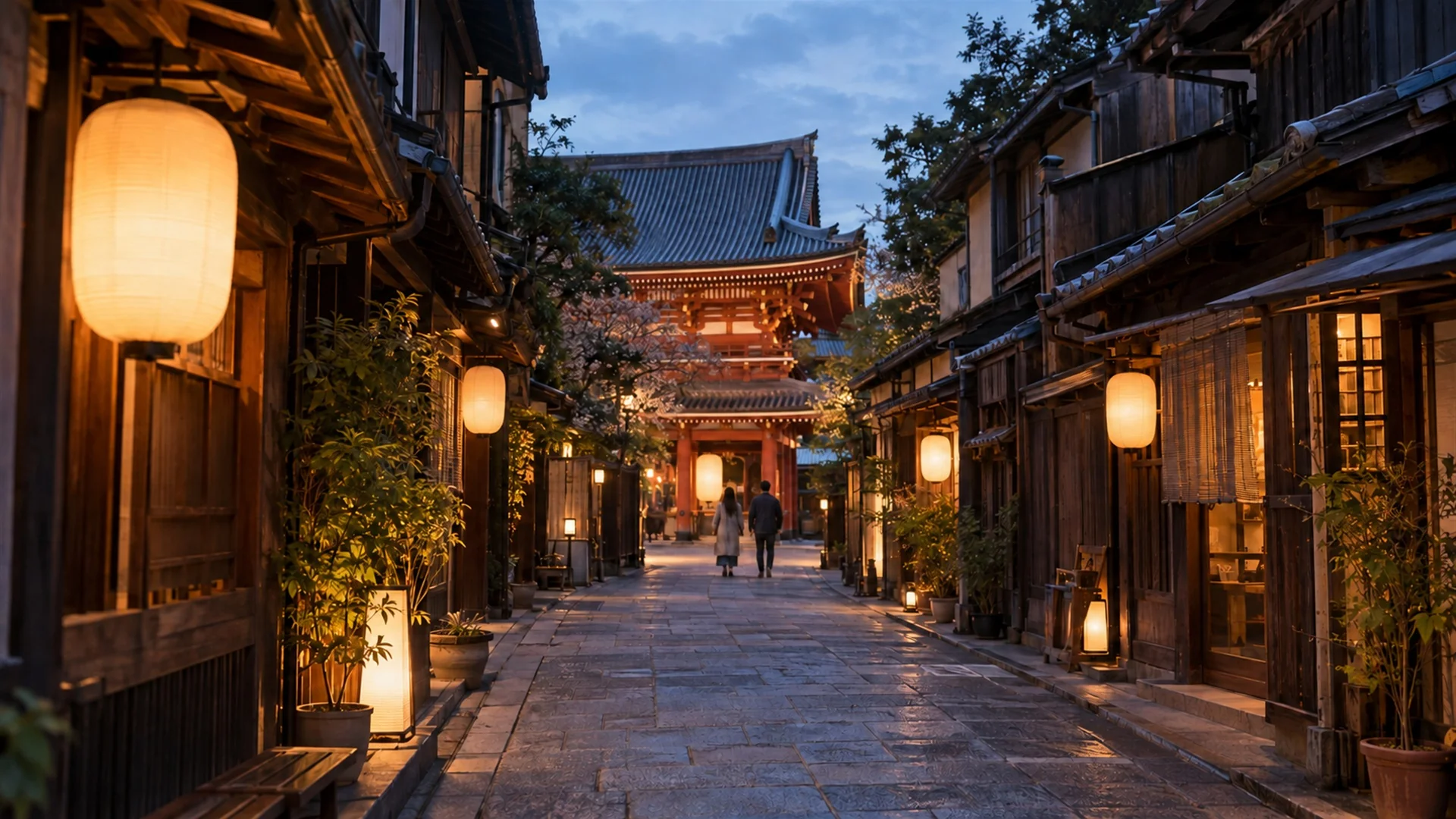
In contrast, the west of the city is fast, bright and vertical. Shibuya is best known for its scramble crossing, which is most striking seen from above at dusk, when the city lights come on.
Shinjuku combines the busiest station in the capital with a remarkable counterweight: Shinjuku Gyoen, a national garden of lawns, ponds and formal landscapes. Meanwhile, the narrow lanes of Golden Gai and Omoide Yokocho offer tiny bars and grill counters that keep a postwar atmosphere.
Not every crowd is worth joining. Shopping streets at weekend peaks and queues for viral cafés rarely repay the time. The views, the garden and the evening lanes do.
For art, the immersive digital rooms of teamLab in Azabudai Hills and Toyosu offer a very different Tokyo, and they are best booked for the first entry of the day.
The Low City: Yanaka, Asakusa and What Survived
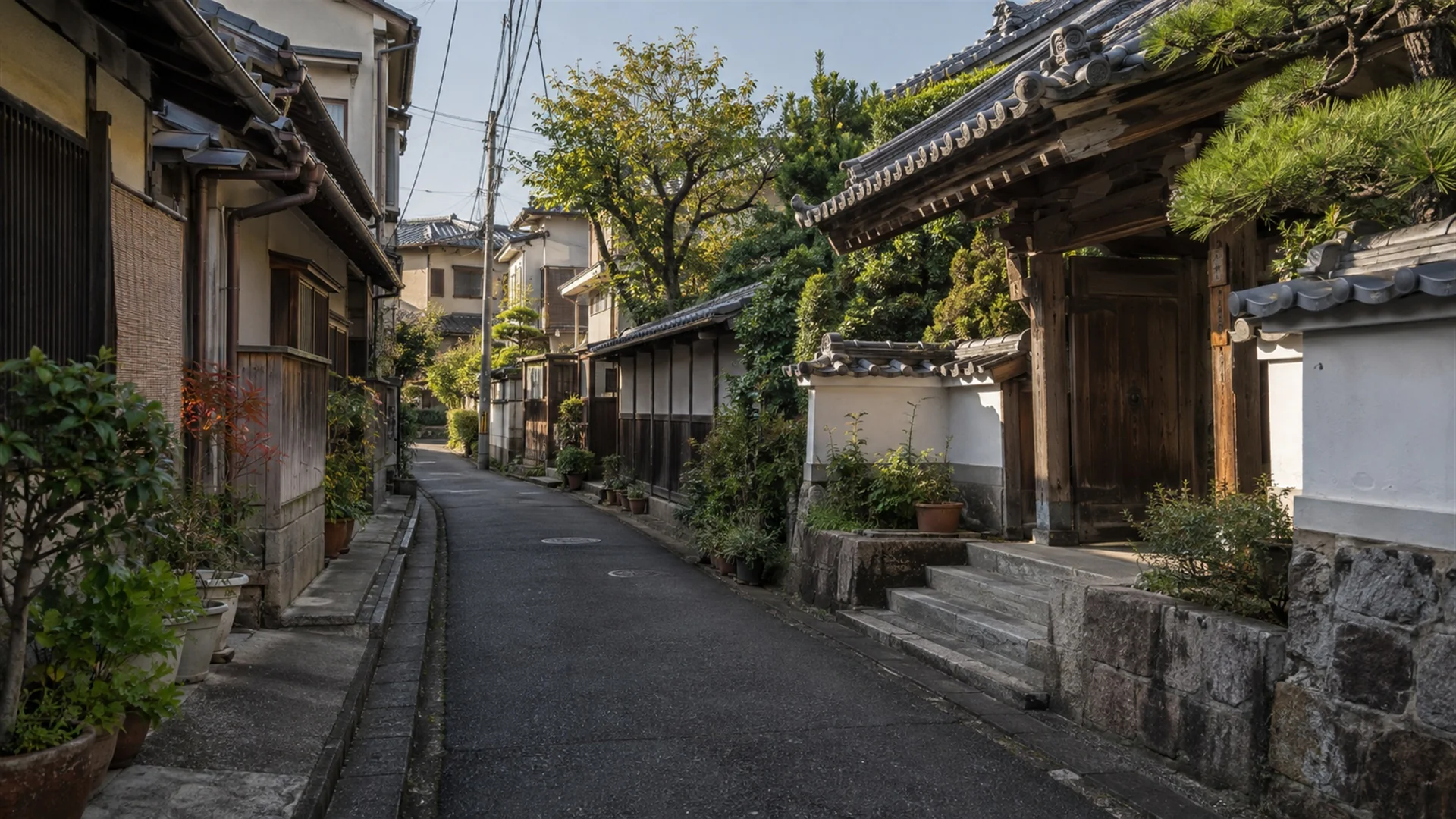
Yanaka is the district most often described as old Tokyo. Its temples, cemetery paths and wooden houses came through the twentieth century with far less damage than most of the city, and its streets still move at a neighborhood pace.
A morning here might include small artisan workshops, a traditional sweets shop and the long shopping street of Yanaka Ginza. As a result, the district offers something rare in the capital: quiet without distance.
Next, Asakusa holds Sensō-ji, the city’s oldest temple, reached through the Kaminarimon gate and the stalls of Nakamise. The approach fills quickly by mid-morning, so an early visit or an evening walk, when the halls are illuminated, is far calmer.
Together, these two districts form the soul of the shitamachi, and they are among the most rewarding things to do in Tokyo for travelers who value atmosphere over spectacle.
Aoyama, Shimokitazawa and the Residential City
Beyond the famous names lies a quieter Tokyo of residential streets and considered design. In Aoyama, the Nezu Museum houses a private collection of East Asian art in a building by Kengo Kuma, set within a landscaped garden with tea houses and stone lanterns.
Nearby, the boulevard of Omotesando is lined with flagship stores designed by leading architects. Consequently, a walk here reads as much like an architecture tour as a shopping street.
Shimokitazawa, a short train ride away, is different again: independent coffee roasters, vintage shops and small theaters on narrow lanes. It shows how most residents actually live in the city.
For couples who have seen the landmarks, these are often the most memorable things to do in Tokyo, because they reveal the capital at rest.
Where to Base Yourself in Tokyo
Finally, the right hotel shortens every day. Otemachi, beside the Imperial Palace gardens, places guests between the old center and the rail network.
Aman Tokyo occupies the upper floors of a tower there, with a soaring stone and washi lobby and views across the palace grounds. Hoshinoya Tokyo, nearby, is a ryokan within a tower, complete with tatami corridors and a hot spring bath on its upper floor.
Therefore, a base in Otemachi or Marunouchi suits most routes. For travelers who favor the west, a hotel near Shibuya or Aoyama works equally well.
From Otemachi, the Imperial Palace East Gardens are a short walk away, with the massive stone walls of the former Edo Castle framing quiet lawns. An early walk there is a calm way to begin any day in the city.
Official visitor information is available at https://www.japan.travel
Wooden counters, temple lanes, and a city of quiet districts
Signature Experiences
- Reserved counter dining in Ginza
- An early morning walk through Tsukiji outer market
- Dusk views over the Shibuya scramble crossing
- Garden paths of Shinjuku Gyoen in Shinjuku
- Temple lanes and artisan workshops of Yanaka
- An evening visit to Sensō-ji in Asakusa
- Art and garden at the Nezu Museum in Aoyama
- Immersive digital rooms at teamLab
- Coffee and vintage lanes of Shimokitazawa
- A hot spring bath above the city at Hoshinoya Tokyo
Ready for Something Extraordinary?
Tokyo rewards travelers who choose their districts with care. At EscapeXperts, we shape the city around your interests, combining seamless logistics, private experiences and curated exploration, from secured counter reservations to guided walks through the low city.
Why Travel to Tokyo with EscapeXperts
Tokyo is too large to see and too rich to rush. At EscapeXperts, we select the two or three districts that suit each traveler, secure the tables that matter and place you in a hotel that shortens every journey. The result is a clear, personal selection of the best things to do in Tokyo, and time to enjoy them.