Best months: March and April, during the austral harvest
Countries: Argentina · Chile · Uruguay
Regions covered: Uco Valley · Maipo Valley · Colchagua Valley · Casablanca Valley · Garzón
Signature grapes: Malbec · Carmenere · Tannat
South America Wine Regions: Read by Altitude, Not by Appellation
The South America wine regions are best understood through altitude and air rather than through appellation. In Argentina, vineyards climb the foothills of the Andes. In Chile, the cool Pacific breeze shapes the valleys. In Uruguay, the Atlantic sets the tone. Three grapes, Malbec, Carmenere and Tannat, define the journey.
Many wine travelers arrive expecting a single map of named estates and villages. At EscapeXperts, we read this continent differently. The mountains decide where vines can grow, the oceans decide how they ripen, and the harvest calendar decides when to travel.
Why Altitude Shapes the South America Wine Regions
The Andes run the length of the continent and divide its wine country in two. East of the range, in Argentina, the land is dry and sunny, and vineyards are planted high to find cooler nights. West of the range, in Chile, the valleys lie between the mountains and the coast.
Above them stands Aconcagua, the highest peak in the Americas, visible on clear days from parts of the wine country on both sides of the border. Its snowmelt feeds the irrigation channels that have made this dry landscape green for centuries.
Meanwhile, the Pacific plays the opposite role. Offshore, the cold Humboldt Current chills the ocean air, and that air reaches the Chilean valleys through gaps in the coastal range. Here, the sea replaces altitude as the cooling force.
As a result, the key difference between two bottles often lies in the height of the vineyard or its distance from the sea. A wine grown at high altitude feels fresher and more vivid, while one from a warm, sheltered valley feels fuller and rounder. This is the simplest way to read the South America wine regions without technical vocabulary.
Argentina: Mendoza and the Uco Valley
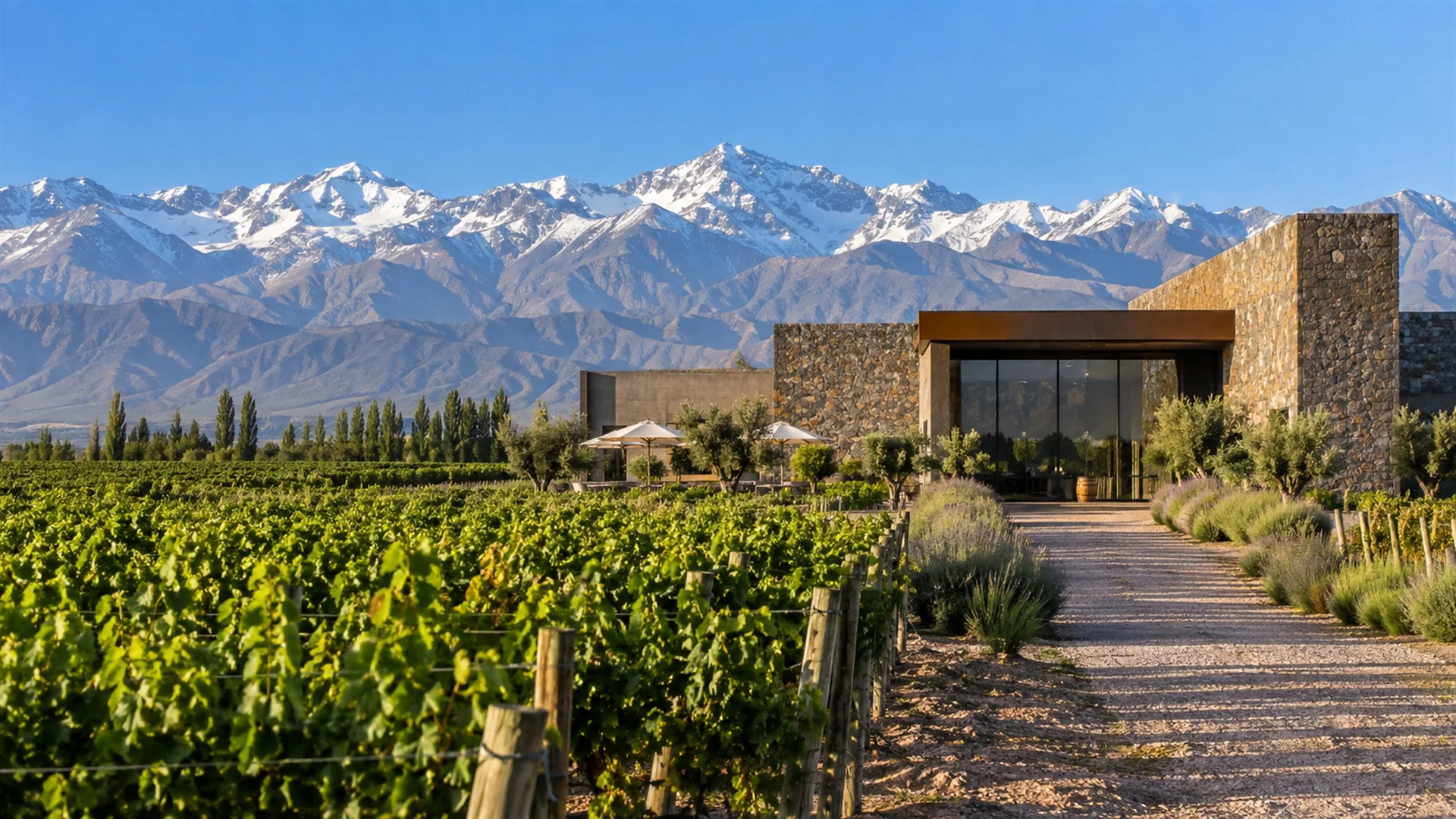
Mendoza is the heart of Argentine wine, producing the majority of the country’s bottles. Its most admired sub-region is the Uco Valley, around ninety minutes south of the city, where vineyards sit at roughly 3,000 to 5,000 feet beneath a wall of snow-capped peaks.
Here, Malbec reaches its most celebrated form. The high sun and cold nights give the grape its deep color and freshness, and the valley’s contemporary wineries pair architecture, cuisine and views of the Andes in a single visit.
In addition, Malbec is the grape most travelers already know. It arrived in Argentina from Europe in the nineteenth century and found its true home in these high, dry foothills. Therefore, it serves as the natural starting point before the journey moves west to less familiar grapes.
Chile: Maipo, Colchagua and the Pacific Breeze
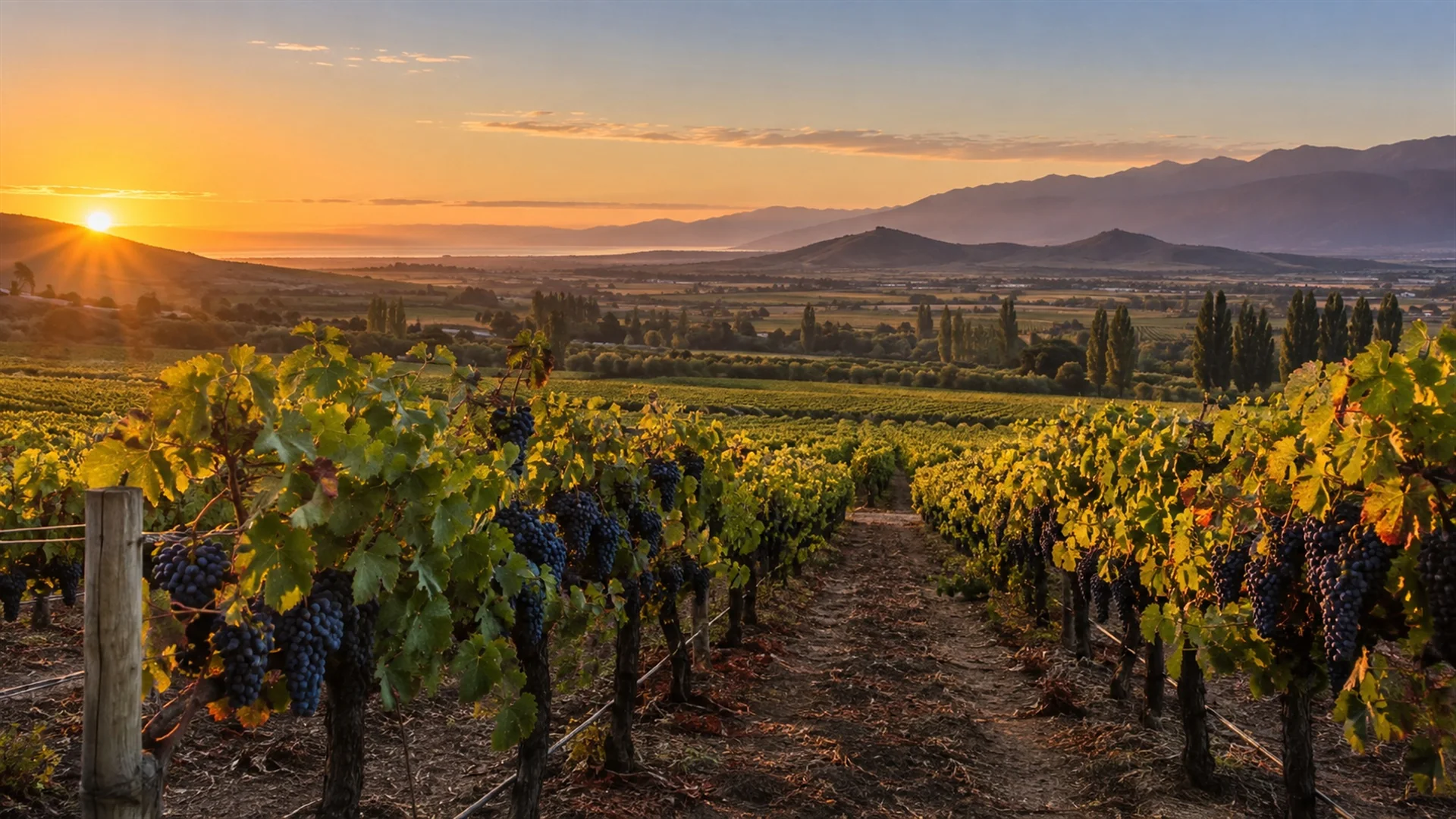
Crossing the Andes, the landscape changes completely. Chile’s wine valleys run east to west between the mountains and the ocean, and the cold Pacific breeze moves inland each afternoon. Because of this, the climate is shaped as much by the sea as by elevation.
The Maipo Valley, just south of Santiago, is the country’s historic heartland. Its vineyards lie against the foothills, and some of Chile’s oldest estates are set among its avenues of trees and colonial houses.
Further south, the Colchagua Valley is the home of Chile’s signature red, Carmenere. This grape was once widely planted in Bordeaux but nearly disappeared there after the vine disease of the nineteenth century. For decades, Chilean growers mistook their vines for Merlot, and only in the 1990s was Carmenere identified and given its own name.
Today, Carmenere offers a soft, deep red with gentle spice, easily appreciated by a traveler who knows only Malbec. Meanwhile, Colchagua combines winery visits with haciendas, horseback rides and the relaxed rhythm of the Chilean countryside.
Casablanca Valley: The Coastal Counterpoint
Between Santiago and the Pacific port of Valparaíso lies the Casablanca Valley. Morning fog and ocean air keep temperatures low, making it Chile’s most important region for crisp white wines.
In contrast to the red wine valleys further inland, Casablanca feels coastal and green. Its wineries are close enough to Santiago for an easy day, yet they offer a completely different expression of Chile. For many travelers, this contrast is one of the strongest arguments for exploring the South America wine regions across more than one valley.
Next, a stay here can combine lunch among the vines with an afternoon in Valparaíso, whose painted hillsides and historic funiculars sit less than an hour away.
Uruguay: Tannat on the Atlantic
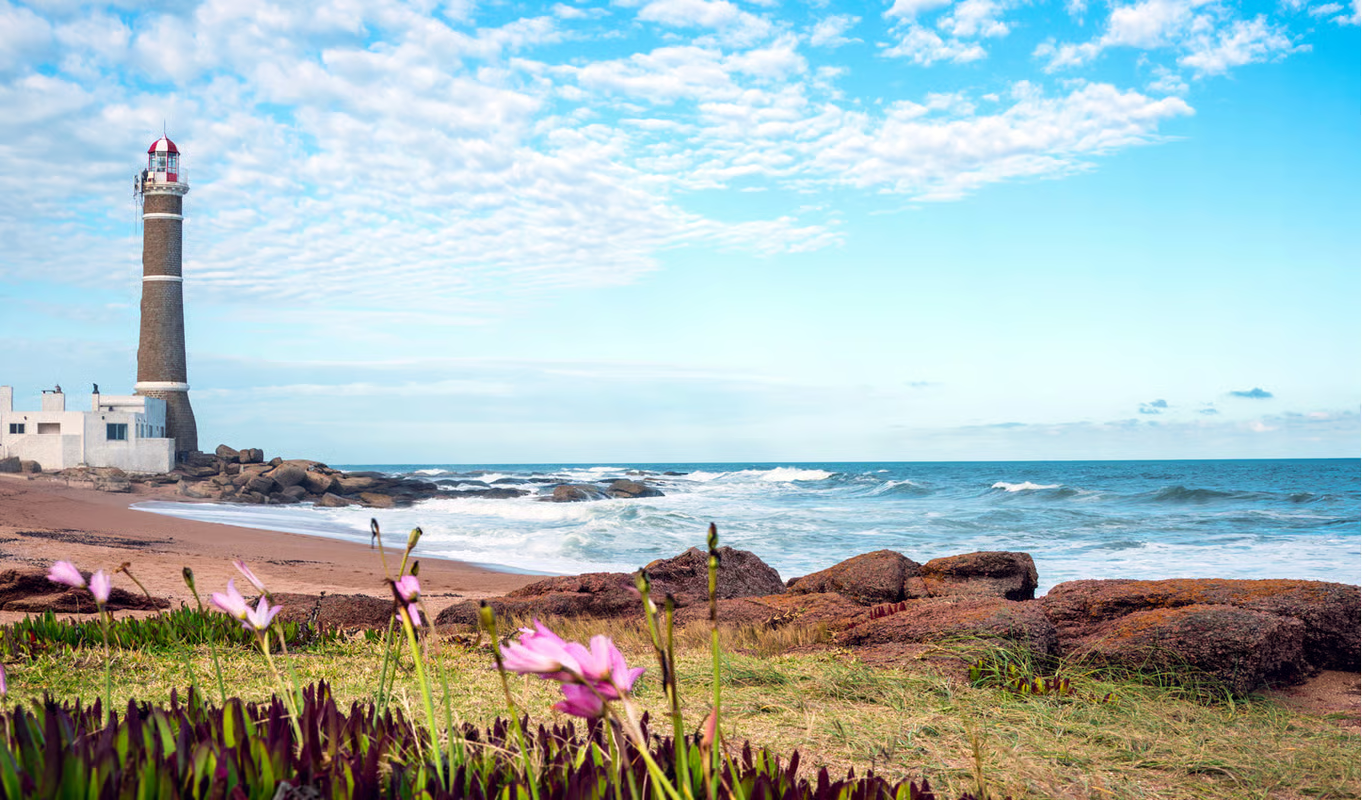
Uruguay offers the continent’s most unexpected wine story. Here, the climate is maritime rather than mountainous, shaped by Atlantic winds and rainfall. The signature grape is Tannat, which arrived with European immigrants in the nineteenth century and became the country’s national variety.
For a traveler who knows only Malbec, Tannat is darker and bolder, yet in Uruguay’s cool coastal air it keeps a surprising freshness. Near the Atlantic coast, the vineyards of Garzón grow on granite hillsides, within reach of the ocean air.
From the start, Uruguay adds a quieter, more intimate dimension to the South America wine regions. Its wineries are smaller, often family-run, and easily combined with the beaches of the Atlantic coast.
Most of the country’s vineyards lie in Canelones, close to Montevideo, which makes a first tasting possible on the day of arrival. Later, the route can continue east toward Garzón and the coast, where a vineyard lunch and a sunset by the sea fit comfortably into the same day.
Harvest in March and April
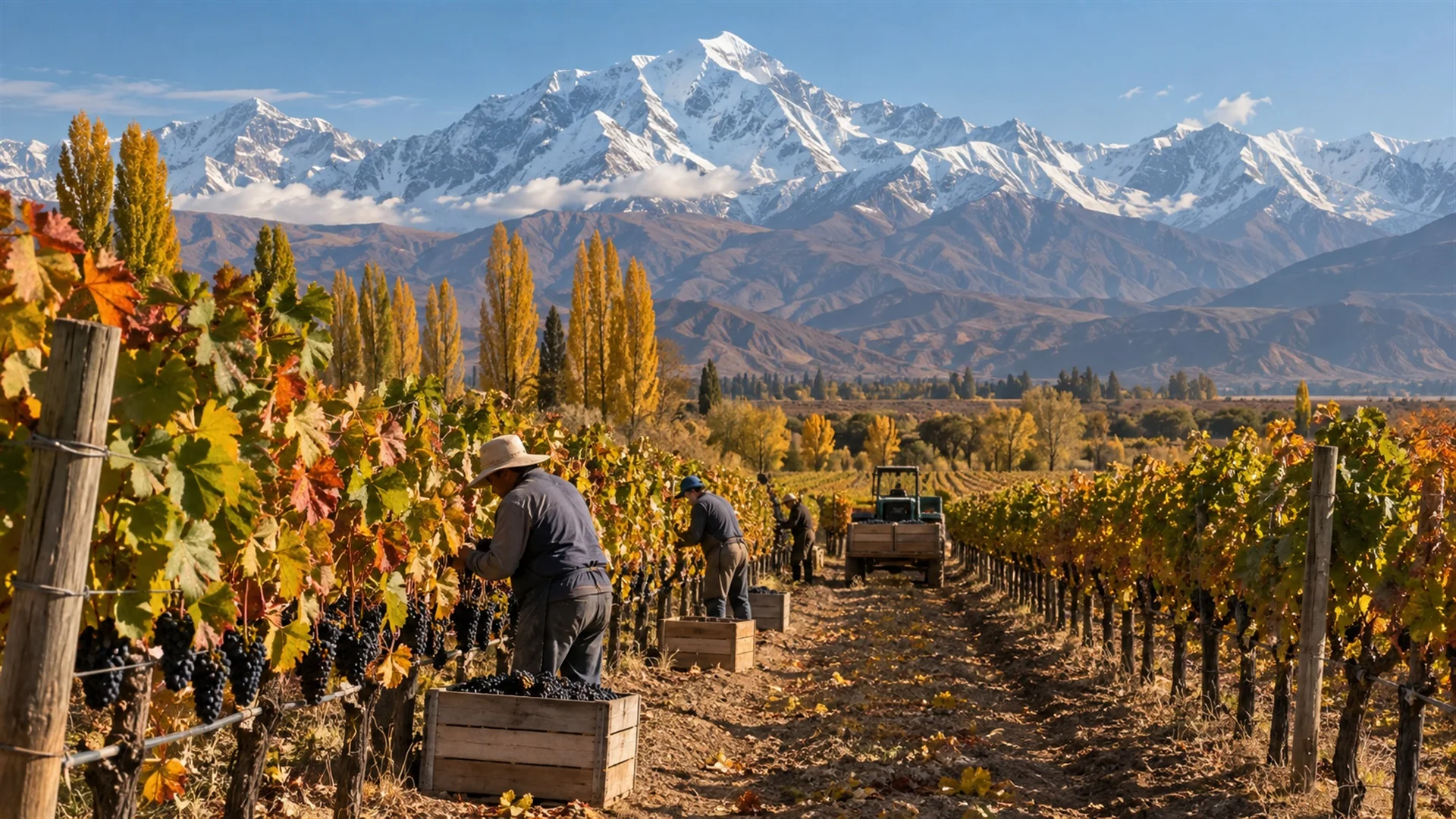
The austral harvest takes place in March and April, the reverse of the northern calendar. Vineyards are busy, landscapes turn gold and red, and wineries welcome visitors into the most active weeks of their year.
In Mendoza, the Fiesta Nacional de la Vendimia marks the season each year in early March. Meanwhile, Chile’s valleys hold their own harvest festivals in the same weeks, and Uruguay’s wineries complete their picking by early autumn.
Outside the harvest, the vineyards keep their own appeal. Spring, from October to December, brings fresh green leaves, snow still on the high peaks and quieter wineries. In contrast, the winter months suit city stays and cellar visits rather than long days outdoors among the vines.
Finally, harvest is the moment when the South America wine regions are most alive and most in demand. Therefore, the best estates and lodges should be secured well in advance.
Routing between the three countries is simpler than the map suggests. A short flight crosses the Andes between Mendoza and Santiago, while the mountain road over the border pass offers one of the most dramatic drives on the continent in summer. Montevideo then connects easily with both capitals. As a result, a journey through the South America wine regions can link all three countries within ten to twelve nights. For official Chilean travel information, see https://www.chile.travel
High vineyards, ocean air, and a harvest that turns the Andes gold
Signature Experiences
- Lunch among high vineyards in the Uco Valley
- Malbec tasting with views of the Andes
- Harvest-season visit during the Mendoza vendimia
- Historic estates and tree-lined avenues in the Maipo Valley
- Carmenere and hacienda stays in the Colchagua Valley
- Coastal white wines in the Casablanca Valley
- Afternoon among the painted hillsides of Valparaíso
- Tannat on granite hillsides at Garzón
- Clear-day views toward Aconcagua
- Private winery visits in all three countries
Ready to Begin the Journey?
A wine journey across South America depends on routing as much as on the estates themselves. At EscapeXperts, we connect Argentina, Chile and Uruguay through seamless logistics, private access and curated experiences timed to the harvest.
Why Travel South America’s Wine Country with EscapeXperts
South American wine is a story of mountains, oceans and three distinctive grapes. At EscapeXperts, we design wine journeys that follow altitude and air across three countries, with private visits, exceptional stays and seamless connections between valleys. The result is a journey through the South America wine regions that feels coherent, unhurried and entirely your own.