Ideal stay: Two to three nights, not a single stopover
Getting around: On foot, by cyclo and with a private driver
Country: Vietnam
Region: Old Quarter · Hoan Kiem Lake · French Quarter · Ba Dinh · Bat Trang
Things to Do in Hanoi: Two Cities Around One Lake
The most rewarding things to do in Hanoi make sense once the city is read as two layers. North of Hoan Kiem Lake lies the Old Quarter, a merchant town of streets named after trades. South and east of it lies the French Quarter, a grid of boulevards and villas. The lake sits between them.
Many travelers give Hanoi a single night on the way to the coast. Seen from a car window, its traffic and narrow lanes can feel impossible to read.
At EscapeXperts, we plan the capital as a stay of two or three nights. Understood through its two cities, the plan of Hanoi becomes clear, and the capital reveals a depth of craft, scholarship and cooking that few Asian cities can match.
Things to Do in Hanoi Begin in the Old Quarter’s Guild Streets
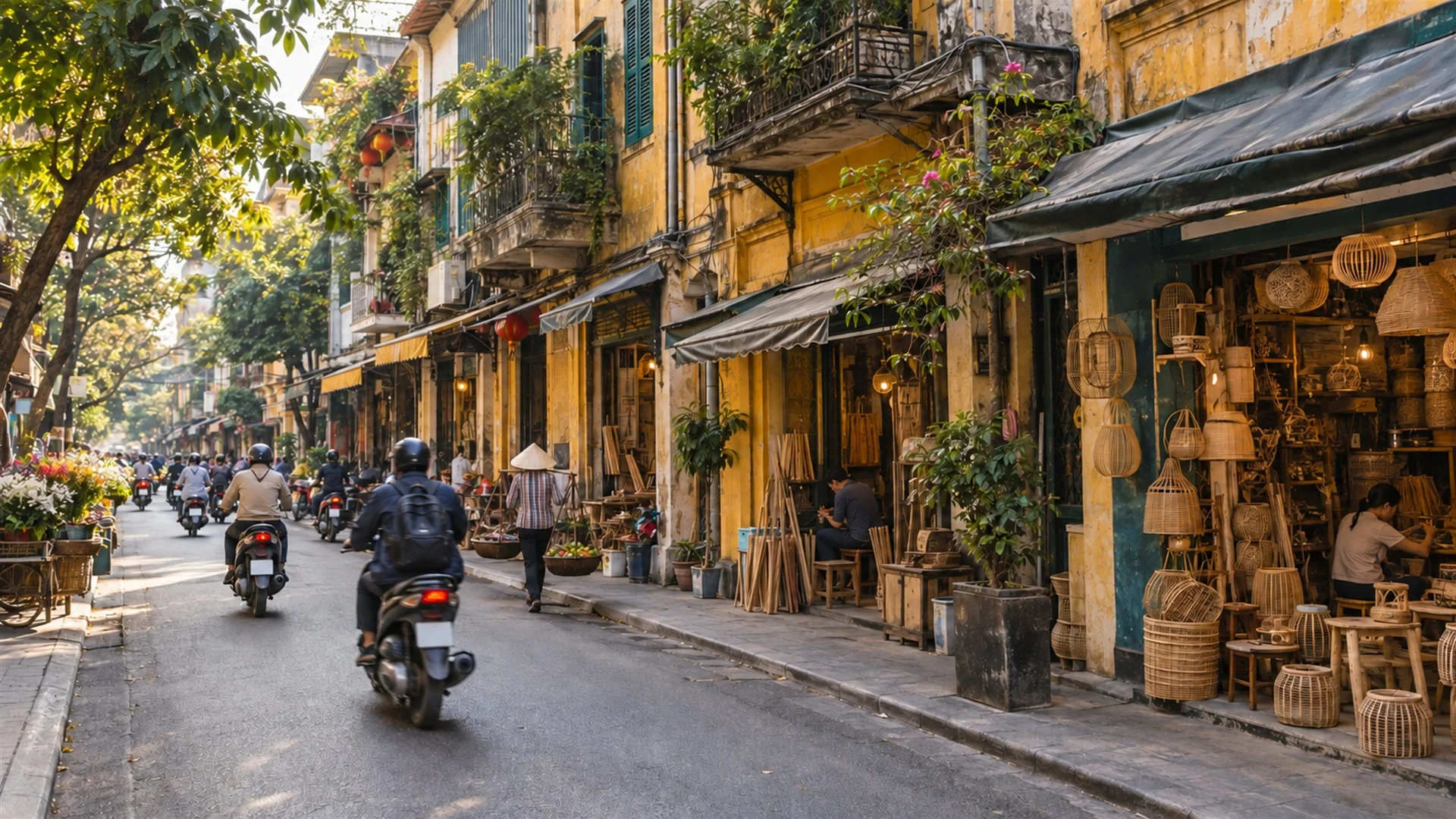
The Old Quarter grew as a district of guilds. Craftsmen from surrounding villages settled together by trade, and many streets still carry the word “Hang,” meaning merchandise, followed by the goods once sold there: silver, silk, tin, paper and more.
This is why the district is often called the thirty-six streets. Each lane had its own specialty, its own communal house and often its own village temple, and a few trades survive on the same streets today.
The architecture follows the same logic. Narrow “tube houses” present a slim shop front to the street and extend far back, with courtyards, workshops and living rooms behind, because frontage was once taxed and fiercely valued.
Therefore, a guided morning walk here is less about shopping than about reading a medieval urban plan. It remains the foundation of all things to do in Hanoi.
Hoan Kiem Lake and Ngoc Son Temple
Hoan Kiem, the Lake of the Returned Sword, is named after a legend in which a fifteenth-century ruler returned a magic sword to a golden turtle. The lake is the emotional center of the city.
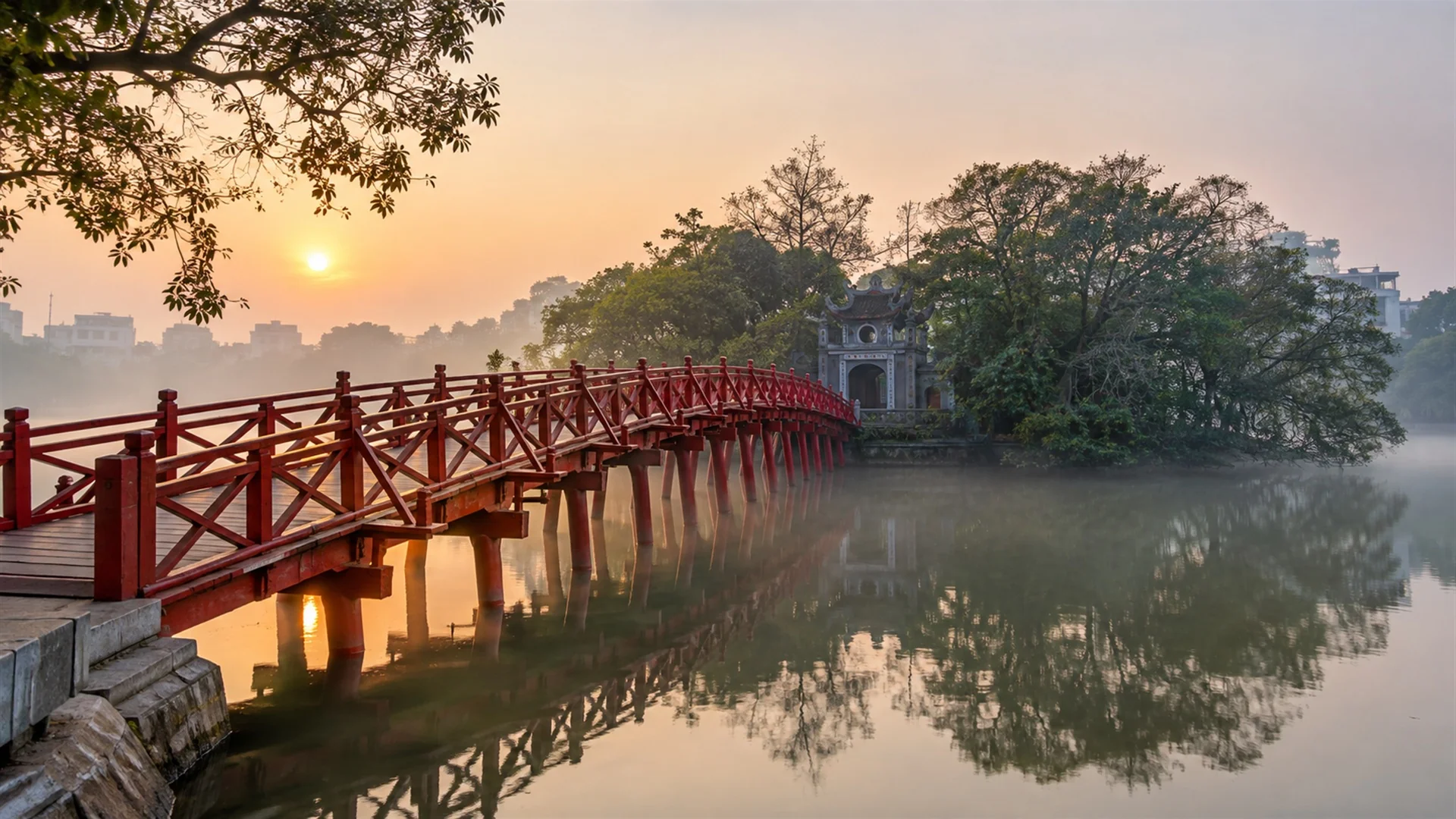
On a small island, Ngoc Son Temple is reached by a red wooden bridge. Early in the morning, the shore fills with residents practicing tai chi, dancing and walking, long before most visitors arrive.
Beside the lake, performances of water puppetry preserve a tradition born in the flooded rice fields of the Red River delta. Puppeteers stand hidden behind a screen, waist-deep in water, guiding lacquered figures across its surface to live music.
As a result, the lake is both a daily stage and a meeting point between the two cities, and it anchors the most memorable things to do in Hanoi.
The French Quarter and the Sofitel Legend Metropole Hanoi
South of the lake, the city changes character. At the end of the nineteenth century, the French administration laid out a second city here, with wide tree-lined avenues, ochre villas, government buildings and the Opera House.
In contrast to the dense lanes of the Old Quarter, the French Quarter was designed for carriages and promenades. Its geometry explains why modern Hanoi feels like two different cities joined at the lake.
At its heart stands the Sofitel Legend Metropole Hanoi, which opened in 1901. The white colonial façade, green shutters and courtyard pool have welcomed writers, diplomats and film stars for more than a century, and the hotel remains the city’s most historic address.
Because of this, we often choose the Metropole as the base for a Hanoi stay, placing guests on the seam between the two layers of the city.
The Temple of Literature and the Imperial Citadel
West of the center, the Temple of Literature was founded in 1070 in honor of Confucius. It later housed the Imperial Academy, considered the first national university of Vietnam.
Its courtyards are among the calmest places in the city. Stone stelae mounted on carved turtles record the names of scholars who passed the royal examinations over several centuries.
Nearby, the Imperial Citadel of Thang Long preserves the archaeological layers of successive royal capitals. Its central sector is inscribed on the UNESCO World Heritage List: https://whc.unesco.org/en/list/1328/
In addition, the two sites together show a third, older Hanoi, the scholarly capital that preceded both the guilds and the boulevards. A historian-guide connects the three periods in a single morning, which makes this one of the most illuminating things to do in Hanoi.
Bun Cha, Egg Coffee and the Hanoi Table
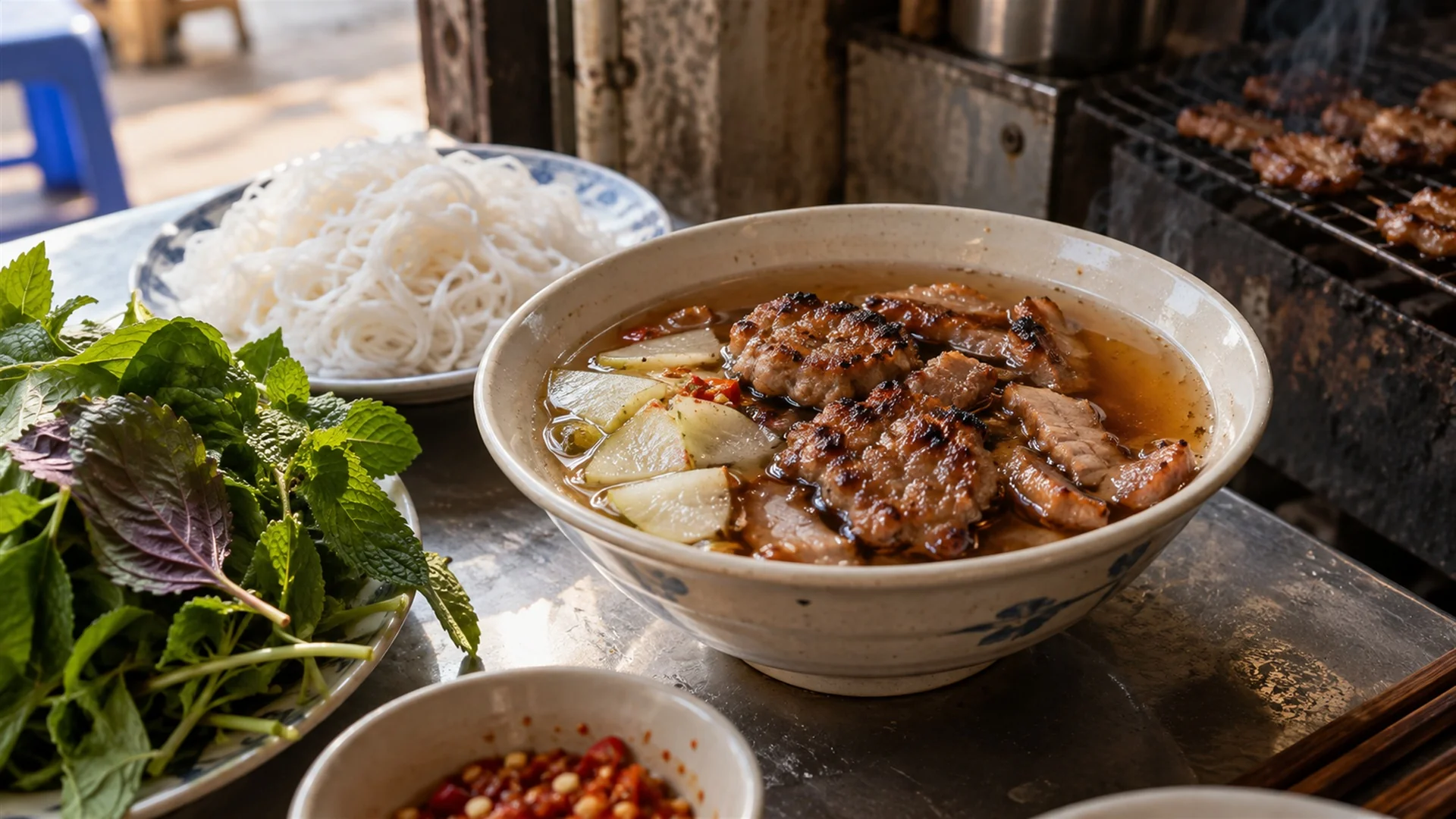
Hanoi’s food is best understood dish by dish. Bun cha, grilled pork served in a sweet and sour broth with rice noodles and herbs, is the city’s midday tradition. Pho, the beef noodle soup, is most closely associated with the north.
Next come the specialties. Cha ca, turmeric-marinated fish cooked at the table with dill and spring onion, has an entire street named after it. Egg coffee, whipped egg yolk and sugar over strong Vietnamese coffee, originated in the city in the mid-twentieth century.
Meanwhile, many of the finest cooks work from small street kitchens that serve a single dish. A private food walk with a local guide makes these addresses accessible and explains the etiquette of each. Low plastic stools, shared tables and a brisk lunchtime rhythm are part of the experience, and the right guide knows which kitchens are at their best at which hour.
For couples, a guided evening of tasting remains one of the most rewarding things to do in Hanoi.
Dong Xuan Market, Long Bien Bridge and Bat Trang
At the northern edge of the Old Quarter, Dong Xuan market is the city’s largest covered market, a wholesale hall of fabrics, household goods and dried foods that still supplies the surrounding streets.
From there, the Long Bien Bridge crosses the Red River. Built in the first years of the twentieth century, its steel spans offer a slow walk above banana groves and river islands.
Finally, across the river lies Bat Trang, a village of potters whose ceramic tradition goes back several centuries. A private visit to a family workshop shows the whole process, from clay to glaze, and completes the city’s story of craft. The same afternoon can end back in the French Quarter, closing the day where the two cities meet.
Taken together, these visits turn a stopover into a full portrait of the capital. That is the real value of well-chosen things to do in Hanoi: each one explains a different part of how the city was built.
Seasonal planning for northern Vietnam is covered separately in our guide to the best time to visit the country.
Guild streets, colonial boulevards, and a quiet lake between them
Signature Experiences
- A guided morning through the guild streets of the Old Quarter
- Dawn walks around Hoan Kiem Lake
- The red bridge to Ngoc Son Temple
- A performance of traditional water puppetry
- Boulevards and villas of the French Quarter
- A historic stay at the Sofitel Legend Metropole Hanoi
- Scholarly courtyards of the Temple of Literature
- A private tasting of bun cha, pho and egg coffee
- The wholesale halls of Dong Xuan market
- A slow walk across the Long Bien Bridge
- A family pottery workshop in Bat Trang
Ready for Something Extraordinary?
Hanoi deserves more than a night on the way to the coast. At EscapeXperts, we design stays that read the city through its layers, combining seamless logistics, private experiences and curated exploration of its streets, scholars and kitchens.
Why Travel to Hanoi with EscapeXperts
Hanoi rewards travelers who understand how it was built. At EscapeXperts, we select the right historic hotel, arrange expert guides for the guild streets and the colonial grid, and open the doors of the city’s best kitchens and workshops. The result is a stay shaped around the things to do in Hanoi that turn a transit city into a destination.