Clearest months: October and November
Second window: March to April, in the rhododendron season
Quiet cultural season: December to February in the Kathmandu Valley
Regions covered: Kathmandu Valley · Pokhara · Himalayan foothills · Terai
Best Time to Visit Nepal: Two Clear Windows and the Months Between
The best time to visit Nepal for mountain views is October and November, when the post-monsoon air is clear and dry. Spring, from March to April, is the second window, bringing warmth and rhododendron blooms. Between them, winter suits the Kathmandu Valley, while the summer monsoon softens but does not close the country.
Most planning advice treats Nepal as a trekking destination with two seasons and nothing in between. That view overlooks a great deal, because the valley cities of Kathmandu, Patan and Bhaktapur hold one of the densest concentrations of heritage in Asia, and they are open all year.
At EscapeXperts, we time Nepal by region and by purpose. This guide explains why autumn gives the clearest views, what spring offers instead, and how the valley, the lowlands and the festival calendar each follow their own rhythm.
The Post-Monsoon Window: October and November
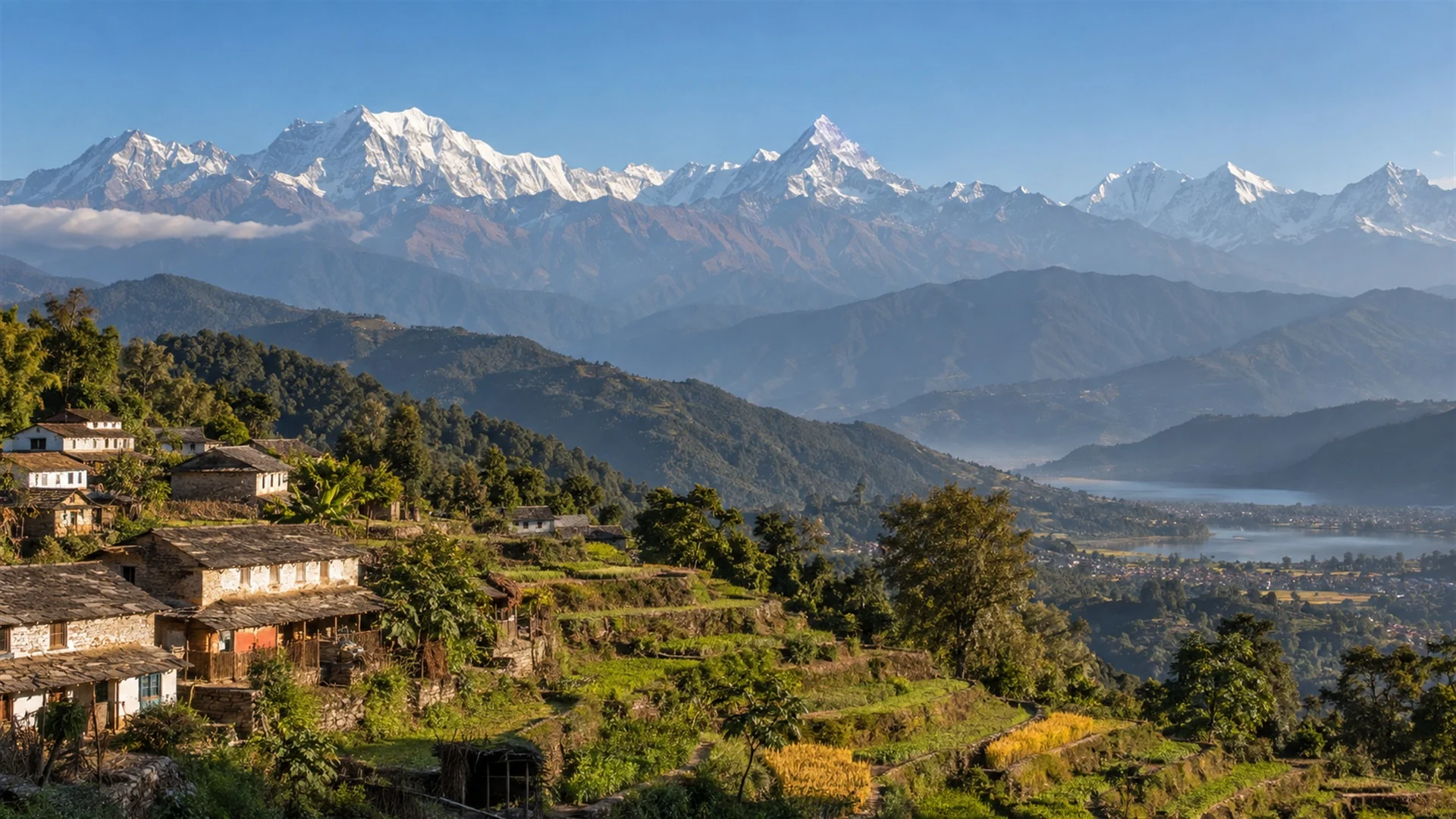
By early October, the monsoon has withdrawn and months of rain have washed the dust and haze from the air. As a result, visibility reaches its peak, and the Himalaya stand out sharply against deep blue skies.
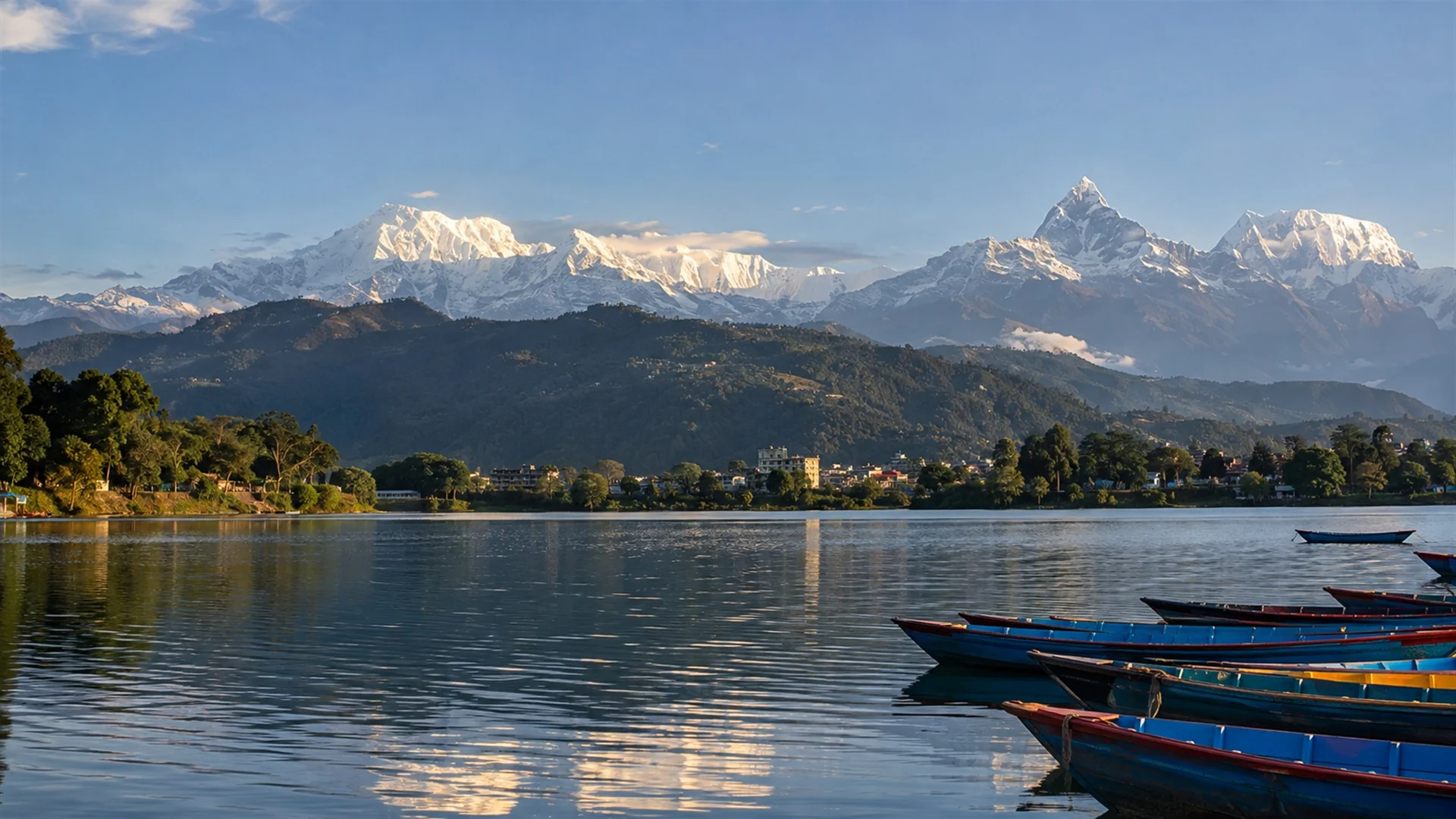
From Pokhara, the peaks of the Annapurna range rise directly above the lake, and sunrise viewpoints on the surrounding hills are at their finest. Meanwhile, scenic mountain flights from Kathmandu offer the clearest views of the Everest region without any trekking at all.
Temperatures are comfortable in the valleys, with warm days and cool evenings. The landscape is still green from the rains, and the rice harvest brings color to the terraces.
Because this is the best time to visit Nepal for views, it is also the busiest. The finest rooms in Kathmandu and Pokhara, and the mountain flights themselves, need planning well in advance.
Spring and the Rhododendron Season
The second clear window opens in March and continues into April. Days grow longer and warmer, and the forests of the middle hills come alive with rhododendron, the national flower, in shades of red, pink and white.
Mountain views are often excellent in early spring. However, as the season advances, haze gradually builds in the lower atmosphere, so May tends to bring softer, less reliable panoramas than the autumn months.
In contrast to autumn, spring offers more color at ground level. Gardens, forests and hillside villages are at their most vivid, and the warmer evenings suit dining outdoors in the valley towns.
For travelers who value flowers and warmth over perfect clarity, spring is the best time to visit Nepal, and it is generally a little quieter than the peak of autumn.
Winter in the Kathmandu Valley
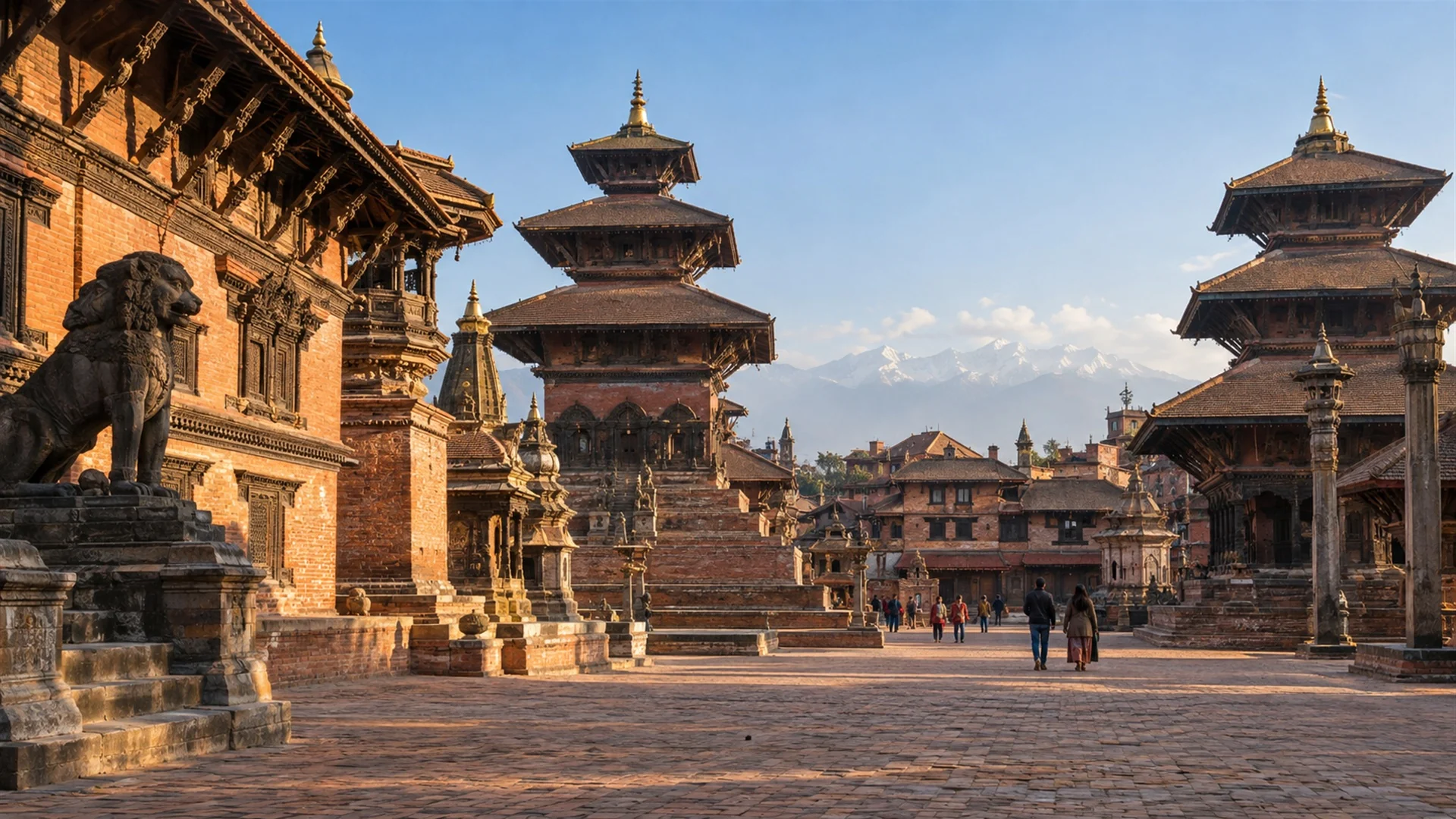
From December to February, the high mountains turn cold, but the Kathmandu Valley enjoys a quiet and rewarding season. Days are often sunny and mild, while nights are cold, sometimes close to freezing.
Here, the three royal cities of the valley are at their most atmospheric. Morning mist lifts from the courtyards of Bhaktapur, and the temples and palaces of Patan and Kathmandu can be explored without the crowds of autumn.
The valley’s monuments are recognized together as a UNESCO World Heritage Site, from the royal squares to the great stupas and Hindu temples: https://whc.unesco.org/en/list/121/
Therefore, winter is the season for cultural Nepal. Guided walks through workshops, courtyards and living temples reveal a country that exists well beyond the trekking trails, and that very few travelers think to schedule.
Clear winter days also bring views of the snow peaks from the hills on the valley rim, often with fewer clouds than in spring. Because of this, a sunrise excursion above the valley pairs naturally with a morning in the temple squares.
What the Monsoon Closes, and What It Opens
The summer monsoon usually runs from June to mid-September. Rain tends to fall in heavy bursts, often in the afternoon and evening, and cloud hides the high peaks for much of the season.
Roads in the hills can be affected by landslides, and mountain flights are more often delayed. Because of this, the monsoon is not the time for itineraries built around views or long overland drives.
Yet the valley remains open and deeply green. The rice planting season transforms the terraces, visitor numbers drop sharply, and the temple cities keep their daily rituals. With flexible planning, a short cultural stay in the valley works well even in these months.
In addition, several of the valley’s traditional street festivals fall in late summer, when chariots, masked dancers and processions fill the old squares. These events are intensely local, and they give a monsoon visit a character that the busy seasons rarely offer.
Chitwan, the Terai and the Best Time to Visit Nepal in the Lowlands
The lowland Terai follows a different calendar again. Chitwan National Park, home to rhinoceros, tigers and a rich birdlife, is best visited from October to March, when the weather is warm but not oppressive.
Later in spring, the heat builds steadily, while the monsoon brings flooding rivers and dense vegetation. Next, the combination of a valley stay, Pokhara and Chitwan fits most naturally into the cooler months, when all three are in season together.
Winter mornings in the lowlands can begin with mist over the rivers and grasslands, which usually lifts by mid-morning. Because of this, early game drives often start in soft light and end under clear skies, and the cooler evenings suit dining outdoors at the lodges.
For wildlife, then, the best time to visit Nepal runs from autumn through early spring, which aligns neatly with the two clear windows in the mountains and the quiet season in the valley.
Dashain and Tihar: Festivals That Shape Availability
Dashain, the largest festival of the year, usually falls in late September or October, followed a few weeks later by Tihar, the festival of lights. Their dates follow the lunar calendar and shift each year.
Both are family celebrations. During the main days, many offices and shops close, domestic flights and roads fill with travelers returning home, and some services operate at reduced capacity. Consequently, these weeks require careful planning, even though the atmosphere in the valley is memorable.
During Tihar, homes and temples are lit with oil lamps and garlands, and the valley glows after dark. For travelers who wish to witness it, the best time to visit Nepal is a stay timed to the final festival days, with rooms and transport secured early. Those who prefer calm can shift their dates by a week or two in either direction.
Clear Himalayan skies, spring forests, and a valley alive all year
Signature Experiences
- Sunrise over the Annapurna range from the hills above Pokhara
- Scenic mountain flight toward Everest in the post-monsoon clarity
- Rhododendron forests of the middle hills in spring
- Winter mornings in the courtyards of Bhaktapur
- Guided heritage walks through the royal squares of Patan
- Temple and stupa visits across Kathmandu
- Wildlife drives in Chitwan in the cool season
- Festival lights across the valley during Tihar
- Quiet green-season stays in the temple cities
Ready to Begin the Journey?
Nepal rewards travelers who look beyond the trekking calendar. At EscapeXperts, we match each region to its best weeks, combining seamless logistics, private guides and curated exploration from the Kathmandu Valley to the foothills and the lowland parks.
Why Travel to Nepal with EscapeXperts
Nepal is often reduced to a trekking season, yet its valley cities, lowland parks and festivals follow calendars of their own. At EscapeXperts, we plan around all of them, from clear October skies to quiet winter courtyards. The result is a considered answer to the best time to visit Nepal, shaped by what you wish to see.