Ideal stay: 7 to 10 nights
Best months: March to May and late September to November
Country: Bhutan
Region: Paro · Thimphu · Punakha · Haa Valley · Bumthang
Bhutan Travel Guide: How the Kingdom Welcomes Visitors
This Bhutan travel guide begins with the question most travelers ask first: why a daily fee? Bhutan charges each visitor a Sustainable Development Fee for every night in the country and requires a licensed guide. The model limits numbers, funds public services and keeps tourism in proportion to a small nation.
The policy is often described as an obstacle or a mystery. In practice, it is a form of capacity management, and it shapes everything from the size of the crowds at a monastery to the character of a village festival.
At EscapeXperts, we plan Bhutan around that model rather than against it. This guide explains how the fee works, which valleys justify the mountain roads, what the climb to Taktsang really demands and how the festival calendar affects availability.
How the Fee Works: The First Chapter of Any Bhutan Travel Guide
The Sustainable Development Fee is charged per person, per night, and is paid alongside accommodation, transport and guiding. Its level has been revised several times in recent years, so the current figure should always be confirmed at the time of booking.
The fee sits within a broader philosophy. Bhutan measures progress through Gross National Happiness, a framework that weighs culture, environment and wellbeing alongside economic growth. As a result, tourism is expected to contribute to the country rather than consume it.
In addition, every visitor travels with a licensed Bhutanese guide and a driver, arranged through a registered operator. The guide is not a formality: access to temples, dzongs and festivals depends on local knowledge, dress codes and permits.
Understood this way, the fee is the reason Bhutan feels uncrowded. This Bhutan travel guide treats it as a policy of scale, not a barrier to entry.
Dress codes follow the same logic of respect. Long sleeves and trousers or long skirts are expected inside dzongs and temples, hats are removed, and the guide will advise on photography, which is not permitted inside most shrines.
Paro and the Climb to Taktsang
Most journeys begin in Paro, home to the country’s international airport and one of its most beautiful valleys. The approach by air, between forested ridges, is an introduction in itself.
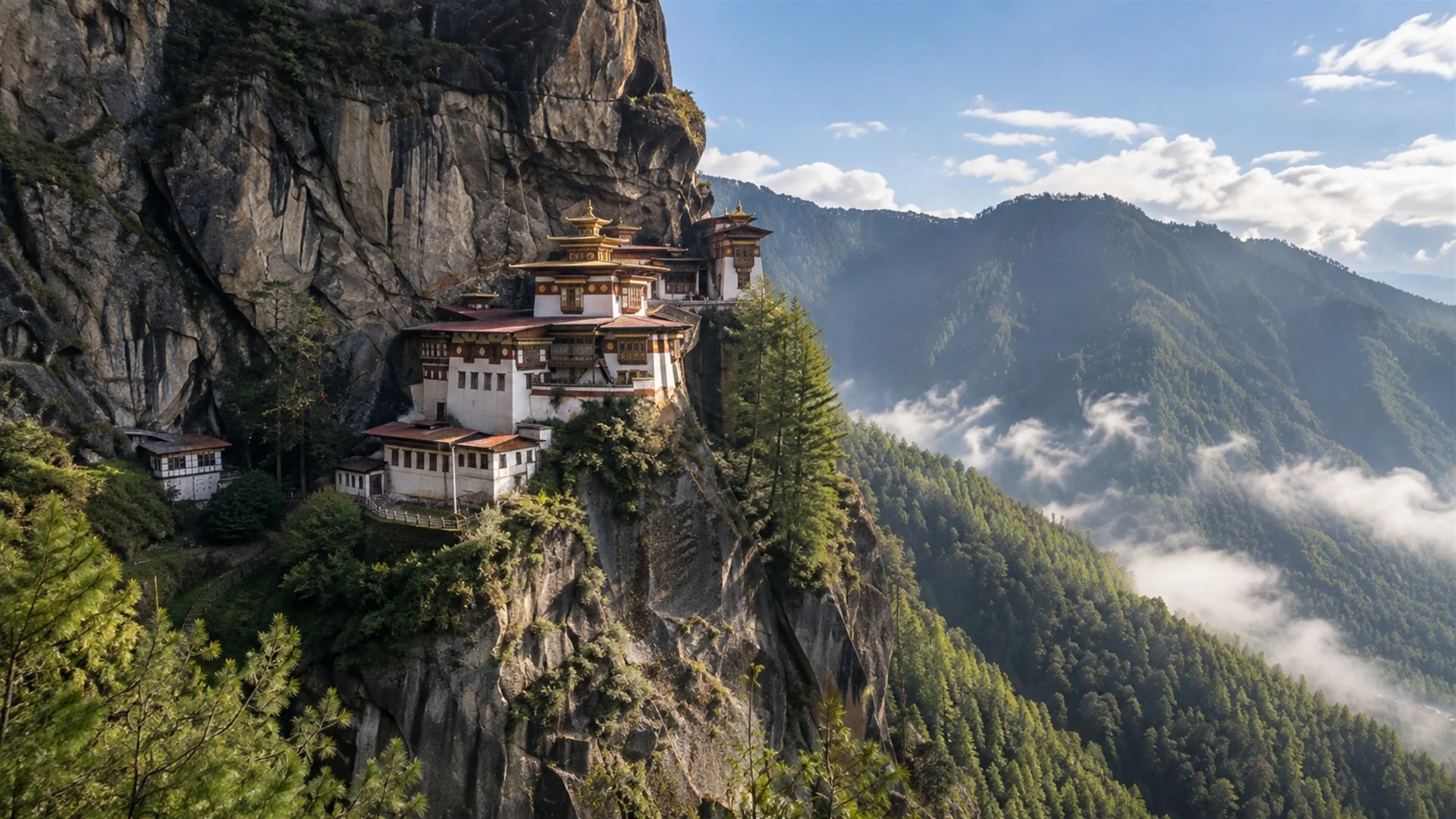
Above the valley stands Taktsang, the monastery built into a cliff face at around 3,120 meters. The trail climbs roughly 900 meters from the trailhead, and the full visit usually takes between four and six hours, including time inside the temple.
The ascent is steady and steep in places, with a long flight of steps down and up again in the final section. Therefore, it suits travelers with reasonable fitness, and it is best attempted after a few days of acclimatization. Horses can carry visitors on part of the way up, though not down.
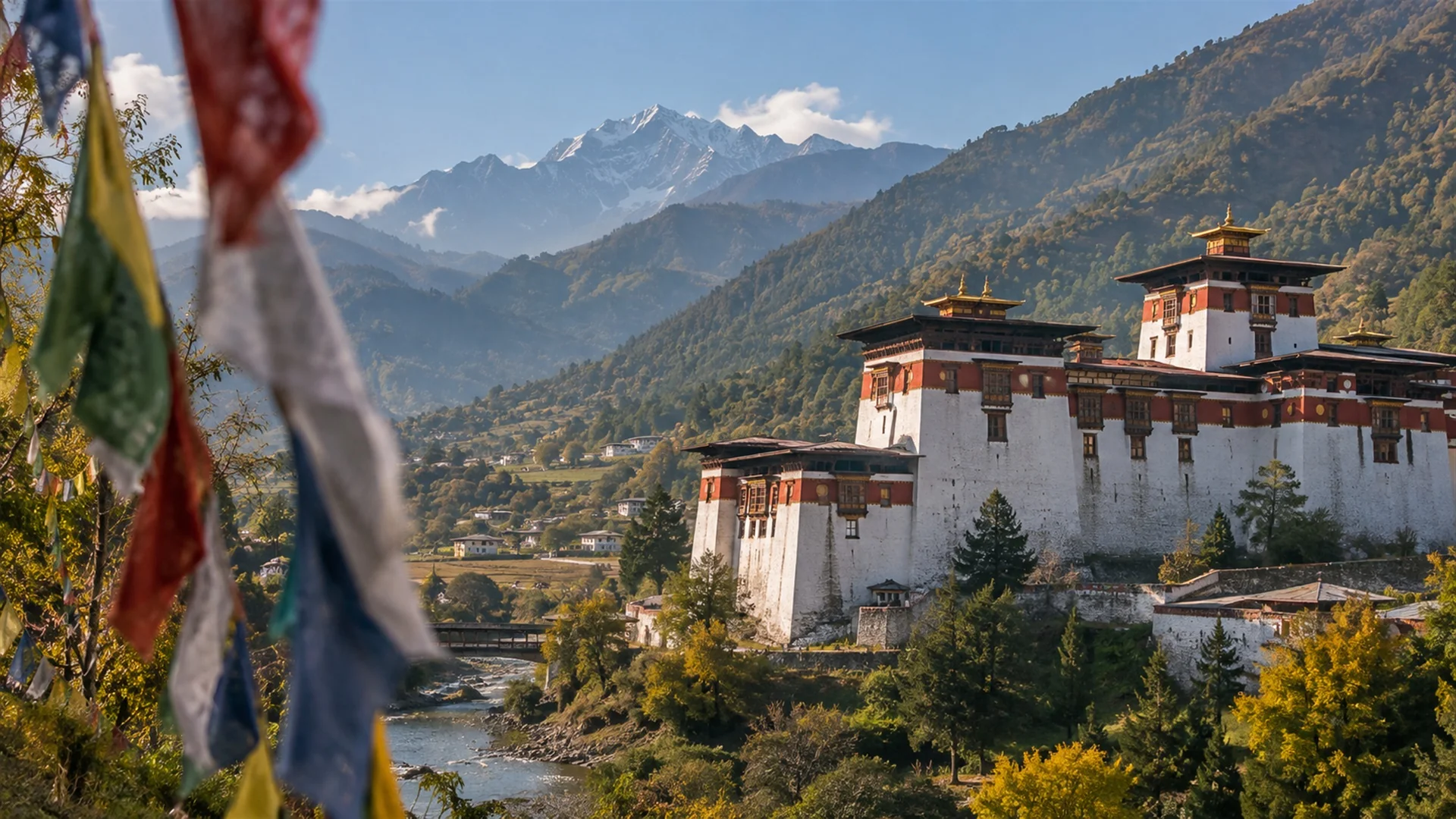
Meanwhile, the Paro valley itself rewards slower days. The Rinpung dzong, farmhouses and quiet temples make it a natural first and last base in any Bhutan travel guide.
Thimphu and the Road Over Dochula
The drive from Paro to Thimphu takes around an hour and a half along the river. The capital is small and walkable, with the great Tashichho dzong, craft schools and a weekend market that reveal daily life.
Next, the road to Punakha climbs over the Dochula pass, where 108 memorial stupas stand against a Himalayan skyline on clear days. The journey takes about three hours, with the pass offering a natural pause for tea and views.
These road times matter. Mountain roads are narrow and winding, so distances that look short on a map take far longer to drive. Because of this, an unhurried pace with two or three nights per valley makes the journey more rewarding.
Punakha and the Warmer Valleys
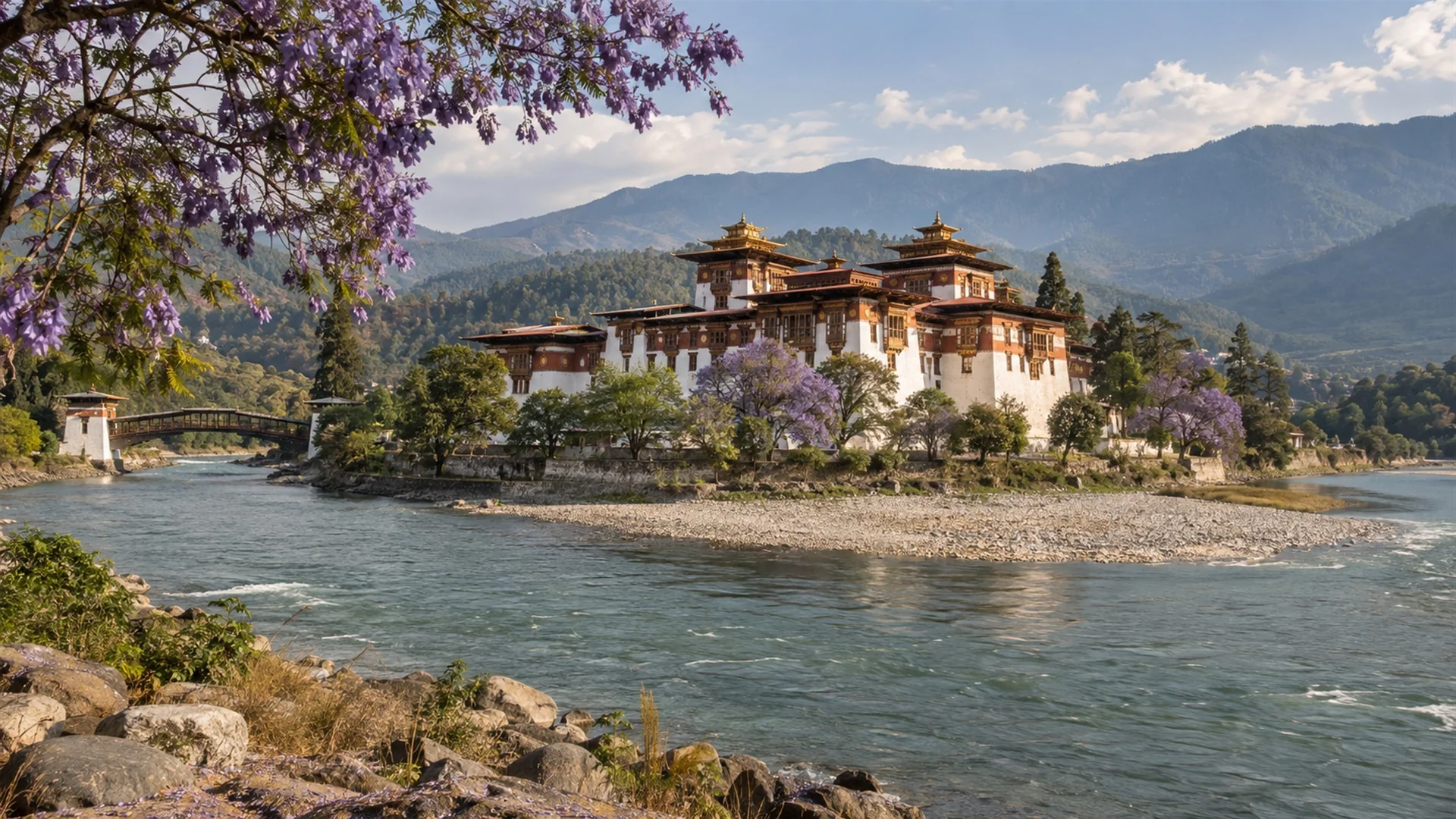
Punakha lies lower and warmer than Paro or Thimphu, with rice terraces along its rivers. The Punakha Dzong, set at the meeting of two rivers, is among the most beautiful buildings in the Himalaya.
Because of its milder climate, the valley is pleasant well into winter, when the higher valleys turn cold. Walks through farmland to village temples and along the rivers give the stay a gentle rhythm.
In autumn, the terraces turn gold before the harvest, while spring brings fresh green to the fields. Either way, Punakha offers the softest landscapes of the western circuit.
Here, the dzong also plays a role in the religious year, hosting its own festival in late winter. Travelers who time their stay for it see a quieter, more local celebration than the famous autumn events.
Beyond the Western Valleys: Bumthang, Haa and Where to Stay
For travelers with more time, Bumthang in central Bhutan is the spiritual heartland, a cluster of valleys filled with some of the kingdom’s oldest temples. It is reached by a long day’s drive from Punakha or by a short domestic flight, which saves a full day on the road.
In contrast, the Haa Valley, west of Paro over a high mountain pass, remains one of the quietest corners of the country. Its farmhouses, temples and alpine meadows see few visitors, and the drive over the pass offers wide views on clear mornings.
Both reward an extended journey. Here, a stay with Amankora or Six Senses Bhutan, each operating lodges in several valleys, allows the route to move between them without compromise on comfort. Because each lodge is small, rooms in the busiest weeks are limited.
Therefore, the choice of valleys sets the length of the stay, and it is the most important decision in any Bhutan travel guide that goes beyond the classic western circuit.
Tsechu Season and When to Go
The tsechu festivals are held in the courtyards of dzongs and temples, with masked dances performed by monks and laymen over several days. Their dates follow the Bhutanese lunar calendar and change each year.
The Paro festival usually falls in spring, in March or April, while the Thimphu festival takes place in autumn, often in September or October. As a result, these weeks are the busiest of the year, and flights and preferred rooms fill many months in advance.
The festivals are religious occasions first. Local families attend in their finest dress, and visitors are welcome as long as they keep to the edges of the courtyard, dress formally and avoid blocking the dancers. Seen this way, a tsechu is the most memorable chapter of this Bhutan travel guide.
The clearest skies arrive in October and November, while spring brings rhododendron blooms. The summer monsoon, from June to mid-September, brings rain and cloud. For official information, see https://www.bhutan.travel
Cliffside temples, quiet valleys, and a kingdom that sets its own pace
Signature Experiences
- Private arrival into the Paro valley by air
- Guided ascent to Taktsang above the valley
- Evening walk around the Rinpung dzong in Paro
- Craft schools and weekend market in Thimphu
- Himalayan views from the Dochula pass
- Visit to the Punakha Dzong between two rivers
- Farmland walks and village temples in Punakha
- Masked dances at a tsechu festival
- Quiet days in the Haa Valley
- Spiritual heartland journey to Bumthang
Ready for Something Extraordinary?
Bhutan rewards travelers who plan around its rules rather than against them. At EscapeXperts, we arrange the permits, guides and lodges that make the kingdom seamless, combining careful logistics, private experiences and curated exploration from valley to valley.
Why Travel to Bhutan with EscapeXperts
Bhutan is a country that decides how it will be visited, and that decision is its strength. At EscapeXperts, we work within that model, timing the festivals, pacing the mountain roads and choosing the lodges that suit your journey. The result is a Bhutan travel guide made real: a quiet, considered kingdom seen at its own pace.