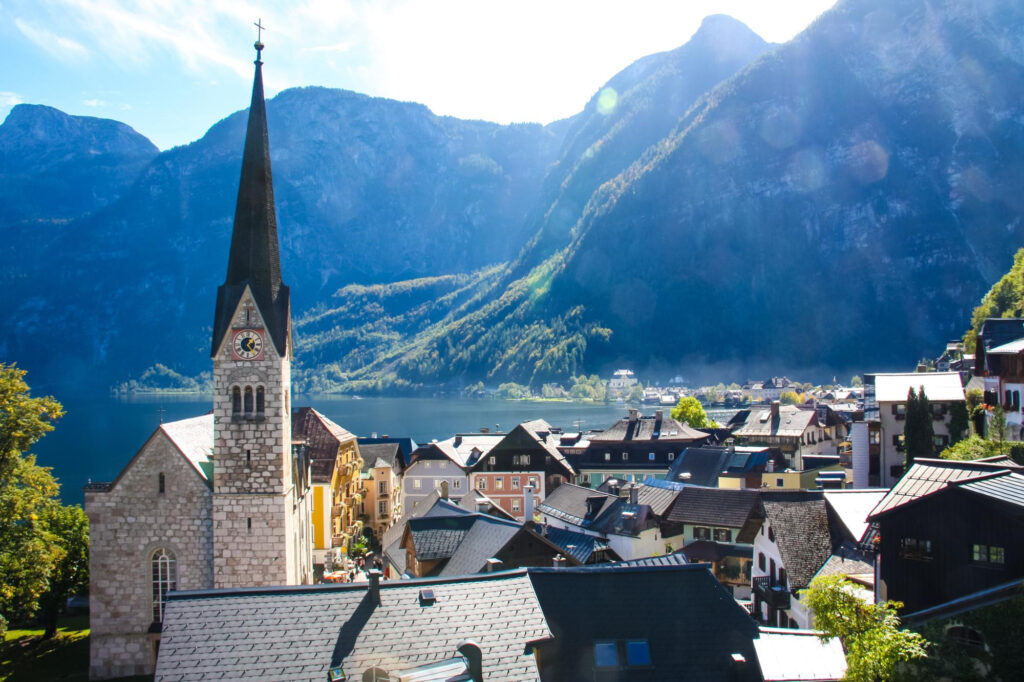
Season: Late November to 23 or 24 December, confirmed annually
Chosen by: The character of the city, not the size of the market
Countries: Germany · France · Austria · Switzerland
Cities covered: Nuremberg · Dresden · Cologne · Munich · Strasbourg · Salzburg · Lucerne · Basel
European Christmas Markets: Choose the City First
Almost every city in central Europe holds an Advent market, and they are not variations on one another. The european christmas markets divide into two entirely different experiences: a single vast market filling one square, and a scattering of small ones threaded through an old town.
Which of the two suits a traveler decides whether the trip is memorable or exhausting, and it has very little to do with how famous the market is.
At EscapeXperts, we choose the city by the shape of its Advent rather than by the ranking of its stalls, and we place the visit in the quieter half of the season.
The Calendar: When Advent Actually Opens
The season is governed by Advent, which begins on the fourth Sunday before Christmas and therefore moves by up to a week from one year to the next.
Most markets open in the days around that first Advent weekend, which places the start between the last days of November and the first of December. The majority close on 23 or 24 December, and a small number continue into the new year.
Meanwhile, the exact dates are published by each city in the late summer and should be confirmed rather than assumed, because a handful of the older markets open earlier by tradition and one or two close before Christmas Eve.
Next, the timing within the season matters as much as the dates. The first ten days are considerably quieter than the two weeks that follow, and weekday mornings in any city are a different market from Saturday afternoon.
Therefore, the european christmas markets are best visited early in the season and early in the week, which is the single most useful piece of planning available.
The Great Squares: Germany at Scale
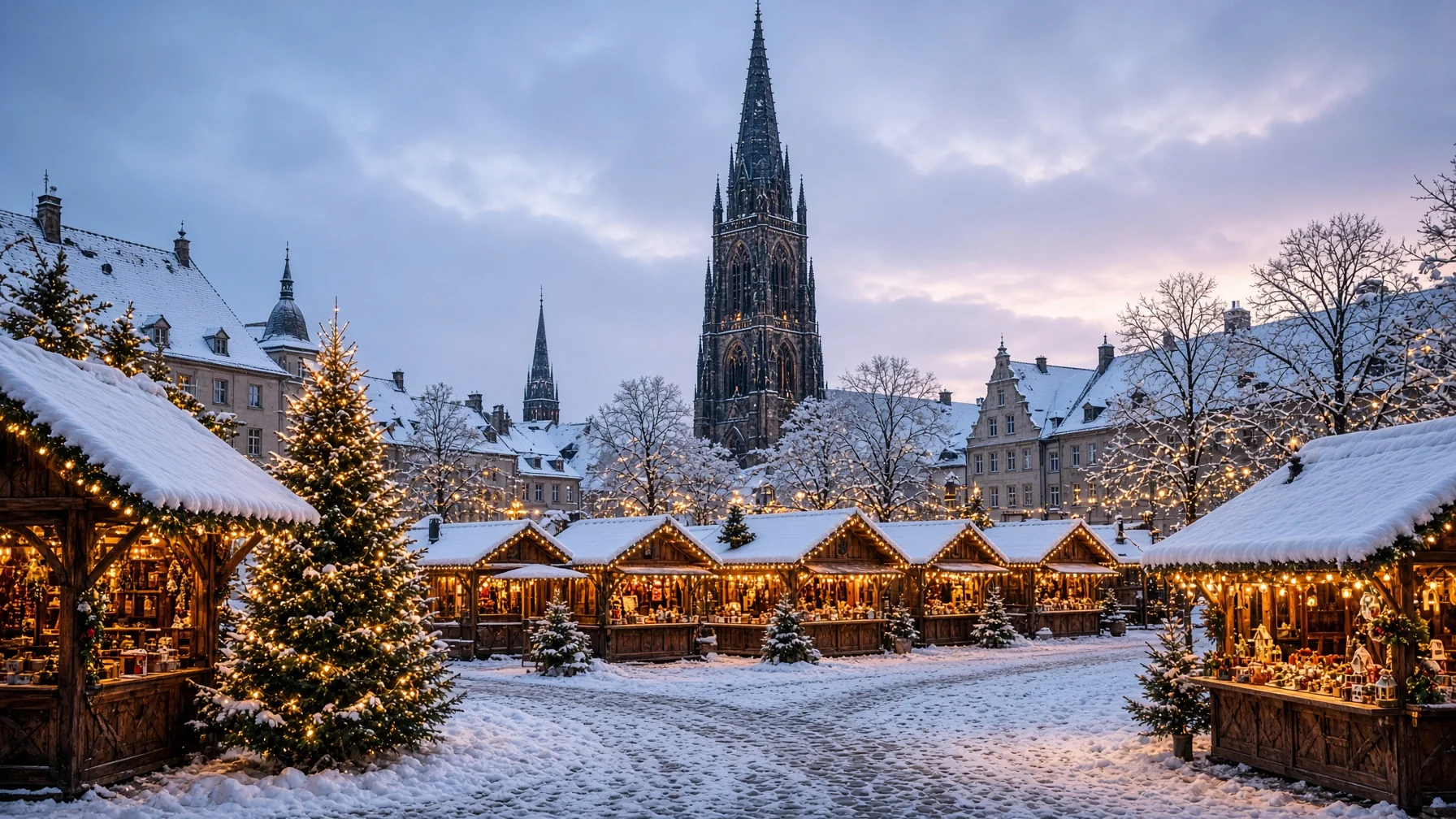
Germany invented the format and still runs the largest examples of it, and the experience is one of scale.
Nuremberg holds the best known of them on its main square, opening with a spoken prologue delivered by a figure in gold who has performed the same role since the 1940s. Its Lebkuchen has been baked in the city since the Middle Ages, and the stalls are held to strict rules on what may be sold.
Dresden runs the oldest documented market in Germany, first recorded in 1434, and marks the season with a festival built around a single enormous stollen carried through the streets on the Saturday before the second Advent.
Meanwhile, Cologne takes the opposite approach with several separate markets across the centre, the largest of them directly beneath the cathedral, connected by a short walk or a tram ride.
In addition, Munich keeps its main market on the town hall square where it has stood since the fourteenth century, with a medieval-themed market a few streets away for contrast.
As a result, the German cities suit travelers who want the full scale of the tradition and accept the crowds that come with it.
In addition, the German cities are the most straightforward to combine. The distances between them are short by rail, and a week that takes in two or three of the largest european christmas markets requires no internal flights and very little driving.
The Old-Town Markets: Strasbourg and Salzburg
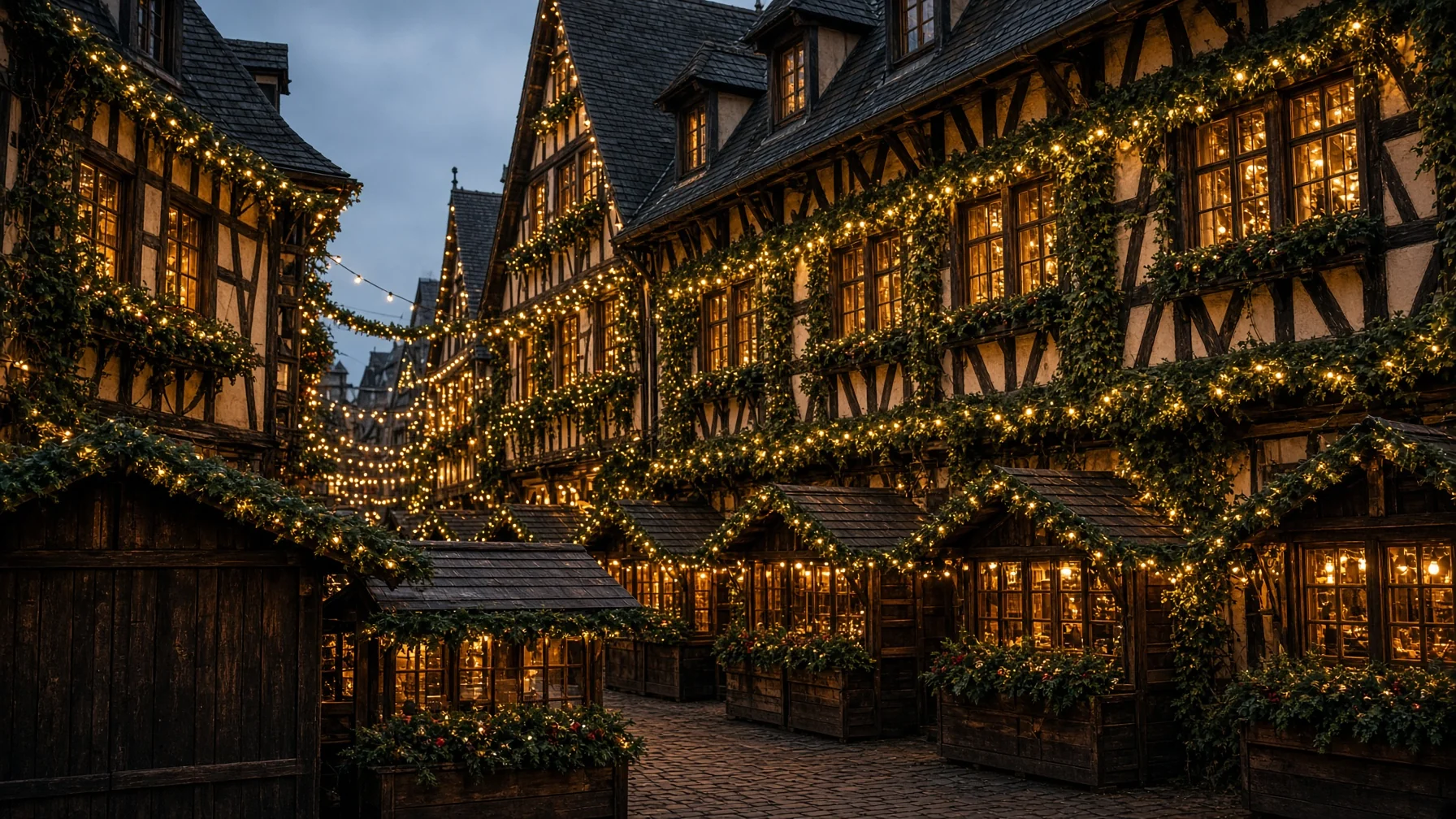
The alternative is a city where the market is distributed rather than concentrated, which changes the pace entirely.
Strasbourg has held its market since 1570, the oldest in France, and rather than one square it fills a dozen places across an island old town that is UNESCO-listed in its own right. The half-timbered facades are decorated at a scale the city takes seriously, and the walk between the markets is as much the point as the stalls.
Here, the Alsatian character is distinct from the German one across the river: different pastries, different mulled wines, and a decorating tradition that is closer to theatre than to commerce.
Meanwhile, Salzburg sets its market in front of the cathedral and the residence, enclosed by baroque facades and backed by the fortress on its rock. It is smaller than the German equivalents and considerably more atmospheric for it.
Next, the surrounding valley holds several village markets, some in castle courtyards, which are reached in half an hour and receive a fraction of the visitors.
Because of this, the old-town cities are the answer for travelers who want the season without the density, and they are where most of the european christmas markets worth returning to are found.
The Swiss Option
Switzerland is rarely the first answer to this question and is often the right one.
Lucerne holds a short, small market by the lake and another in a historic granary hall, with the whole thing running for a matter of days rather than a month. It is the quietest option on this list and it sits inside a town of covered bridges and painted facades.
In contrast, Basel operates at a larger scale across two squares, one beneath the cathedral, and is among the largest in the country while remaining considerably calmer than its German neighbours upriver.
Meanwhile, both cities offer something the others cannot: mountains within an hour, and a rail network that makes a market visit and a day at altitude possible from the same base.
Therefore, the Swiss cities suit families who want the season without committing the entire trip to it. Of the european christmas markets on this list, these are the two that leave the most room for everything else.
How to Use a Market
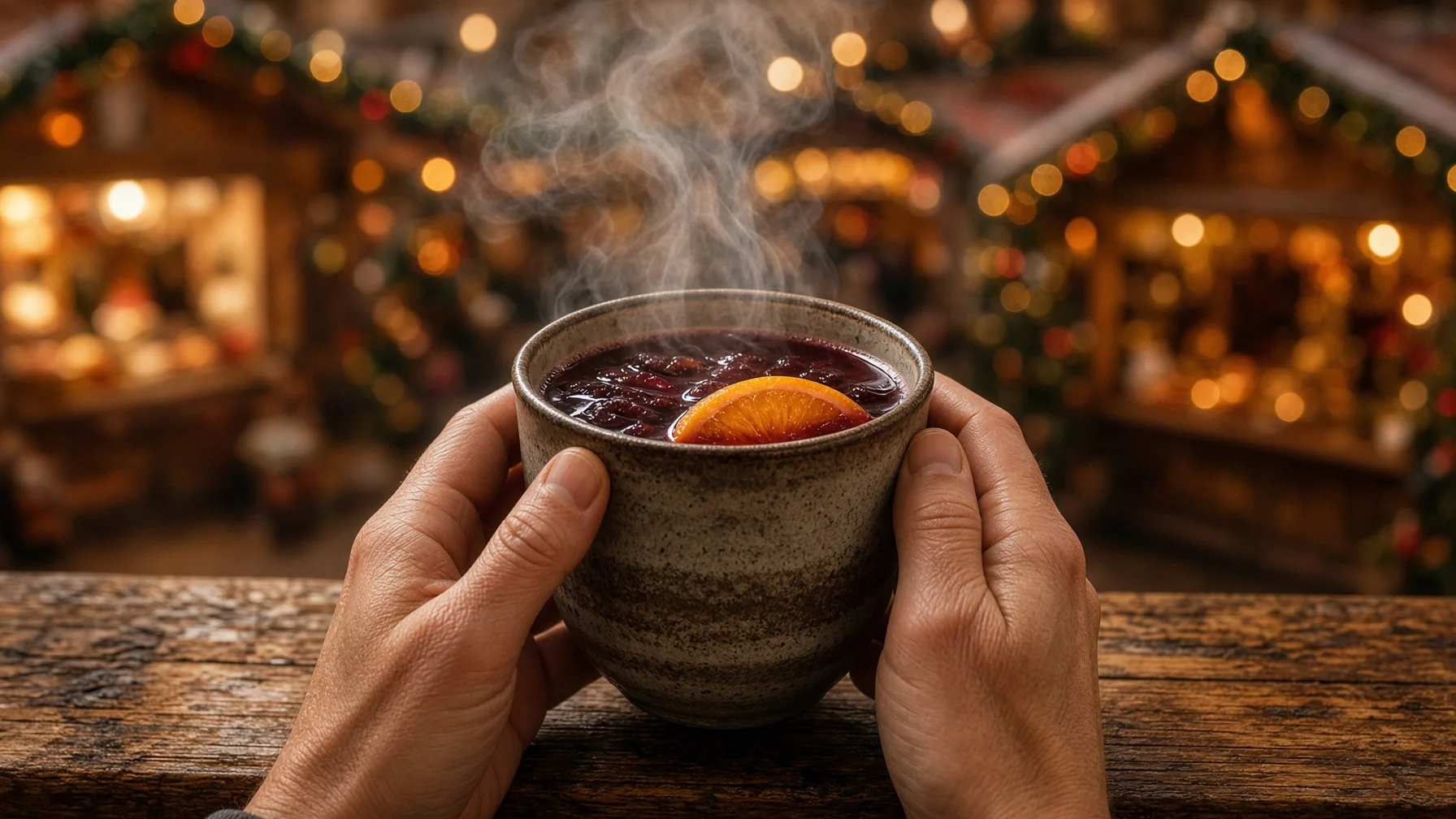
A few conventions govern the stalls, and knowing them removes most of the friction.
Glühwein is served in a ceramic mug against a deposit, refunded when the mug is returned or kept as a souvenir. The mugs are dated and city-specific, and collecting them is a genuine local habit rather than a tourist invention.
Next, the food is regional and specific: gingerbread in Franconia, stollen in Saxony, tarte flambée in Alsace, and roasted chestnuts everywhere. Almost none of it is transferable between cities, which is a large part of why the european christmas markets reward a route rather than a single stop.
Meanwhile, Vienna Rathausplatz deserves a mention as the largest of the Austrian markets, set in front of the neo-Gothic city hall, though the capital itself is a much wider subject than its Advent weeks.
Finally, the rivers connect several of these cities, and the winter sailings that link them are a separate way to travel the same season. For official regional information, see https://www.germany.travel
Lit stalls on a medieval square, a walk between a dozen small markets, and a mug returned for its deposit
Signature Experiences
- The opening prologue on the main square in Nuremberg
- Lebkuchen baked to the city’s medieval rules
- The stollen procession at the Dresden Striezelmarkt
- Several separate markets across the centre of Cologne
- The town hall square market in Munich, held since the fourteenth century
- A dozen small markets across the old island of Strasbourg
- Baroque facades enclosing the cathedral market in Salzburg
- Castle courtyard markets in the valley beyond the city
- Lakeside stalls and a granary hall in Lucerne
- Cathedral square and old town squares in Basel
- A dated mug of Glühwein returned for its deposit
- The city hall market at Vienna Rathausplatz
Explore more Europe journeys: EscapeXperts curates luxury Europe journeys across the region. To shape the next itinerary, speak with an EscapeXperts travel advisor.
Ready to Begin the Journey?
Advent travel is decided by the city and by the week, both of which are fixed long before the season starts. At EscapeXperts, we place the visit in the quiet half of the calendar and build the days around the market rather than inside it, combining seamless logistics, private guiding and curated exploration.
Why Travel in Advent with EscapeXperts
The difference between a market that charms and one that overwhelms is the shape of the city holding it and the day of the week it is seen on. At EscapeXperts, we read the european christmas markets by character rather than by size, then time the visit so the streets are still walkable.