Resorts compared: Nine, across three countries
Compared on: Terrain · village character · the table
Countries: France · Switzerland · Austria
Season: December to April, with glacier skiing beyond it
Luxury Ski Resorts in Europe: What Actually Separates Them
By the fourth resort, the skiing is rarely the deciding factor. The luxury ski resorts Europe has built over a century all deliver reliable snow, fast lifts and enough terrain for a week; what differs is the village at the bottom and the hours spent in it.
Three things separate them in practice: the size and character of the linked terrain, whether the village is a real town or a built resort, and what the table looks like at eight in the evening.
At EscapeXperts, we compare Alpine resorts on those three axes rather than by reputation, because the reputations were largely established fifty years ago.
The Three Questions That Decide the Week
Terrain is the easiest to measure and the least differentiating at this level. Every resort here holds enough for a week, and the meaningful question is what kind: linked and vast, or compact and steep.
Village character is where the divergence begins. Some of these places were medieval towns before anyone skied, some were farming hamlets, and some were designed from nothing on a slope in the 1940s. That history is visible in every street.
Meanwhile, the table is the axis most often ignored in the planning and most often remembered afterward. A resort with a serious restaurant culture changes the shape of the day, because lunch on the mountain becomes an event rather than a refuelling stop.
Therefore, the choice among luxury ski resorts Europe offers comes down to which of the three matters most to the group, and they rarely agree.
The French Alps: Scale and the Kitchen
France built its major resorts as infrastructure, high on the mountain and purpose-designed, which produced the largest linked terrain in the world and villages with no history to preserve.
Courchevel 1850 sits at the top of the Three Valleys, the largest connected ski area anywhere, with several hundred kilometers of linked piste reachable without removing skis. It also holds the densest concentration of Michelin-starred kitchens of any ski resort on earth, along with its own altiport cut into the slope.
Meanwhile, Val d’Isère trades that culinary density for altitude and terrain. Linked with Tignes, it is among the most snow-sure resorts in the Alps, opens early and closes late, and its off-piste has a seriousness that Courchevel’s does not.
In contrast, Megève is the exception in France. It was developed in the 1920s by a Rothschild who wanted a French answer to St Moritz, and it was built to look like a village rather than a resort: cobbles, horse-drawn sleighs, a market square and gentle terrain that suits mixed-ability families better than anywhere else on this list.
As a result, the French choice is a straightforward one between scale, snow and character, and it is difficult to have all three.
In addition, the French resorts share a practical advantage that is rarely listed among their attractions. They sit high enough that the season holds its shape from December to April with little dependence on the weather below, which is not true of every candidate among the luxury ski resorts Europe markets at this level.
The Swiss Alps: Villages That Kept Their Own Rules
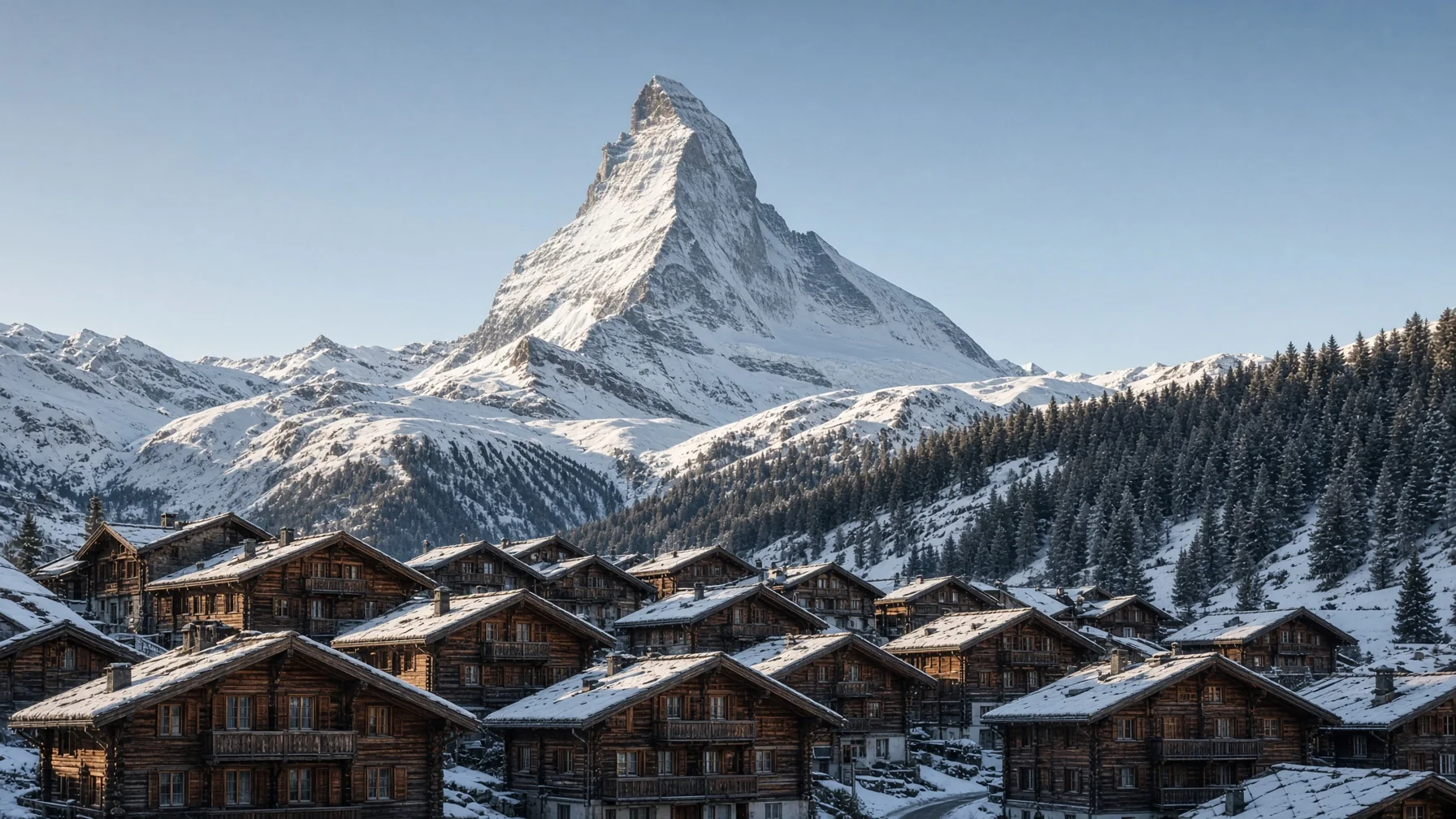
Switzerland’s resorts grew out of existing settlements, and several of them made decisions a century ago that still define them.
Zermatt banned combustion vehicles and has never reversed it. Arrival is by train, the streets carry electric carts and horse-drawn sledges, and the Matterhorn stands at the end of the main street. Its lift system reaches the highest point in Europe accessible by cable car, with glacier skiing available in summer and a link across the ridge into Italy for lunch.
Next, Verbier is the freeride capital of the Alps, with a large linked area and a reputation built on what happens off the marked runs. Its village is more social and considerably younger in tone than its neighbors.
St Moritz in the Engadin is where winter tourism was invented, on a hotelier’s wager in 1864 that his summer guests would return in the cold. It sits on a high sunlit plateau, and its winter calendar includes horse racing on the frozen lake, which says most of what needs saying about the place.
Meanwhile, Gstaad is the deliberate understatement of the group: several separate small mountains rather than one system, a village that discourages display, and a clientele that has been coming for generations.
Because of this, Switzerland offers the widest spread in tone among the luxury ski resorts Europe keeps in this category, from car-free formality to open-field freeride.
The Austrian Alps: Old Towns and Managed Crowds
Austria’s resorts are towns first, which changes the texture of the week considerably.
Lech am Arlberg is the quiet answer for travelers who want the terrain without the crowd. It sits within a very large linked area and caps the number of skiers admitted to it each day, which is unusual in the Alps and immediately noticeable on the mountain.
Its dining is a genuine strength rather than a marketing line, with several serious kitchens in a village of a few thousand residents, and a hospitality tradition that runs on family ownership rather than international brands.
In contrast, Kitzbühel is a medieval walled town with painted facades and a working high street that would exist without the skiing. Its terrain is lower and less snow-sure than the high French resorts, and its January downhill race is the most demanding on the World Cup circuit.
Therefore, Austria suits travelers who want the mountains to be part of a place rather than the entire reason for it. Among the luxury ski resorts Europe offers, these two are the least likely to feel like a resort at all.
Choosing by What Happens After the Lifts Close
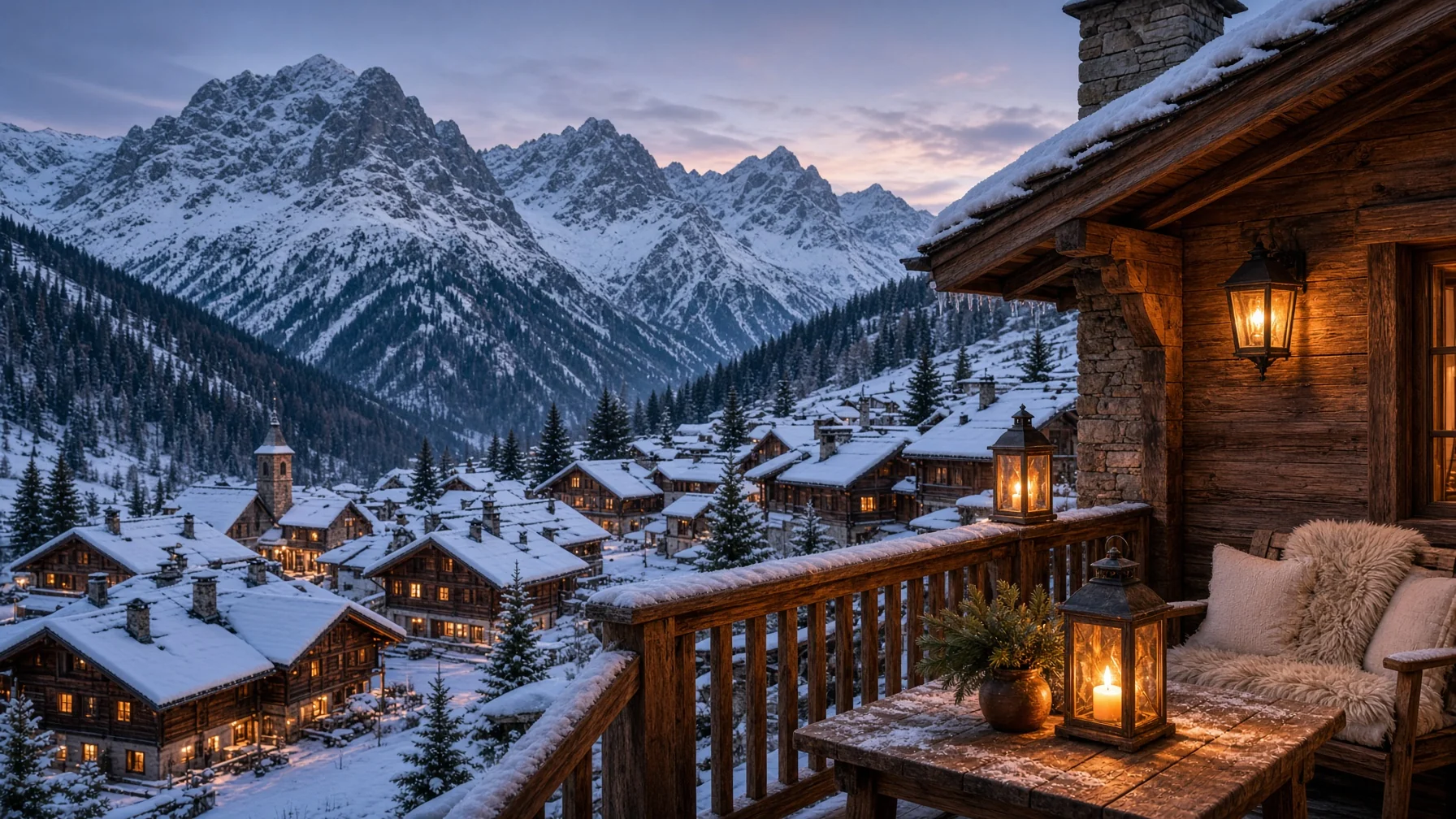
The clearest way to choose is to work backward from the evening.
For a group that treats dinner as the centre of the day, Courchevel and Lech are the two resorts where the kitchens justify the trip on their own. For a group that wants a town with its own life, Kitzbühel and Zermatt hold it, in very different registers.
Meanwhile, for skiers whose priority is the mountain itself, Val d’Isère and Verbier deliver the most demanding terrain, and Zermatt the longest season by a wide margin.
Next, families with mixed abilities are best served by Megève and Gstaad, where the gentler terrain and the compact villages remove most of the logistics from the day. For a family week, those two are the luxury ski resorts Europe consistently gets right.
Finally, the calendar matters as much as the choice. January is the quietest month with the coldest snow, February carries the European school holidays across all three countries, and March delivers the longest days and the softest afternoons. For official regional information, see https://www.myswitzerland.com
Six hundred kilometers of linked piste, a village with no cars, and a table worth the descent
Signature Experiences
- Linked skiing across the whole of the Three Valleys
- Michelin kitchens at altitude in Courchevel 1850
- Snow-sure high terrain and early openings in Val d’Isère
- Horse-drawn sleighs through the cobbled centre of Megève
- Arrival by train into car-free Zermatt
- Lunch across the ridge in Italy beneath the Matterhorn
- Off-piste descents from the high lifts at Verbier
- Racing on the frozen lake at St Moritz in the Engadin
- Several separate small mountains above Gstaad
- Capped skier numbers on the slopes of Lech am Arlberg
- The medieval high street of Kitzbühel in January
- Long March afternoons on south-facing pistes
Ready to Begin the Journey?
The fourth ski week is chosen on details rather than on brochures. At EscapeXperts, we match the resort to the group, the terrain to the ability and the week to the school calendars of three countries, combining seamless logistics, private instruction and curated exploration.
Why Travel to the Alps with EscapeXperts
Alpine resorts are compared on their pistes and remembered for their villages. A car-free arrival, a capped lift system or a market square that predates the skiing will shape a week more than a hundred extra kilometers of terrain. At EscapeXperts, we read the luxury ski resorts Europe holds against how a group actually spends its days, which is where the differences finally show.