Best months: Late December to February
Quietest months: March to November
Country: Uruguay
Region: José Ignacio · Manantiales · La Barra · Garzón
Jose Ignacio, Uruguay: The Quiet Side of the Atlantic Coast
Jose Ignacio, Uruguay, is a former fishing village on a small point of rock and sand in the department of Maldonado, some forty minutes east of Punta del Este. Its permanent population numbers only a few hundred, yet for a handful of summer weeks it hosts one of the most discreet beach crowds in South America.
Most visitors reach this coast through Punta del Este and its resorts. At EscapeXperts, we treat Jose Ignacio, Uruguay, as the reverse of that picture: unpaved lanes, low houses, two beaches and a lighthouse. Inland, the village of Garzón and the Atlantic vineyards complete the destination.
A Village on a Point Between Two Beaches
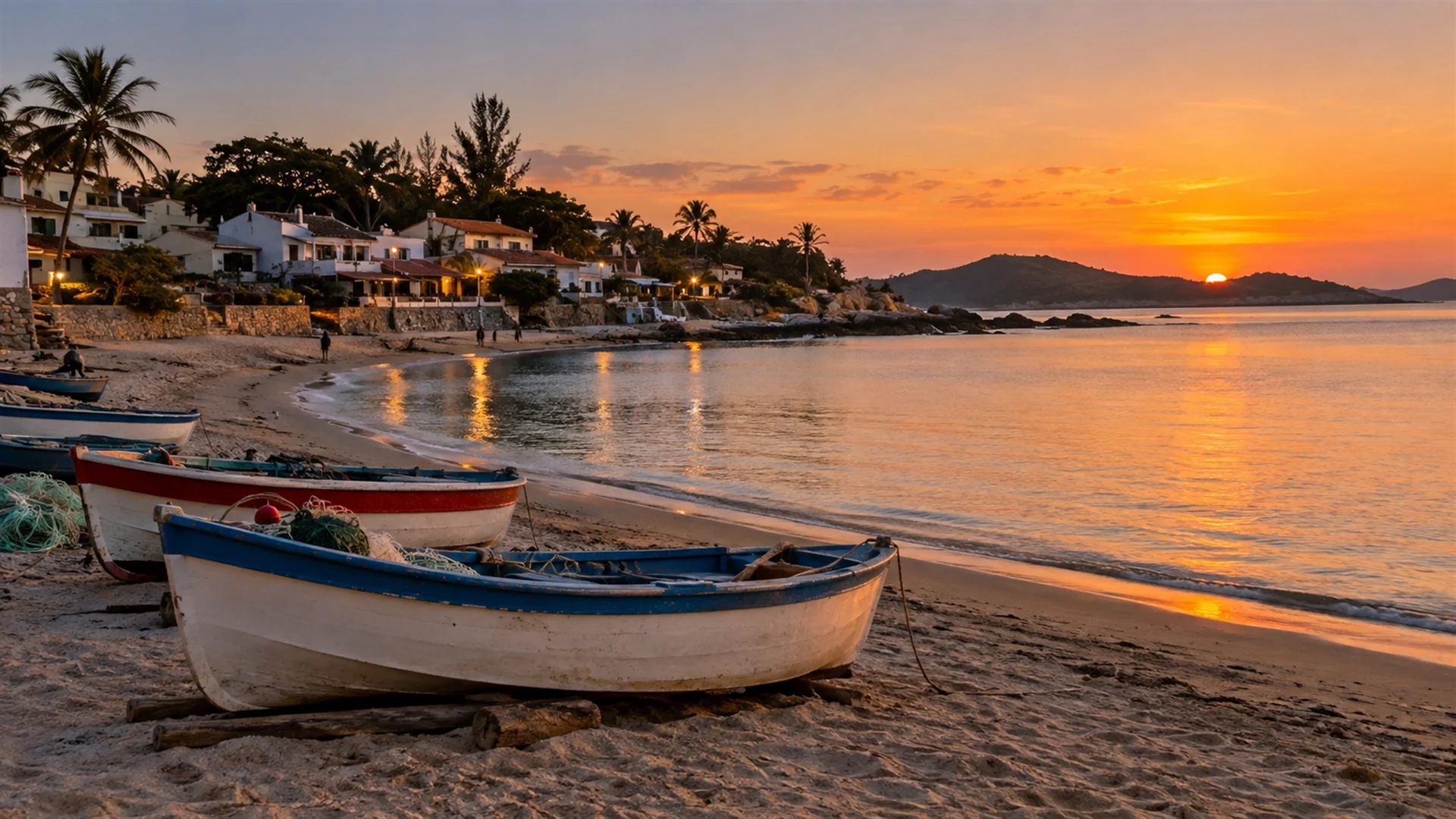
The village occupies a narrow headland, and its geography defines the day. On one side lies Playa Mansa, a sheltered curve of calm water where the fishing boats still come ashore. On the other lies Playa Brava, open to the Atlantic, with steady surf and a long, unbroken horizon.
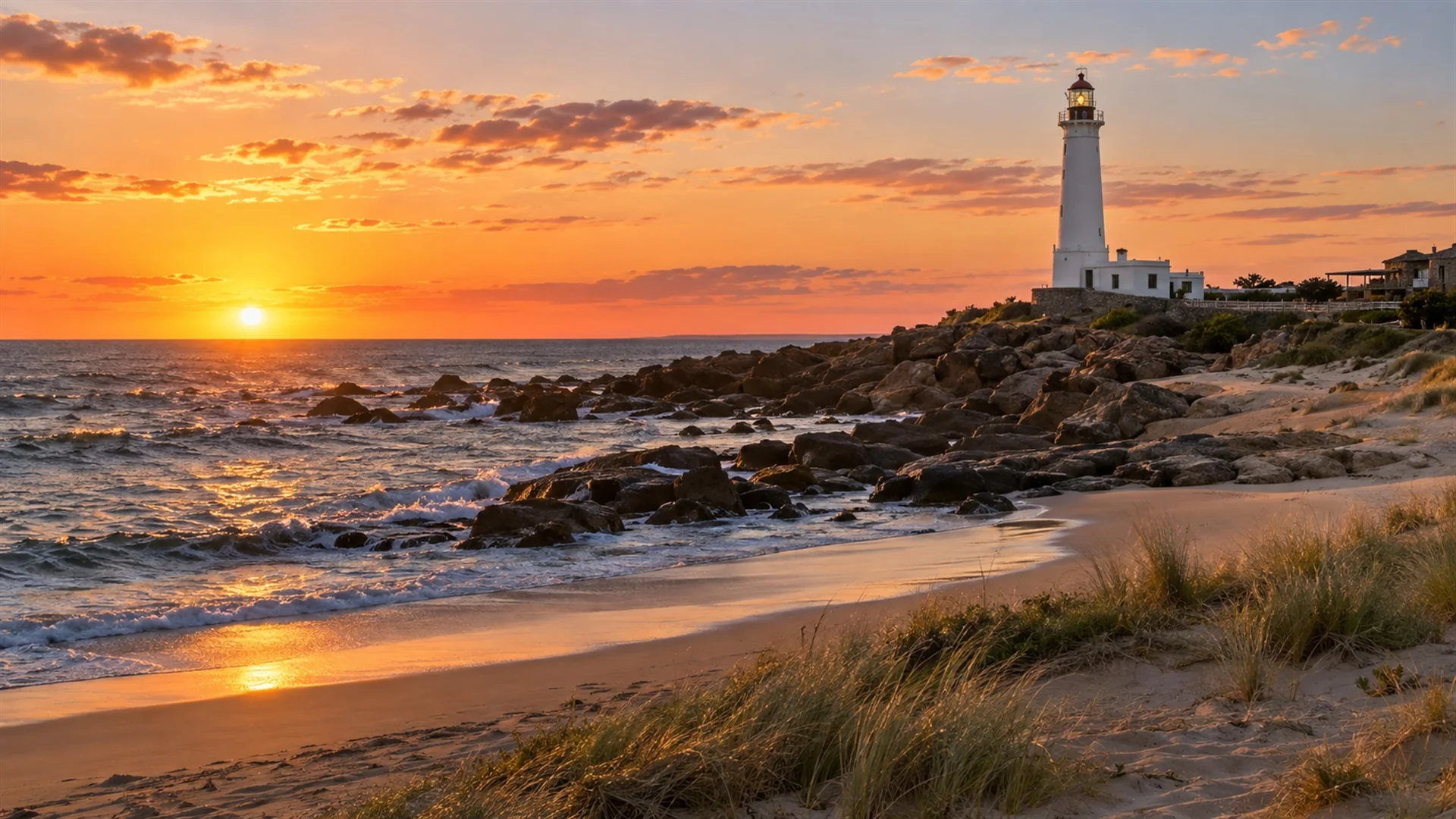
As a result, the rhythm of a stay is simple. Mornings belong to whichever beach the wind allows, and evenings gather on the Mansa side, where the sun sets over the water. Few beach towns on this coast offer both conditions within a short walk.
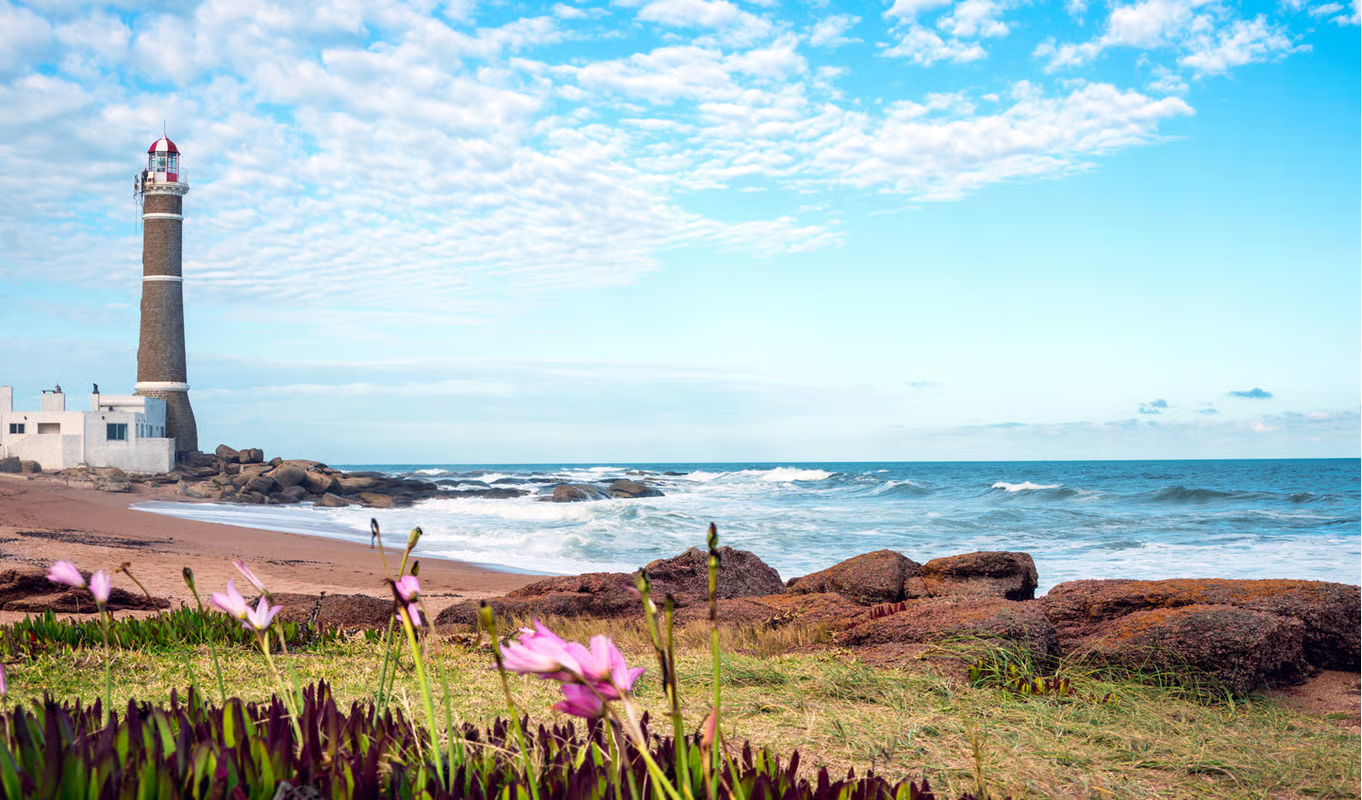
At the tip of the point stands the Faro de José Ignacio, the nineteenth-century lighthouse that remains the village’s reference point. The surrounding streets follow a quiet building code, with low houses of wood, stone and whitewash rather than towers.
Meanwhile, the village keeps its fishing character. Fresh catch still reaches the kitchens directly, and the beachfront parador restaurants cook it over wood fire. This is the essential texture of Jose Ignacio, Uruguay: understated, coastal and deliberately small.
Accommodation follows the same logic. Stays here take the form of private houses, small inns and a few design-led estates, including the Vik properties on the beach and in the hills behind the coast. Here, the choice of house matters more than the choice of hotel brand, because most of the day is lived on its terrace.
A Season Measured in Weeks, Not Months
The most important fact about this coast is how short its season is. The austral summer runs from December to March, but the village is fully open and fully occupied only from the Christmas holidays to the end of January. Early February still feels summery, though the crowd begins to thin.
Therefore, availability is concentrated in very few weeks. The best rooms and villas for New Year are committed long in advance, often by returning guests from Buenos Aires, Montevideo and São Paulo who spend the same fortnight here every year.
Outside that window, the character changes completely. From March, many restaurants and boutiques reduce their hours or close, and the lanes return to residents. For travelers who value silence over atmosphere, late February and March offer warm days, open beaches and a village almost to themselves.
Winter, from June to August, is cool and windy, with a wild beauty on the Brava side. Because of this, it suits a short stay combined with the vineyards inland rather than a beach holiday.
Later in the year, one short exception interrupts the quiet. Holy Week, known in Uruguay as Semana de Turismo, briefly reopens houses and restaurants for a few days of autumn light. Beyond that week, the village keeps a residents’ pace until the following December.
Jose Ignacio and Punta del Este: Two Different Summers
The contrast with Punta del Este is the clearest way to understand Jose Ignacio, Uruguay. Punta is a city resort, with high-rise apartments, a marina and a busy social calendar. It is where the coast gathers.
In contrast, the villages to the east grow quieter the further one travels. La Barra, just across the creek from Punta, keeps a livelier summer evening scene. Next comes Manantiales, with its surf beaches and hillside houses facing the ocean.
José Ignacio sits at the end of that sequence, and the difference is intentional. The village has no nightlife to speak of, few shops and no large hotels. Instead, its guests come for long lunches, empty stretches of sand and privacy.
For many of our travelers, this is precisely the point. Punta del Este remains a short drive away for a dinner or a day of activity, while the evenings return to the calm of the point.
As a result, travelers who already know Punta del Este often arrive here looking for its opposite. The same coastline, the same summer and the same light are available, but without the traffic, the queues or the need to be seen.
Garzón and the Atlantic Vineyards Inland
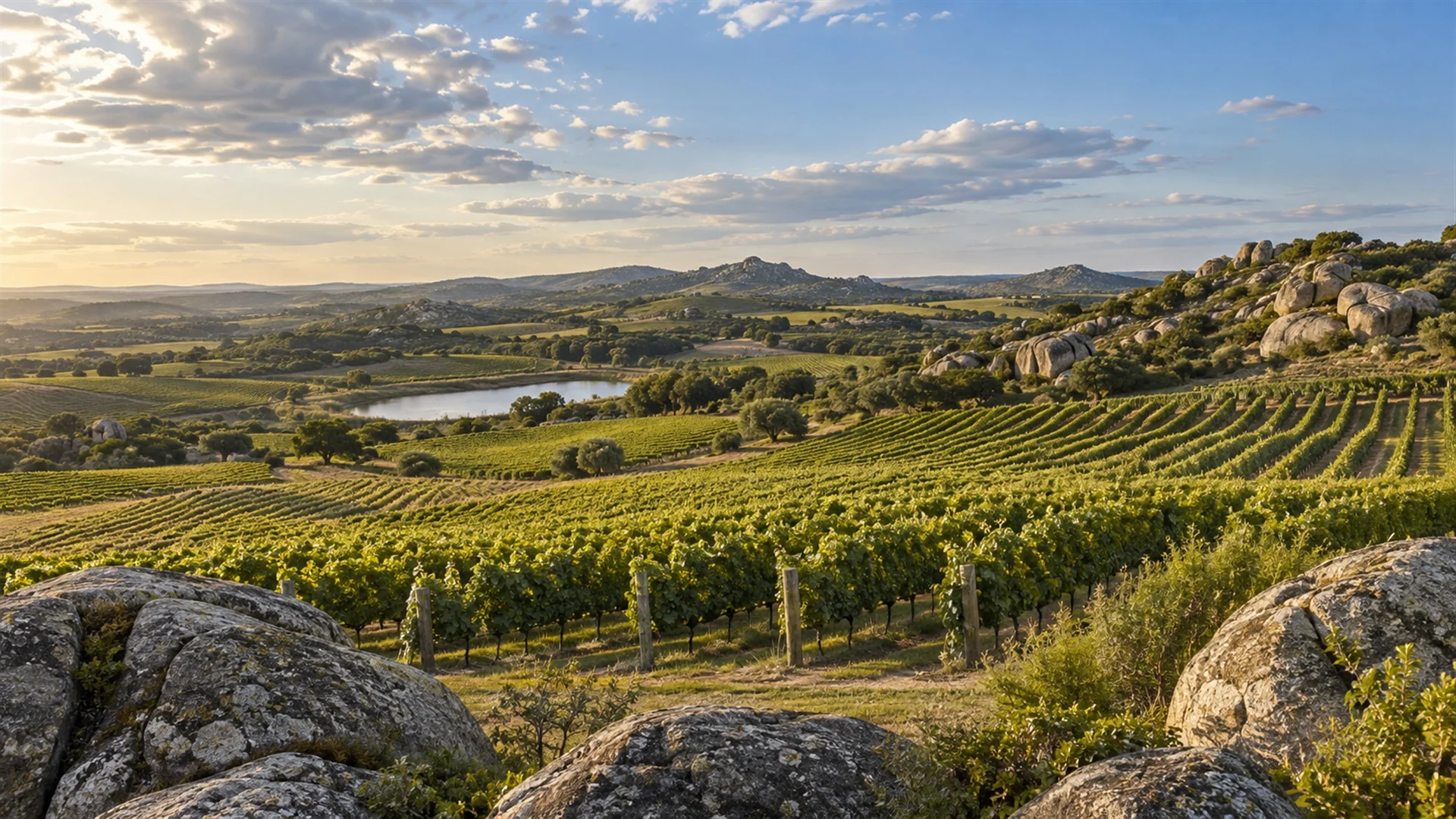
Beyond the coast, the landscape opens into cattle country, rolling hills and granite outcrops. East of the village, the wide Laguna Garzón is crossed by a distinctive circular bridge, and the lagoon itself draws birdlife and quiet kayak outings on calm mornings.
Further inland lies Garzón, a small nineteenth-century village that had nearly emptied before chef Francis Mallmann opened his restaurant and hotel on its plaza. Today it offers a slower counterpoint to the coast, with a single square, a handful of stays and a strong culinary reputation.
Nearby, Bodega Garzón has helped place the region on the wine map. Its vineyards grow on granite hillsides close enough to the Atlantic to feel the ocean air. In addition, a visit introduces tannat, the red grape most associated with Uruguay.
From the start, a day inland adds depth to a stay in Jose Ignacio, Uruguay. Lunch among the vines, a slow drive through open estancia country and an evening return to the sea make a natural rhythm.
Arriving from Montevideo and Buenos Aires
Access is straightforward once the options are clear. From Montevideo’s Carrasco International Airport, the drive east along the coast takes roughly two to two and a half hours, passing Punta del Este along the way. For official travel information, see https://www.uruguaynatural.com
From Buenos Aires, travelers usually choose between two routes. A short flight crosses the Río de la Plata to Laguna del Sauce airport near Punta del Este, less than an hour by road from the village. Alternatively, a ferry crosses to Montevideo or Colonia, followed by the drive along the coast.
Beyond Punta, the coastal road continues east through La Barra and Manantiales before reaching the turn to the point. Meanwhile, arrivals timed for late afternoon reach the village in time for the sunset over Playa Mansa, which is the most natural introduction to the place.
Finally, during the peak weeks, flights and ferries fill as quickly as the villas themselves. Therefore, private transfers and travel days should be secured together with accommodation, so that arrival in Jose Ignacio, Uruguay, is as unhurried as the stay that follows.
A lighthouse point, two beaches, and vineyards within sight of the sea
Signature Experiences
- Sunset on Playa Mansa as the fishing boats return
- Long mornings on the open surf of Playa Brava
- Evening walk to the Faro de José Ignacio
- Wood-fired lunch at a beachfront parador
- Kayak outing on the calm waters of Laguna Garzón
- Vineyard lunch and tannat tasting at Bodega Garzón
- Slow afternoon on the village plaza of Garzón
- Surf beaches and hillside views in Manantiales
- Private dinner in Punta del Este and a quiet return
- Late-season beach days in an almost empty village
Let’s Design Your Experience
A stay on this coast depends on a few weeks and a few addresses. At EscapeXperts, we secure the right house for the right fortnight, combining seamless logistics, private experiences and curated time inland among the vines.
Why Travel to Jose Ignacio with EscapeXperts
José Ignacio rewards travelers who understand its calendar and its restraint. The season is brief, the village is small and the best houses are rarely advertised. At EscapeXperts, we plan the timing, the arrival route and the days inland at Garzón, so that Jose Ignacio, Uruguay, feels exactly as it should: quiet, coastal and entirely your own.