Suggested stay: Five to seven nights per region
Harvest window: Late August in the south to November on the Mosel
Countries covered: France · Italy · Germany · Spain
Regions: Champagne · Bordeaux · Burgundy · Piedmont · Mosel
European Wine Regions as Places to Stay, Not to Tour
Most travelers experience european wine regions as a day out: a car, three appointments and a return to a city hotel by evening. Staying on the estate is a different proposition, and it is the one that changes how the region is understood.
A working property has a rhythm that a visitor never sees. The pickers eat at seven, the presses run at night during harvest, and the winemaker walks the rows before breakfast because the decision on when to pick is made in the vineyard rather than in the cellar.
At EscapeXperts, we plan wine country as accommodation first and tasting second, with the week placed against the harvest calendar of the specific region.
Staying on an Estate Is Not the Same as Visiting One
The distinction is practical rather than semantic, and it decides the shape of the trip.
A tasting visit is an appointment. It runs an hour or two, follows a fixed route through the cellar and ends at a counter, and the estate is presented rather than lived in.
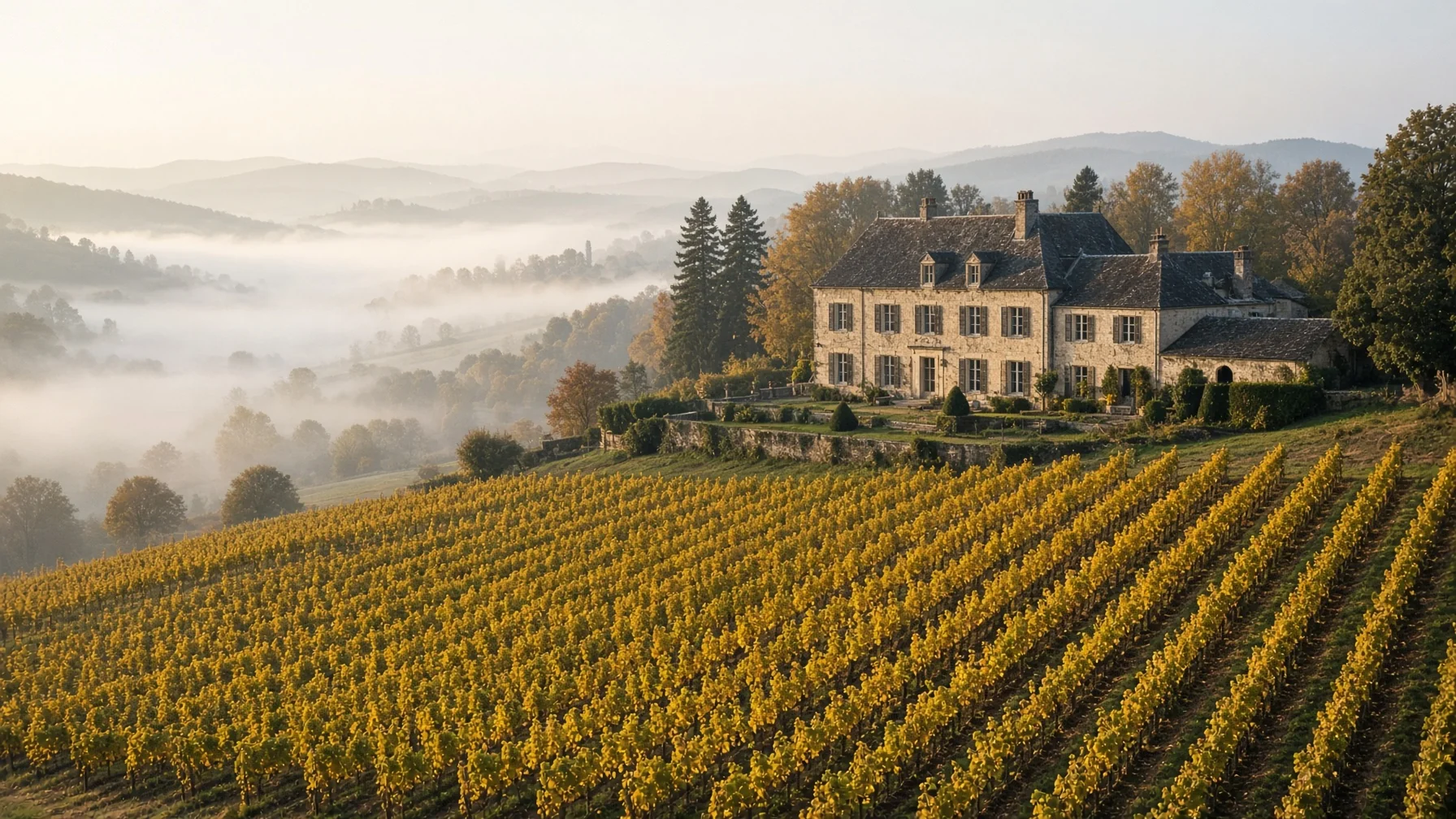
In contrast, an estate stay places the guest inside the operation. Meals are taken with the family’s own wines, the cellar is accessible outside visiting hours, and the vineyard is walkable at first light without arranging anything.
Here, the number of properties that genuinely offer this is smaller than the search results suggest. Many hotels sit among vines without owning any; a working estate with rooms is a different category, and there are perhaps two or three in each of the major appellations.
Therefore, the property list is short and it books early. Across the european wine regions, harvest weeks at the estates with rooms are committed a year in advance.
Champagne: Every Grape Picked by Hand
Champagne is the most regulated of the european wine regions and the most surprising to visit, because almost none of what happens there resembles the image the wine carries.
The appellation sets a harvest start date each year rather than leaving it to individual growers, and mechanical picking is prohibited outright. Every grape in every bottle is cut by hand, because the fruit must reach the press whole to keep the juice pale.
Meanwhile, the cellars are the other half of the story. Reims and Épernay sit above chalk quarries cut by the Romans, now holding hundreds of kilometers of tunnels at a constant temperature, and the scale underground is the thing photographs consistently fail to convey.
Next, the harvest itself falls in the second half of September in most years, and the region fills with tens of thousands of seasonal pickers, which is when the villages are at their most alive and their least available.
Because of this, September is both the best and the hardest month here, and the growers’ own small houses in the villages are where the stays are found rather than in the famous names.
Bordeaux and Burgundy: Two Ideas of an Estate
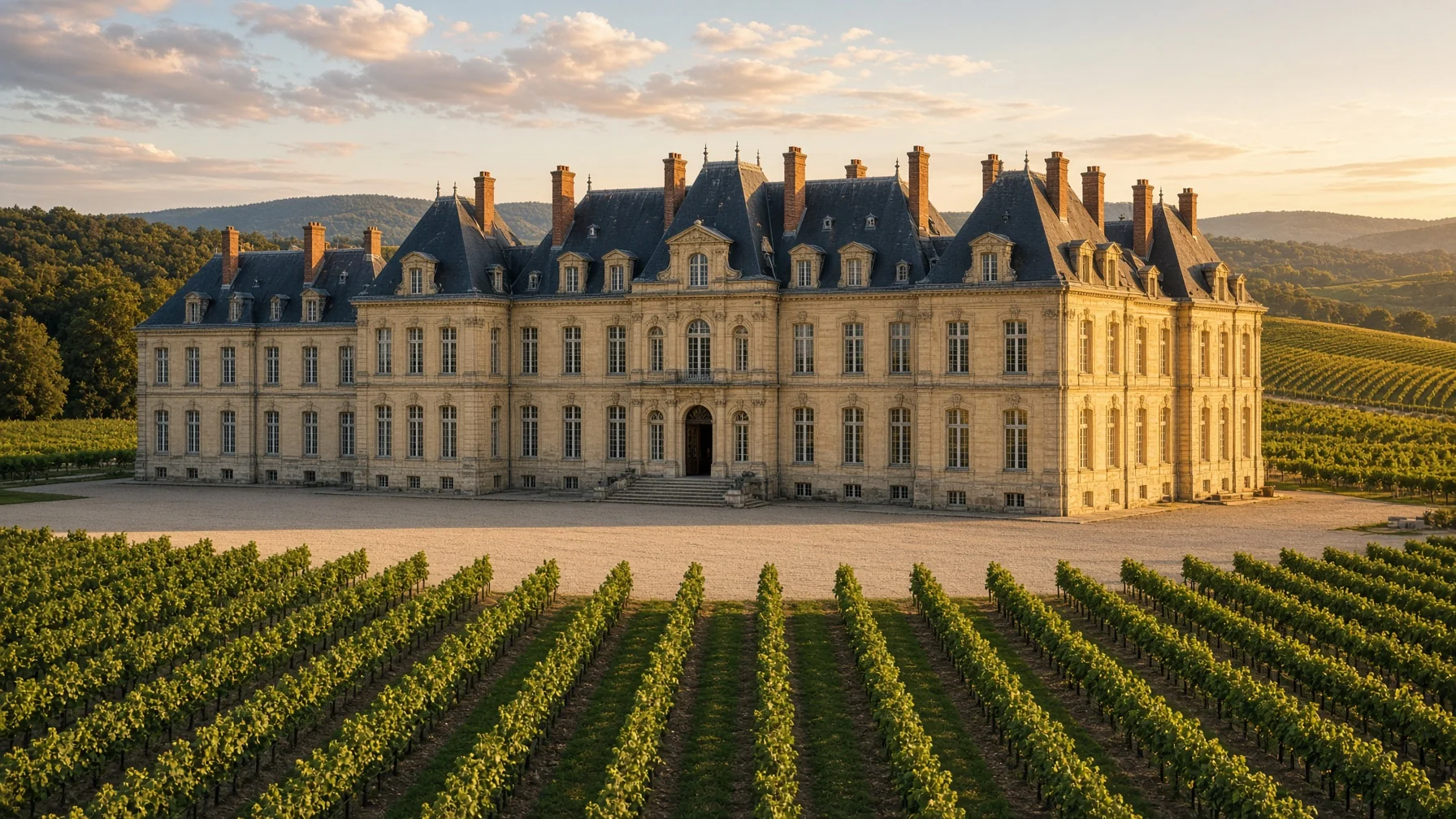
The two great French regions are opposites in structure, and the difference determines what a stay in each one feels like.
Bordeaux is built on large single properties, châteaux with their own vineyards, cellars and, increasingly, rooms. Château Pape Clément in the Pessac-Léognan appellation is among the oldest continuously producing estates in France and keeps guest accommodation on the property itself, a short drive from the city.
Its harvest runs late: whites from the end of August, reds through the second half of September and into October, with the Médoc typically the last to come in.
In contrast, Burgundy is fragmented into tiny parcels, many of them a fraction of a hectare, divided among dozens of growers within a single named vineyard. There are few grand châteaux and many small domaines, and the stays are in village houses rather than on estates.
Meanwhile, its harvest is early, usually the first half of September, and it is short. The best growers pick their parcels over a matter of days, which makes timing a visit around it genuinely difficult and worth the effort. Of all the european wine regions, this is the one where the dates move most and announce themselves latest.
Piedmont: Where Nebbiolo Comes In Last
Piedmont in the northwest of Italy holds the longest autumn of any of the European wine countries, and it is the region that rewards October travel most completely.
The Langhe hills around Barolo are a UNESCO cultural landscape, terraced with vines that turn deep red and gold through the month. Nebbiolo is one of the last varieties picked anywhere in Europe, usually in the second half of October, weeks after the whites have gone in.
Here, the fog that gives the grape its name settles in the valleys in the mornings and burns off by ten, leaving the hilltop villages standing above a white layer that hides everything below.
In addition, the region’s white truffle season overlaps precisely with the harvest, from October into November, which makes it the single most concentrated food and wine window in Europe.
Next, the stays are in restored monasteries and farmhouses on the ridges rather than in large hotels, an arrangement that suits the european wine regions of northern Italy better than any resort model. For official regional information, see https://www.italia.it
The Mosel and the Rest of the Map
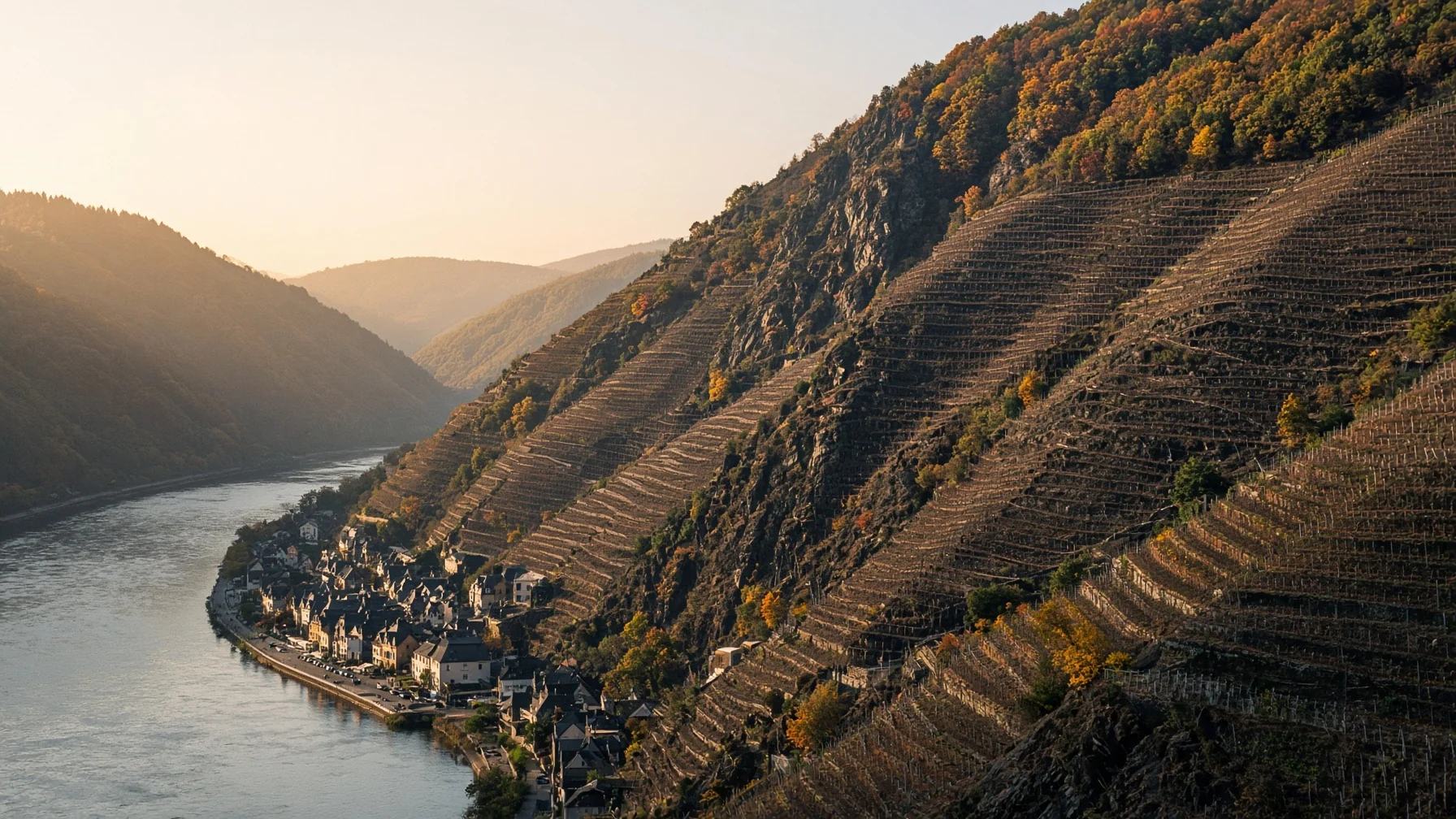
The Mosel in western Germany closes the European harvest year and is the most physically extreme wine landscape on the continent.
Its slopes reach gradients that machinery cannot touch, worked by hand with the help of winches, on blue slate that holds the day’s heat and releases it overnight. That thermal effect is why Riesling ripens this far north at all.
Meanwhile, its harvest is the latest in Europe, running through October and often into November for the sweeter styles, which are picked selectively bunch by bunch over several passes. A restored castle above the river at Lieser is among the estates that now keep rooms.
Beyond it, the map extends further than most itineraries allow. La Rioja in northern Spain harvests through late September and October, and Chianti Classico picks its Sangiovese in September on the Tuscan ridges, both with estates that accommodate guests.
Finally, the whole calendar reads as a single wave moving north. The vendange begins in the southern French vineyards in late August and finishes on the Mosel in November, which means a traveler can follow the harvest for three months without ever seeing the same region twice.
Because of this, the sequence matters as much as the choice. Two european wine regions taken four weeks apart deliver two harvests rather than one, which is the argument for splitting a wine journey across a season instead of packing it into a single fortnight.
Presses running at night, fog in the valleys by seven, and slate that holds yesterday’s heat
Signature Experiences
- Hand-picking weeks in Champagne during the fixed harvest window
- Roman chalk cellars beneath the villages of the appellation
- A room on the estate at Château Pape Clément
- The late red harvest across Bordeaux in October
- Village domaines and fragmented parcels in Burgundy
- Vineyard fog at first light in the Langhe hills
- The last Nebbiolo picked around Barolo in late October
- White truffle season overlapping the Piedmont harvest
- Winch-worked slate slopes above the river on the Mosel
- Late selective picking of Riesling into November
- September Sangiovese on the ridges of Chianti Classico
- Following the vendange north across three months
Ready to Begin the Journey?
Wine country is booked by the calendar rather than by the destination, and the estates with rooms are a short list in every appellation. At EscapeXperts, we hold the weeks that matter and arrange access to the cellars that do not receive visitors, combining seamless logistics, private guiding and curated exploration.
Why Travel Through the Vines with EscapeXperts
A tasting is an hour and a harvest week is a different kind of travel altogether. The properties that allow it are few, they are committed a year ahead, and each region opens on its own date. At EscapeXperts, we place the week inside the working calendar of the european wine regions rather than alongside it.