
Duration: 7 to 10 nights recommended
Best months: October to March
Country: Argentina
Region: El Calafate · El Chaltén · Los Glaciares National Park · Patagonian steppe
An Argentine Patagonia Travel Guide: Ice, Granite and Open Steppe
This Argentine Patagonia travel guide covers the southern Argentine side of a region that most travelers imagine as a single place. Here, the journey is defined by three experiences: the Perito Moreno Glacier near El Calafate, the granite spires of Fitz Roy above El Chaltén, and the estancia, the historic ranch that remains the most authentic way to stay.
At EscapeXperts, we separate the two Patagonias from the start. The Argentine side is wider, drier and more open, and it rewards a slower route across the steppe rather than a single park.
Why an Argentine Patagonia Travel Guide Starts with Two Countries
Patagonia spans the southern tip of South America, divided between Argentina and Chile by the Andes. On the Chilean side, the landscape is shaped by a wetter Pacific climate, rainforest and Torres del Paine. In contrast, the Argentine side opens east of the mountains into the vast, wind-shaped Patagonian steppe.
Because of this, the two sides feel entirely different. The Argentine route moves between ice fields, glacial lakes and high granite peaks, connected by long roads through empty grassland. The distances are generous, and the sense of space is part of the experience.
Further north, Bariloche anchors the Lake District, with forests and alpine lakes that suit a separate stay. Far to the south, Ushuaia sits on Tierra del Fuego at the end of the continent. Both are worth combining, but they lie a flight away from the southern core.
Therefore, this Argentine Patagonia travel guide focuses on the heart of the region: El Calafate, El Chaltén and the estancias between them, all within Los Glaciares National Park or on its edge. The park is inscribed on the UNESCO World Heritage List for its ice fields and glaciers.
El Calafate and the Perito Moreno Glacier
El Calafate sits on the southern shore of Lago Argentino, the largest lake in the country. The town serves as the gateway to the southern park, with its own airport and a small selection of refined lodges on the hills above the water.
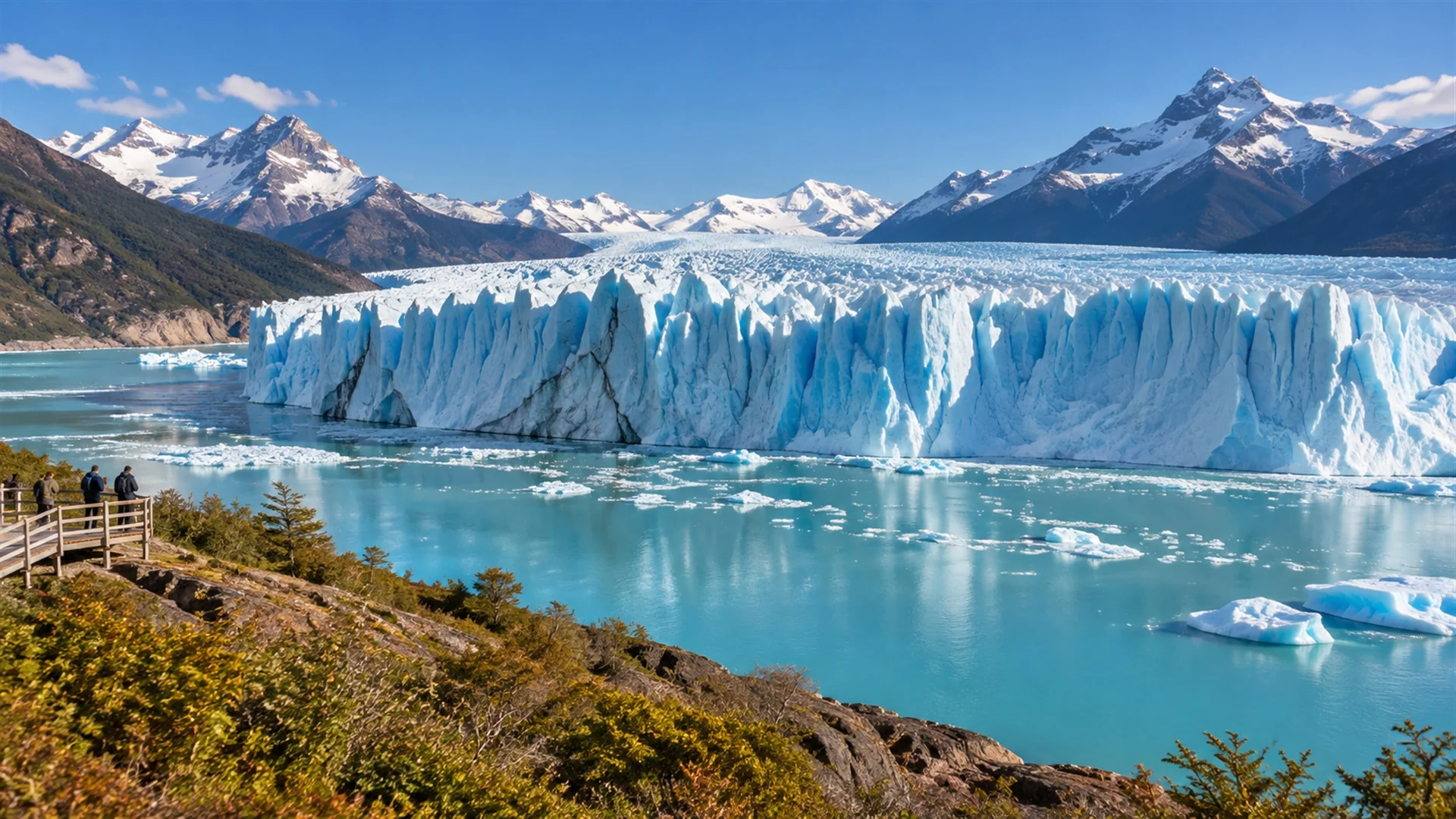
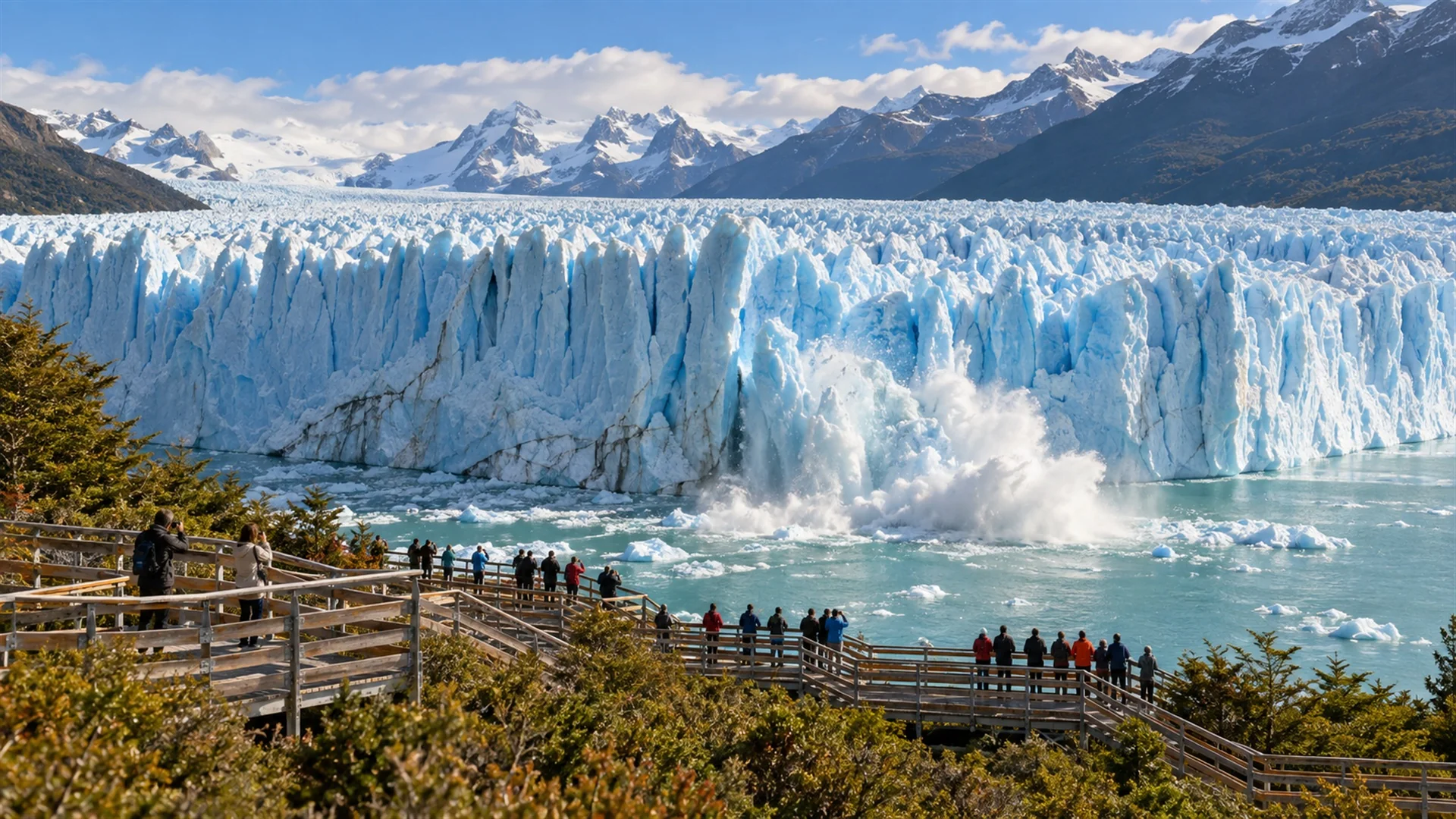
The defining visit is the Perito Moreno Glacier, around an hour and a half by road. Its front rises some 200 feet above the lake and stretches for several miles. Unlike most glaciers in the world, it is not in steady retreat. It remains one of the few that still advances, pushing forward across the water as it calves.
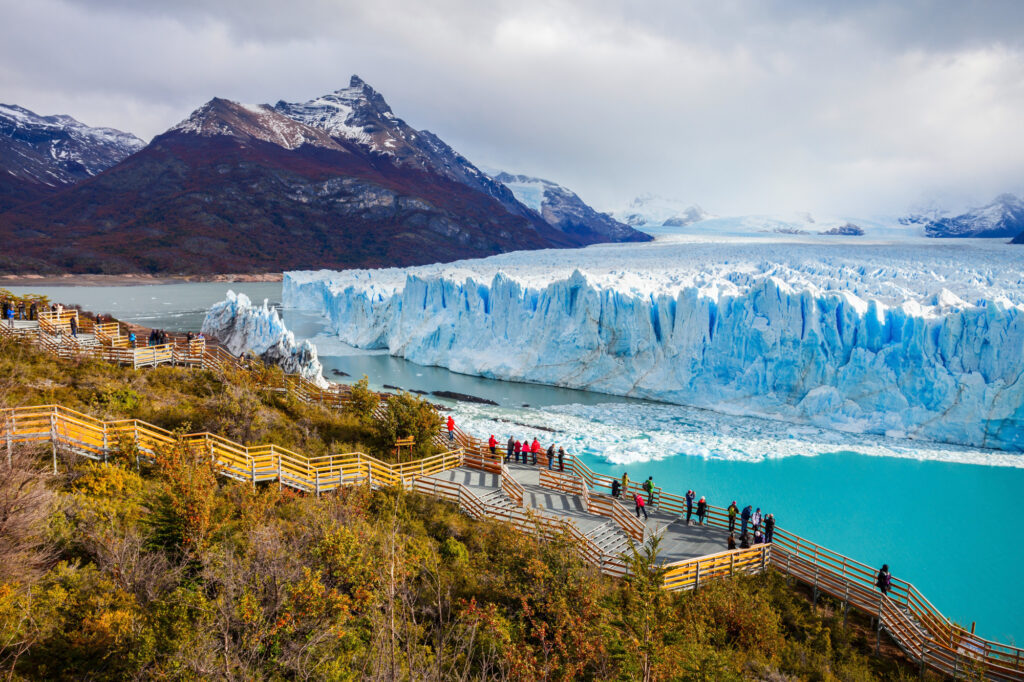
As a result, the glacier feels alive. Sections of ice break away and fall into the lake with a sound like thunder, often after long periods of silence. A network of walkways faces the ice wall directly, allowing an unhurried morning of watching rather than a brief stop.
Witnessing an advancing glacier has a particular meaning. Every few years, the ice front reaches the opposite shore and seals off one arm of the lake. Water then builds behind the ice until it forces a tunnel through the wall, and the arch eventually collapses. The timing cannot be predicted, which is why each visit to the Perito Moreno Glacier shows a slightly different face.
In addition, guided walks on the glacier itself, with crampons and specialist guides, reveal crevasses, blue pools and ridges of compacted ice. For many travelers, this is the most memorable day of the entire trip.
Later, the afternoon returns to the lodge and the lake. The quality of this first stage sets the pace for the rest of this Argentine Patagonia travel guide.
El Chaltén and the Fitz Roy Massif
Next, the route turns north. El Chaltén lies about three hours by road from El Calafate, across the steppe and along the shore of Lago Viedma. The drive itself is part of the journey, with the peaks growing on the horizon for the final hour.
The village was founded in 1985 and is known as Argentina’s national trekking capital. It sits at the foot of the Fitz Roy massif, whose sheer granite towers rise above surrounding glaciers and forests of southern beech.
Here, the day is organized around walking. Trails leave directly from the village toward viewpoints, lagoons and glacier valleys. Some routes take a few hours, while the full ascent to the lagoon beneath Fitz Roy is a long day that rewards fitter walkers with an extraordinary view.
Meanwhile, the pace can remain gentle. Private guides adapt each route to the traveler, and lodges in and around the village provide comfortable bases after long days outdoors.
Because the two areas are three hours apart, El Calafate and El Chaltén should never be treated as a day trip from each other. Each deserves its own nights within any Argentine Patagonia travel guide.
The Estancia: How Patagonia Has Always Been Lived
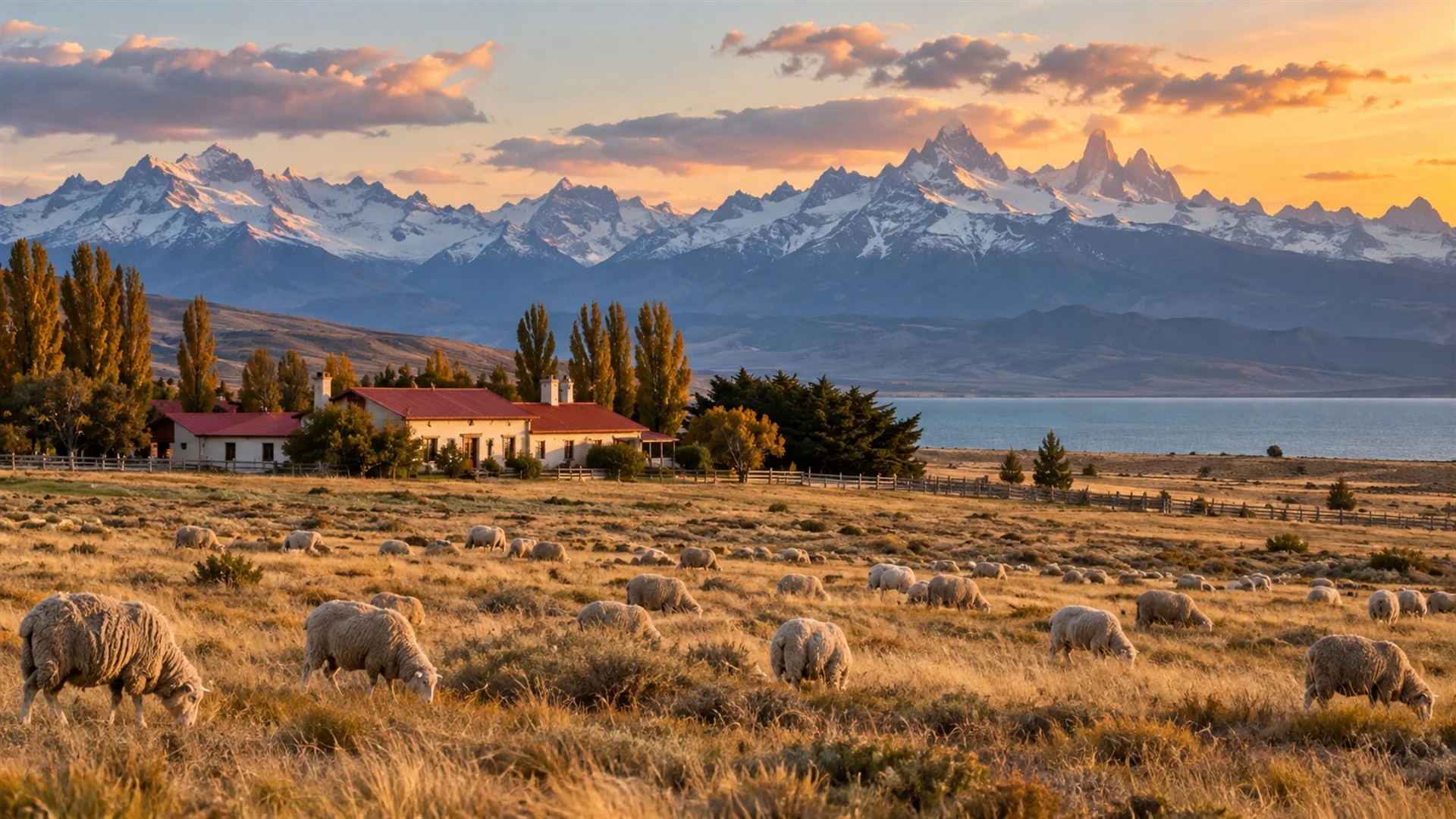
Long before modern lodges arrived, the way to live in Patagonia was the estancia. From the late nineteenth century, settlers established vast sheep ranches across the steppe, and wool became the region’s economic backbone for decades.
Many of these estates remain working ranches today. Their homesteads, shearing sheds and corrals hold the history of the region, and their owners often descend from the first families who arrived.
As a result, an estancia stay is not a themed hotel. It is time spent within a working landscape: horseback rides across open land, sheep-shearing demonstrations in season, and lamb slow-roasted over an open fire in the traditional style.
In addition, the estancia offers something no lodge can replicate: silence and scale. Guests are often the only visitors for miles, and evenings end with long twilight over the steppe.
Some properties combine this heritage with refined hospitality. Eolo Lodge, set on a large private estate between El Calafate and the glacier, is a member of Relais & Châteaux and frames the steppe and lake from every room. Other estancias remain simpler, more rustic, and closer to the ranch life of the past.
Therefore, we treat the estancia as a stage of its own rather than an excursion. Two nights allow a full day on horseback, an unhurried evening by the fire and a morning with the ranch hands, which is when the region’s history becomes tangible rather than descriptive.
Season, Wind and Light: October to March
The season in southern Argentine Patagonia runs from October to March. Spring brings wildflowers and fewer visitors, while December to February offers the warmest days and the longest light, with more than sixteen hours of daylight near the solstice.
Wind is the constant companion. It is strongest in spring and summer and can change conditions within the same hour. Therefore, layered clothing matters more than warm clothing, and flexible daily plans matter more than rigid schedules.
Finally, the shoulder weeks of March bring autumn color to the beech forests around El Chaltén. From around May, many lodges close for the winter, which makes this Argentine Patagonia travel guide a warm-season plan. For official travel information, see https://www.argentina.travel
Advancing ice, granite towers, and the long light of the steppe
Signature Experiences
- Quiet morning facing the Perito Moreno Glacier from the walkways
- Guided ice walk on the glacier with specialist guides
- Lakeside evenings above Lago Argentino in El Calafate
- Private stay at Eolo Lodge on the open steppe
- Scenic drive north toward the Fitz Roy massif
- Guided trek from El Chaltén to glacier lagoons
- Horseback ride across a working estancia
- Traditional fire-roasted lamb at a ranch homestead
- Long summer twilight over the Patagonian steppe
- Autumn color in the beech forests in March
Ready for Something Extraordinary?
The Argentine side of Patagonia rewards careful sequencing across long distances. At EscapeXperts, we plan the route, the right lodges and estancias, and the pace of each day, combining seamless logistics, private guiding and curated exploration.
Why Travel to Argentine Patagonia with EscapeXperts
Argentine Patagonia is defined by scale: ice that still advances, granite that dominates the horizon, and estancias that have shaped the steppe for generations. At EscapeXperts, we connect these experiences at the right pace and in the right season, with private transfers and carefully chosen stays. The result is an Argentine Patagonia travel guide brought to life as a journey entirely your own.
Pingback: Latin America Luxury Travel: How to Plan | EscapeXperts