
Duration: 7 nights
Best months: December to April
Country: Mexico
Region: San José del Cabo · The Corridor · Cabo San Lucas · East Cape · Todos Santos
Los Cabos Luxury Travel Where the Desert Meets the Sea
Los Cabos luxury travel is at its best when it looks beyond the resort strip. At the southern tip of Baja California Sur, cactus-covered desert runs straight into two very different bodies of water, and each winter whales arrive offshore to breed and calve.
Many travelers know Los Cabos only through its hotels. As a result, they miss the old mission town, the quiet coastline to the east and the mountain range that rises behind the coast.
At EscapeXperts, we separate the destination into its distinct parts, each with its own character. The result is a journey shaped by landscape and wildlife, well suited to families who value space, safety and time outdoors together. The destination is also straightforward to reach, with direct flights from many North American cities to the international airport near San José del Cabo.
San José del Cabo: The Old Town and the Estuary
San José del Cabo is the older and calmer of the two towns. Its plaza is anchored by a mission church, and the streets around it hold galleries, small restaurants and shaded courtyards. The mission was founded in the eighteenth century, and the town retains a sense of place that the newer development along the coast lacks.
Evenings here are relaxed. The art district stays open late during the winter season, and families can walk the historic center at an easy pace before dinner.
Meanwhile, the San José estuary, where fresh water meets the sea, offers a surprising pocket of reeds, palms and birdlife on the edge of town. A guided walk or a quiet paddle reveals herons, egrets and other waterbirds.
Because of its location near the airport and its gentler rhythm, San José del Cabo makes a natural first base. The nearby coastline also has some of the more refined resorts of the region, set well apart from the busier marina.
Therefore, this is where Los Cabos luxury travel begins: with culture, calm and a first view of the desert coast.
The Corridor, Cabo San Lucas and El Arco
Between the two towns runs the Corridor, a stretch of coast of roughly thirty kilometers lined with resorts, golf courses and sheltered bays. Coves such as Chileno Bay and Santa María are among the best places for calm-water snorkeling. For families, resorts with protected swimming beaches along this stretch keep logistics simple, with calm water close at hand. Spa treatments, golf and private dinners on the sand fill the quieter afternoons.
Understanding the two seas matters here. The Sea of Cortez side is generally calmer, with bays that suit swimming and snorkeling. In contrast, the Pacific coast brings powerful surf and strong currents, and many of its beaches are best admired from the sand rather than entered.
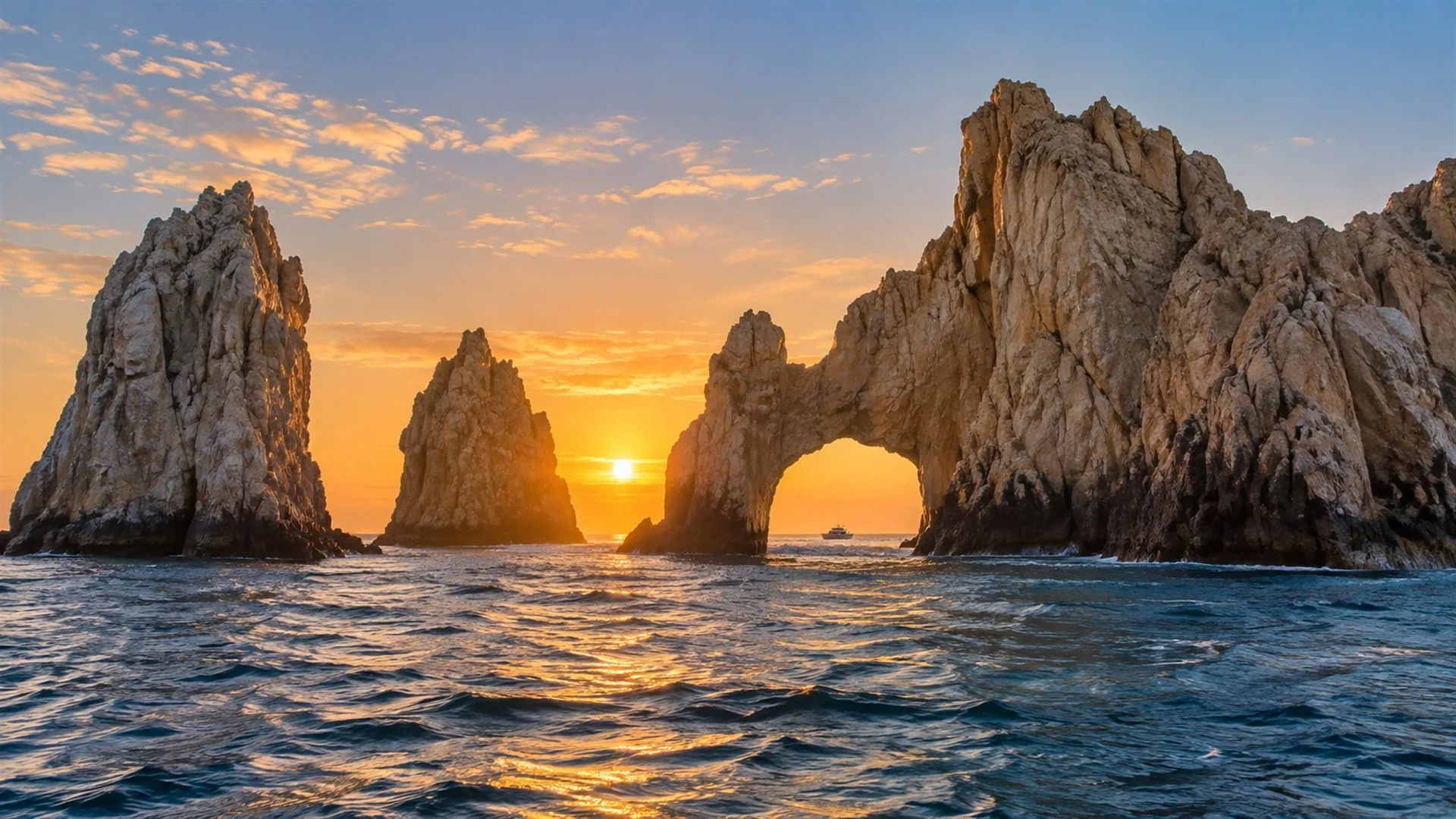
At the western end, Cabo San Lucas is the busier town, built around its marina. From here, a private boat reaches El Arco, the rock arch at Land’s End where the peninsula finally meets the ocean.
The boat ride passes sea lions resting on the rocks and small beaches reachable only from the water. Early morning is the calmest time, with softer light and fewer boats.
As a result, the Corridor and Cabo San Lucas show the classic face of Los Cabos luxury travel, experienced on the water rather than by the pool.
Whale Season on Two Coasts
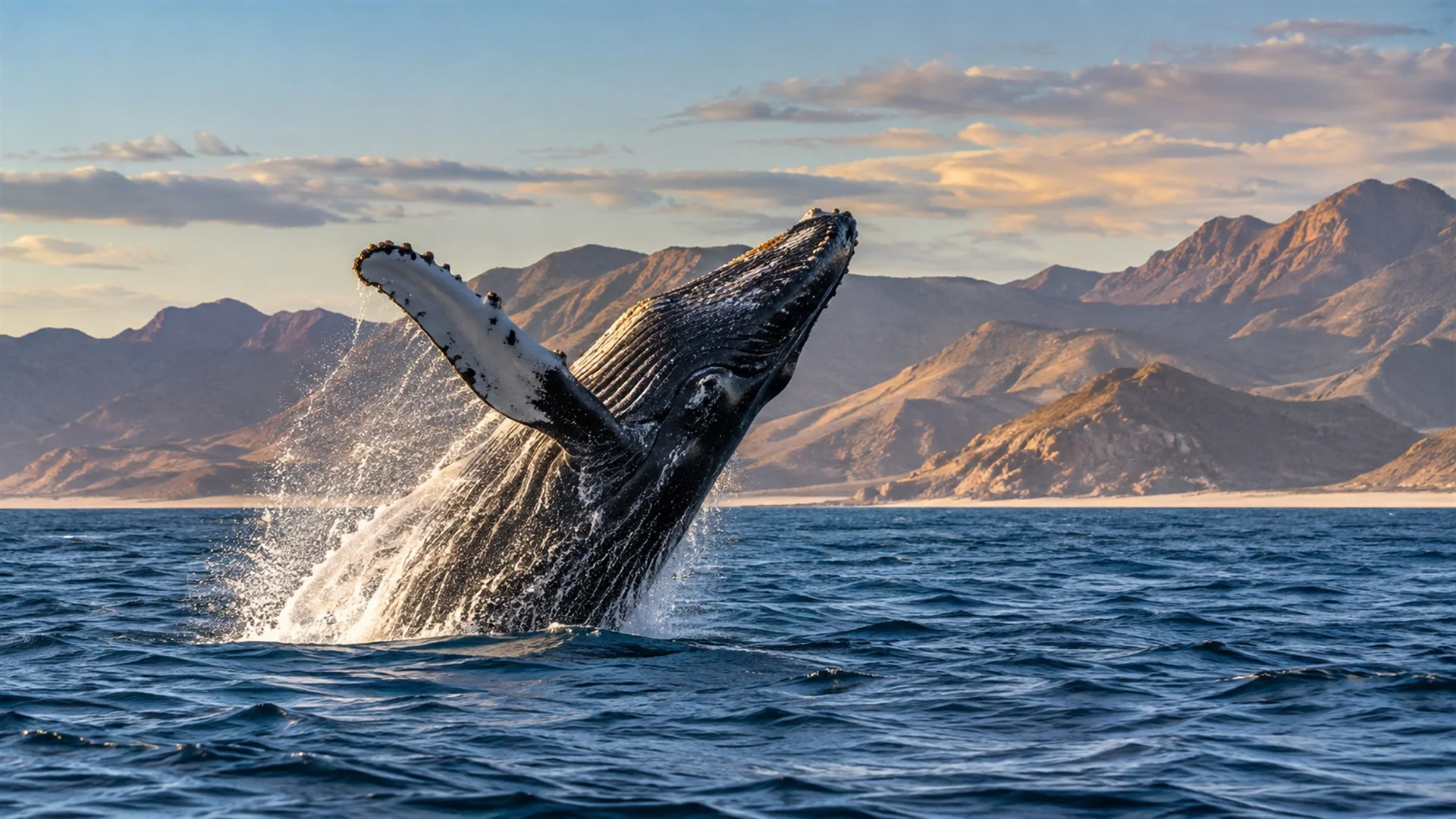
From roughly December to April, the waters off Los Cabos become one of the region’s great wildlife stages. The humpback whale arrives to breed and give birth, and breaches, tail slaps and mothers with calves are common sights from small boats. Sightings are never guaranteed, but the peak months, usually January to March, offer the most reliable encounters.
Further north on the Pacific coast, the sheltered lagoons of Baja California Sur host the gray whale, typically from January to March. In these calm waters, curious gray whales sometimes approach boats closely, an encounter that can be arranged as a longer excursion or an overnight trip.
In addition, the island of Espíritu Santo, reached via La Paz, offers protected bays, red cliffs and a sea lion colony where snorkeling alongside the animals is possible.
For families, these encounters are often the highlight of the journey. Small boats with experienced naturalist guides keep the experience respectful and safe. Official visitor information for the region is available at https://visitmexico.com
This wildlife season gives Los Cabos luxury travel a depth that few beach destinations can match.
The East Cape: A Quieter Coastline
North and east of San José del Cabo, the paved road gives way to a quieter coast. The East Cape is a landscape of long empty beaches, fishing villages and desert stretching to the water’s edge.
Here, Cabo Pulmo National Park protects one of the few living coral reefs in the Sea of Cortez. Its marine life has recovered strongly under protection, and snorkeling or diving with a local guide reveals schools of fish, rays and reef life. The reef’s recovery is often cited as a model of community-led marine conservation, the result of local families choosing to protect it.
The pace is slower. Accommodation is limited to small lodges and private villas, which suits families seeking space and privacy. Parts of the coastal route remain unpaved, so a private driver with a suitable vehicle is the most comfortable way to explore.
Finally, the East Cape offers the counterpoint to the Corridor: fewer people, wider horizons and a sense of remoteness within easy reach of the airport.
Todos Santos and the Sierra de la Laguna
About an hour north of Cabo San Lucas on the Pacific side, Todos Santos is a historic town of galleries, restored adobe buildings and farm-to-table restaurants surrounded by fields and palm groves. Nearby, Cerritos beach offers some of the gentler conditions on this coast and is a popular place for surf lessons with an experienced instructor.
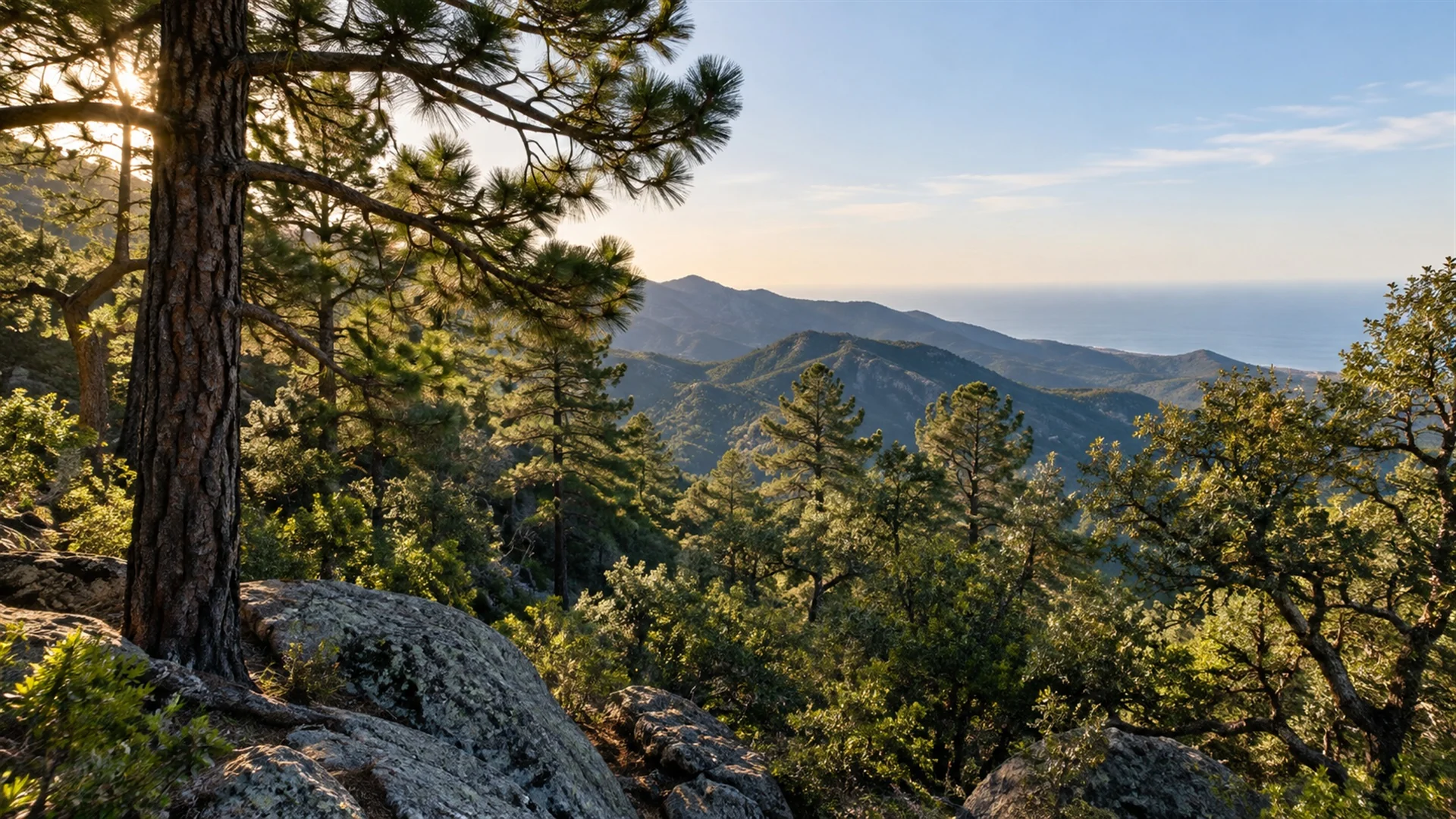
Beyond the town, the Sierra de la Laguna rises inland. This biosphere reserve holds oak and pine forests, streams and cooler air, a striking contrast to the desert below. Its peaks catch far more rain than the lowlands, which explains these unexpected forests.
Guided hikes follow canyons and freshwater pools, while ranches in the foothills preserve traditions of the region’s ranching families.
Later, a sunset on the Pacific beaches near Todos Santos closes the day. Therefore, the mountains and the town provide the essential balance to the coast, and they complete a well-rounded journey through Los Cabos luxury travel.
Desert light, whale season, and two seas at land’s end
Signature Experiences
- Evening walks through San José del Cabo old town
- Birdwatching in the San José estuary
- Snorkeling in calm bays along the Corridor
- Private boat to El Arco at Land’s End
- Humpback whale watching with a naturalist guide
- Gray whale encounters in Pacific lagoons
- Swimming with sea lions near Espíritu Santo
- Reef snorkeling at Cabo Pulmo on the East Cape
- Galleries and farm tables in Todos Santos
- Guided hikes in the Sierra de la Laguna
- Pacific sunsets on quiet desert beaches
Ready to Begin the Journey?
Los Cabos is far more varied than its resorts suggest. At EscapeXperts, we design family journeys with seamless logistics, private boats and guides, and curated exploration of the desert, the mountains and both coasts.
Why Travel to Los Cabos with EscapeXperts
The tip of Baja California rewards travelers who look beyond the pool. At EscapeXperts, we balance comfortable stays with whale season, quiet coastlines and inland landscapes, and we arrange every boat, guide and transfer. The result is Los Cabos luxury travel that feels spacious, grounded and closely tied to the desert and the sea.

