
Duration: 7 nights
Best months: October to April
Country: Mexico
Region: Oaxaca de Juárez · Monte Albán · Tlacolula Valley · Teotitlán del Valle
Oaxaca Luxury Travel: A City That Rewards a Full Week
Oaxaca luxury travel is best measured in days rather than hours. The city of Oaxaca de Juárez sits in a high valley in southern Mexico, surrounded by Zapotec archaeological sites, weaving villages and the palenques where mezcal is made.
Many travelers arrive for the food and plan two nights. As a result, they taste the mole but miss the valleys that give the city its depth: the ancient ceremonial centers, the craft workshops and the agave fields beyond.
At EscapeXperts, we treat Oaxaca as a destination for a full week. The city becomes the base, and each day reaches a different valley, returning in the evening to colonial streets and an excellent table.
Arrival in Oaxaca de Juárez and the Santo Domingo Quarter
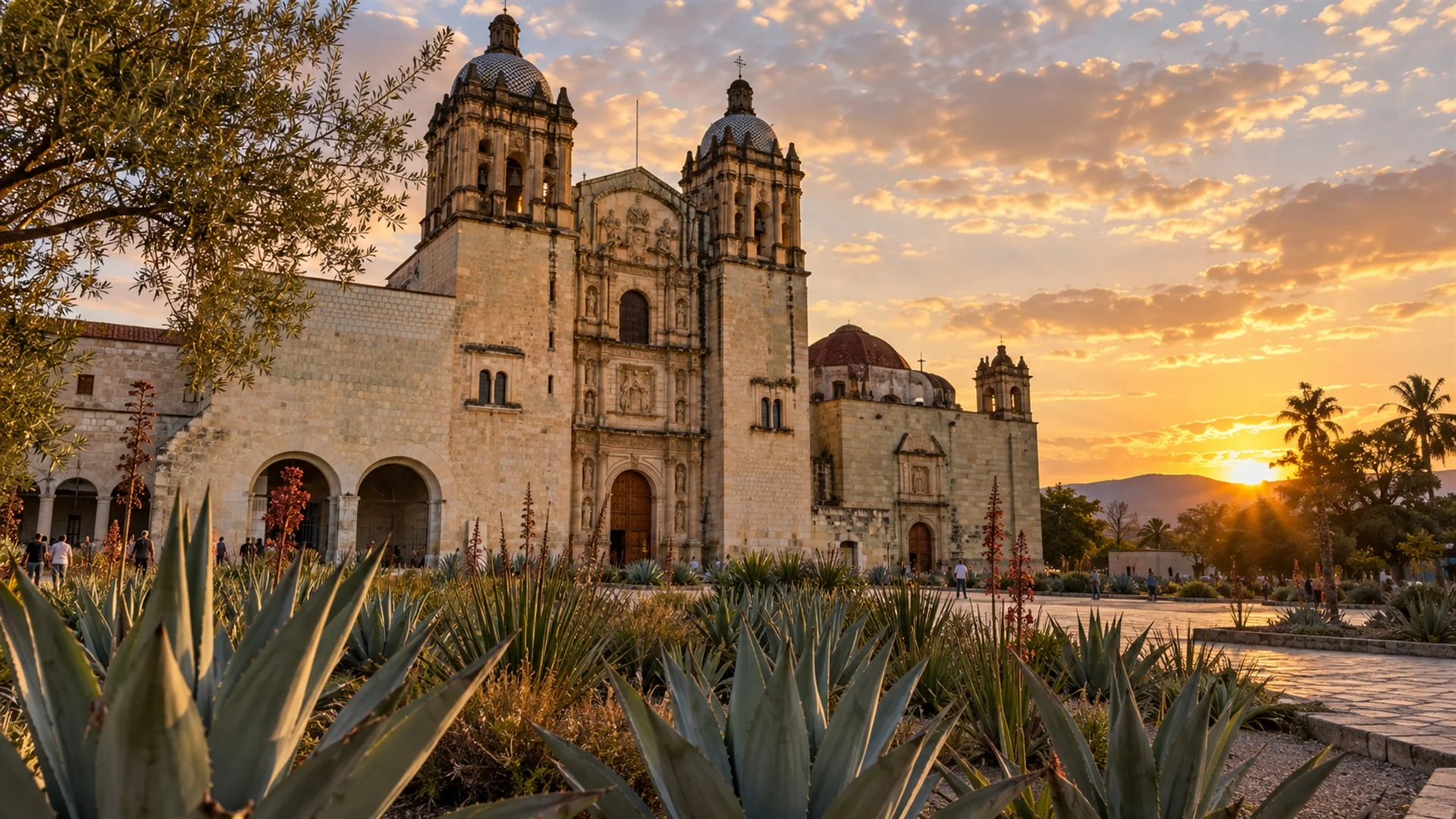
The journey begins with a short domestic flight and a private transfer into the historic center. Oaxaca de Juárez is compact and walkable, built on a grid of stone streets and colorful colonial facades, many built in the pale green cantera stone of the region.
The church of Santo Domingo is its centerpiece. Its baroque interior is covered in gilded stucco, and a carved family tree of the saint spreads across the ceiling near the entrance. The former monastery beside it now holds a regional museum with treasures recovered from Monte Albán, as well as an ethnobotanical garden of native plants.
Here, the choice of stay shapes the week. Quinta Real Oaxaca occupies a former sixteenth-century convent, with arcaded courtyards, fountains and thick stone walls that keep the rooms cool. In contrast, Hotel Los Amantes is a small design hotel in the center with a rooftop terrace overlooking the domes.
Meanwhile, the first evening is best kept simple: a walk along the pedestrian streets, a mezcal on a terrace and an early dinner. Therefore, Oaxaca luxury travel begins at the city’s own unhurried pace.
Monte Albán and the Zapotec Valleys
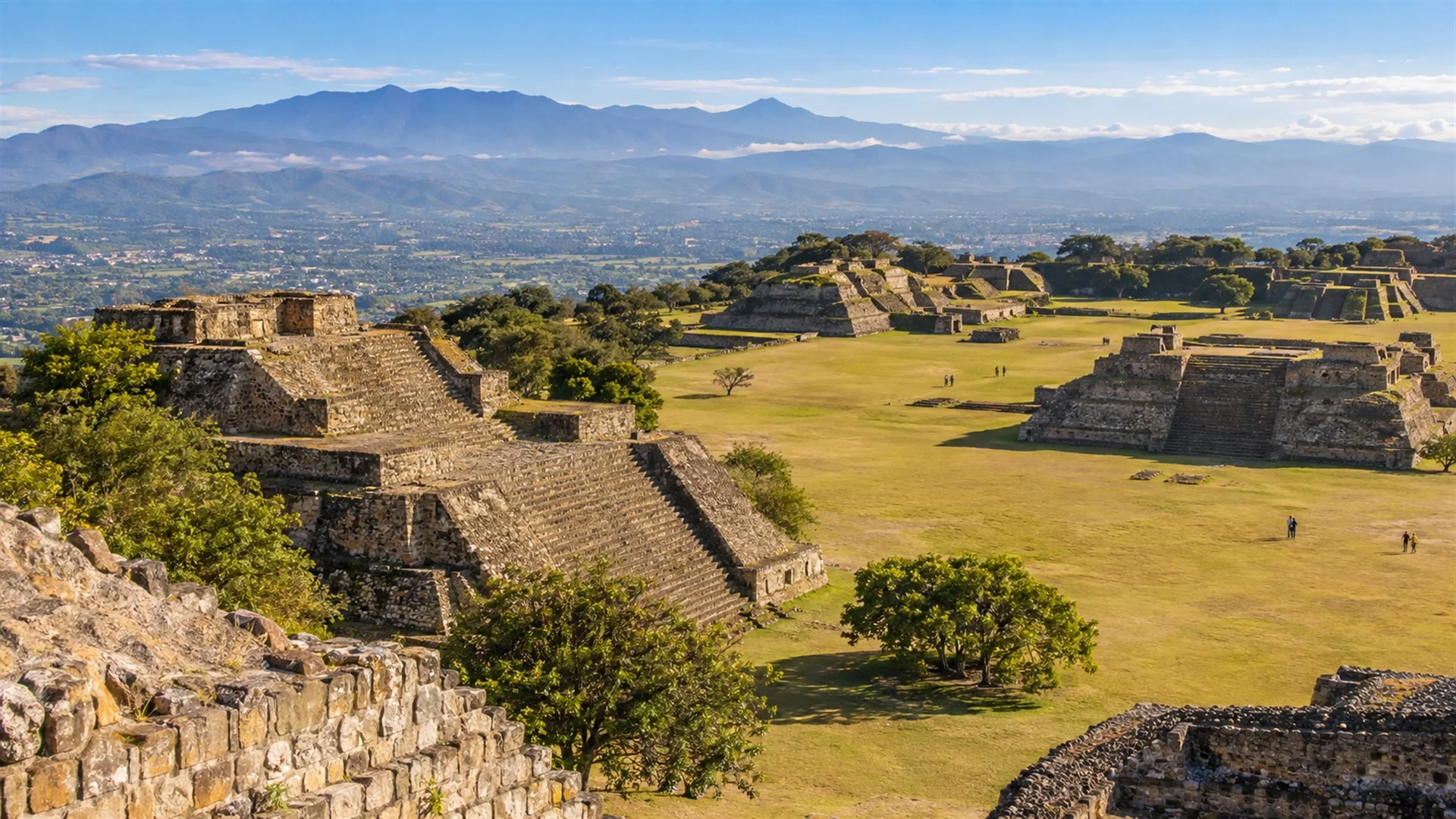
Next, the road climbs to Monte Albán, the ancient Zapotec capital built on a leveled mountaintop above the valley. Its great plaza is framed by platforms, temples and a ball court, with views across three branches of the central valleys.
The site is known for its carved stone figures, the Danzantes, whose meaning is still debated. With an archaeologist as a guide, the visit explains how this hilltop city governed the region for centuries. Both the site and the historic center of Oaxaca are recognized together as a UNESCO World Heritage property.
Later in the week, the Tlacolula Valley leads east to Mitla, a Zapotec ceremonial center famous for its geometric stone mosaics. Thousands of cut stones form intricate fretwork patterns across the walls, without mortar. Along the way, the Tule tree in Santa María del Tule, a vast cypress with one of the widest trunks in the world, makes a brief and memorable stop.
Beyond Mitla, Hierve el Agua offers mineral formations that resemble frozen waterfalls, with natural pools set on a cliff edge above the valley. Because of this sequence, the valleys reveal a civilization that shaped the region long before the colonial city.
These excursions give Oaxaca luxury travel its historical backbone, and each one fits comfortably within a day. Official visitor information is available at https://visitmexico.com
Mole Negro, Markets and the Oaxacan Table
Oaxaca is often called the land of the seven moles, and each has its own character. Mole negro is the most complex, built from dark chilies, toasted seeds, spices and chocolate, ground and cooked slowly into a deep, smoky sauce. Lighter moles, such as the red coloradito and the yellow amarillo, appear on menus across the city.
The difference between a good mole and an exceptional one lies in patience and balance. A private cooking session with a local cook explains how each ingredient is toasted separately before grinding, and why some families guard their recipes for generations.
In addition, the markets show the everyday table. In the Mercado 20 de Noviembre, a smoky aisle of grills prepares meats to order, while vendors sell tlayudas, fresh cheeses and chapulines, toasted grasshoppers seasoned with lime, chili and salt.
Chocolate is another pillar of the city. It is ground with cinnamon and sugar, and served as a hot drink with bread at breakfast or in the afternoon.
As a result, the table becomes one of the central pleasures of Oaxaca luxury travel, from the refined dining rooms of the center to the market stalls.
Mezcal in the Palenques of the Valleys
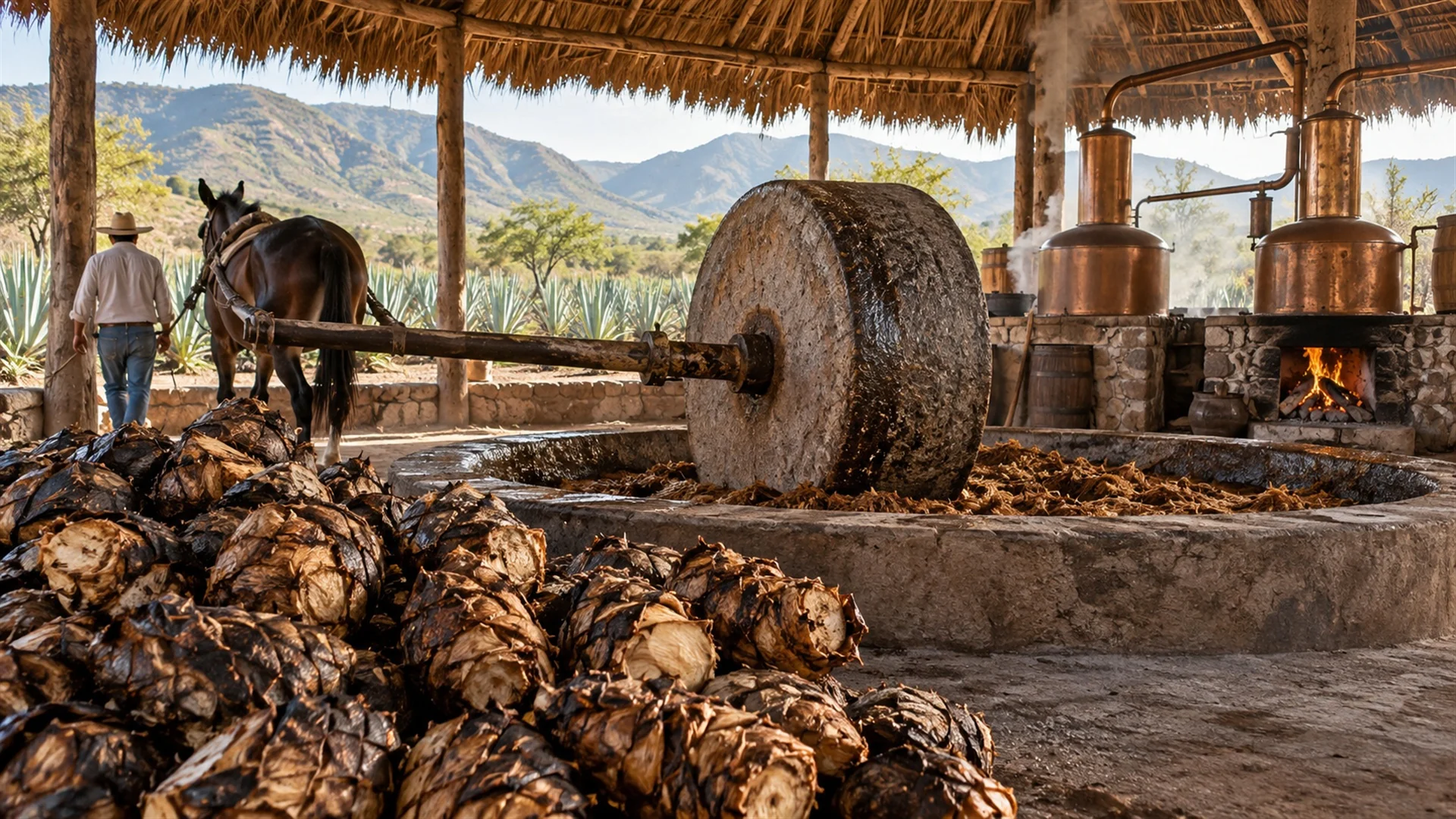
Mezcal is distilled from agave, and Oaxaca is its heartland. The spirit is made in small family distilleries known as palenques, many of them in the valleys southeast of the city around Santiago Matatlán.
The process follows a clear sequence. The hearts of mature agave plants are roasted in earthen pits, which gives the spirit its smoky character. They are then crushed, often by a large stone wheel called a tahona, fermented in wooden vats and distilled in copper or clay stills.
Different agaves give different results. Espadín is the most widely cultivated, while wild varieties such as tobalá and tepextate take many years to mature and produce more distinctive spirits.
Therefore, a visit to a palenque with a mezcal specialist is a lesson in patience and terroir. Tastings are unhurried, served with orange and worm salt, and focused on understanding rather than quantity.
This stage adds depth and authenticity to Oaxaca luxury travel, connecting the landscape directly to the glass.
Teotitlán del Valle, Alebrijes and the Craft Villages
The villages of the central valleys are among the strongest reasons to stay a full week. Each specializes in a craft, often passed down within families over generations.
Teotitlán del Valle is known for its Zapotec weaving. Rugs are woven on wooden looms and dyed with natural colors, including red from cochineal insects and blue from indigo. A private visit to a family workshop shows the process from raw wool to finished design.
Meanwhile, the villages of San Martín Tilcajete and San Antonio Arrazola produce alebrijes, carved wooden figures painted with vivid, intricate patterns. Watching the artisans at work adds meaning to every piece brought home.
In addition, the pottery village of San Bartolo Coyotepec is known for its burnished black clay, and a visit to a family studio there completes a day devoted to the craftsmanship of the valleys.
Finally, the Day of the Dead is best understood as one window within the year rather than the reason for the journey. At the end of October and the start of November, the city fills with altars and marigolds, and the craft villages are equally rewarding in any month.
Smoky mezcal, ancient stones, and the patient craft of the valleys
Signature Experiences
- Stay in a former convent at Quinta Real Oaxaca
- Private visit to the gilded church of Santo Domingo
- Guided morning at Monte Albán with an archaeologist
- Stone mosaics of Mitla in the Tlacolula Valley
- Mineral pools and cliffs at Hierve el Agua
- Private mole negro cooking session with a local cook
- Market tasting in the Mercado 20 de Noviembre
- Palenque visit and mezcal tasting near Santiago Matatlán
- Family weaving workshop in Teotitlán del Valle
- Alebrije studios in San Martín Tilcajete
- Rooftop evenings above the domes of the historic center
Ready for Something Extraordinary?
A week in Oaxaca rewards careful planning. At EscapeXperts, we design journeys with seamless logistics, private access to workshops and palenques, and curated exploration of the valleys beyond the city.
Why Travel to Oaxaca with EscapeXperts
Oaxaca reveals itself through its kitchens, its workshops and its ancient sites, and it rewards those who stay long enough to see all three. At EscapeXperts, we select the right stay, arrange specialist guides and pace each valley excursion carefully. The result is Oaxaca luxury travel that feels immersive, unhurried and deeply connected to place.

