Best hours: Early morning and after four in the afternoon
Best months: December to April, the dry season
Country: Colombia
Neighborhoods: Walled City · Getsemaní · Bocagrande · Rosario Islands
Things to Do in Cartagena, Planned Around the Heat
The best things to do in Cartagena are arranged around the Caribbean heat: the Walled City at first light, cool interiors at midday, the fortress and the ramparts in the late afternoon, and the islands by boat in the early morning. Timing, more than distance, decides whether the city is enjoyed or endured.
Many travelers arrive expecting a beach destination and discover a sixteenth-century fortified city instead. Cartagena is best understood as a colonial port with a Caribbean climate, where the architecture, the plazas and the islands beyond the bay form the heart of the visit.
At EscapeXperts, we build each day around that rhythm. The following experiences are ordered by the hour at which each part of the city is at its best.
Understand the Three Cartagenas
The historic center is enclosed by walls built over centuries to defend the port. Inside, the Walled City is divided into El Centro, with its churches and grand mansions, and San Diego, quieter and more residential. Together they form the heart of any visit.
Next, just outside the walls, Getsemaní has a different character. Once a working neighborhood, it is now known for street art, small plazas and an evening life that feels local rather than staged.
In contrast, Bocagrande is the modern Cartagena, a peninsula of high-rise hotels and apartments facing an urban beach. It is useful to understand, but it is not the reason to come. The city’s beaches are urban shorelines, and the Caribbean water worth the journey lies on the islands.
Because of this, the choice of base shapes the stay. For most travelers, a restored house inside the walls offers the most rewarding experience of the city.
Walk the Walled City at First Light
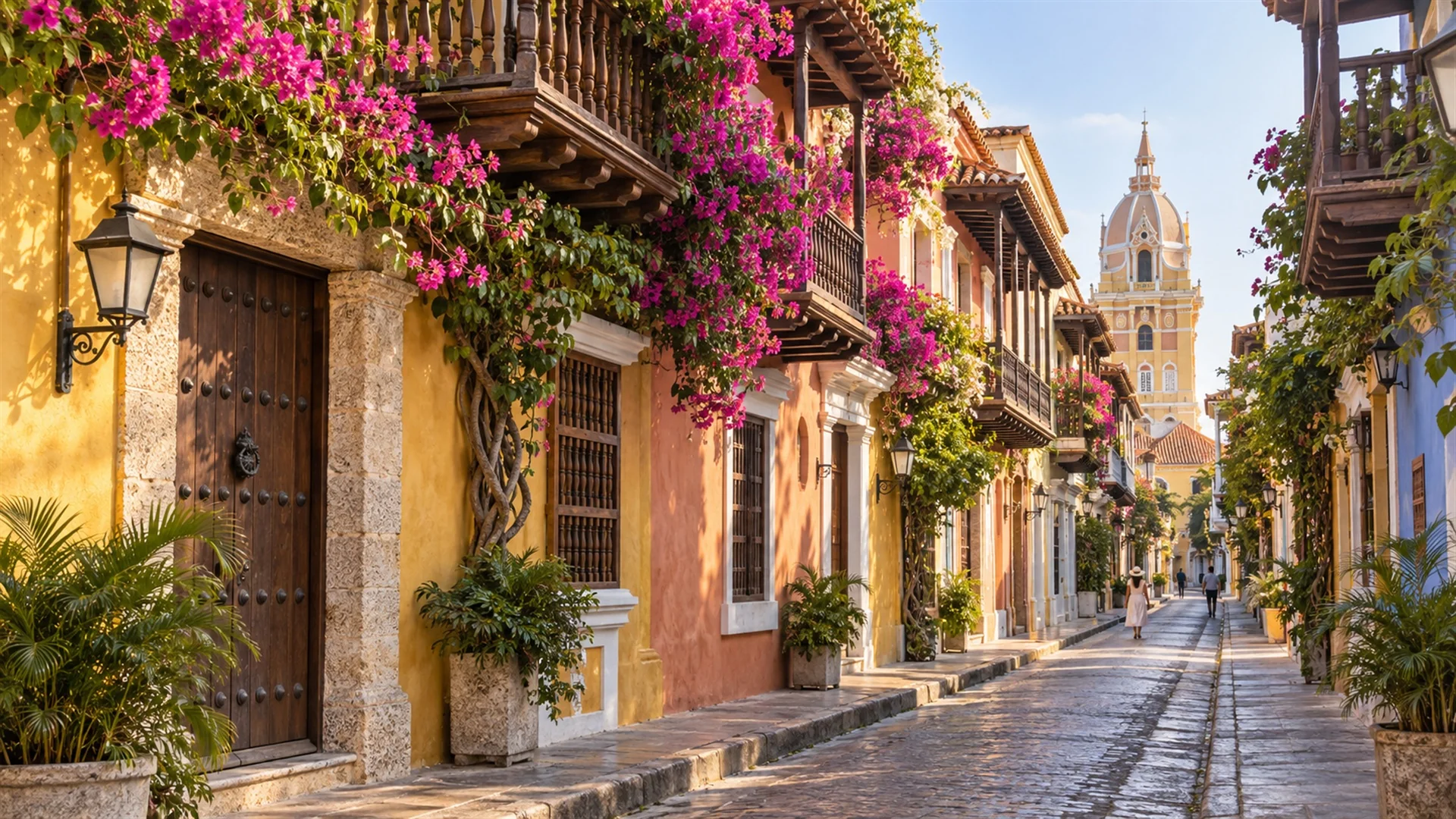
The early morning is the finest hour in Cartagena. Streets are quiet, the light is soft on the ochre and pastel facades, and bougainvillea spills from wooden balconies above the cobbles. The heat has not yet settled into the stone.
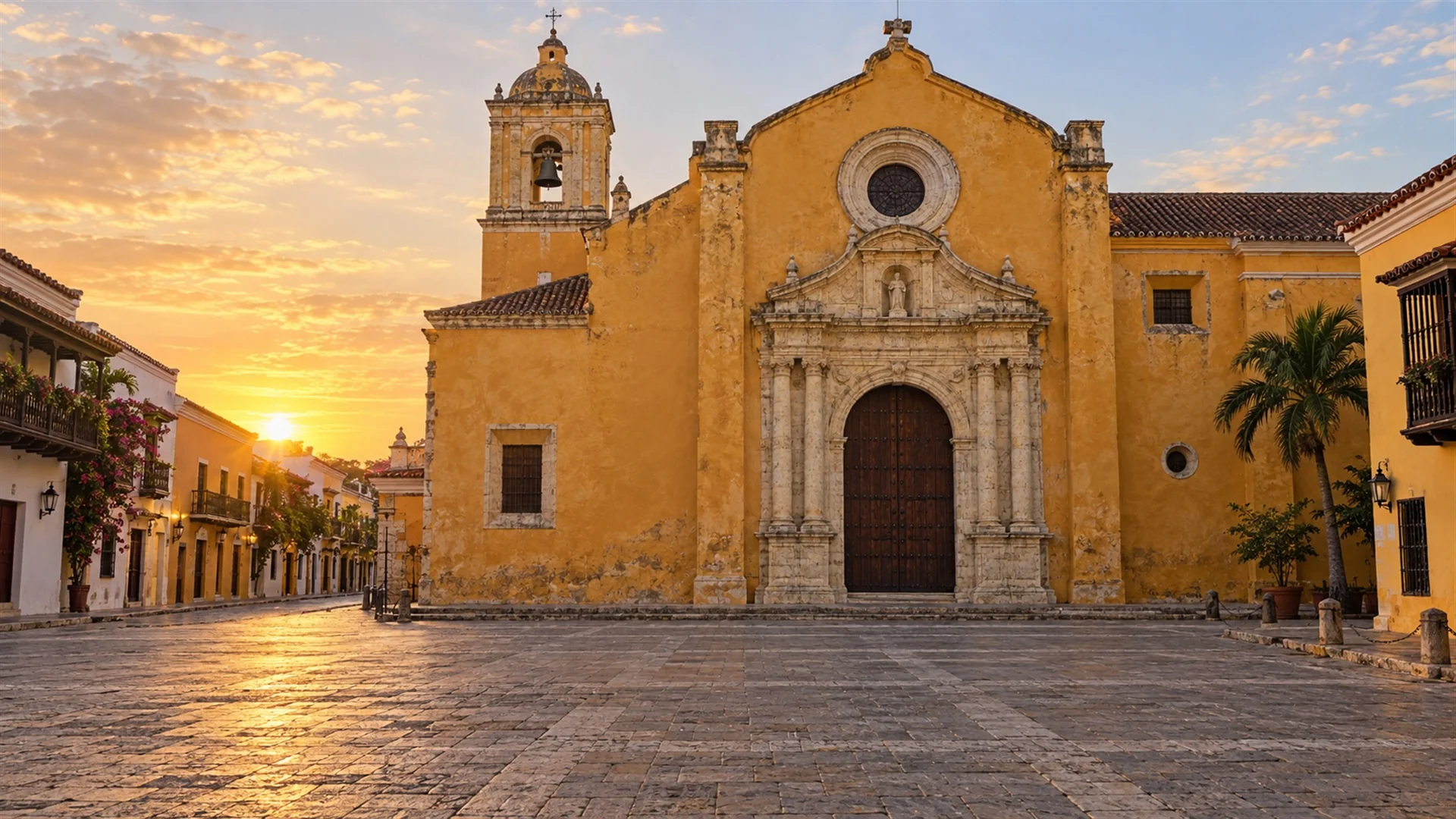
A guided walk links the main plazas and churches. Plaza Santo Domingo, with its colonial church and a reclining bronze figure by Fernando Botero, is at its most peaceful before the terraces open. Nearby streets reveal carved doors, courtyards and centuries of layered history.
Meanwhile, the ramparts offer views over the rooftops toward the sea. The city’s defensive system and historic center are recognized by UNESCO: https://whc.unesco.org/en/list/285
As a result, the first hours of the day are among the most valuable things to do in Cartagena. Walking the Walled City at dawn reveals its architecture without crowds or heat.
Retreat Indoors Through the Midday Heat
From late morning until mid-afternoon, the heat and humidity dominate the streets. Residents slow down, and visitors should do the same. This is the time for interiors, long lunches and shaded courtyards.
The city’s finest hotels make this easy. Sofitel Legend Santa Clara, set in a former seventeenth-century convent in San Diego, offers cloisters, gardens and a pool that become a refuge during the warmest hours.
Similarly, Casa San Agustín brings together restored colonial houses in the heart of the Walled City. Its calm courtyards and pool make midday a pleasure rather than an obstacle.
Several of the city’s museums sit around Plaza de Bolívar, a few steps from the hotels. The Palace of the Inquisition traces the colonial history of the port, while the Museo del Oro Zenú displays pre-Hispanic goldwork from the Caribbean lowlands. Both are compact, shaded and well suited to the warmest part of the day.
Therefore, the most successful things to do in Cartagena include time indoors. Museums, galleries, a long lunch and a quiet hour by the pool prepare travelers for the afternoon and evening.
Castillo San Felipe and the Late-Afternoon Walls
The Castillo San Felipe de Barajas rises on a hill just beyond the old town. It is one of the largest fortifications Spain built in the Americas, with tunnels, ramparts and commanding views across the city.
A guided visit brings the stone to life. The fortress withstood the attack led by the British admiral Edward Vernon in 1741, a defense still associated with the Spanish commander Blas de Lezo. Walking the narrow tunnels with that story in mind explains why the city invested so heavily in its walls.
Its exposed position makes the late afternoon the best time to visit. After four o’clock, the heat eases and the light softens, and the view from the top reaches across the Walled City to the modern skyline and the bay.
Later, the city walls become a natural gathering place at sunset. Travelers and residents walk the ramparts as the sky changes color over the Caribbean.
Because of this, the late afternoon connects history and atmosphere. It is one of the most memorable things to do in Cartagena, especially when followed by an evening in Getsemaní.
Evenings in Getsemaní
As night falls, Getsemaní comes alive. Its plazas fill with residents, street musicians and families, while small restaurants and bars open onto the sidewalks. The atmosphere is relaxed and authentic rather than loud.
Walking its streets reveals murals, colorful facades and courtyards hidden behind open doors. The neighborhood’s creative energy contrasts with the grandeur of the Walled City.
Meanwhile, dining in Cartagena reaches its best in the evening. Restaurants across the historic center and Getsemaní celebrate Caribbean flavors, fresh seafood and regional ingredients.
In addition, a private guide helps travelers choose the most rewarding venues and understand the neighborhood’s history. The result is an evening that feels part of the city’s daily life.
The Rosario Islands, Barú and Beyond
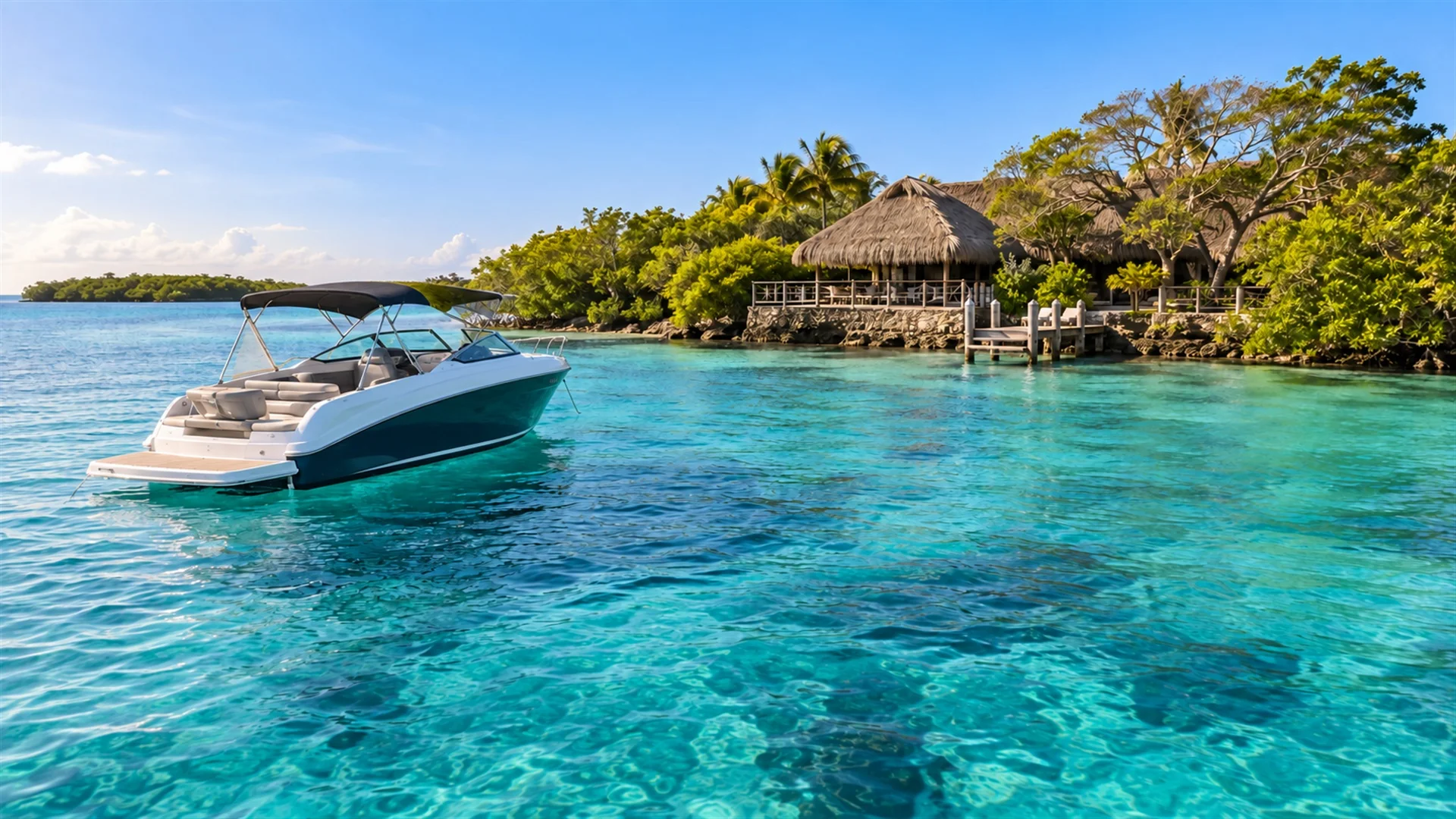
The Caribbean beaches travelers imagine lie beyond the city. The Rosario Islands, within a national marine park, are reached by boat from Cartagena’s waterfront, typically in around an hour depending on the sea and the destination.
Logistics matter. Departures are best early in the morning, when the water is calmer, and a private boat allows travelers to choose quieter islands and return before the afternoon sea picks up. The dry season, from December to April, generally brings the most settled conditions for these crossings. Some stay overnight at small island lodges for a slower rhythm.
Closer to shore, the Barú peninsula can also be reached by road, while Tierra Bomba lies just across the bay for a shorter escape. Each offers a different pace, from simple beach clubs to secluded retreats.
In contrast, inland from the coast, Palenque offers a cultural excursion. San Basilio de Palenque, founded by people who escaped slavery, preserves its own language, music and traditions, adding depth to the list of things to do in Cartagena.
Colonial walls, Caribbean light, and the slow rhythm of the tropics
Signature Experiences
- Dawn walk through the Walled City before the heat
- Quiet morning at Plaza Santo Domingo
- Midday retreat at Sofitel Legend Santa Clara
- Courtyard stay at Casa San Agustín
- Late-afternoon visit to Castillo San Felipe
- Sunset stroll along the city walls
- Evening among the plazas and murals of Getsemaní
- Private boat excursion to the Rosario Islands
- Secluded beach time on the Barú peninsula
- Cultural day trip to Palenque
Ready to Begin the Journey?
Cartagena rewards travelers who follow its rhythm. At EscapeXperts, we combine seamless logistics, private access and curated exploration to shape each day around the heat, the light and the sea.
Why Travel to Cartagena with EscapeXperts
Cartagena is a city of history, architecture and Caribbean light, and its heat decides how each day unfolds. At EscapeXperts, we select exceptional stays inside the walls, arrange private boats to the islands and plan every hour with care. The result is a thoughtful selection of things to do in Cartagena that feels effortless and immersive.