Suggested stay: 4 to 5 nights
Best months: December to March · July to August
Country: Colombia
Region: Quindío · Risaralda · Caldas · Cocora Valley
The Colombia Coffee Region as a Destination in Its Own Right
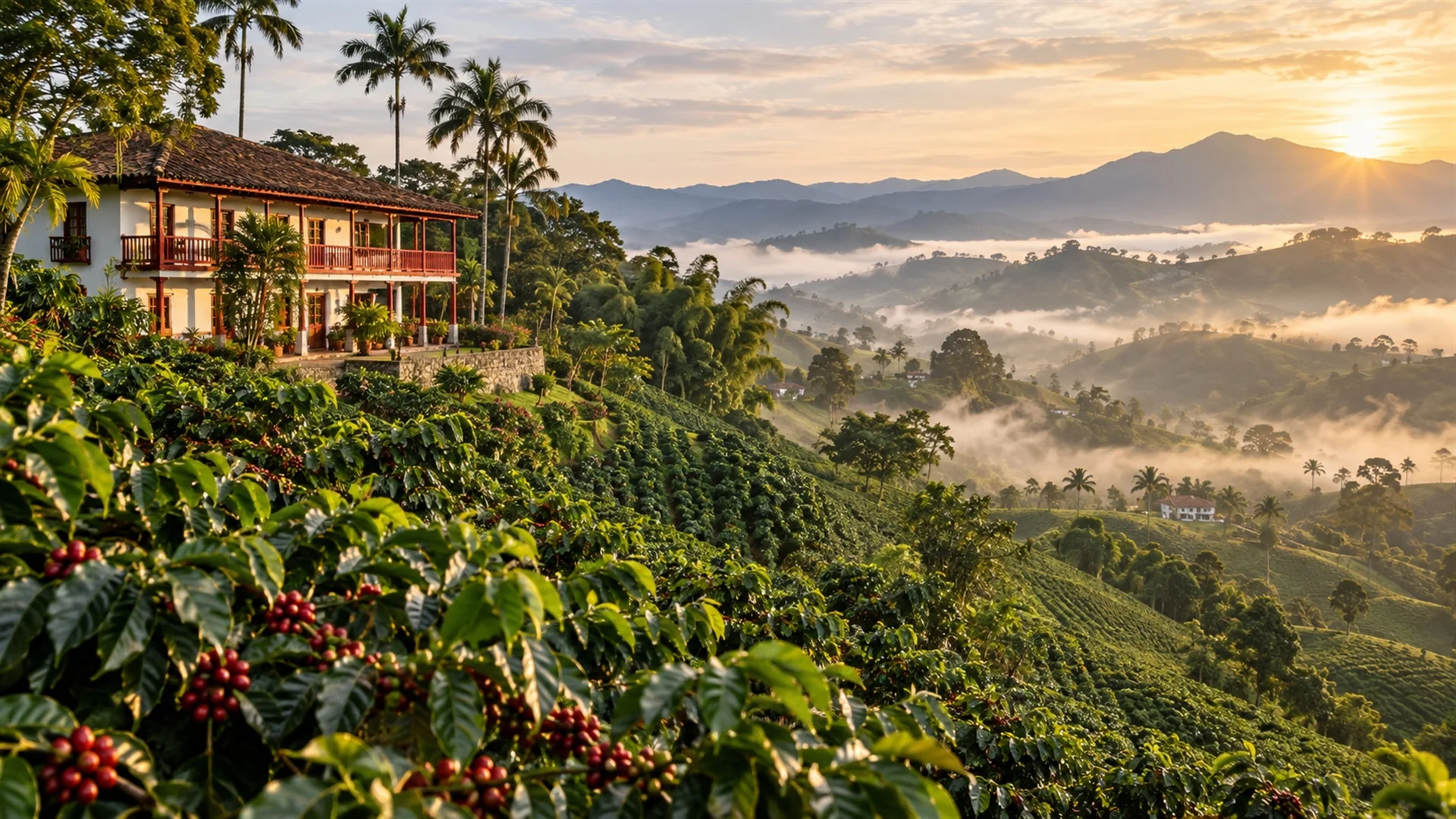
The Colombia coffee region is a landscape of steep green hills, bamboo groves and small towns set along the Andean slopes west of Bogotá. Known locally as the Zona Cafetera or Eje Cafetero, it rewards travelers who stay several nights on a working hacienda rather than visiting on a single day trip.
Most travelers associate Colombia with the walled city of Cartagena, and many treat the interior as an afterthought. In contrast, the highlands offer a quieter register: cool mornings, birdsong, and a rural culture shaped by more than a century of coffee growing.
At EscapeXperts, we organize the region by town and by landscape, with the hacienda as the fixed point of the stay. Cartagena then becomes a connection on the way in or out, not the reason for the journey.
Much of the region lies at mid-altitude, cool enough for a light layer in the evening yet mild through the day. Because of this, the climate suits walking, riding and long lunches outdoors in most months of the year.
Arrival and the Hacienda as a Way of Staying
The journey begins with a short flight from Bogotá to Pereira or Armenia, followed by a private transfer into the hills. Within an hour, the city gives way to plantain, coffee and tall stands of guadua bamboo.
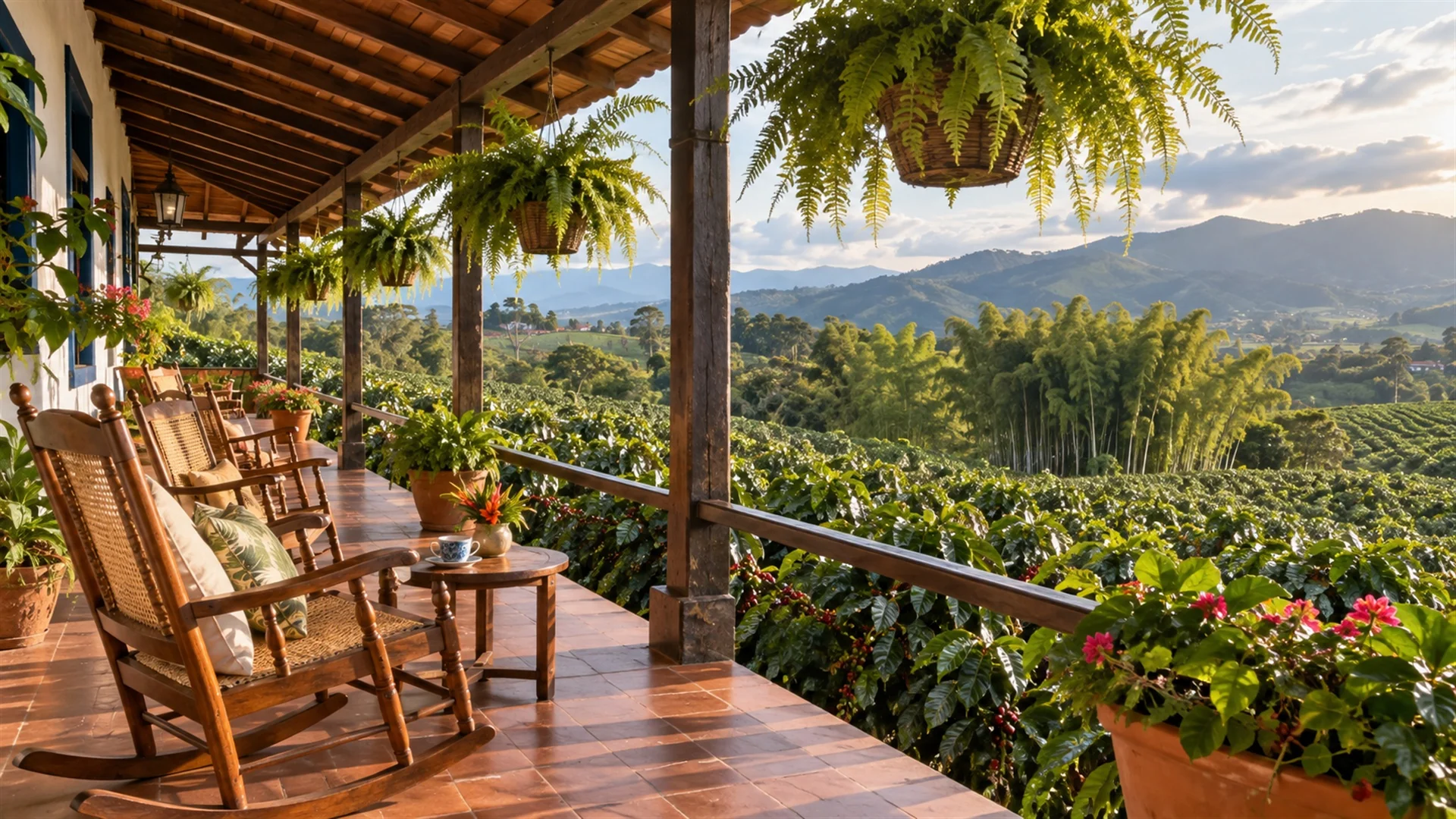
A coffee hacienda is not a rural hotel with a farm theme. It is a working estate where the harvest, the drying patios and the daily rhythm of the farm continue around the guests. Rooms usually sit in the main house, opening onto wide verandas known as corredores. Most estates keep only a few rooms, which keeps the atmosphere private and the service personal.
Meanwhile, a rural hotel is built for visitors first and borrows the landscape as scenery. The difference shows in small details: breakfast made with produce from the estate, a farm manager who explains the season, and evenings shaped by the land rather than by a schedule of activities.
In Quindío, Hacienda Bambusa sits among guadua bamboo groves in the valley, with a small number of rooms and an unhurried pace. Further north near Manizales, Hacienda Venecia is a family coffee farm with guest accommodation and a long-running coffee tour on site.
Manizales itself, built along a steep ridge, is a university city with views toward the snow-capped volcanoes of Los Nevados on clear mornings. It makes a practical northern anchor for travelers who prefer to divide the stay between two estates.
Because of this, the hacienda sets the tone for the whole Colombia coffee region stay. It is a base from which the towns and valleys are explored in short, easy excursions.
Salento and the Wax Palms of the Cocora Valley
Salento is the most visited town in the region, and for good reason. Its main street, Calle Real, is lined with painted balconies and doors in bright colors, set against traditional bahareque walls made from earth and cane.
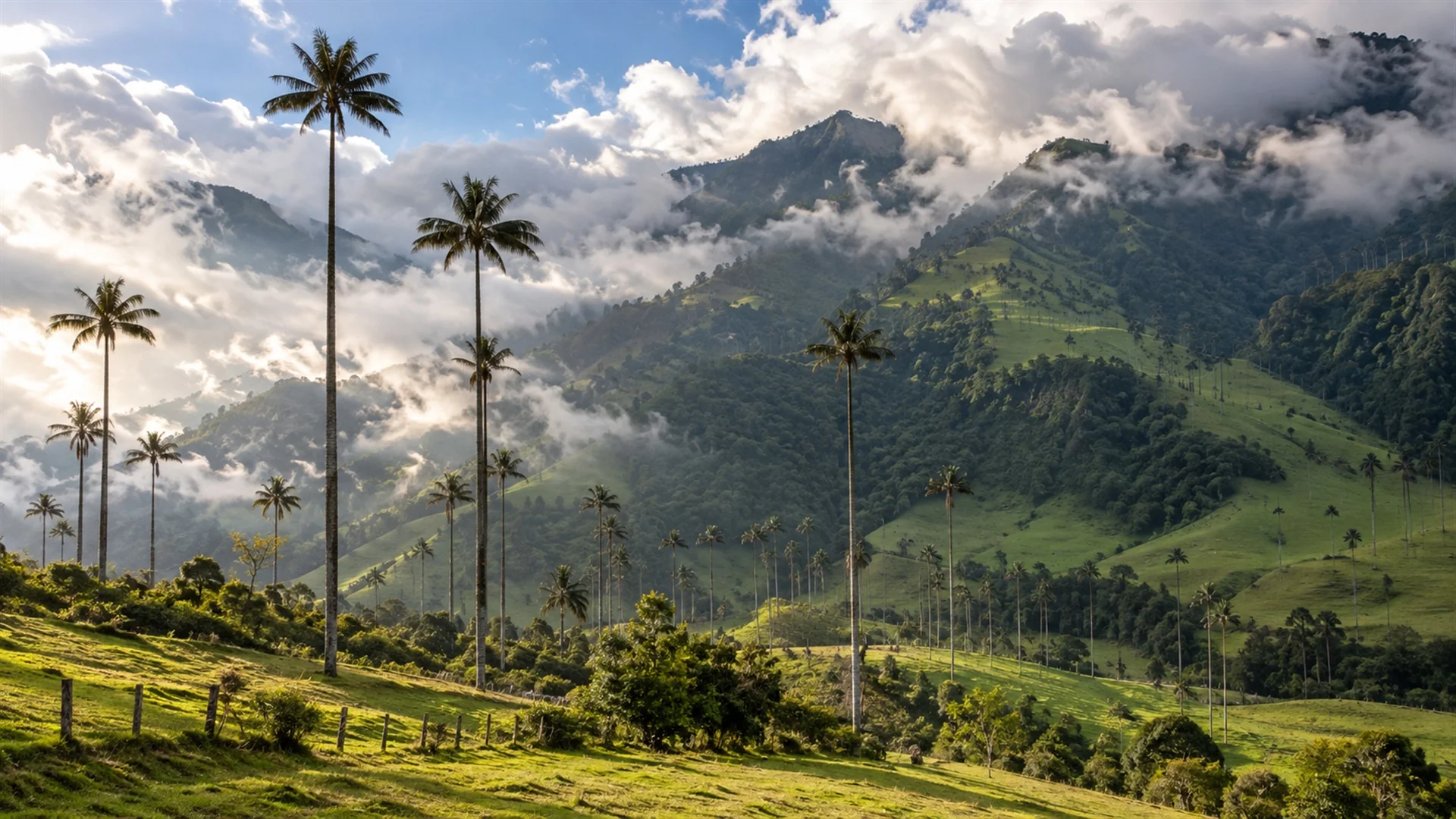
Next, the road climbs into the Cocora Valley, the landscape most closely linked to the region. Here, the wax palm rises from open pasture to heights rarely seen in any other palm species. It is the national tree of Colombia, and the valley holds some of its most striking stands.
The effect is unusual. Slender grey trunks crowned with small tufts of green stand far above the grass, often wrapped in cloud that drifts up from the valley floor. Early morning is the quietest and the most atmospheric time to arrive.
Walks can be tailored to the traveler. A short route stays among the palms on the valley floor, while a longer loop climbs through cloud forest, where hummingbirds are frequent companions. In addition, horseback rides offer a gentler way to reach the upper viewpoints.
Afterward, lunch in Salento often features river trout, a local specialty served with patacón, a flattened and fried green plantain.
As a result, Salento and Cocora form the visual heart of the Colombia coffee region, best experienced at an early hour and with a private guide.
Filandia and the Quieter Hill Towns of Quindío
If Salento is the region’s showcase, Filandia is its quieter counterpart. The town keeps a similar architecture of carved balconies and painted facades, with fewer visitors and a more local pace in its central square.
Filandia is also known for basket weaving, a craft that grew alongside the coffee harvest, when baskets were needed to collect the cherries. Small workshops still produce them by hand, and a visit adds a layer of craftsmanship to the day.
From the Colina Iluminada lookout at the edge of town, the view opens across the green hills of Quindío toward the central range of the Andes. On clear afternoons, the landscape reveals how coffee, bamboo and pasture are stitched together across the slopes.
In addition, the smaller towns nearby, each with its own plaza and church, reward slow drives between farms. Later in the stay, a visit to the thermal springs near Santa Rosa de Cabal, outside Pereira, offers a restorative change of scene.
Therefore, pairing Salento with Filandia gives a balanced view of town life in the Colombia coffee region, from its most photographed street to its most authentic square.
From Cherry to Cup: Coffee Without the Jargon
Coffee here is arabica, grown on steep slopes where machines cannot work. Because cherries on the same branch ripen at different times, picking is done by hand, with several passes through the same plants during each harvest.
After picking, the fruit is removed from the seed, which is then fermented, washed and dried, usually in the sun on patios or raised beds. The dried beans are hulled and sorted before roasting. A good estate tour follows each stage in the field, not in a classroom.
Meanwhile, tastings reveal how altitude, soil and processing shape the cup. The emphasis is on understanding what makes the region distinctive rather than on technical cupping vocabulary.
Colombia typically has two harvests a year, a main harvest and a smaller one known as the mitaca, with timing that varies by altitude and slope. As a result, picking can be seen in the fields of the Colombia coffee region across much of the year.
This coffee culture is recognized internationally. UNESCO inscribed the Cultural Coffee Landscape of Colombia, known locally as the Paisaje Cultural Cafetero, as a World Heritage site in 2011. Official regional travel information is available at https://colombia.travel
Finally, understanding the process changes how the landscape reads. The patios, the pickers and the slopes of the Colombia coffee region become part of a living tradition rather than a backdrop.
Green hills, morning mist, and the slow rhythm of the harvest
Signature Experiences
- Private transfer from Pereira into the coffee hills
- Several nights on a working coffee hacienda
- Guided estate walk from harvest to drying patio
- Private coffee tasting with a farm expert
- Early morning among the wax palms of the Cocora Valley
- Cloud forest walk with hummingbird sightings
- Colorful balconies along Calle Real in Salento
- Basket weaving workshops in Filandia
- Sunset from the Colina Iluminada lookout
- Scenic drives between the towns of Quindío
- Thermal springs near Santa Rosa de Cabal
Ready to Begin the Journey?
The coffee highlands deserve more than a day trip from the coast. At EscapeXperts, we design stays around the right hacienda, with seamless logistics, private guides and curated exploration of the towns and valleys at your pace.
Why Travel to the Coffee Region with EscapeXperts
The highlands of Colombia reveal themselves slowly, through early walks, long lunches and evenings on a hacienda veranda. At EscapeXperts, we select the estate, arrange private access to farms and guides, and pace each day around the landscape. The result is a Colombia coffee region journey that feels rooted, restful and genuinely personal.