
Suggested stay: 4 to 5 nights
Altitude: About 2,240 meters
Country: Mexico
Neighborhoods: Roma Norte · Condesa · Polanco · Centro Histórico · Coyoacán
Things to Do in Mexico City, Organized by Neighborhood and Institution
The best things to do in Mexico City are found in its neighborhoods, its museums and its restaurants. Few capitals in the Americas hold such a density of cultural institutions, and the most rewarding way to see them is colonia by colonia, with at least one full day given to Teotihuacán.
Many travelers plan the city as a stopover on the way to the coast. As a result, they leave with a snapshot of a place that deserves several days and a deliberate plan.
At EscapeXperts, we build Mexico City stays around a few distinct neighborhoods and the institutions that anchor them. The capital is vast, so grouping the days by area keeps travel time short and the pace unhurried.
Roma Norte and Condesa: Tree-Lined Streets and Art Deco Facades
Roma Norte and Condesa sit side by side southwest of the center, and they are where many visitors choose to stay. Both were laid out in the early twentieth century and share a leafy, walkable character.
Roma Norte is known for its early twentieth-century mansions, independent galleries, bookshops and cafés. Its plazas and side streets reward slow wandering, and many of its older houses now hold studios and design shops.
In contrast, Condesa is quieter and greener. Its Art Deco apartment buildings frame Parque México and Avenida Amsterdam, an oval street that follows the outline of a former racetrack. Early mornings here are for walking, coffee and watching the neighborhood wake up.
Safety is best treated with the same sense a traveler would bring to any large capital: these central neighborhoods are busy and well frequented, and a private driver in the evening removes most of the practical concerns.
Because of this, Roma and Condesa make an ideal first chapter among the things to do in Mexico City, a gentle introduction to the city’s pace before its larger institutions.
Polanco and a Full Day at the Museo Nacional de Antropología
Polanco is the city’s most polished neighborhood, with embassies, galleries and flagship boutiques along Avenida Presidente Masaryk. It also borders Chapultepec, the vast wooded park that holds several of the country’s major museums.
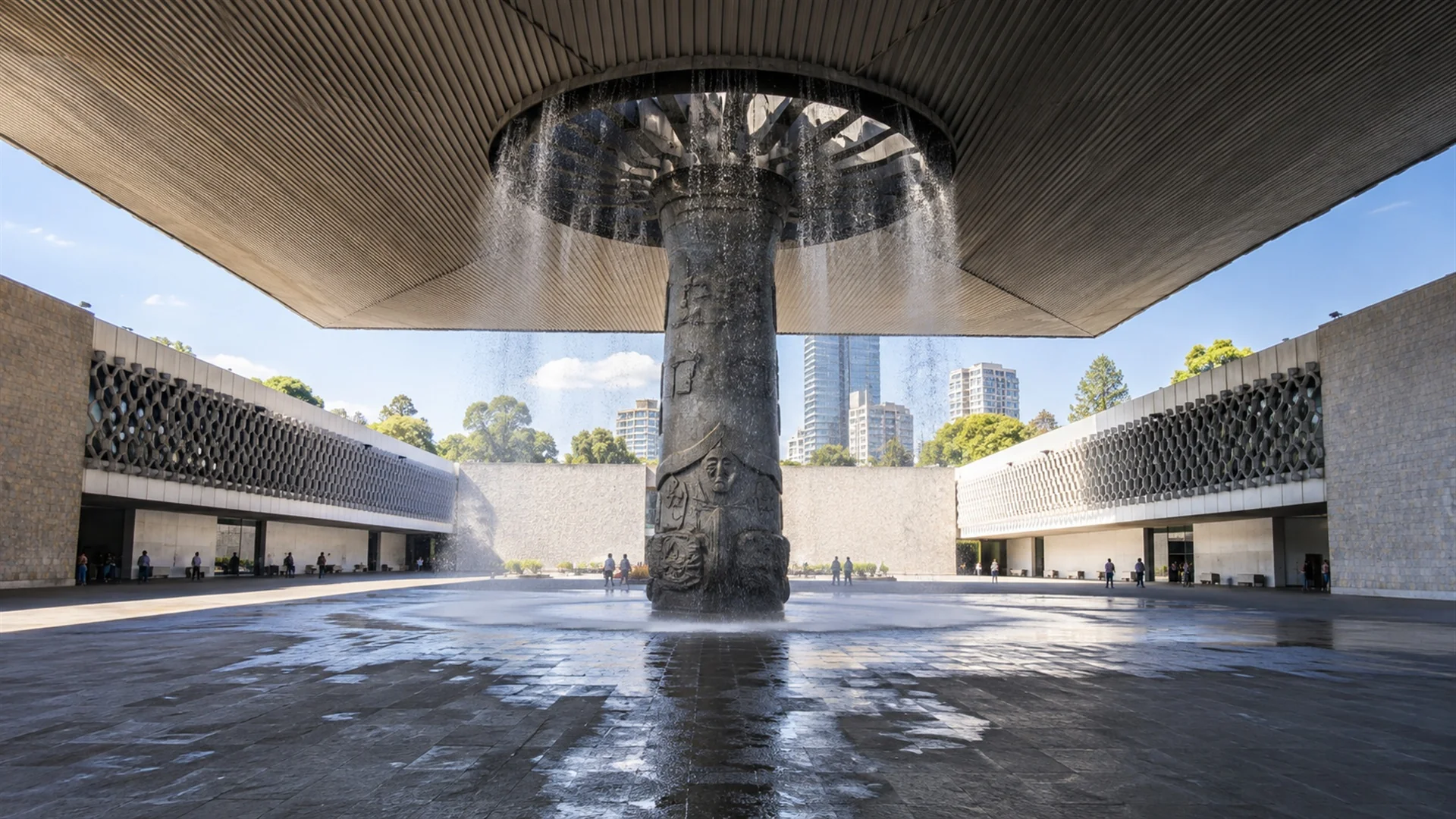
The Museo Nacional de Antropología is a reason to travel in itself. Opened in 1964, its courtyard is sheltered by a single enormous canopy supported on one central column, from which water falls like rain.
The collection spans more than twenty halls devoted to the civilizations of ancient Mexico. The Mexica hall holds the Sun Stone, while the Maya hall includes a reconstruction of the tomb of the ruler Pakal. Upstairs, the ethnographic galleries trace the living Indigenous cultures of the country.
Therefore, the museum deserves a full day rather than a morning. With a private historian, the visit can be paced across two sessions, with lunch in Polanco in between.
Later, Chapultepec Castle, set on a hill above the park, offers a quieter afternoon and wide views across the city. As a result, Polanco serves as both a comfortable base and a gateway to the museums of Chapultepec.
The Historic Center and the Palacio de Bellas Artes
The Centro Histórico is the oldest layer of the city, built over the Mexica capital of Tenochtitlan. The Zócalo, one of the largest public squares in the world, is framed by the Metropolitan Cathedral and the National Palace.
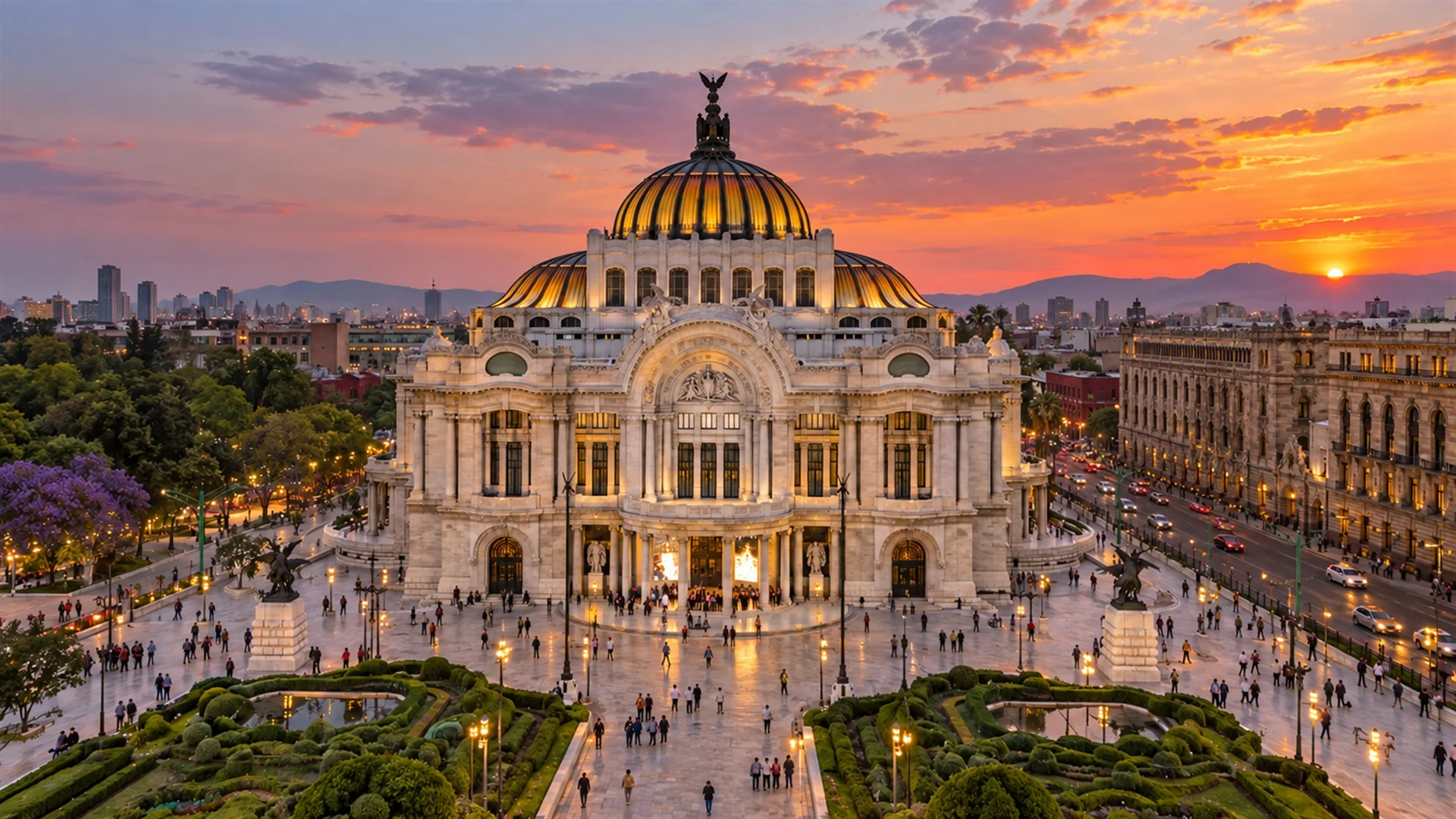
Next, the Palacio de Bellas Artes marks the western edge of the center. Its white marble exterior gives way to an Art Deco interior, and its upper floors hold murals by Diego Rivera, José Clemente Orozco and David Alfaro Siqueiros.
The building is also a working theater. An evening performance of the Ballet Folklórico de México offers a formal introduction to regional music and dance, and the stage curtain, made of glass mosaic, depicts the volcanoes of the Valley of Mexico.
In addition, the ruins of the Templo Mayor, uncovered beside the cathedral, reveal the scale of the city that stood here before the Spanish arrival. The site museum completes one of the most layered mornings among the things to do in Mexico City.
Coyoacán and the Southern City
Coyoacán feels like a separate town, with cobbled streets, colonial churches and two linked plazas at its heart. It was once a village outside the city, and it still keeps that slower rhythm.
The Museo Frida Kahlo, known as the Casa Azul, is the house where the painter was born and later lived with Diego Rivera. Its cobalt walls, garden and studio are preserved much as they were. Entry is by timed ticket, and slots are best reserved well in advance.
Meanwhile, the Coyoacán market and the cafés around the main plazas make an easy lunch stop before returning north.
Further south, Xochimilco preserves a network of canals and chinampas, the floating fields used for farming since before the Spanish conquest. An early boat trip with a local guide focuses on this agricultural landscape and its birdlife rather than on the weekend crowds.
Finally, the southern city adds a different register to the things to do in Mexico City: domestic, intimate and closely tied to the artists who shaped modern Mexican identity.
The Table: Pujol, Quintonil and the Markets
Mexico City is one of the great dining capitals of the Americas, and its tasting-menu restaurants have shaped how contemporary Mexican cuisine is understood abroad.
Pujol, led by chef Enrique Olvera in Polanco, is known for its mole madre, a mole aged and replenished over many days and served with a fresh mole alongside. Nearby, Quintonil, led by chef Jorge Vallejo, focuses on native ingredients, vegetables and herbs in a precise, seasonal menu.
Both restaurants are among the most acclaimed in the world, and tables are released well in advance. Securing them is exactly the kind of detail best arranged before arrival.
In contrast, the markets show the everyday table. The Mercado de San Juan is known for specialty produce and cheeses, while neighborhood stalls serve tacos, tamales and seasonal fruit throughout the day. A guided market morning brings context to ingredients that appear later on the tasting menus.
Here, the things to do in Mexico City come together: the same corn, chilies and herbs appear in a market stall and in a fine-dining course, linked by the same tradition.
Teotihuacán as a Full Day
Teotihuacán lies northeast of the city, around an hour’s drive with light traffic and considerably more at peak hours. It deserves a full day with an early departure, not a quick stop on the way elsewhere.
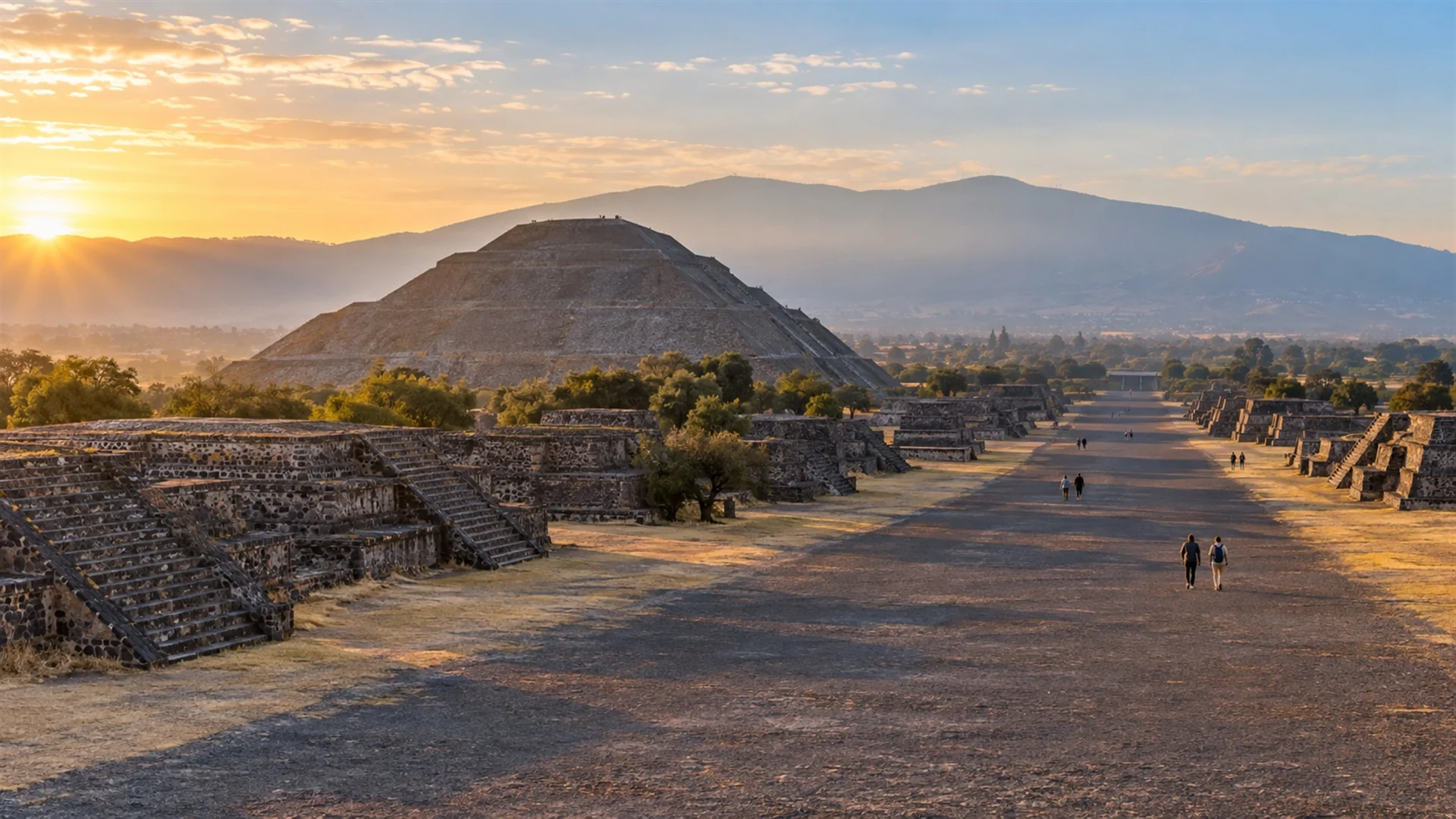
The ancient city was built centuries before the Mexica and later abandoned. Its scale is remarkable: the Avenue of the Dead runs between the Pyramid of the Sun, the Pyramid of the Moon and the Temple of the Feathered Serpent.
Arriving at opening avoids the midday heat and the largest groups. Meanwhile, a guide trained in archaeology explains the city’s urban plan, its murals and the questions that remain unanswered. For those who wish, a dawn hot-air balloon flight above the site can precede the visit.
Because the site sits at high altitude with little shade, water, a hat and a steady pace matter. The day ends with a relaxed lunch nearby and a return to the city by mid-afternoon. Official visitor information is available at https://visitmexico.com
Great museums, quiet colonias, and a table without equal
Signature Experiences
- Morning walks through Roma Norte and Condesa
- A full day at the Museo Nacional de Antropología
- Private historian guide through the Mexica and Maya halls
- Afternoon at Chapultepec Castle above the park
- Murals and ballet at the Palacio de Bellas Artes
- Templo Mayor and the Zócalo with an expert guide
- Timed visit to the Museo Frida Kahlo in Coyoacán
- Early boat trip through the chinampas of Xochimilco
- Tasting menus at Pujol and Quintonil
- Guided morning at the Mercado de San Juan
- Opening-hour visit to Teotihuacán
Let’s Design Your Experience
Mexico City rewards a plan that respects its scale. At EscapeXperts, we combine seamless logistics, private access to museums and guides, and curated exploration of its neighborhoods and tables.
Why Travel to Mexico City with EscapeXperts
Mexico City is best understood through its institutions and its neighborhoods, not through a checklist. At EscapeXperts, we group each day by area, secure timed entries and restaurant reservations, and pair every visit with the right guide. The result is a selection of things to do in Mexico City that reveals one of the great cultural capitals of the world.

