Ideal length: 14 to 21 nights for a first journey
Countries per trip: Two, occasionally three
Adaptation time: Two to three days after the long-haul flight
Region: Japan · Indochina · India · Bhutan · Sri Lanka
Asia Luxury Travel Begins With Fewer Countries
Successful Asia luxury travel starts from three constraints rather than a wish list: the long-haul flight and its jet lag, monsoons that fall in opposite months across the region, and the time lost each time the journey changes country. Planned around them, a first trip of two to three weeks usually covers two countries, not five.
Many first itineraries try to link Japan, Thailand, Vietnam, Cambodia and India in three weeks. On a map, the idea looks efficient. In practice, it leaves few days in which travelers are both rested and in the right place at the right season.
At EscapeXperts, we count those hidden costs before choosing destinations. This guide explains how, and why the answer is usually fewer stops with more time in each.
Jet Lag as a Scheduling Cost
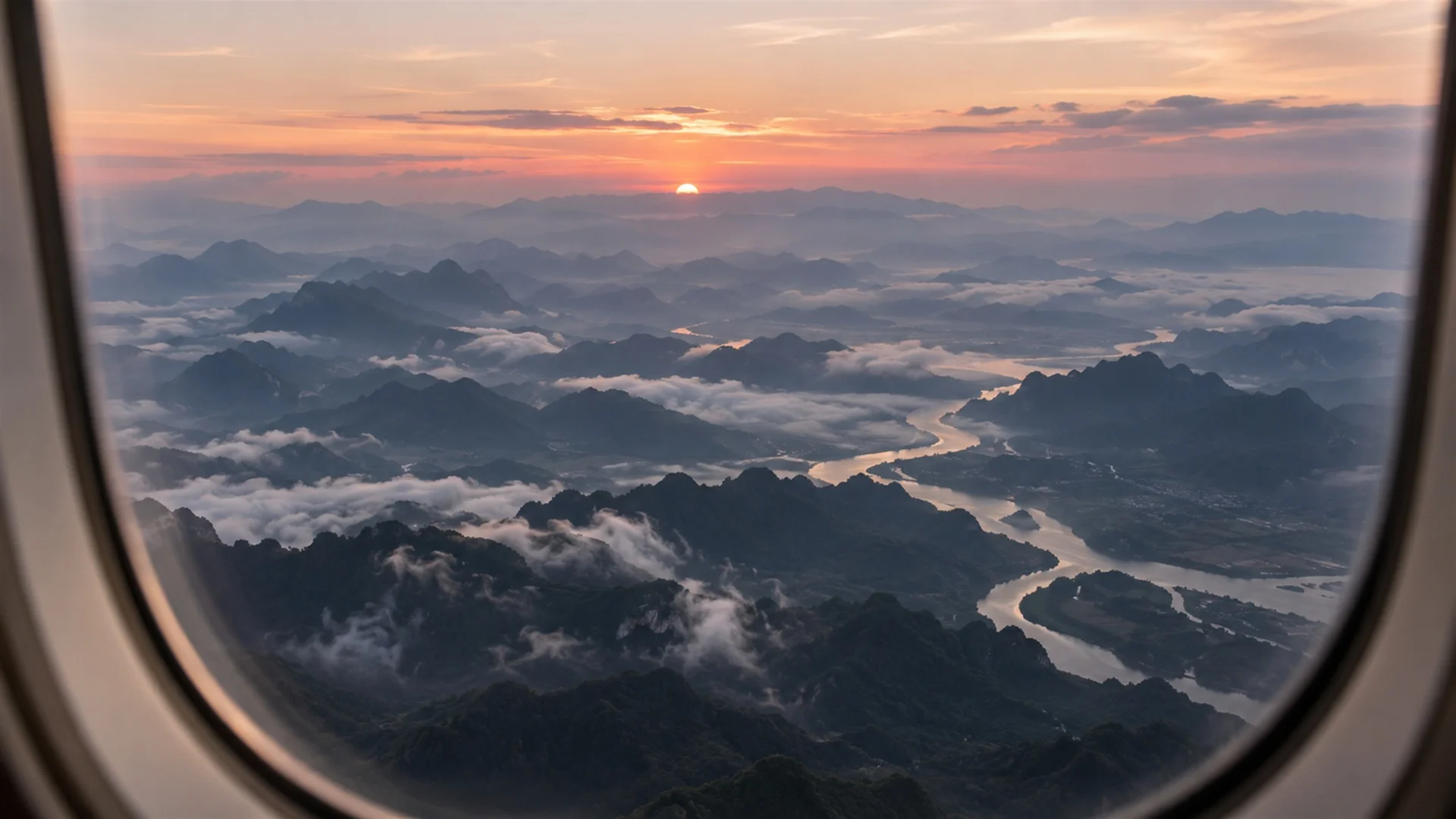
From the United States, the long-haul leg to Asia commonly takes twelve to sixteen hours, and longer with a connection. On arrival, the clock has moved roughly ten to fourteen hours from the East Coast, depending on the destination and the season.
That shift is not absorbed in a night. For most travelers, the first two or three days bring broken sleep, early waking and low energy in the afternoon. The days still count on the itinerary, yet they rarely deliver full value.
Therefore, we treat jet lag as a line in the schedule rather than an inconvenience. On a fourteen-night journey, two to three of those nights belong to adaptation. On a trip that returns home the same way, the effect repeats after the flight back.
Most itinerary planners ignore this cost. Yet it is the first reason that Asia luxury travel works better with fewer countries: every day spent recovering is a day not spent exploring.
The practical answer is simple. The first stop should be restful, with a gentle schedule, a comfortable hotel and no early starts.
Where to Place the Demanding Days
Once the adaptation days are counted, the demanding days need a home. Sunrise temple visits, full-day treks and long drives belong in the middle of the journey, after the body has settled.
In contrast, the first days suit gardens, walks, spa time and relaxed meals. A city arrival works well if the program stays light, while a remote lodge with a pre-dawn start is better placed later.
Meanwhile, the final days deserve their own logic. A beach or a quiet retreat before the flight home gives time to rest before the journey back.
Smaller shifts inside Asia add up as well. Moving from Japan to India, for example, sets the clock back by three and a half hours. It is a modest change, yet it still affects the first evening and the next morning, and it belongs in the plan.
As a result, the itinerary follows an arc: gentle arrival, active center, calm close. This single principle improves most plans for Asia luxury travel more than any change of hotel.
Monsoons That Contradict Each Other
The second constraint is weather. Asia does not share a single dry season. Indochina, meaning mainland Southeast Asia, is dry roughly from November to March, while much of Indonesia is dry from May to September.
India’s southwest monsoon arrives in early summer and retreats in the autumn. Sri Lanka has two monsoons, which affect opposite coasts at different times of year. Japan has its own early summer rainy season and a typhoon period later on.
Because of this, the monsoons act as a hard limit on combinations. Two countries can be close on the map and six months apart on the calendar.
A journey in January, for instance, suits mainland Southeast Asia, Rajasthan and the southern and western coasts of Sri Lanka at the same time. Meanwhile, Bali and the east coast of Sri Lanka are better left for the middle of the year, when those other regions are wet or hot.
The planning order therefore reverses. The season comes first, and only then the countries that share it. For Asia luxury travel, this removes more itineraries than any flight schedule.
Why Asia Luxury Travel Favors Two Countries, Not Five
Each change of country costs time. A morning checkout, a transfer, a flight, immigration and a new check-in usually consume most of a day. Five countries in three weeks means four such days, added to the adaptation days after arrival.
Together, these costs can remove a third of a three-week journey. Therefore, two countries, occasionally three, is the more rewarding choice for a first trip to the region.
A third country becomes reasonable on journeys of three weeks or longer, provided it shares the season and sits on a sensible flight path. Beyond that, each addition tends to subtract more than it adds.
Some pairings work by geography and season together. Vietnam and Cambodia share the mainland dry months. India’s Golden Triangle pairs naturally with Bhutan in the autumn. Japan in November combines well with northern Vietnam or Thailand.
Other pairings only work on a map. Temples in Cambodia and beaches in Bali rarely share good weather, and Japan’s cherry blossom season arrives as heat builds across northern India.
Internal Flights, and Where Rail Wins
Within Asia, internal flights connect most capitals and regional centers efficiently. They are the right tool for long distances, such as crossing from one country to another or from north to south within India or Vietnam.
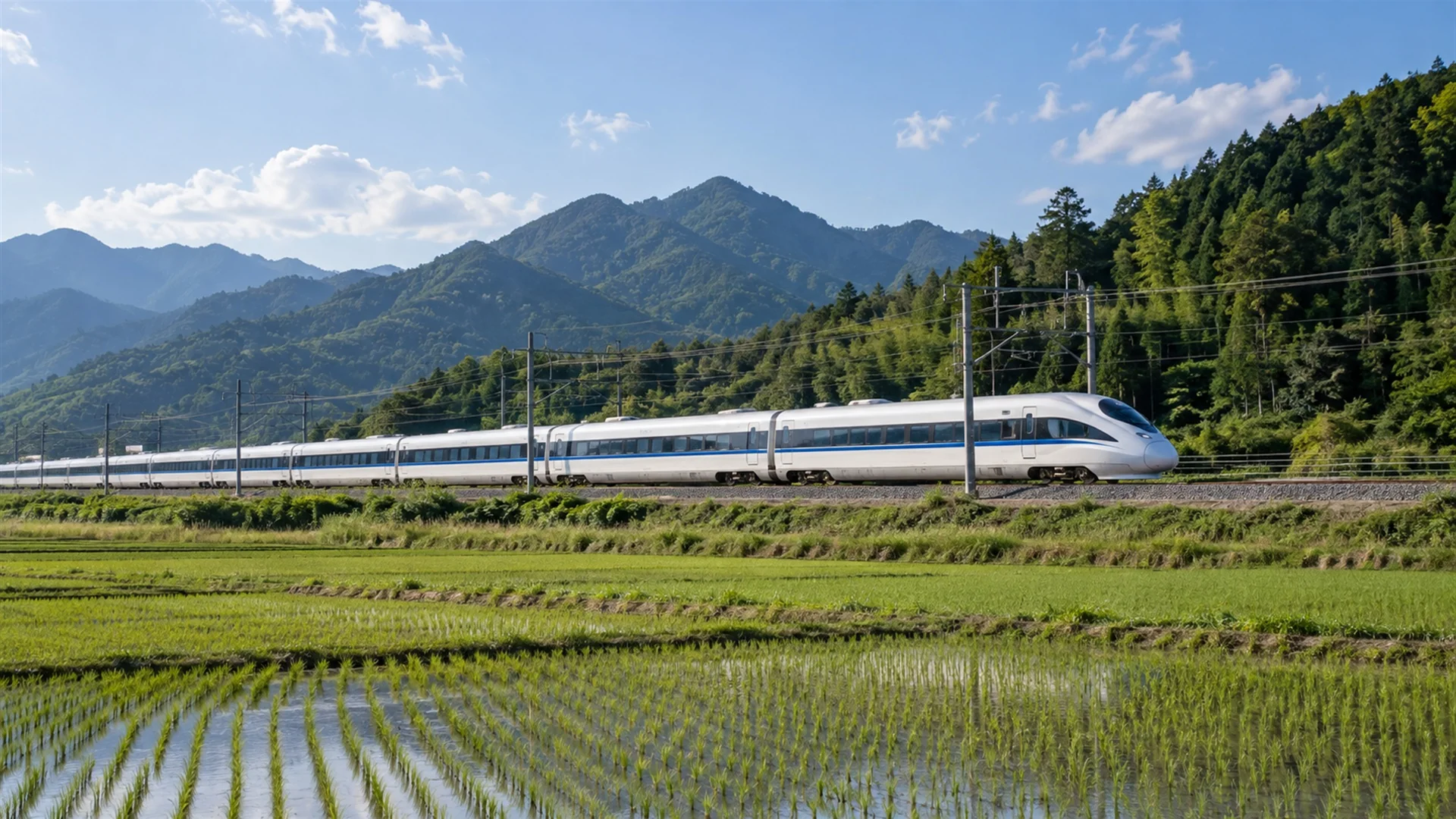
However, some routes are faster and calmer by train. Japan’s high-speed rail links Tokyo and Kyoto in a little over two hours, center to center, without airport time. In India, express trains connect Delhi and Agra in a similar span.
Next, a few slower railways justify themselves as experiences rather than transport. The hill train through Sri Lanka’s tea country is one example, planned as a scenic day rather than a transfer.
The rule is straightforward. Flights for distances, rail for short city pairs, and a car with a driver for everything in between.
In addition, each border brings its own paperwork, from visas to arrival forms. These details are straightforward when arranged ahead, and they are one more reason to cross fewer of them.
The Seasonal Guides Behind the Plan
This article sets the method, and the detail sits in our seasonal guides. Each one explains a single country’s calendar: the best time to visit Japan, when to go to Thailand, Vietnam’s best seasons, the best months for India and when to visit Sri Lanka.
Separate guides to travel in Bhutan and to the temples of Angkor in Cambodia follow the same logic, each built around the months when that destination is at its best.
Read together, they show which months each country offers and where those months overlap. For heritage planning, the UNESCO World Heritage List is a useful reference: https://whc.unesco.org/en/list/
Finally, the method applies to every guide: count the adaptation days, respect the monsoons and choose fewer countries. That is the basis of well-planned Asia luxury travel.
Unhurried arrivals, aligned seasons, and room for each place
Signature Experiences
- A restful first stop planned around arrival from the long-haul flight
- Autumn temples and gardens in Japan
- High-speed rail between Tokyo and Kyoto
- Dry season journey through Vietnam and Cambodia
- Winter circuit of India’s Golden Triangle
- Autumn valleys and monasteries of Bhutan
- Scenic hill train through the tea country of Sri Lanka
- A quiet beach close before the flight home
- Private driver between the stops that flights cannot reach
Let’s Design Your Experience
A first journey to Asia rewards careful subtraction. At EscapeXperts, we count the adaptation days, match countries to their seasons and plan the transfers, combining seamless logistics, private experiences and curated exploration.
Why Travel to Asia with EscapeXperts
Asia is vast, and its seasons rarely agree. At EscapeXperts, we plan around the long-haul flight, the monsoons and the time between countries, then choose the stays that make each day count. The result is Asia luxury travel built on fewer places and more time, shaped around how you want to travel.